Ross Clark

Ross Clark

Ross Clark is a leader writer and columnist who has written for The Spectator for three decades. He writes on Substack, at Ross on Why?

Enough, says Blair — but is anyone listening?

From our UK edition

Given that the government’s lust for setting targets has done so much to increase bureaucracy in public services Given that the government’s lust for setting targets has done so much to increase bureaucracy in public services, one could be forgiven for a little scepticism regarding the Prime Minister’s latest target: to reduce red tape by 25 per cent. Presumably a new quango will be set up to measure the exact length of red tape which binds the country, so that Blair will be able to pronounce victory once precisely a quarter of it has been chopped off. I don’t hold out a great deal of hope that this latest initiative will achieve anything. We’ve heard it all before.

Demolition crazy

From our UK edition

While Tony Blair was making his valedictory speech to the Labour party conference in Manchester on 27 September, 60-year-old Elizabeth Pascoe was ecstatic. Not because she was impressed by the Prime Minister’s self-composed list of glorious achievements, but because the High Court had just stopped the government from running a bulldozer through her house. Miss Pascoe’s misfortune had been to live in Adderley Street, Liverpool, in one of 500 homes scheduled for demolition in Liverpool under the so-called Pathfinder scheme. The Liverpool Land Development Company, the quango responsible and misleadingly disguised as a private company, had argued that the area needed to undergo ‘regeneration’ because many homes were lying empty and abandoned.

Monetary genius? I beg to differ

From our UK edition

Amid the growing mutterings over his suitability to be prime minister, Gordon Brown has managed to preserve his reputation in at least one quarter. It has become received wisdom that the Chancellor played a blinder on his first day in the job in 1997 by making the Bank of England independent, giving us perpetually low interest rates and bringing an end to boom and bust. Indeed, this is one Labour ‘success’ that David Cameron has promised to leave intact. It is not hard to see why Gordon Brown has managed to portray himself as the genius who brought low, stable interest rates to Britain. To anyone over 40, the Brown years must seem a golden age of stable money.

The real case against Tesco

From our UK edition

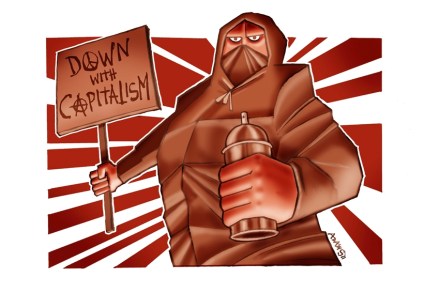
Corporate success can generally be measured by the size and strength of the campaign to boycott your business. But until very recently there was a remarkable exception to this rule: Tesco. For a supermarket group which now accounts for a remarkable one in every eight pounds taken by retailers in Britain, opposition has been remarkably light. Where are the student demos, the bricks flying through Tesco windows on May Day? Even tapping into www.boycotttesco.com is something of a disappointment; the site was bought up some time ago by a bunch of American libertarians who object to the way loyalty cards are used to spy on our shopping habits — not exactly an issue which excites the British public’s imagination.

Down with the new morality

From our UK edition

It was John Major who came a cropper while trying to restore the nation’s moral values: his ‘back to basics’ campaign was mocked to death before it had really got started. Yet Mr Major’s attempt to influence the nation’s morals was nothing compared with that of Tony Blair, who has overseen a Sexual Offences Act, a law against discrimination on the grounds of sexual orientation, the introduction of civil partnerships for gay couples, and a gambling Bill. Moreover, Mr Blair seems to have got away with it. It is not entirely obvious why we should be happy to allow a preachy Tony Blair to tell us what is right and wrong when we sneered at the merest suggestion of John Major doing the same.

Trial by tabloid

From our UK edition

I have no idea whether Sion Jenkins — the former Hastings deputy headmaster who was this week acquitted of murdering his foster daughter after juries in two successive trials failed to reach a verdict — committed the foul deed or not. I wasn’t there. Maybe Jenkins suffered one of the fits of rage which his former wife, Lois, now claims are part of his character and slugged poor Billie-Jo over the head because she had spilled paint on the carpet, then stuffed a piece of black bin-liner up her nose in a deliberate attempt to implicate the mysterious ‘Mr B.’, a lowlifer with a plastic fetish who used to frequent the park outside the Jenkinses’ home.

Reefer madness

From our UK edition

After some consideration I am not sure that I can get excited about the debate as to whether cannabis should be classifed as a Class B drug or whether, as the Home Secretary Charles Clarke decided last week, it should remain Class C. Rather, I am coming round to the conclusion that it should be declassified as a drug altogether — and reclassified as a banned foodstuff. Instead of being handled by a bunch of creepy do-gooders from the drugs’ charities, the battle to keep it off the streets would then be run by the zealots of the Food Standards Agency.

Why did he do it?

From our UK edition

While David Cameron was at a Basildon comprehensive on Monday announcing that the Conservative party no longer believes in selective education, my ten-year-old son was sitting the 11-plus at a private school in Suffolk. There are no grammar schools left in Suffolk, as it happens, nor in Cambridgeshire, nor in Norfolk: my son’s 11-plus papers had been sent up from Kent. But if it comes to moving the family 100 miles so that my son can enjoy the grammar-school education that I did, that is exactly what I will do. The alternative is to stay put and spend up to £13,000 a year on private education.

Tomorrow’s world

From our UK edition

31 December 2055 The deaths of the Earl of Sedgefield, aged 102, and Mr Gordon Brown, 104, brings to a sad conclusion the most remarkable and prolonged feud in British political history. It would, of course, be improper to speculate on the precise circumstances before the inquest, but police have confirmed that at around 2.30 p.m. on Christmas Day two elderly men were involved in a fracas at the Golden Handshake Nursing Home, the opulent country house in Surrey favoured as the final home of many wealthy civil servants and local government employees. Both men later succumbed to their injuries. According to nursing staff, the two were seen squabbling over who was to sit in the large, gilded easy chair in the bay window of the Prescott Lounge.

Public-sector scroungers

From our UK edition

Ross Clark on the workers who milk the rest of us by retiring early as a result of ‘ill health’ The next few months may well see the political death of Tony Blair. But whether he will get buried is another matter. In an echo of the public-sector bolshieness 27 winters ago that eventually brought down the Callaghan government, public-sector unions have renewed their threat to stage a national strike over proposals to raise their normal retirement age from 60 to 65. A month ago Alan Johnson, the trade secretary, appeared to buy off a strike by agreeing with the unions to exempt all existing public-sector employees, even newly recruited 18-year-old postmen, from the need to work until 65.

Diary – 12 November 2005

From our UK edition

There was a surreal touch to last Sunday’s newspapers. The inside sections, which tend to be prepared a little in advance, brimmed, as usual, with pieces about the delights of living in France. The news pages, by contrast, carried pictures of French youths lobbing Molotov cocktails and overturning cars in the great orgy of rage that has overtaken the country in recent days. Cars seem to have had the worst of it. In the truest French bureaucratic traditions, somebody has even been keeping a countrywide tally of those destroyed: by Monday night the toll had reached 1,408 vehicles.

Death, drugs and red tape

From our UK edition

Over the next few weekends, the gardens of 23 stately homes will be opened up to several thousand sponsored fun-runners who, demonstrating the typically huge generosity shown towards cancer charities by the British public, will raise £2.5 million for oncology research. Elsewhere, the stalls at village shows will heave with home-baked cakes, thousands will empty their lofts to send surplus possessions to Cancer Research shops, and many more will be stuffing ‘pinkie rings’ on to their fingers and toes in order to support work on breast cancer. In all, Britons last year raised £302 million for cancer charities, far more than any other country in Europe.

Guilty until proved innocent

From our UK edition

Ross Clark shows that Tony Blair’s new theory of justice is both sinister and historically illiterate I don’t know whether Maria Otone de Menezes, the mother of Jean Charles de Menezes, the Brazilian electrician shot by police at Stockwell underground station on 22 July, has hired the services of a PR firm, but even Max Clifford could not have timed better her arrival in Britain. As Mrs Menezes and other members of her family surveyed the spot where her son was summarily executed on suspicion of being a terrorist, the Prime Minister was on a stage in Brighton saying this: ‘We are trying to fight 21st-century crime — antisocial behaviour, drug-dealing, binge-drinking, organised crime — with 19th-century methods, as if we still lived in the time of Dickens.

Fear in the community

From our UK edition

The local people who turned out to see Princess Helen Louise open the new wing of St Leonard’s Hospital in Sudbury, Suffolk, in 1938 would not have recognised the term ‘stakeholder’, but they would seem to have fitted perfectly Tony Blair’s vision of a breed of socially responsible citizens helping to run the country’s public services. ‘They paid for the hospital through voluntary subscriptions of a few pence a week,’ says local historian Barry Wall. ‘The hospital had been built in 1867 using the proceeds of the sale of the site of an old leper home which had been in existence since the reign of Edward II. But it was local people who paid to keep it going.

Flap over nothing

From our UK edition

Who believes that bird flu may cause as many as 50 million deaths? Ross Clark doesn’t, and here’s why I don’t personally know anyone suffering from malaria or tuberculosis, but I imagine that if they have been following the Western media they must have found the past week somewhat surreal. Half a billion people are now suffering from malaria, of whom about one million will be dead by this time next year. Nine million are suffering from tuberculosis, two million of whom will die in the next 12 months.

Hot Property

From our UK edition

In these pages recently Elisabeth Anderson wrote about, but declined to give the name of, a website that gives the price of any property sold in England and Wales during the past five years. Actually, it’s called www.nethouseprices.com, and a quick nose around the site reveals that flats up Liz’s way, Marylebone, are selling for anything between £200,000 and £500,000. But the website isn’t good just for being nosy about your friends and colleagues; it gives property buyers the wonderful advantage of being able to catch out estate agents and developers.

Crash course

From our UK edition

I have some native sympathy with the lackeys struggling to handle the Inland Revenue’s computers which, like a berserk one-arm bandit, have just spewed out an excess £1.9 billion in tax credits. I am not sure I am the best-qualified person to expound on the inadequacy of government IT systems. My own computer bears the large indelible bootprint of the Clark school of systems technology. It was imprinted a fortnight ago when the machine crashed, erasing two years’ worth of work, or at least sending it somewhere deep into the bowels of the hard drive where it could only be recovered by the kind of forensic nerds who do kiddie-porn investigations.

The worst of both worlds

From our UK edition

Ross Clark says that the government’s PFI deals allow private companies to prosper at the public’s expense Imagine you are a left-leaning Guardian reader with a social conscience. You are not a communist, but your attitude towards private enterprise is less one of enthusiasm than grudging tolerance. If we are going to let private companies run things and make things, you believe, they must at least follow a Will Huttonesque paradigm of virtue, looking after their staff and the local community before distributing a few crumbs to their shareholders. And, of course, capitalists must be kept away from the things which really matter.

Asbo madness

From our UK edition

Like many of my countrymen, I find the cantankerous figure of Charles Clarke somewhat alarming. In fact, I think on balance I would rather live next door to David Boag. It would certainly be more entertaining. Boag, a 28-year-old warehouseman from Dechmont, West Lothian, is a man of unusual habits. He likes to watch the film An American Werewolf in London, after which he spends some time howling. Not only that; neighbours who have taken to watching him through his curtainless windows have spotted him climb up a step ladder, leap on to his sofa and then dance around the room with a Christmas tree. Whether Mr Boag is a little mad or just eccentric I don’t feel qualified to say. Perhaps he needs to meet some girls, or at least broaden his taste in films a little.

Everyone benefits | 9 April 2005

From our UK edition

Thirteen local authorities have been chosen by the government to be Cultural Pathfinders, showing how culture and sport can help to deliver government priorities across public life. The government’s social, environmental and economic agenda is to be promoted through cultural initiatives at local level.