Rose George

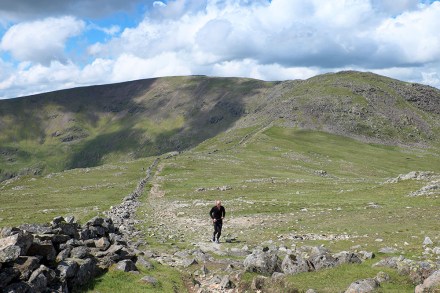
Does running 42 Lakeland fells in less than 24 hours really bring ‘serenity’?

From our UK edition

‘We continue to grapple as a species,’ writes Carl Morris, ‘with a knotty philosophical divide between anthropocentric and biocentric approaches to the natural world. Our bodies are both transcendent – seemingly beyond nature and capable of rationalised enhancement – but also immanent – that is within nature and therefore subject to the same frailties and

A death sentence for Afghanistan’s women judges

From our UK edition

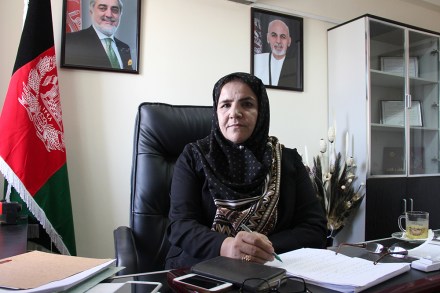
Quiz. Which country had a successful court named the Court for the Elimination of Violence against Women, where women could seek redress for any perceived wrong? Was it the United Kingdom, this ancient democracy that operates according to the rule of law? Or Afghanistan, where we assume women have always had to wear hideous burqas,

Freddy Gray, Tanya Gold, Rose George, Toby Young and Rory Sutherland

From our UK edition

28 min listen

On this week’s Spectator Out Loud: Freddy Gray reads his letter from Washington D.C., and reveals what Liz Truss, Eric Zemmour and Steve Bannon made of Trump’s inauguration (1:22); Tanya Gold writes about the sad truth behind the gypsies facing eviction in Cornwall (7:15); Rose George reviews The Forgotten Sense: The New Science of Smell, by

Why do we assume smell is our weakest sense?

From our UK edition

My cat can smell depression. Another family cat could smell my stepfather’s dementia. They both became more affectionate and tactile: the dementia-smelling cat would gently paw my stepfather, when he hadn’t even liked her when he had been well. My cat comes in close when my mood is darker. Perhaps both cats were using other

Why must we be in constant battle with the ocean?

From our UK edition

I recently learned to dive in the bay of Dakar. It was exciting. I’d started learning in a Leeds swimming pool and though I knew the ocean would feel different, I didn’t expect it to feel comfortable. It shouldn’t. It is not my element, and humans have long since left it to the rest of

The rat as hero

From our UK edition

Behold rat. Behold the magnificent, clever creature as it runs from the bin you have just opened or disappears into the nearest bush. Behold rat as it is cut open or drugged or injected to improve your health in the name of science, as many millions of its peers have been. Behold rat – though

Violence overshadowed my Yorkshire childhood

From our UK edition

We might be twins, Catherine Taylor and I. We were both girls growing up in Yorkshire in the same decades – I in the West Riding (where an alley is a ‘ginnel’), her in the south (where it’s a ‘gennel’). We are children of the Yorkshire Ripper years, conditioned to be constantly scared of the

The scandal of rubbish disposal worldwide

From our UK edition

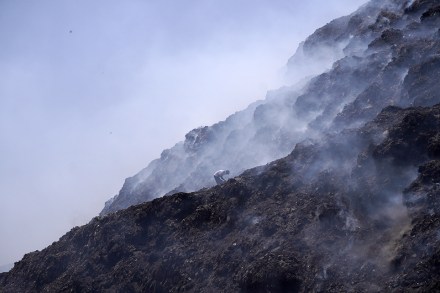
Above a foul towering dump in Delhi a cloud of vultures and Siberian black kites fly in hope, ‘careening over the mountainside like some dreadful murmuration’. Here some of the world’s million waste pickers stash water bottles along their route, ‘like climbers making camp’. Oliver Franklin-Wallis concedes that his subject – the dirty truth of

Women beware women: young feminists are betraying their older sisters

From our UK edition

Where are all the father-in-law jokes? You won’t find them, because fathers-in-law are not fair game in the way middle-aged women are. There is no male ‘Karen’. Men are not mocked as wizards, but we are witches. Victoria Smith has subtitled her timely book ‘The Demonisation of Middle-aged Women’, and if you are one of

An old Encyclopaedia Britannica is a work to cherish

From our UK edition

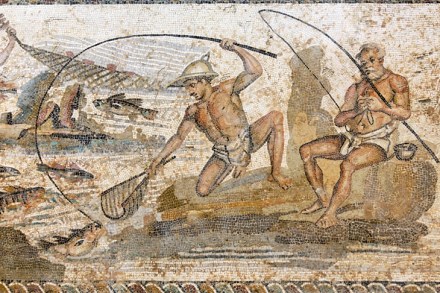
Two thousand years ago, a young Cilician named Oppian, wanting to rehabilitate his disgraced father, decided to write Halieutica, an account of the world of fishes, as a gift for Marcus Aurelius. It was a mixture of possible fact and definite fiction – if only there were octopuses that climb trees and fishes that fancy

The kiss of death

From our UK edition

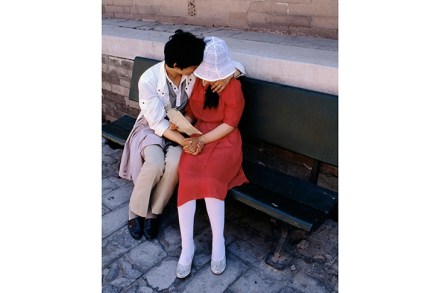
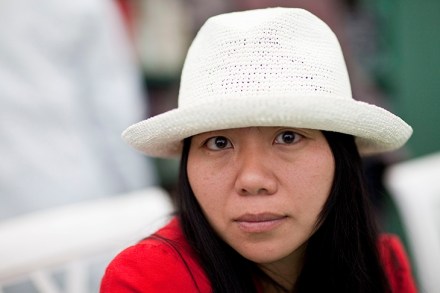
I once threw Tony Parker’s Lighthouse across the fo’c’sle of a ship at sea when I read that his characters were composites. Oral history should be historical, or it goes into the ocean. So it is a shame that I sometimes question Xinran’s authenticity in this account of the loves and lives of four generations

A different kettle of fish

From our UK edition

Fish. Slippery, mysterious creatures. They are mysterious because of where they live, in vast waters, and because they elude the historical record, too: fishing equipment is soft and decays (bamboo, hemp, lines made from kelp, cedar bark, women’s hair). Brian Fagan is an archaeologist, a profession that we associate with dust and soil and stone,

Cinderella in China

From our UK edition

She was a foundling in her own family, shunted to adoptive parents for two years, then to the edge of China, to a fishing village on the East China Sea, and to a furious, alcoholic grandfather and a grandmother sold at 12 into marriage for some pottage, and never given a name. Is that colourful

Making waves | 14 July 2016

From our UK edition

The tour guides of Ephesus, in Turkey, have a nice party trick to wake up their dozing coach passengers. As the coach drives along, they say, ‘This is the ancient port of Ephesus’, and the passengers look, as I did, at fields and trees and nothing else. They peer for the sea and are told

Very much like a whale

From our UK edition

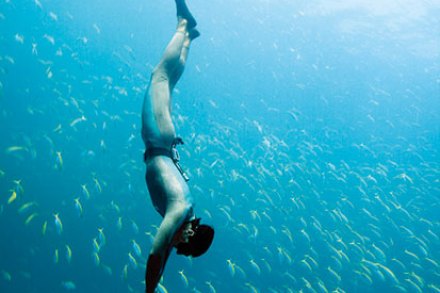
In principle, freediving is simple and perilous: divers take one breath, then dive as deep as they can, with no tanks or air, and come back up again. Watch a video of this — or Luc Besson’s 1988 film The Big Blue — and you have to hold your own breath, because it is beautiful,

Lover and fighter

From our UK edition

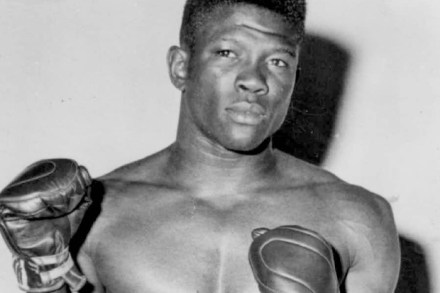
I don’t like boxing. If I ever get into a boxing ring, I’ll be in the corner with the governor of California, Edmund ‘Pat’ Brown, who in 1963 called for ‘the abolition of this barbaric spectacle’ because another man had just been beaten to death in the ring. That man was Davey Moore, who had

Suffering a sea change

From our UK edition

The oceans cover seven-tenths of our planet, and although it may not seem like it above the surface, they are very busy. Helen Scales and Christian Sardet are marine biologists: Sardet is apparently known as Uncle Plankton, and those multitudes of drifting organisms — ‘plankton’ comes from the Greek planktos, meaning to wander or drift