Rory Sutherland

Rory Sutherland

The allure of ‘delight qualities’

From our UK edition

If you were to ask which single business concept deserves to be more widely known, I would be hard-pressed to find a better answer than the Kano model. Developed in the 1980s by Dr Noriaki Kano at the Tokyo University of Science, it is not only self-evidently true, it also provides a simple framework to explain much that is wrong with modern life. Kano is a management theorist, but his greatest contribution is in seeking to reduce the wasted effort and expense which arise when an organisation’s pursuit of seemingly logical targets becomes misaligned with other crucial qualities which deliver emotional value to customers. A Pot Noodle without the sachet is like a Bloody Mary without Worcestershire sauce — i.e.

The case for ‘premium economy’ train carriages

From our UK edition

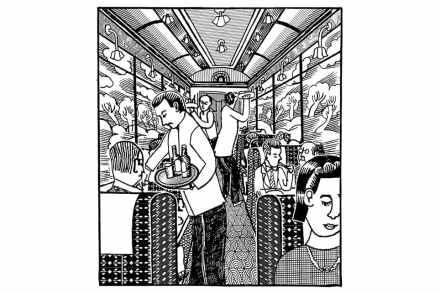
A few years ago I wrote here about the unexpected symbiosis between economy passengers and business travellers on commercial flights. Largely unnoticed by people in either cabin, those buying each class of air ticket are unintentionally helping out their fellow travellers at the other end of the plane. Precisely because the two classes of passenger have wildly different priorities (the people at the front are sensitive to time, productivity and comfort; the people at the back are more sensitive to price), it benefits both groups to share the same aircraft. Why? Well, put simply, leisure passengers do not much care whether a flight to Miami operates daily, weekly or even fortnightly, since they are most likely going away for one or two weeks.

The genius of bottomless brunch

From our UK edition

I’m rather fond of the many service stations on the M4, since I am convinced they are all named after Jane Austen characters who never made it into the final drafts of the novels. But as an alternative, west of Lord Chieveley and Lady Membury and just east of Sir Leigh Delamere, you can try the Three Trees Farm Shop & Café just south of Junction 15. There is a bank of four car chargers outside, which is what drew me there. The farm shop is wonderful, with charming staff, and stocked with the kind of high-margin artisanal goods you can buy as presents for the people you are visiting or, better still, for yourself.

The hidden benefits of smart motorways

From our UK edition

In 2015, Holborn Underground station was suffering from serious overcrowding at peak hours, with a bottleneck forming in the space leading to the escalators. So Transport for London tried an experiment. Abandoning the usual ‘stand on the right, walk on the left’ convention, they placed signs on two of the three ascending escalators instructing people on both sides to stand. Outrage followed. But the experiment worked. Escalators with passengers standing transported an average of 151 people per minute, compared with 115 for the dual-use escalator. People cannot all walk up an escalator in strict lockstep for fear of ending up on the sex offenders register You can see why people objected: it is counterintuitive to the point of seeming daft.

Why we pick the wrong holiday destinations

From our UK edition

Having returned from a fortnight’s break, I wonder if we get holidays all wrong. In northern Europe, the custom is that you head south to spend time on the beach. But equally, there is such a thing as too damned hot, especially if, like me, you have a healthy dose of Celtic ancestry. To avoid this, you need to study what is called the ‘wet-bulb temperature’. This is a measure of temperature which accounts for the cooling effect of evaporation. At 100 per cent relative humidity, the wet-bulb temperature is equal to the dry-bulb temperature shown on weather forecasts. At lower humidity the wet-bulb temperature is lower, owing to evaporative cooling, a mechanism all humans other than Prince Andrew depend on to reduce their body temperature.

The mathematical formula that proves London is over

From our UK edition

Some years ago, an Australian neurologist was in the habit of walking barefoot across his lawn. This being Australia, the lawn was slightly prickly, and the experience was painful but not intolerable; until one day, when one of the pricks in his heel was more pronounced than usual. He had been bitten by a snake and, again this being Australia, the snake was highly venomous. Doctors saved his leg and he made a complete recovery. But there was one lasting side-effect: he now found walking across his lawn agonising. In terms of the stimulus to his feet, nothing had changed. What had changed was how his brain processed the stimulus. What was once a mildly aversive discomfort was amplified by a learned fear into something much more painful.

Prima donna: is Giorgia Meloni the most dangerous woman in Europe?

From our UK edition

43 min listen

In this week’s episode:Is Giorgia Meloni the most dangerous woman in Europe?Spectator contributor, Nicholas Farrell is joined by Chiara Albanese, a political correspondent at Bloomberg, to discuss the road ahead for Italy’s next likely leader. (01.10)Also this week: Are we entering a new age of digital censorship?Lord Sumption unpicks the Online Safety Bill in this week’s magazine. He’s joined by Baroness Nicky Morgan, a firm supporter of the bill. (17.53)And finally: why has holiday hand luggage become such a hassle this summer?Spectator contributor and marketing guru, Rory Sutherland joins us to get to the bottom of this. (31.56)Hosted by Lara Prendergast and Gus CarterProduced by Natasha Feroze.

What Bob Dylan can teach us about economics

From our UK edition

The problem with attempts to make everything in life more scientific is that reality hates generalisation. You can try to formulate universal laws, but in any complex system even the smallest contextual difference or hidden asymmetry can be enough to rewrite those laws completely. Economics refers to something called ‘the market’, the laws of which supposedly govern all economic activity. In reality, anyone exposed to commerce soon realises that different markets follow wildly different rules. With airline seats, it is widely observed that ‘scarcity bias’ drives sales – hence the message ‘only three seats left at this price’. But this does not work for vegetables.

The case for theft-tanks

From our UK edition

The Conservative party leadership contest is a milestone for diversity and inclusion. This time, we get to choose between someone who studied philosophy, politics and economics at Lincoln College, Oxford and someone who studied philosophy, politics and economics at Merton College, Oxford. I can barely contain my excitement. I find the very idea of an undergraduate degree in politics alarming. It is often seen in business that people who complete an MBA straight after university turn out to be spectacularly useless employees, and it’s possible that this unhappy pattern recurs in politics. The reason is simple: there is an order effect at work. It’s one thing to theorise on the basis of practice; quite another to practise on the basis of theory.

The hidden benefit of an electric car

From our UK edition

Hello, and welcome to episode one of What’s in My Frunk?, the first in an occasional Spectator series of news and advice for the electronic motorist. In this edition we’ll be discussing one of the unexpected benefits of owning an electric car. The space under the bonnet vacated by the engine often provides a small but usable secondary storage area. This is the ‘frunk’, a portmanteau word combining ‘front’ and the American word ‘trunk’. Now that even Land Rover Defenders have carpeted boots, your frunk is great for transporting anything wet or dirty – wellingtons, charging cables, takeaways or body parts from your last hit.

The unhappy truth about holidays

From our UK edition

In the 1980s, the great advertising writer John Webster described the following paradox. As he saw it, the dream of everyone in advertising was to work hard for many years, ultimately winning enough accounts and awards to retire to a French farmhouse where they could wake to the smell of fresh bread and black coffee, before driving a rusted 2CV to the local market. ‘A simpler alternative,’ Webster explained, ‘was simply to be born a French peasant, in which case you could cut out the middle bit altogether.’ Retirement plans are prone to what the behavioural economist Daniel Kahneman calls ‘affective forecasting’. We think we know what will make us happy.

Buying a brand-new car is the ultimate good deed

From our UK edition

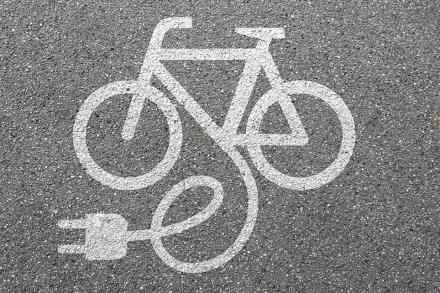
The Department for Transport recently ended a £1,500 subsidy towards the price of new, lower-priced electric cars one year earlier than planned. To their credit, there are better ways to promote electric-car use – for instance by encouraging the installation of public charging stations. As it is, the spread of rapid-charging stations in the UK is bizarrely uneven. Some parts of the country are well served, but there are unexpected black spots. Oddly, trendy places where people talk endlessly about sustainability – such as Oxford, Cambridge and Brighton – are hopeless for rapid charging points, while less fanciful places like Thurrock, Milton Keynes and Newport are awash with them.

Working from home could have been the reset we needed

From our UK edition

‘It is vital that we see a return to face-to-face meetings to foster the dynamic collaboration that creates breakthrough ideas.’ All true, I’m sure. But what you’re describing here isn’t an office: it’s a pub. The same goes for ‘team-bonding’. Placing a lot of people in an open-plan office doesn’t really form a close-knit team – which may explain why very little military training takes place behind desks. No, if you want to form a highly collaborative team, just book your subordinates on a Eurostar junket to Paris, then forget to confirm their return tickets.

Inside Taiwan’s plan to thwart Beijing

From our UK edition

37 min listen

In this week’s episode:Ian Williams, author of The Fire of the Dragon: China’s New Cold war, and Alessio Patalano, Professor of War and Strategy in East Asia at King’s College London, talk about how the war in Ukraine has changed the thinking in Taiwan. (00:37) Also this week: Was Sue Gray’s report on Downing Street parties a game-changer or a damp squib? The Spectator’s editor, Fraser Nelson, and our political editor, James Forsyth, join the podcast to discuss the fallout from partygate. (15:39) And finally:If rising restaurant prices are causing you grief, you're not alone. Writer Yesenda Maxtone Graham and The Spectator’s Wikiman columnist, Rory Sutherland, join the podcast.

Why sat navs are a conversation killer

From our UK edition

When my daughters learned to drive, I suggested they take their tests in automatics as driving manual cars would soon be redundant. I worry about this. Not because I think I was wrong, but because I fear that gear-changing is yet another of those once commonplace skills which may soon be lost to technology for ever, like double-declutching or the ability to memorise more than three phone numbers. As evidence of this depletion of tacit expertise, consider how the satnav has eroded map-reading skills in anyone under 40 – something which might explain why the Russian army sticks to main roads even when driving tanks. Since nobody uses printed maps any more, it has left people spectacularly ignorant of relative geography.

My solution to unfair traffic fines

From our UK edition

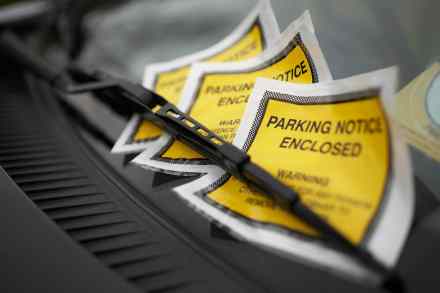
My driveway now lies in the middle of an ‘Average Speed Check Zone’. It’s a wonderful arrangement – for me – since the slower traffic makes it easier to pull into the road. Yet I am still free to drive through the village like Fangio since average speed check cameras do not record your speed, only time taken between two points. Since I rarely drive past my house without stopping, it barely affects me at all. It’s symptomatic of a wider problem. To what extent can we truly rely on technology to replace human judgment in the administration and enforcement of rules? If a traffic camera catches one person a day, that driver is likely at fault.

My plan to cut congestions on our roads

From our UK edition

Much of the current antipathy towards the car derives from the excessive influence Londoners exert over national debates. London is an outlier in being one of the very few places where you can avoid owning a car, and where cycling or public transport is faster than driving. Indeed a car is less useful in the middle of London than anywhere else: you can’t drive to work, you can’t park at the shops and, if you set out from inner London, after 30 minutes of fraught driving you will merely end up in a worse part of London. This is not true in other cities, where 30 minutes’ drive will take you from the centre to attractive countryside and fast roads.

How to watch YouTube on your TV – and why you should

From our UK edition

According to Pliny the Elder, Scipio Aemilianus was the first man to shave daily. The origin of the name Boeing is Welsh. The family emigrated to the US from Germany, where they were called Böing, but this was a Germanisation of the Welsh patronymic ab Owen. In Pembrokeshire there is a Church of St Elvis. Helen Viola Jackson, the last recipient of a US Civil War widow’s pension, died in 2020. Nothing beats videos produced by the obsessive for the obsessive At the time of the Napoleonic wars, France was the fourth most populous country in the world, behind only China, India and Japan, with double the population of the UK. The origin of the word ‘zydeco’ – to describe the Cajun musical genre – is uncertain.

Should the young pay less tax than the old?

From our UK edition

In evolutionary terms, it is obvious why we get more conservative with age. Two strong forces, acting in the same direction, lead us not to bet on rank outsiders when we’re nearing the last race of the day. First, older people have more experience to draw on when making decisions: if you already know what you like, the need to experiment is much less. But that’s not all. The elderly also have far less time remaining to benefit from experimentation. If you happen on a new cuisine, band, social circle or holiday destination in your twenties, you have many decades to profit from the discovery. Someone in their sixties might have one or two.

The link between motorway service stations and shortages of PPE

From our UK edition

I spend quite a lot of time attacking what I call ‘motorway service station’ path design. More attentive readers of The Spectator may remember this from 2019: ‘You are tooling down a motorway at 75mph and decide to stop for a break… Once off the slip road you face a barrage of signs: Food Court/Fuel/Lorries/Caravans/Coaches/Travelodge/Costa Drive-Thru, each pointing to a different fork. If your attention briefly wavers and you miss one of these bifurcations, you will find yourself hopelessly trapped in the lorry park with no means of return. This is probably what happened to Lord Lucan.