Rory Sutherland

Rory Sutherland

Why the restaurant world hates beer drinkers

From our UK edition

I’ve always thought working in hospitality is like getting a free MBA – but one rooted in the real world rather than theory. So it didn’t surprise me to discover a brilliant business idea in a book about the restaurant trade. In Unreasonable Hospitality: The Remarkable Power of Giving People More Than They Expect, star restaurateur Will Guidara describes his quest to take Manhattan’s Eleven Madison Park from number 50 in the San Pellegrino restaurant rankings in 2010 to the number one spot in 2017. To check out the competition, Guidara takes a group of employees to the top restaurant on the list. Unsurprisingly, the experience is superb, and his team busily spot ideas they could copy. But Guidara isn’t interested in these.

Henry Jeffreys, Marcus Walker, Angus Colwell, Nicolas Farrell and Rory Sutherland

From our UK edition

29 min listen

On this week’s Spectator Out Loud: Henry Jeffreys looks at the potential impact of Trump’s tariffs on British drinkers (1:31); on the 400th anniversary of Charles I’s accession to the throne, Marcus Walker explains what modern Britain could learn from the cavalier monarch (7:10); Angus Colwell provides his notes on beef dripping (13:55); Nicolas Farrell reveals he refused to accept the local equivalent of an Oscar (16:40); and, Rory Sutherland makes the case for linking VAT to happiness… with 0% going to pubs, Indian restaurants and cheddar cheese (24:08).  Produced and presented by Patrick Gibbons.

What’s the point in spending a fortune on a wedding?

From our UK edition

I follow the YouTube postings of a maverick young economist called Gary Stevenson, author of The Trading Game. Whatever you think of Gary, he is absolutely right about one thing. Economists, by using what are called ‘Single Representative Agent’ models, have taken a dangerous wrong turn. Such simplistic models, which contain the convenient but absurd assumption that what is good for the average person must be proportionately good for everybody else, have allowed economists to make confident pronouncements on policy while ignoring social and intergenerational inequality completely.

Massacre of the innocents, saving endangered languages & Gen Z’s ‘Boom Boom’ aesthetic

From our UK edition

37 min listen

This week: sectarian persecution returnsPaul Wood, Colin Freeman and Father Benedict Kiely write in the magazine this week about the religious persecution that minorities are facing across the world from Syria to the Congo. In Syria, there have been reports of massacres with hundreds of civilians from the Alawite Muslim minority targeted, in part because of their association with the fallen Assad regime. Reports suggest that the groups responsible are linked to the new Syrian president Ahmed al-Sharaa (formerly known as Abu Mohammed al-Jolani). For some, the true face of the country’s new masters has been revealed. Whether the guilty men are punished will tell us what kind of country Syria has become since the fall of Assad’s dictatorship.

The case for a daily limit on social media posts

From our UK edition

A few years ago, my old school magazine featured a pupil’s brief account of a geography field trip. Before the magazine was mailed out, someone had noticed a jokey reference to a minibus being driven erratically after the teacher had visited the local pub, and worried that this might be libellous. The school could have reprinted the magazine, or else thought ‘publish and be damned’. Alas they did neither: they stuck a white sticker over the offending paragraph in every copy. This led to the piece receiving perhaps 1,000 times more attention than it would otherwise have done, the attempt at censorship spotlighting a harmless joke that most people wouldn’t have noticed anyway.

How to get your husband to do the vacuuming

From our UK edition

This column nearly didn’t happen. Just as I sat down to write, disaster! My dishwasher lost its connection to the internet. This meant I could no longer view real-time feedback about its water consumption on the app. Nor could I start my dishwasher remotely from my office, timing it perfectly so it would be ending the drying cycle when I got home. This facility is, of course, almost entirely pointless. I use it all the time. Thus I was nearly resigned to cancelling this column in order to spend the next six hours fixing the problem. Fortunately, resetting the router fixed the glitch straight away, which is why you are reading this now. I am obsessed with this nonsense. I recently spent half an hour ‘upgrading the firmware’ on my lavatory.

Has email destroyed decision-making?

From our UK edition

The discourse around ‘flexible working’ has degenerated into a narrow debate over whether people come into the office on three days of the week or four. But this risks distracting us from a more interesting question: do people work better in parallel or in series? When the pandemic hugely accelerated the adoption of video-calling, many people took to comparing the quality of meetings carried out via video with those conducted face to face. In general, they divide into two camps: those who believe that there is no substitute for meeting in person, and those who concede there are some disadvantages to meeting on a screen, but suggest these are far outweighed by the time and cost savings. This is a perfectly natural comparison to make.

Freddy Gray, Tanya Gold, Rose George, Toby Young and Rory Sutherland

From our UK edition

28 min listen

On this week’s Spectator Out Loud: Freddy Gray reads his letter from Washington D.C., and reveals what Liz Truss, Eric Zemmour and Steve Bannon made of Trump’s inauguration (1:22); Tanya Gold writes about the sad truth behind the gypsies facing eviction in Cornwall (7:15); Rose George reviews The Forgotten Sense: The New Science of Smell, by Jonas Olofsson, and explains the surprising link between odour disgust and political attitudes (13:07); Toby Young provides his favourite anecdotes about President Trump, having crossed paths with him in New York City in the 1990s (18:39); and, Rory Sutherland proposes a unique way to solve Britain’s building crisis: ‘Areas of Outstanding Natural Ugliness’ (23:40).  Produced and presented by Patrick Gibbons.

The case for ‘Areas of Outstanding Natural Ugliness’

From our UK edition

I was leaving the car park of my local shop yesterday – a manoeuvre which involves a hair-raising reverse on to a busy road – when a thought struck me. ‘There’s no chance anyone would get planning permission for a shop here today.’ Either someone from the council would declare there was no safe vehicular access, or else neighbours would complain about the noise. Failing that, someone else would find that the marshland behind the site was the breeding ground for some rare but disgusting toad, or complain that a sweet shop could not open within a parsec of a primary school. You know something has gone wrong when Crawley has a Facebook group called ‘Justice for Taco Bell’ Then it occurred to me that the same would also apply to the row of Victorian houses opposite.

In defence of BA’s new loyalty scheme

From our UK edition

One of my favourite cartoons shows a couple sitting in luxury at the front of a plane, the wife peeking through the curtains to the cabin behind. ‘I’m so glad we’re in business class, darling,’ she says to her husband. ‘There seems to be some sort of hijacking happening in economy.’ People who have learned to play a game by one set of rules are bitterly affronted when the rules change Because we must consort with strangers for several hours, planes and airports amplify the normal human sensitivity to status. And so the media furore created by British Airways in revising the status thresholds for its loyalty programme is valuable fodder for students of psychology.

What’s really killing business

From our UK edition

Late in the evening six months ago, my wife and I were driving back to our hotel in the dark when we came upon what looked like an abandoned service station. Since it was entirely dark, we assumed it was closed. This was annoying as we needed milk and some other groceries and it was getting late. I was also confused. I had stopped there often before, and remembered shopping at the very same service station on Christmas Day a few years ago. How likely was it, I wondered, that a place which opened on Christmas Day would close at 8 p.m.? So, disregarding the abundant evidence that it was shut I took the off-ramp anyway and drove through the lorry park to see if there was any chance of finding some cheesy comestibles.

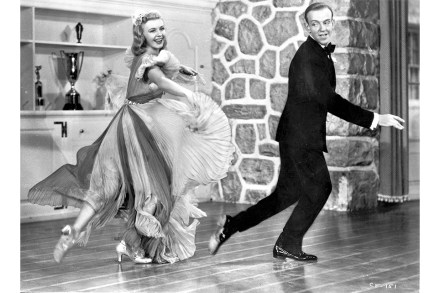
The Ginger Rogers theory of information

From our UK edition

I had a friend whose approach to entrepreneurialism was to take two separate things that seemed stupidly popular and somehow find a way to combine them. He thought karaoke was ridiculous; his friend thought 24-hour rolling news channels were daft. The two of them created a 24-hour karaoke channel in Asia – and sold it at a sizeable profit. The idea of gynogenic climate change holds that the planet is warming up, but that it is women who are to blame Following this model, I wondered if it might be a useful thought-experiment to contrive political theories which are annoying to people on both the left and the right.

Why forcing a return to the office won’t work

From our UK edition

The Romans never invented the stirrup. What we call a ‘chest of drawers’ was unknown before the late 17th century – before which time you had to store your valued possessions in a deep coffer or chest. The doorknob did not exist until 1878. The tea bag was invented by accident in the early 20th century when a New York tea merchant sent out samples of tea in small silk bags. Travelling into an office to spend a day performing work which could easily be done at home suddenly seems as absurd as buying a CD The evolutionary process by which new ideas are conceived and adopted seems linear and inevitable when viewed in retrospect. Delve into history, however, and you will find it is insanely uneven and haphazard.

How to buy a house that isn’t on the market

From our UK edition

There are many, mutually reinforcing causes of the property crisis: it is too easy to borrow; there are too many people; there aren’t enough houses; what houses do exist are in the wrong place; and many houses have the wrong people living in them. Solutions exist to all of these, some of which involve building and some of which don’t. In south-east England it is not uncommon to find people living in£1 million homes who are skint Today we are going to focus on the fifth problem. Too many people are living in houses which are too big for them. In south-east England it is not uncommon to find people living in £1 million homes who are otherwise skint. I know someone who lives on a long road of four-bedroom houses where they are the only household of more than two. This is daft.

Philip Womack, Ian Thomson, Silkie Carlo, Francis Young and Rory Sutherland

From our UK edition

28 min listen

On this week’s Spectator Out Loud: Philip Womack wonders why students can't tackle university reading lists (1:12); Ian Thomson contemplates how much Albania has changed since Enver Hoxta’s dictatorship (6:12); Silkie Carlo reveals the worrying rise of supermarket surveillance (13:33); Francis Young provides his notes on Hallowe’en fairies (20:21); and Rory Sutherland worries that Britain may soon face a different type of migrant crisis (24:08).  Produced and presented by Patrick Gibbons.

Why the young are fleeing to Portugal

From our UK edition

The legendary music producer Rick Rubin once asked me why I had never moved to the United States. The answer, I think, comes down to an important trade-off: quantity of earnings vs quality of consumption. Historically, once you had a job, there was a limit to the lifestyle choices you could make Whereas the United States is certainly a better place to earn and accumulate money, Europe is, on balance, still a better place to spend it. (Which may explain why Rick asked me that question at his summer home in Italy.) This imbalance partly arises from a fundamental asymmetry in the transmission of ideas.

Beware the ‘sourdough effect’

From our UK edition

As the joke goes, there are two ways to become a top judge. You can study law at university, then enter one of the Inns of Court as a trainee barrister, before embarking on a period of pupillage. If all goes well, you may be called to the bar. Play your cards right and you might take silk, and then as you reach your fifties, with a following wind, you may be invited to become a judge. Ten years later, with a few widely admired judgments under your belt, you may reasonably claim to be a ‘top judge’. If I am to endure the peculiarly dysfunctional queue at Gail’s, I want choice. Where is the cornbread? The alternative is to become a minor local magistrate and get caught in flagrante with a farm animal.

The Mad Men theory of drunk decision-making

From our UK edition

In electing this government, we seem to have picked the worst of both worlds: higher taxation combined with austerity in the public finances. The one bonus I had hoped to see from a left-wing regime was a healthily indulgent approach to spending. Instead we get a Chancellor of the Exchequer who is a former Bank of England economist. Voting Labour and getting a neo-liberal Chancellor is like going on a Club 18-30 holiday and bringing your parents along. It defeats the purpose of the exercise.

Is protest counterproductive?

From our UK edition

If I had my life again and was asked to choose a superpower, I’d like to come back as one of those people who can enjoy crowds. As superpowers go, I acknowledge this isn’t all that rare, given the bizarre popularity of events such as Glastonbury, or the widespread compulsion to buy Oasis tickets. But what qualifies it as a superpower for me is that I cannot imagine myself enjoying being in a crowd any more than I can envisage having the power of telekinesis or levitation. I don’t really understand why people pay huge amounts of money to watch live sporting events when you can watch them on television for free. I’d choose staying at home stabbing my hand with a fork over joining a demonstration Is this a genetic thing?

Lucy Letby and the problem with statistics

From our UK edition

First Fred West, now Lucy Letby. At this rate, it won’t be long before Herefordshire has produced more serial killers than it has miles of dual carriageway. You might assume growing up in one of England’s loveliest counties would make people placid, but then you haven’t spent half your life stuck behind a caravan on the A465. They may not all kill people, but Herefordshire people overtake like psychopaths. It only takes one dodgy assumption to reach a conclusion that is diametrically wrong But I’m going to park my Monmouthshire prejudice here and suggest that something about the Lucy Letby conviction seems off to me. I’m not going to talk about the medical aspects, because I’m not qualified to comment.