Rory Sutherland

Rory Sutherland

Think fracking’s bad for the countryside? Just look at farming…

From our UK edition

I’m off to Balcombe this weekend. In fact I might even carry a placard and paint my face with a clever pun, like ‘F*** off!’ or ‘Go f*** yourself.’ Because it’s time to add my voice in opposition to a greedy industry which threatens your ground-water, exudes greenhouse gases, leaches chemicals into the earth, destroys the beauty of the landscape and imperils our native fauna and flora wherever its grasping hand is felt. This extractive activity fills the air with noxious smells and clogs the roads with slow-moving vehicles; its safety record is appalling, with a high rate of work-related injuries and famously low worker pay.

Why smartphones work better in Soweto

From our UK edition

A friend of mine insists that when Alfred Hitchcock’s Psycho first opened in Britain, the emotional impact of the most famous murder in cinematic history was slightly diminished. As Norman Bates’s knife came into frame, British audiences of 1960 were still recovering from the shock of a scene they had witnessed a few minutes earlier when they were shown a hotel room that had its own shower. I can still just remember a time when it was normal to walk along a hotel corridor to take a bath or use the loo. And the folk memory of these regional variations still lingers. I don’t think anyone in Britain still packs loo rolls to take to the continent, but people did.

Never seen the need for a class system? Take a long-haul flight

From our UK edition

Usually it is annoying when you have to board an aeroplane via a shuttle bus rather than an airbridge. The exception is when the plane is a 747. That’s because, with the single exception of Lincoln Cathedral, the Boeing 747-400 is the most beautiful thing ever conceived by the mind of man. Any chance to see one at close quarters is a delight. But aside from the engineering, the most beautiful thing about a long-haul airliner is the economic wizardry which keeps it flying. On board are a variety of seats from the sybaritic to the spartan for which people have paid wildly varying amounts of money, even though each seat will reach the same destination in the same length of time. You may find this class division offensive.

Why the NHS is like a kitten

From our UK edition

Of all the strange behaviours of the rich, owning horses long struck me as the most bizarre. A horse, when you think about it, is a hopelessly unsuccessful attempt to combine a pet with a form of transportation. So whenever anyone mentioned that their daughter wanted a horse, I always recommended they bought a Range Rover and a kitten instead. The two would cost much less to run, and provide far more in the way of utility, pleasure and companionship. Or at least that’s what I used to think. I always loved cats and thought horses rather stupid. But then it dawned on me: cats have effectively hacked us. The relationship between a horse and a human is a reciprocal one. They perform useful work and we supply them with food and shelter. It’s a straightforward business deal.

Don’t abolish The Knowledge!

From our UK edition

Now that most taxi drivers use satnavs, should ‘the Knowledge’ be abolished? Shouldn’t we ditch the requirement that all London black cab drivers spend several years acquiring an insanely detailed knowledge of London before obtaining a badge? In cabbie folklore, the model for the Knowledge was first suggested by Prince Albert. True or not, there is something German about the notion that every tradesman should have a qualification. And the test is teutonically stringent: more than 70 per cent of applicants fail or drop out. It demands that the prospective driver memorise 25,000 streets and 20,000 landmarks within six miles of -Charing Cross.

Why I’m hiring graduates with thirds this year

From our UK edition

Whenever I return to my old university, I am always struck by how incredibly focused, purposeful and studious everyone seems to be. It fills me with despair. It’s hard to tell the difference between a university and a business school nowadays. Where are all the hippies, the potheads and the commies? And why is everyone so intently serious and sober all the time? ‘Oh, it’s simple,’ a friend explained. ‘If you don’t get a 2:1 or a first nowadays, employers won’t look at your CV.’ So, as a keen game-theorist, I struck on an idea. Recruiting next year’s graduate intake for Ogilvy would be easy. We could simply place ads in student newpapers: ‘Headed for a 2:2 or a third? Finish your joint and come and work for us.

Why politics needs more Darwinists – and fewer economists

From our UK edition

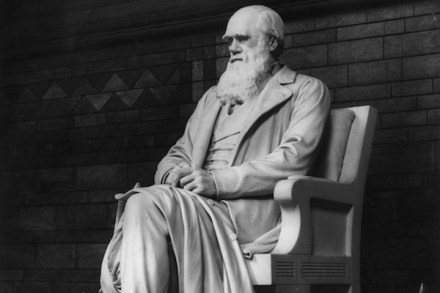
An ardently left-wing friend of mine is travelling over from Thailand next week to look for a private school for his daughter. My email to him was short. It read ‘Charles Darwin 1, Karl Marx 0’. Nobody among the sharp-elbowed middle class ever allows his political convictions to override the pursuit of a good education for his children. They will pay or move house or, if those two approaches fail, rapidly reawaken a long-dormant interest in Catholicism. One reason for this inconsistency is explained in four words by the evolutionary theorist and sociobiologist E.O. Wilson, by common consent the world’s leading expert on ants. His simple observation on Marxism was ‘Beautiful theory. Wrong species.

Why does anyone drink wine?

From our UK edition

You will be scandalised by the suggestion, of course, especially those of you who spend several hours every week drinking it, reading about it or discussing it. But most wine is actually rubbish. I’ll let you off the hook if you drink wine only with food. But wine drunk on its own is often a terrible drink, usually consumed for appearances’ sake, or because the drinker lacks the confidence to complain, or for want of any alternative source of alcohol. Our judgment of wine is also notoriously flaky — influenced as much by the appearance and weight of the bottle as by its contents. One winemaker sent the same wine to a competition under three different labels. One was rejected by the judges as ‘undrinkable’; another won a double gold medal.

The ludicrous 20-year timescale for HS2 is reason enough to abandon the whole thing

From our UK edition

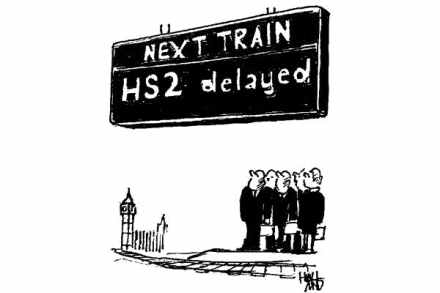
If I stand on the forecourt of Euston station tomorrow morning, I will be able to get to Manchester by high-speed train in 20 years, one hour and eight minutes. That’s only 19 years, 364 days and 23¾ hours longer than it took me last month. But at least we know that 17 June 2033, the day earmarked for the opening of the London to Manchester High Speed Rail service, will be a nice, sunny day. As the inaugural train pulls out of Euston, it will travel under clear blue skies until the train reaches Birmingham (scattered clouds: chance of precipitation 20 per cent). We know this, because, of course, we can forecast the weather 20 years in advance. Well at least we should be able to do this, since economic forecasters can clearly predict the demand for travel 20 years ahead.

The Hitler guide to rigging a referendum

From our UK edition

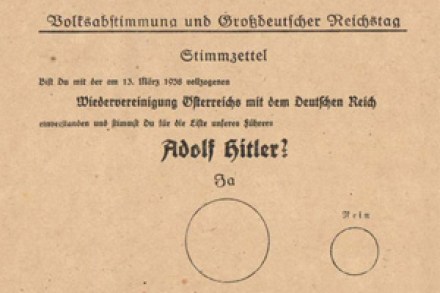
In 1964 Harold Wilson was so afraid that a scheduled election-night broadcast of Steptoe & Son would cost him at least a dozen marginal seats that he successfully pressured the director-general of the BBC to postpone it. There are plenty of ways to manipulate an election, short of stuffing a ballot box. Another example is here, from 1938: This ballot paper crudely follows the advice of Dr Josef Goebbels, that ‘the most effective form of persuasion is when you are not aware you are being persuaded’. Translated, it reads: ‘Do you approve of the reunification of Austria with the German Reich that was enacted on 13 March 1938 and do you vote for the party of our leader, Adolf Hitler? Yes. No.

The Wiki Man: So it might really be true – nicotine is good for your brain

From our UK edition

It was a few months ago, and I had just arrived in Philadelphia. My friend picked me up at the airport — one of those charming, civilised things people do when they live in a city that’s a sensible size. As I climbed into the car I furtively pulled an e-cigarette out of my pocket. Furtively, because my friend has never smoked, and is better qualified than most to criticise my nicotine use — what with his having been awarded the highest first in biochemistry in his year at Cambridge and being a professor at the University of Pennsylvania and all. I muttered some apologetic comment: ‘E-cigarettes… nicotine but without the carcinogens or something… about on a par with caffeine… not too bad a drug… .’ ‘Are you kidding?

The Wiki Man: If you want to diet, I’m afraid you really do need one weird rule

From our UK edition

‘Never play cards with a man called Doc. Never eat at a place called Mom’s. And never sleep with a woman whose -troubles are worse than your own.’ These were Nelson Algren’s Three Rules of Life. You may have noticed a few more ‘rules of life’ appearing recently. After years of our being advised to drink some forgettable number of units of alcohol every week, a new rule seems to have emerged: ‘Don’t worry much about how much you drink but do abstain from alcohol completely for at least two days in seven.’ The hottest diet of the moment, sometimes called the 5:2 Diet, lets you eat freely except for two days of fasting each week. Other diets focus on total abstinence from carbohydrates, especially sugar.

Why Granada is the unfriendliest town on earth

From our UK edition

The city of Granada is notable for several things. Most visitors go to see the Alhambra, or for a strange procession during Holy Week interesting chiefly for having provided fashion tips to the Ku Klux Klan. Judging by its Wikipedia entry, it is also home to Europe’s most eccentric twinning committee: its twin towns include Aix-en-Provence, Freiburg, Marrakech and Sneinton, a suburb of Nottingham whose attractions extend to a moderately interesting windmill. Its other distinction is that it is the unfriendliest place I have ever been. Granada’s hospitality industry seems to have improved little since 1936, when locals celebrated the return of Federico Garciá Lorca by shooting him and dumping his body by a road.

Yahoo and the big-city paradox

From our UK edition

An interesting furore erupted this month following an order from the new chief executive of Yahoo, Marissa Mayer, that employees accustomed to working from home would henceforth have to turn up at the office. The edict, unexceptional in many industries, scandalised many tech workers, for whom the freedom to work anywhere is an article of faith. You can see why. Since the chief use of information technology is to free us from the constraints of place and time, what is the point of all this wizardry if people must still spend hours commuting to jobs they could do at home? At the risk of sounding Marxist, I do think it is time for technology to benefit labour as well as capital.

Hailo matters more than HS2 – but we just can’t see it

From our UK edition

One of Britain’s exam boards was attacked last year for a question in a GCSE religious studies examination: ‘Explain briefly why some people are prejudiced against Jews.’ Is this really a theological question? Or does it belong in biology? Or psychology? Or economics? The Canadian evolutionary psychologist Steven Pinker in The Blank Slate devotes a few pages to the issue of prejudice, including not only anti-Semitism but also hostility towards trading groups and intermediaries everywhere: from Chinese shopkeepers in Malaysia to Armenians, the Gujaratis and Chettiars in India and Korean store-owners in the United States. Pinker partly attributes this to what economists call ‘the physical fallacy’.

Chris Huhne and the £500,000 speed camera

From our UK edition

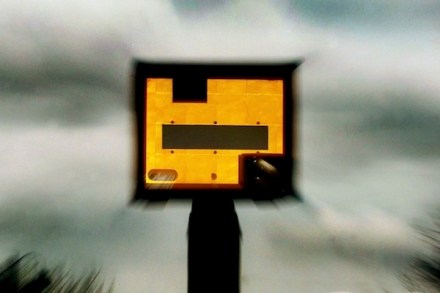
I don’t want to defend Chris Huhne, I really don’t. Apart from anything else, I have always thought the country would be better off if all Oxford PPE graduates were simply imprisoned immediately, instead of the present inefficient system where we wait for them to commit a crime first. This would save us from being ruled by people who wanted to be politicians at the age of 17. But no newspaper has yet pointed out that the speed camera which caught Chris Huhne was not just any old speed camera. From what I have found online it seems to have been the long-notorious ‘Site 050’ camera at the M11 at Chigwell, just beyond the point where the speed limit on the motorway drops from 70mph to 50. The camera was installed in 2000.

Doing more with less

From our UK edition

If you ever need confirmation that necessity is the mother of invention, you can do worse than watch one of the rash of property programmes on Channel 4. A typical example of this genre was the recent ‘We Are A Boring Retired Couple Who By The Happy Accident of Being Born in 1950 And Having Bought A Five-Bedroom House in 1978 Now Have A Tax-Free Capital Gain Of £600,000 With Which To Buy A Place In France Where We’ll Live On Our Public Sector Pensions At Your Expense (Season 9, Episode 8).’ Programmes of this type are mostly dismal. The pair are shown various pricey properties only to raise fatuous objections: ‘I didn’t like the kitchen, I thought it was just too blue.’ But there is a remarkable outlier amongst all this drivel.

My very own 1970s sex pest

From our UK edition

To understand the Jimmy Savile affair, you had to be there. By ‘there’ I mean the late 1970s. At the time my school on the Welsh borders had its own very minor provincial sex-pest. I think every school did. Ours was known as ‘the 50p man’. Periodically he would approach a straggler on a cross--country run, or someone taking a walk (i.e. smoke) by the river, and expose himself, announcing, ‘If you touch this, I’ll give you this 50p.’ Even allowing for inflation, 50p was an offer you could easily refuse. So the schoolboy victim would scarper off, usually (perhaps not always) to relate the incident to general hilarity.

Life’s secret menus

From our UK edition

Supposedly the coffee chain Starbucks will sell you a smaller, 8oz cappuccino even though this size and its price is never published on their menu boards — you just have to ask for a ‘short’. Handy to know. In any case, I never liked using the word ‘grande’. Two syllables seems pretentious; using one makes you sound like a music-hall Yorkshireman. The cultish West Coast burger chain In-N-Out has created a minor art form from this kind of secret menu. In-N-Out’s official menu is tiny, but an extensive samizdat menu has circulated among aficionados for years solely by word of mouth, like the poetry of Homer.

In praise of inventors – and visionaries too

From our UK edition

The award for the most hideous TV moment of 2012 goes to NBC — and their coverage of the opening ceremony of the London Olympics. ‘Apparently there’s going to be a tribute to someone called Tim Berners-Lee.’ ‘If you haven’t heard of him, we haven’t either,’ giggles co-anchor Meredith Vieira. Then, with no evident irony, ‘We could look him up on the web.’ The recognition given to inventors is a strange thing. It isn’t helped by the fact that, with rare exceptions, they are not the most telegenic of people, putting their efforts into inventing things rather than explaining them.