Rory Sutherland

Rory Sutherland

Cruel boy errors

From our UK edition

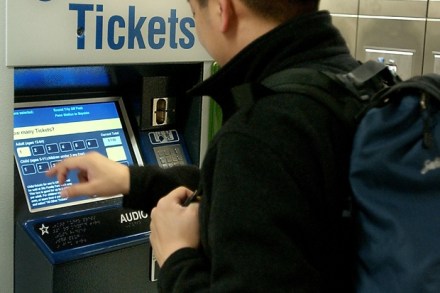
Perhaps you are slightly concerned about your son. At present he is sitting in the crawlspace beneath your home wearing a clown costume, gleefully pulling the legs from crane flies and waiting for the cover of darkness so he can set light to your neighbours’ sheds. Well, no need to worry. You see, 50 years ago the only possible future for people like this lay in becoming a serial killer or, failing that, joining the secret police in a brutal dictatorship. But now, thanks to the wonders of technology, there are almost limitless openings for people of a sadistic disposition. To date the most prized job for the aspiring young sociopath has been designing the user interface for the ticket machines at railway stations.

Let there be light, and at better times of day

From our UK edition

We already drive on the left, give road distances in miles and drink pints. So one good feature of Brexit is that Britain will be able to develop a whole series of exciting new idiosyncrasies to annoy continental Europeans. For instance, I am planning to bring a private petition to Parliament demanding that Britain formally adopt the UK tabloid approach to metrication, where all low temperatures are reported in Celsius and highs in Fahrenheit. A colleague of mine, Pete Dyson, has an idea that might raise the eyebrows of our continental chums. He points out to me that the EU sanctioned dates on which we change our clocks for daylight saving time are holding us back. Pete is a human geographer, so he should know, but just to be sure I checked with my brother who is a bona fide astronomer.

The stupidest target in British transport

From our UK edition

Two books to recommend to my fellow transportation nerds: Travel Fast or Smart? A Manifesto for an Intelligent Transport Policy by David Metz, formerly chief boffin at the Department for Transport; and Are Trams Socialist? Why Britain Has No Transport Policy by Christian Wolmar. The first is excellent throughout, the second is excellent right up to the final pages when, as many British transport commentators are liable to do, Wolmar rhapsodises about European approaches to city planning with their ‘bicycle superhighways’ and, yes, those bloody trams. You know the kind of thing: ‘In the Norwegian port of Slartibartfast, all cars are banned from the city centre before midnight, and the high street has been converted into an organic kale farm.

Watch out for Chesterton’s fences

From our UK edition

There exists in such a case a certain institution or law; let us say, for the sake of simplicity, a fence or gate erected across a road. The more modern type of reformer goes gaily up to it and says, ‘I don’t see the use of this; let us clear it away.’ To which the more intelligent type of reformer will do well to answer: ‘If you don’t see the use of it, I certainly won’t let you clear it away. Go away and think. Then, when you can come back and tell me that you do see the use of it, I may allow you to destroy it.’ The above paragraph is from G.K. Chesterton’s 1929 defence of Catholicism titled The Thing.

The internet of stupid things

From our UK edition

Back in the 1980s a colleague of mine was paranoid about being burgled. Before he went away on a two-week holiday, he bought the most expensive telephone answering-machine he could find and installed it in plain view on his hall table. Each morning he phoned it from Spain and hung up once he heard the outgoing message. He’d then enjoy the rest of the day content in the knowledge that his flat was safe; if no one had stolen his absurdly flashy answering machine, he reasoned, they wouldn’t have stolen anything else. Today he could buy a Canary. These cost about £139 (the website’s canary.is) and let you view your own hallway in glorious HD from anywhere in the world.

How more data can make you more wrong

From our UK edition

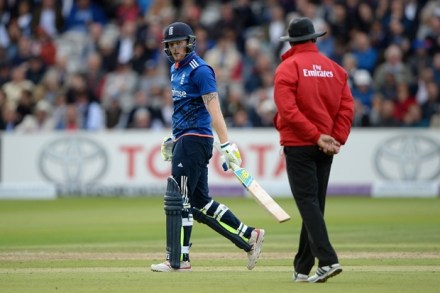
In a one-day international against Australia last year, Ben Stokes was dismissed for ‘obstructing the field’, a rule rarely invoked in-cricket. The bowler had thrown the ball towards the wicket (and hence near Stokes’s head) in an attempt to run him out. Stokes raised his hand and deflected the ball. After some discussion between the two on-field umpires, and a referral to the third umpire, Stokes was given out. What was most interesting was the difference in the conclusions people reached depending on whether they watched the replay in real time or in slow motion (you can find both on YouTube). Seen at speed, his raising of his hand looked nothing more than an involuntary and instinctive act of self-defence.

When more data makes you more wrong

From our UK edition

In a one-day international against Australia last year, Ben Stokes was dismissed for ‘obstructing the field’, a rule rarely invoked in-cricket. The bowler had thrown the ball towards the wicket (and hence near Stokes’s head) in an attempt to run him out. Stokes raised his hand and deflected the ball. After some discussion between the two on-field umpires, and a referral to the third umpire, Stokes was given out. What was most interesting was the difference in the conclusions people reached depending on whether they watched the replay in real time or in slow motion (you can find both on YouTube). Seen at speed, his raising of his hand looked nothing more than an involuntary and instinctive act of self-defence.

Aspirin should be reassuringly expensive

From our UK edition

Last year, those rationalist killjoys at the Australian Competition and Consumer Commission prosecuted Reckitt Benckiser over four products: Nurofen Migraine Pain, Nurofen Tension Headache, Nurofen Period Pain and Nurofen Back Pain. Their gripe was that ‘each product claimed to target a specific pain, when in fact it was found that they all contained the same amount of the same active ingredient, ibuprofen lysine.’ These variants were often sold at a higher price than the basic brand, despite being pharmacologically identical. I am sure the ACCC have their chemistry right; their psychology, however, is wrong. For me, Nurofen didn’t go far enough.

We need to invent something better than Machu Picchu

From our UK edition

Don’t know if you’ve noticed, but middle-class rules now require that every dinner party cheeseboard must contain at least two cheeses which aren’t very nice. Typically one will be a veiny French cheese which is not as good as Stilton; another may be that foreign thing with rind on it which isn’t nearly as good as Cheddar. I was baffled by this for a long time, until I realised that these cheeses are not bought to be eaten, but to signal the sophistication of the occasion. Economists might call them Veblen cheeses. (One day someone should make an inedible cheese called Veblenne. They’d make a fortune.

A game of chicken with the electorate

From our UK edition

I have worked in advertising for 28 years. In that time I have seen many briefs for communication campaigns, but none contained the line ‘It is important to insult the target audience, or at least treat them with barely disguised disdain.’ So I wonder whether the referendum result might have gone the other way had Remain supporters refrained from using social media in the days before the vote. Impossible to enforce, of course. The problem with the self-righteous is that they are so eager to virtue-signal to each other that they will go on doing it even when it is completely counterproductive. One American expert has written a blog post entitled ‘Liberals, Want Trump to Win? Keep Calling Him Racist.

The cultural hodgepodge that is Europe

From our UK edition

If Geert Hofstede’s name is familiar to you, it might be from pop-science articles explaining a spate of Korean airliner crashes in the 1990s. A widely held theory placed some of the blame on the hierarchical nature of Korean culture; this made the junior pilot reluctant to mention any mistakes made by his superior. If he noticed the captain heading for a hillside, he might summon up the courage to mutter, ‘Perhaps, honoured sir, you might like to pay particular attention to the interesting terrain.’ This contrasts with low ‘power distance’ cultures: New Zealand, say, or Ireland. On Aer Lingus, a stewardess could jab the pilot in the ribs and say, ‘Watch you don’t fecking crash, you gobshite!

A monkey-brained case for Donald Trump

From our UK edition

A few years ago I was asked to speak at a conference in New York. ‘Where would be the best place to stay?’ I asked my assistant. ‘Well, you’re booked into The Trump SoHo’, she said, careful to pronounce the capital H. ‘Are you completely deranged? Do I look like a man with a craving for gold taps and Swarovski-encrusted towelling robes?’ ‘The conference organiser has booked it. They’ve got a special rate.’ So a few weeks later a Lincoln Town Car (which after a long flight, for some unfathomable reason, is the best car in the world) dropped me in front of The Donald’s hotel.

How your brain buys a sofa

From our UK edition

Almost every popular commercial product owes its success to two different qualities. First, it does the job it is ostensibly designed to do pretty well. Secondly, it has some quality that you might call ‘limbic appeal’. It delights or soothes our unconscious mind in ways which defy objective measurement. Much as it delusionally believes that it runs the show, the power granted to conscious reasoning within the brain is that given to a slightly colour-blind, utilitarian man when he buys a sofa with his wife. The man may have his own preferences, but he has a minimal role in the selection, involving as it does many complex factors that defy male comprehension (my wife has names for colours that seem not to exist on the visible spectrum).

Tea and honesty

From our UK edition

We recently moved -offices from Canary Wharf to Blackfriars bridge. When you move after a long time in one place, you notice the surprising ways in which your behaviour is subliminally affected by your surroundings. On my second day in the new office, someone came from Victoria to meet me. After about 25 minutes of useful conversation, I thanked them and they left. Something about the encounter seemed strange; I suddenly realised that, back in the old office, I’d never had such brief meetings. Instinctively it felt discourteous to give anyone who had made the longer trip to Canary Wharf any less than 45 minutes of your time. This sense of obligation was unconscious. In some ways, something similar seems to apply to phone calls.

How to do better at darts – and life

From our UK edition

I have always been intrigued by the scoring systems for different sports, and the degree to which they contribute to the enjoyment of any game. As a friend of mine remarked, had tennis been given the same scoring system as basketball it would be tedious to play, and even worse to watch. Once you glanced at your TV and saw Djokovic leading Murray ‘by 57 points to 31’, you would shrug and change channels to something more gripping, like an unsubtitled version of Last Year at Marienbad. Tennis scoring isn’t quite socialist — one player can demolish -another — but in such cases the contest is over in a mercifully short time.

My tip for the next cool shop: Argos

From our UK edition

When I was at school in the 1970s, some of the richer kids would come back from their summer holidays with jaw-dropping tales about the wondrous places they had visited. Chief among them, as I remember, was Schiphol airport. ‘It was amazing,’ they would say. ‘There were shops and restaurants and stuff,’ and you could buy a Walkman for some insanely low price. A few others vainly tried to trump the Schiphol crowd by fancifully claiming to have been to Frankfurt airport and seen an actual sex shop there — an assertion widely disbelieved, certainly by me, until I used the airport 15 years later and discovered it was perfectly true.

Directions your phone can’t give you

From our UK edition

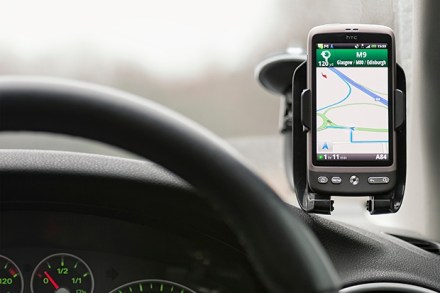
In many ways a satnav is a miraculous device. A network of US military satellites more than 10,000 miles above the surface of the Earth, each broadcasting a signal with little more power than a 100-watt light bulb, allows a device in your satnav or mobile phone to triangulate your location on the ground to within seven yards or so. The system is so finely tuned that the clocks aboard the satellites must be calibrated to run 38 microseconds a day slower than Earth time to correct for the effects of general and special relativity. This allows your phone to know your location and, after factoring in real-time traffic information, to calculate the quickest route to any destination with an astonishing degree of precision.

What’s the point of the driverless car?

From our UK edition

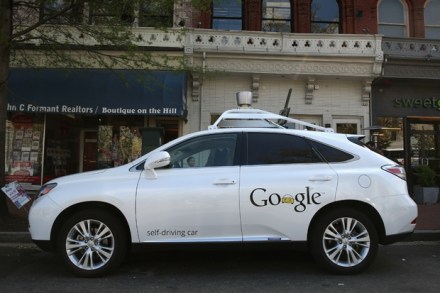
A first last week: a Google driverless car in autonomous mode was partly at fault in a collision, interestingly one involving a bus. The car was merging into a lane of faster-moving traffic to dodge a pile of sandbags in a collapsed drain and nudged in ahead of the bus on the assumption that its driver would give way. He didn’t. I suspect this may be a failure of social intelligence. Human drivers, for all their faults, can intuitively read the behaviour of other road users very well. We instinctively know that bus drivers are less likely to give way than car drivers. Understanding humans is always going to be easier when you know what it’s like to be one: in reading human emotions, even the best technology still lags far behind the typical domestic dog.

The 5 per cent of people who get to decide everything

From our UK edition

What happens when 95 per cent of people like something, but 5 per cent of people prefer something else? You might think natural democracy would prevail: that the 5 per cent would acquiesce and go along with the taste of the majority. Not necessarily. In many cultural settings, it is common for a small, intransigent minority to beat a much larger, tolerant majority. If you’re hosting a dinner party, for instance, all it takes is one git with a spurious ‘fenugreek intolerance’ to veto your best lamb curry. You might call this ‘the asymmetry of tolerance’, where certain social systems end up calibrated to suit their most inflexible component.

Tax me more, but don’t touch my dishwasher

From our UK edition

There was a big fuss a year or so ago about a book by a French chap called Piketty about wealth inequality. He suggested capitalism, aside from an anomalous period between 1930 and 1979, inexorably concentrated wealth at the top. One interesting defence of inequality is that the rich, by adopting technologies early, redistribute far more of their wealth than we realise by funding R&D and innovation. The first people to pay top dollar for a flat-screen TV or a dishwasher are unwittingly subsidising their wider adoption. As Hayek observed of early adopters of technology: ‘We depend on them, for they finance the invention and reinvention of products whose cost falls to a point where we can afford them’. When Hayek was writing in 1960 this was inarguably true.