Roger Kimball

Roger Kimball

Roger Kimball is a US columnist for The Spectator, the publisher of Encounter Books and the editor and publisher of the New Criterion.

Trump is like those martial arts experts who use their opponents’ own strength against them

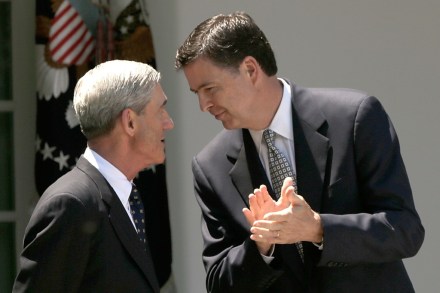
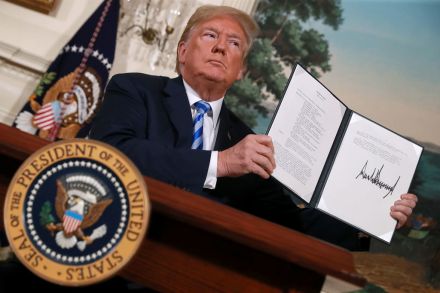
Is Donald Trump intemperate? You betcha. The latest episode in the Trump Reality Show was his twenty-minute fugue, via telephone, on Fox & Friends Thursday morning. It was a breathless, manic performance in which the President inveighed against “leakin’, lyin’ James Comey,” the Justice Department, and the murderous regime of Iran. He dilated on the prospects for peace and denuclearization of the Korean peninsula. He talked about the travails of his personal lawyer Michael Cohen, whose home, hotel room, and business have been raided by the FBI. He also, in response to one question, graded his job performance at the 1 year, 3 month mark: A+. The word that many commentators employed to describe the President’s comments was “unhinged.

The media believes that Macron’s visit was a Gallic triumph and a blow for Trump. That’s wrong.

Absorbing the handholding—we were not party to anything so standoffish as handshakes here—the kisses, and the hugs, I thought of Paradise Lost: “They hand in hand with wand'ring steps and slow,/ Through DC took their solitary way.” I quote from memory. Macron and Trump, Donald and Emmanuel: the state visit was nothing if not a bromance, at least in its pas de deux. I think it was in Ars amatoria that Ovid recommends that suitors take every opportunity to touch the objects of their interest. If you are sitting at the games with your date and a speck of dust—or dandruff—falls on her dress, flick it off with your hand. If no speck of dust falls, flick it off anyway. Then she’ll be perfect.

James Comey really seems to believe that he embodies the law

Inquiring minds want to know: What is James Comey’s favourite snippet from Gilbert & Sullivan? My candidate is this bit from one of the “susceptible” Chancellor’s songs in Iolanthe: “The law is the true embodiment/ Of everything that’s excellent/ It has no kind of fault or flaw/ And I my Lords embody the law.

Why the Democrats won’t win big in November

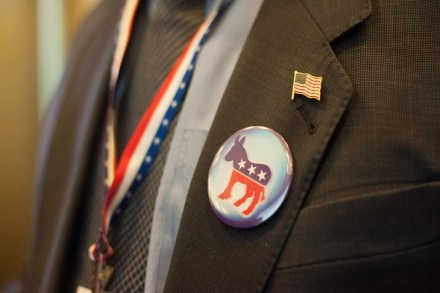
Is a big blue Democratic wave poised to sweep the Republicans out of Congress in the 2018 mid-term election? To listen to much of the media, you might think so. A couple of weeks ago, the Washington Post quoted Nate Silver, the Yoda of Dem pollsters, who suggested that the “Democratic wave in 2018 may be swelled substantially by the enthusiasm gap into a tsunami.” Last month, when the conservative Democrat Conor Lamb eked out a narrow victory over Rick Saccone in a special Congressional election in Pennsylvania, CNN gleefully reported that “Lamb’s performance is ominous for Republicans as the November midterm elections approach.

Why John Bolton is no warmonger

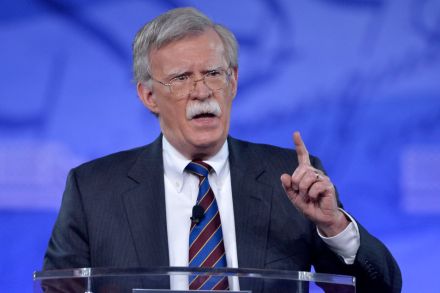
The hysteria from the Left over Donald Trump’s appointment of John Bolton as National Security Advisor to replace Lt. General H. R. McMaster has been partly hilarious, partly alarming to behold. From The Guardian in this country to The New York Times, CNN, Slate, Salon, and beyond in the United States, we are presented with a scarecrow figure who makes Jack D. Ripper in Dr. Strangelove look like Albert Schweitzer after a nap. 'Yes', screamed an editorial in The New York Times, 'John Bolton Really Is That Dangerous'. Bolton is a 'hawk’s hawk', an 'extreme ideologue' and 'warmonger' whose appointment 'scares people' and 'puts us on a path to war'.

False flag

One of the most memorable moments of the 2012 presidential debates came when the candidates were asked what they believed to be the chief national security threat facing the United States. Mitt Romney said ‘Russia’. Barack Obama thought that was ridiculous. ‘The 1980s are now calling to ask for their foreign policy back,’ Obama retorted, to the general hilarity of the panel and much of the audience. But that was before Hillary Clinton, the candidate whom Obama had anointed to win in 2016, performed the impossible and lost to Donald Trump. All of a sudden it was Russia, morning, noon, and night. Donald Trump must have ‘colluded’ with the Ruskies. It was the only answer to the otherwise imponderable question: how could Hillary Clinton lose?

Trump is working

From our UK edition

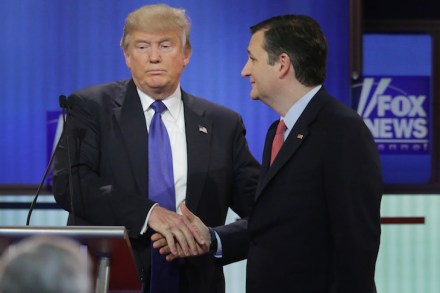
In London last week I had the opportunity to talk about President Donald Trump with several politically mature friends. Most were sceptical, even slightly appalled, by him. It was my task to help them overcome this prejudice. I am delighted, dear reader, to attempt the same service for you. I was not always a fan. For most of the 2016 campaign, I supported Ted Cruz, a choice that many thought only marginally less bad than Mr Trump. But politics is the art of the possible and it turned out that the only two possibilities were Donald Trump and Hillary Clinton. For me, that meant that the only possibility was Donald Trump. Why? First of all, Clinton was the most corrupt serious candidate in history. Her elevation would have tainted the presidency beyond recall.

Splendid isolation | 22 September 2007

From our UK edition

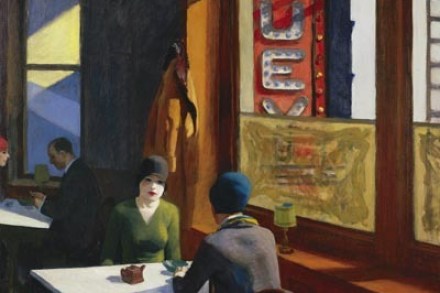
It is not surprising that Edward Hopper (1882–1967) is an immensely popular artist. His pleasing deployment of colour and easy-going presentation of the paraphernalia of everyday life give his work an immediate warmth and likeability. His muted palette, careful modulation of hues, and soft-edged precision are a recipe for visual charm. Considered simply as aesthetic objects, Hopper’s pictures make few demands: they are, on the contrary, quietly inveigling, almost seductive in their plain-as-day obviousness. And if we’ve never seen diners or drugstores or city streets exactly like the ones that Hopper paints, we’ve seen ones that remind us of them — or vice versa.

Museum without a soul

From our UK edition

Roger Kimball on how Yoshio Taniguchi has transformed New York’s Museum of Modern Art We are told that our individualist art has touched its limit, and its expression can go no further. That’s often been said; but if it cannot go further, it may still go elsewhere.André Malraux, The Voices of Silence ‘An institution,’ said Emerson, ‘is the lengthened shadow of one man.’ In the case of the Museum of Modern Art, the man in question is Alfred H. Barr (1902–81). Barr founded MOMA (the acronym by which the museum is universally known) in 1929.