Roger Alton

Roger Alton

Roger Alton is a former editor of the Observer and the Independent. He writes the Spectator Sport column.

On the retirement of Sir Alex Ferguson, and on cricket’s new boy wonder, Joe Root

From our UK edition

The tear-flecked coverage and forests of newsprint devoted to the departure of Sir Alex Ferguson have made the resignation of Pope Benedict and the appointment of his successor look as big a deal as trying to find an ink monitor. And rightly so: Suralex is not just one of the most significant figures in world football, but in also in all of British public life. Besides his jaw-dropping success, he was just about the only top-flight manager to really bring on young English players. We’ll see what David Moyes does: so far he’s brought on several Scottish players, which doesn’t seem to have gone that well for Scotland’s woeful national team.

Spectator sport: Here’s hoping Sachin Tendulkar has an Indian summer after 40

From our UK edition

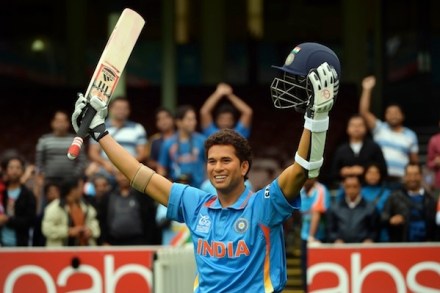
Sachin Tendulkar did not have the happiest of 40th birthdays last week. The man who has been worshipped as a god in India for most of his career lasted only six balls, playing for Mumbai in the Indian Premier League, before being clean bowled by a young West Indian off-spinner who was only a year old when Tendulkar made his international debut. His dismissal silenced the huge crowd who had turned out for him in Calcutta, disappointed the TV executives who know that Tendulkar at the wicket means higher ratings, and left him plenty of time to eat some of the 40lb chocolate birthday cake presented to him before the match. His longevity is remarkable.

Jonny, still the perfect 10

From our UK edition

David Beckham’s elegant but pointless cameo role for Paris Saint-Germain in their Champions League defeat to Barcelona the other day got plenty of play in the British press, despite his ineffectiveness. We love Becks — who doesn’t? — but he’s no longer the player he was, let alone the one he was hyped up to be. He will always have a role, whether it’s as a football ambassador, or simply as an agreeable figure who gets wheeled out to front anything from marital stability to handing out the canapés at a G8 summit. Becks himself has no doubt about his ability to contribute on the pitch, it’s just the rest of us, and he has never really paid too much attention to what we think.

The great tradition of Boat Race swearing

From our UK edition

Armando Iannucci’s The Thick of It listed an unusual character in the credits, a swearing consultant. And no wonder, for he must have been one of the busiest people on set. Lively on-screen swearing has been largely absent recently — until mid-afternoon on Easter Sunday, that is. Commentators Andrew Cotter and Dan Topolski were amiably rhubarbing away on the radio about this year’s Boat Race being a masterpiece of unbelievable tension (though anyone could see, even on the radio, that only a torpedo attack would prevent an Oxford victory) when Oxford’s diminutive cox, the Colombian Oskar Zorrilla, made his pitch for immortality. A shrieked order, ‘Don’t fucking sit’, came crystal clear over the airwaves.

Blonde ambition

From our UK edition

Seems a little weird to be rabbiting about sport at a time when a malign confederacy of sanctimonious do-gooders, vengeful politicians, hypocritical celebrities and hatchet-faced lefties has brought about the biggest threat to press freedom since Uncle Adolf started on his European adventures. But at least we have this fine journal which has refused to sign up to any new system of state licensing of the press. How long before a newspaper has the guts to follow the Spec’s lead? As more than one commentator has pointed out, try to imagine reading the following sentence in the New York Times: ‘The Senate and House of Representatives last night agreed on a new system of press regulation and legislation will be introduced in the next few days.’ Yeah, right!

Wales, England, and the prospects for a Five Nations classic

From our UK edition

‘Look what these bastards have done to Wales,’ Phil Bennett famously said in the dressing-room before a Five Nations match with their friends across the Severn in the mid-1970s. ‘They’ve taken our coal, our water, our steel. They buy our homes and only live in them for a fortnight every year. What have they given us?’ Someone could have piped up at that point, Life of Brian-style, and suggested the Severn Bridge. But they didn’t of course. Bennett, that maestro of a fly half, went on. ‘We’ve been exploited, raped, controlled and punished by the English — and that’s who you are playing this afternoon.

All hail the headmaster

From our UK edition

Two down, three to go. The Six Nations reaches the halfway point this weekend and only one team can aim for the Grand Slam and Triple Crown. The championship is still to play for and Lions places are there to be won, but only England can take the lot. Which is not bad going for a team that was on trial only 12 months ago. There was an awful lot to put right after a World Cup campaign that had gone horribly wrong on and off the paddock. England didn’t just need a new coach, they needed a headmaster... and in Stuart Lancaster that is just what they got. He took up his role as interim head coach in the guise of a PE teacher (exactly what he’d been), but one with a headmasterly outlook.

A classic weekend at the Six Nations

From our UK edition

Has there ever been a more wondrous start to a tournament than the first weekend of this term’s Six Nations? In any sport for that matter. England playing like the All Blacks, with Owen Farrell in stupendous form and Billy Twelvetrees, the face of a choirboy and the frame of Hercules, blasting all before him; a reborn Ireland on the way to crushing Wales in Cardiff before beating off a thrilling fightback; and then the best of all, on a sunny afternoon in front of a roaring Roman crowd.

The football manager as management guru

From our UK edition

The football writers laid on a tribute do for Steven Gerrard the other night, not as you might suppose at Nando’s — but at the Savoy and very jolly it was too. As someone said, it’s about the only honour he’s likely to get now, what with playing just for Liverpool and England and all that. Anyway, there were jolly speeches from Gérard Houllier, Gary McAllister and especially Jamie Carragher, who may be tricky to understand but is clearly going to be a considerable force in English football when he locks away his shinpads. Gerrard didn’t make a speech, but did a perfectly inoffensive Q&A with Henry Winter. Hell will freeze before Gerrard knowingly says anything that isn’t obliging and inoffensive.

Just not cricket

From our UK edition

Sad times for The Times, and for the game of cricket, with the passing within days of each other of William Rees-Mogg and Christopher Martin-Jenkins. Both men represented, besides the potency of the double-barrelled surname, a specific and wholly admirable strand of Englishness. They had unfailing good manners, and though very posh were never snobbish. They would talk to anyone and enjoy it (most of the time anyway). They never looked as if they were trying too hard, though of course both did work very hard throughout their lives. And by golly they knew their stuff — whether it was Rees-Mogg and his antiquarian books (and Somerset cricket, of course) or CMJ and the finer points of Muralitharan’s bowling figures.

2013: A year of sporting gloriously

From our UK edition

This journal’s gongs are, rightly, recognised the world over, and justly so of course. Sadly, however, this column’s Sporting Awards, which would normally be presented around this time of year, have had to be cancelled because they were all going to Laura Trott. The problem with 2012 was that you could either enjoy the greatest sporting year in the history of mankind, or you could have a job, but you couldn’t possibly do both. But if you were considering full-time employment next year, forget it. For a start, it will be the ultimate  anti-Pom year Down Under, with a Lions tour and back to back Ashes. Bring them on. It’s one of the great rivalries: we only play the Germans at football, we play the convicts at everything.

A glorious embarrassment of riches

From our UK edition

So those really were the days of miracle and wonder, the time of times, or any other lyric you might care to think of. 2012 — never has a year of sport provided so many thrills and tears, so many shivers of disbelief, so much joy.

Sympathy for Roman Abramovich

From our UK edition

There’s a rough old whiff emanating from Stamford Bridge these days, and the source of the stench is Roman Abramovich, the Chelsea owner. Roberto di Matteo, the manager he sacked last week, was the eighth dismissed since he bought the club in 2003. That’s quite a turn-over, even for an oligarch who likes to get his own way, but getting rid of di Matteo is significant because the Italian delivered the prize most coveted by Abramovich, the European Cup. Not even José Mourinho could get that into the Chelsea trophy cabinet. When it comes to football, the world is not enough for Roman Abramovich. In fairness to the unshaven money machine, I know people who have worked for him, and they have nothing but admiration for his kindness, charm and generosity. Seriously.

The world in Union

From our UK edition

Here’s a thing: some years ago Rhodri Davies left Cardiff and emigrated to New Zealand with his young half-Scottish, half-Irish wife Megan. Not long after settling in Auckland Megan gave birth to a son, Jock. Jock was a bright boy, and mad keen on rugby. After university and through the local rugby club he met a Samoan girl, Angela. Not long after they were married Jock’s company posted him to Toulouse. A year later Angela gave birth to Manu, who grew into a strapping rugby genius. Despite all his rugby success Jock and Angela were keen to give Manu the best education possible and at 13 he was sent to school in England. In his five years at a rugby-playing public school Manu scored more than 200 tries and converted the lot.

Ugly face of the beautiful game

From our UK edition

Football, bloody hell, as that old bruiser Sir Alex Ferguson twinkled bibulously at the turn of the century. But it’s not looking so good now, Sir Alex. Bloody hell, it’s in a pretty dark place: the game’s a beauty of course, but otherwise nothing but racial abuse, wholesale cheating, assault, shocking levels of officiating and terrace savagery. And that’s on a good day. Even the great gum-chewer himself is reduced to ranting about how there was no need for Chelsea’s Fernando Torres to go down, and get wrongly sent off, just because Jonny Evans whacked his leg. ‘I would never have missed that chance [to go on and score]’, said Sir Alex. ‘I wouldn’t have gone down.’ Of course not. Let’s hope things can only get better.

All hail the Heineken Cup

From our UK edition

Ah, what joys, the first weekend of the mighty Heineken Cup. How many sporting events are so closely identified with their sponsor that you can’t imagine them being called anything else? Heineken has backed this since the first European competition in 1995, which is when rugby went professional. You can’t imagine rugby without beer, though you have to in France, where they ban alcohol advertising at sporting events, so it’s called the H Cup over the Channel. Mark you, you can’t drink proper beer at the Stade de France anyway, just 0% rubbish. Or so it tastes. Heineken is a Dutch lager, not a beer from a country noted for its rugby, like Kronenbourg, Guinness or London Pride. This must be the only connection the Dutch have with the sport.

Team work

From our UK edition

That seems to be that then, the final episode of the best sporting year since, well, 1977 at least. That was another jubilee year, but Ginny taking tea with the Queen, Red Rum at the National, Liverpool winning the European Cup and England the Ashes is still no match for 2012. This is a year to get all Max Boyce about: I was there, that sort of thing. You don’t have to be literal about it, you simply had to be alive and own a television. The edge of your seat was the only place to be. And now we can bask in a warm European glow in the wake of the 2012 Ryder Cup. Apart from the storage room at the EU headquarters in Brussels, it would be hard to imagine more Europe flags in the same place as on the final green at Medinah on Sunday.

All this – and golf too!

From our UK edition

Right now it feels like being eight years old again, having just had the best Christmas Day ever, with the best presents ever, then wandering down on Boxing Day to find what could be an even better present lying still wrapped under the tree. We’ve had the Olympics, and the Paralympics; a Briton won the Tour de France; a Belfast boy won the PGA; and now a Scotsman has won Olympic gold at Wimbledon and then the US Open at Flushing Meadow. And meanwhile the Test cricket side was battling it out with the best team in the world for the No. 1 position. All extraordinary; taken together pretty mind-blowing. And next week, almost creeping under the radar, is the Ryder Cup at Medinah, outside Chicago.

Kevin Pietersen needs a Graeme Smith

From our UK edition

Having reached the summit of the Test cricket rankings by thoroughly outplaying England in three matches that flew largely under the radar due to events in east London, South Africa continue their tour as summer winds down with some one-day cricket. They are pretty handy at this form of the sport, too, and can be expected to end England’s unbeaten run, which stands at ten games, over the course of the five-match series. Both teams will change personnel for the series but perhaps the most significant difference in the South African dressing room will be that Graeme Smith won’t be the captain. Smith stepped aside after the World Cup last year but remains in the 50-over side as a ‘senior player’, something he admits he found ‘incredibly difficult’.

The great Games

From our UK edition

The other day, I was listening to Radio 5 from Crystal Palace, where there had been a Diamond League athletics meeting. By this time the stadium was all but closed, the event had finished, the lights were out and the rain was falling. But what the commentators were seeing was this: in the deserted stadium Mo Farah and his training partner Galen Rupp were being put through a series of 200m interval sprints by their trainer, the legendary Cuban Alberto Salazar. As they churned out endless 25-second runs in the rain, the final touches were being put to a training regime that was to climax in last weekend’s epic 10,000m victory for Farah — not to mention Rupp’s own silver medal.