Rodric Braithwaite

Sir Rodric Braithwaite was the British ambassador to Moscow, 1988-1992.

Peter Mandelson’s rocky path to Trumpworld

From our UK edition

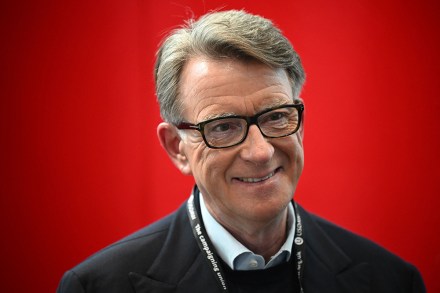
The muddle about who’s to be the next British ambassador in Washington has been only a small part of the grandiose confusion which surrounds Donald Trump’s assumption of power. Sir Keir Starmer announced that Lord Peter Mandelson would bring ‘unrivalled experience to the role and take [the Anglo-American] partnership from strength to strength’, apparently without
The Crimean War spelt the end of hymns to heroism and glory

From our UK edition

Leo Tolstoy served as a young artillery officer in the defence of the great Russian naval base of Sevastopol against British and French invaders in the middle of the 19th century. The first of his three short stories, collected as Sevastopol Sketches, came out as the siege was still in progress. In it he spelled

China’s role in Soviet policy-making

From our UK edition

Why should we want to read yet another thumping great book about the collapse of the Soviet empire? Sergey Radchenko attempts an answer in his well-constructed new work. Based on recently opened Soviet archives and on extensive work in the Chinese archives, it places particular weight on China’s role in Soviet policy-making. The details are

Why Russia couldn’t give up on empire  

From our UK edition

One hundred years ago this December, delegations from the core nations of the East Slavs, Russia, Ukraine, Belarus signed the ‘Declaration and Treaty on the Formation of the Union of Soviet Socialist Republics’. They had with them representatives of the ‘Transcaucasian Soviet Socialist Republic’ artificially constructed by the Communists who had just won a horrifically

How the West misunderstood Russia’s military capabilities 

From our UK edition

Books about Putin’s war against Ukraine are like the No.11 bus: you wait for ages, then a whole bunch turn up at once. Owen Matthews and Mark Galeotti are among the first. They will eventually be superseded by the scholarly histories. Meanwhile they bring clarity to a picture confused by instant comment in the media.

The unedifying Afghan blame game

From our UK edition

A year ago we scuttled out of Afghanistan. We abandoned the aim we and the Americans had proclaimed so noisily of bringing Afghanistan into the twenty-first century so that the Taliban could never triumph again. We left behind many Afghans who had helped us at the risk of their lives. To most of the world

Putin will not survive a failed war in Ukraine

From our UK edition

Vladimir Putin has had a very bad week. His army, allegedly refurbished after its poor performance in the war against Georgia in 2008, has failed to deliver the promised blitzkrieg. It has launched a brutal bombardment of Kharkhiv, Ukraine’s second largest city, full of Russian-speakers who were supposed to welcome Putin’s soldiers as liberators. Meanwhile,

Why autocracy in Russia always fails in the end

From our UK edition

Churchill was wrong: Russia is neither a riddle nor an enigma. Russians themselves concoct endless stories to glorify their country’s achievements and minimise its disasters and crimes. But the rest of us do much the same, as we try to explain Britain’s imperial history or the impact slavery still has on America’s revolutionary ideals. Russia

Putin’s nightmare is becoming a reality

From our UK edition

‘Those he commands move only in command, nothing in love’. Shakespeare always gets it right. I remembered his words about Macbeth as I watched a shifty Vladimir Putin force the members of his Security Council to bob up and down as they tremulously affirmed their support for his wise policy on Ukraine. This enforced compliance

Has Putin lost control?

From our UK edition

As the Soviet Union fell to pieces around our ears, we in the Moscow embassy used to discuss the Weimar precedent. A great nation, humiliated by a lost war and economic misery, tries but fails to set up a democracy. It then falls victim to a dictator who promises to restore his country’s greatness and

Afghanistan and the end of the American hegemony

From our UK edition

We used to sneer at the way the Russians were chased out of Afghanistan by a ragtag of mujaheddin armed only with Kalashnikovs and American Stinger rockets. No longer.  The last superpower to be defeated in Afghanistan withdrew in good order, having negotiated the arrangements with Kabul and the mujaheddin. They left behind a competent

The true diplomat considers the future more than the present

From our UK edition

The 17th-century diplomat Sir Henry Wotton said that an ambassador was ‘an honest man sent to lie abroad for his country’. It is a neatly punning definition. An ambassador is a messenger, who has to live (lie) abroad long enough to understand the interests, the preoccupations and the driving emotions of the people he deals

Demystifying the world of espionage

From our UK edition

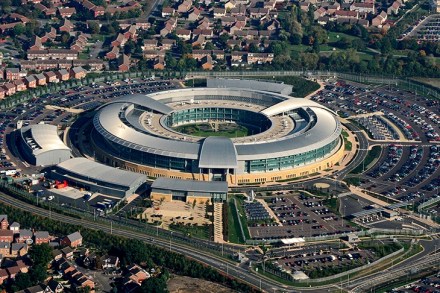
John le Carré once wrote sadly that he felt ‘shifty’ about his contribution to the glamorisation of the spying business. David Omand doesn’t deal in glamour. He was at the top of the Ministry of Defence and the Home Office, director of the code-braking Government Communications Headquarters, chairman of the Joint Intelligence Committee, and responsible

The Big Three who ended the Cold War

From our UK edition

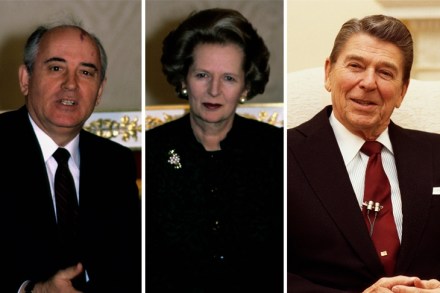
Historians argue endlessly and pointlessly about the extent to which the human factor rather than brute circumstance determines the course of events. History, geography and economic reality always constrain personal freedom of action. But within these limitations the individual can make a decisive difference. Britain’s war would have taken a different turn if Halifax rather

When the Grand Design met ‘le Grand Non’: Britain in the early 1960s

From our UK edition

Peter Hennessy is a national treasure. He is driven by a romantic, almost sensual, fascination with British history, culture, and the quirky intricacies of British democracy and the government machine. His curiosity is insatiable, his memory infinitely capacious. His innumerable contacts confide in him freely because his discretion is absolute. His tireless work in the

Behind the irony curtain

From our UK edition

The comedy of Ruslan Boshirov and Alexander Petrov, the two glum Russian ‘tourists’ who denied on television that they were involved in the poisoning of Sergei Skripal, seems set to run and run. The Moscow press tells us that Russia’s ‘Golden Brand’ has offered them a brand name for a company specialising in tourism, women’s