Rod Liddle

Rod Liddle

Rod Liddle is associate editor of The Spectator.

An intense slab of religiosity: Nick Cave’s Seven Psalms reviewed

 Grade: B There has always been a seriousness and intelligence about Nick Cave quite at odds with that which usually attends to the rancid, tottering, old tart that is rock music, so there should be no surprise that he’s left it completely behind. This is a collection of seven spoken word prayers to that entity with which the Australian has had a long and not always straightforward relationship, God. They are accompanied by minimalist synth and piano compositions – kind of three-note fugues – from collaborator Warren Ellis and none of them clocks in at more than two minutes.

The real reason Boris has gone

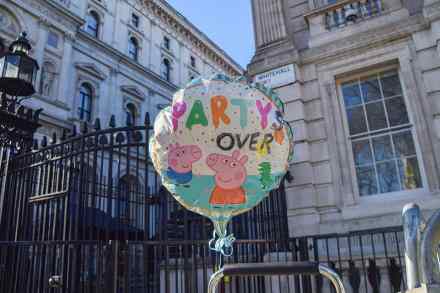
Boris, your leader, hasn’t gone because he handled ineptly the fall-out from deputy chief whip Chris Pincher’s well-lubricated non-consensual bum-fun. Nor even because he lied about all that stuff as well. He has gone because Conservative MPs no longer believe he could win a general election. Who will come next? I don’t much care: none of the fancied pack are Conservatives This may seem a blindingly obvious thing to point out, but when I made the same argument as to why Boris SHOULD go a few weeks ago in this magazine, it was met with a howled, anguished and rude response from many readers, as if they had blue dyed hair, were 13 years old and I had suddenly misgendered them. Dimbos. Listen, we all fasten our flags to the mast of a ship of fools from time to time.

Playing the ace card

The radical feminist publishing house Verso has begun, in its tweets, to refer to a section of the population as ‘womb-carriers’. This conjures up for me a number of distressing images. The first is of a rather sinisterly cheerful woman in late middle age dispensing wombs, which she keeps in a large and battered holdall, to passers-by. ‘Here you are love,’ she says, ‘have a womb.’ People would like to say no, no, I don’t really want one, but they are oppressed by her forceful, jovial demeanour. When they get the womb they don’t know what to do with it, although some end up using it as an umbrella stand, masking the gamey scent with a lime and ginger diffuser placed nearby. Others leave them out at night for the foxes.

The law of unintended consequences

When I awoke the other morning and switched on my radio, the airwaves were alive with the sound of furious, transgressed women. Nobody else got a look in. What have we done to get their goat this time, I wondered, rubbing the sleep out of my eyes. Nothing, it transpired. It was all in the USA, where a Supreme Court decision removed the constitutional right for women to have abortions and left it to the 50 states to decide instead. This last part was largely overlooked, incidentally: in essence the women were howling about decentralised democracy and what an awful thing it is. Democracy is sexist. Democracy is especially sexist in those southern states which might impose (or have already imposed) restrictions on terminations.

What took you so long, Seb Coe?

There’s a left-wing internet advocacy group called 38 Degrees which suggests to its followers that all they have to do is click a button and all the bad things in the world will be outlawed. It is a pleasant conceit. Its name derives from the angle at which snowflakes come together to form an avalanche, which is nicely self-deprecating of it. The problem is that so few people believe in its drivel that the closest it gets is about six degrees, which is the angle at which snowflakes remain exactly where they are until it thaws and they melt. Still, it is a useful simile and I think we may be in a 38 Degrees moment with transgenderism. The avalanche seems to be happening.

The reason Glastonbury is so white

The former comedian Sir Lenny Henry has questioned why there seem to be so few black people at rock festivals such as Glastonbury. He might equally have asked why there are so few young people. Or just concluded that the festival was a convocation of smug airheaded middle-aged white liberal kidults and that black people were, by and large, well advised to steer clear of it. Sir Lenny and I are engaged in the same sort of research work at the moment. Lenny’s job is to look at various British institutions and to point out that there are too few black people present; mine is to look at British institutions and point out that there are far too many of them.

The British Empire’s despicable treatment of mermaids

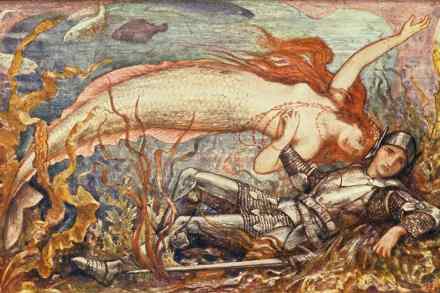
I may have broken the law this week, without having intended to, so great was my rush to return home. I forgot to put on my seat belt and may have exceeded the speed limit on more than one occasion. The cause of my intemperate haste was, of course, a desire to be back at my house in time to listen to BBC Radio 4’s daily evening arts magazine programme, Front Row. I live in a part of the world where the radio reception in cars is thinnish to non-existent, you see. Looking around me, as I depressed the accelerator further than I should, I noticed that everybody else was driving with similar fury, presumably for the same reason: haring back to catch Front Row.

How to win my vote

The repeated injunction that we should all ‘move on’ from worrying our silly heads about partygate is as otiose as it is arrogant. It is also, of course, a case of wishful thinking at its most extreme. And yet I hear it every day, on TalkRadio, on GB News, from pro-Conservative friends on Facebook and so on. Listen, you Tories, you need a new strategy, because ‘it’s time to move on’ hasn’t worked. Indeed, a good million or two voters have moved on and according to the polls will not be voting Conservative at the next election, if ever again. Nor is it any use whining about how we have all become obsessed about the Prime Minister eating a piece of cake when there’s a war going on and a cost-of-living crisis. It is not about a piece of cake.

Are you paying attention?

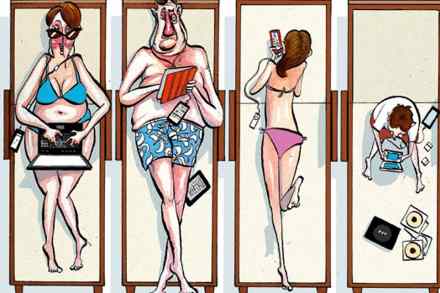
I have just posted a score of 1,625,000 on Bubbleshooter, my best yet. Bubbleshooter is a game where you fire different coloured bubbles at other different coloured bubbles in order, in the end, to make all the different coloured bubbles disappear. It is an elderly game, in its uplifting nihilism, and almost certainly dates me precisely. My latest attempt took slightly over one hour. I had intended to spend the afternoon finishing the book I’ve been reading, but having logged in on my laptop became momentarily and later endlessly distracted. First I did the Times and Telegraph cryptic and ‘toughie’ crosswords, then I did Wordle, of course – identifying the word ‘album’ in three goes, which the website assured me was ‘impressive’.

What we learnt from Eurovision

Twice during the Eurovision Song Contest our television lost the signal and the set went blank – once, mercifully, during the performance of a hirsute, gurning, cod-operatic bellend from that patently European country Azerbaijan. ‘Putin’, my wife and I both reckoned, seeing as Russian hacker groups favourably disposed towards their country’s leader had promised that they would do what they could to disrupt the broadcast and indeed the voting. If this really is the third world war, then I suppose it is a suitably banal and modernist take on universal annihilation – this yearly celebration of joyous gayness and very bad music suddenly part of the same war as the bloodshed, carnage and misery of Mariupol.

The BBC’s obsession with youth

At long last the state of Oregon has got around to installing tampon machines in the male lavatories of its many schools. I have campaigned long and hard on this issue. It has always seemed to me grossly unfair that girls should be provided with this facility but the poor boys utterly ignored. The sense of shame that these young men must have felt when their monthly cycles arrived unexpectedly – and remember that many of them will be victims of ‘period poverty’. Now, though, thanks to the state’s chirpily named Menstrual Dignity Act, equality has been achieved and I will therefore turn my attention to another consequence of social injustice – the continued proliferation of parking spaces which are not designated solely for disabled persons.

The SDP’s electoral triumph is good news for fed-up voters

Meanwhile, there IS an alternative to the two wretched main parties: a socially conservative alternative. Wayne Dixon won by a landslide in the vast Middleton Park ward in Leeds, the first SDP gain since the 1980s and the first time Labour has lost the seat. The SDP picked up 2680 votes to Labour's 1900. One (non-SDP) former councillor described the result as 'astonishing'.  Other SDP candidates in the city are puling in the votes too. It goes to show that when there’s an alternative to the main two parties which can WIN, people will vote for it. Huge congrats to the excellent Wayne Dixon and the scores of party workers who helped. For those of you unsure about the SDP’s policies, here y’go.

Will Putin go nuclear?

A ghastly tragedy Ukraine may well be, but it is coming to the rescue of a number of British Conservative politicians. Most notably Boris Johnson, of course, who would surely be out of a job by now if Vladimir Putin had not rolled those tanks across the border on 24 February, just as Sue Gray was getting her act together. A little later, Ukraine gave David Cameron a facelift as he was photographed driving a van full of supplies to the transgressed country. Supplies of what? Large sacks full of smuggery and emollience, one supposes. Or tiny wind turbines like that one he shoved on the side of his house to buttress his green credentials and which would take seven years and three months to boil water for a cup of tea. The latest is Brooks Newmark.

The quiet dignity of Angela Rayner

In those gentle days before internet pornography there was a book you could buy which listed the precise moment in each Hollywood film when the sex scene began, or when the leading lady – very often Greta Scacchi – got her kit off, thus enabling one to buy the video, or rent it from Blockbuster, and fast-forward to the, uh, important bit. Apparently the most requested fast-forward was of Sharon Stone in Paul Verhoeven’s Basic Instinct: a film as dumb as pretty much everything else the Dutchman has committed to celluloid, even if his reputation has lately been rehabilitated (for reasons I do not understand).

Humour, sweetness and sincerity: Father John Misty’s Chloë and the Next Twentieth Century reviewed

 Grade: A– In which Josh Tillman reimagines the whole back catalogue of 20th-century American pop music (except for rock), tilting heavily in favour of the 1930s-1950s. Lush strings, polite jazz and sometimes cocktail piano, big band stuff etc., plus the expected Tillman mordant humour and some unexpected sweetness and sincerity. There’s the country torch of Patsy Cline on ‘Kiss Me (I Loved You)’, the cabaret samba of ‘Olvidado (Otro Momento)’, Rodgers’ and Hart’s ‘My Funny Valentine’ homage on ‘Funny Girl’, and what we’re told is an attempt to kind of rewrite Fred Neil’s ‘Everybody’s Talkin’’ on ‘Goodbye Mr Blue’. The problem?

My phone call with God

Got slightly wrecked over the bank holiday weekend and had hoped to kind of glide through the early part of the week without too much requirement for that bane of the columnist, research – looking stuff up, talking to people, etc. But I crawled downstairs on Tuesday, switched on the laptop and there was a message bearing the address s.fidelis@almighty.com: ‘Hey Rod, I might have something for you. Give me a call x.’ I hadn’t heard from Semp for three or four years, when he was a canny and ambitious junior press officer, helpful, disinclined to panic, never obsequious. Slightly grating Cardiff accent but other than that, a good sort. Now it seemed he was actually ‘Director of Communications’. For God.

Durham’s maths problem

More exciting news arrives from Britain’s dimmest university, Durham, which is embarking on a programme to ‘decolonise’ mathematics. About time. For too long the subject has been dominated by racist stuff like adding things up or multiplying etc. Hopefully soon there will be room for students, when faced with a question such as ‘what is four plus four?’ to eschew the didacticism of white supremacy by answering ‘eight’ and suggest instead a number which they think feels intuitively right, such as 7,231. (Or indeed any number: it is not for me, as a privileged white straight male, to suggest to people who have been the victims of structural racism an alternative answer to the question ‘what is four plus four?

Can I convert you to my opinion?

I see that on the issue of gay conversion therapy, the Prime Minister has been floating around all over the place, like a giant albino blimp which has suddenly come adrift from its moorings. I believe Boris is now of a mind to ban conversion therapy for gay people but not for trans-gendered people, having already flip-flopped twice. This decision seems to have enraged many more people than it placated and lots of LGBTQI etc groups are shrieking with despair. Could I suggest, then, that the Prime Minister flip-flops again? Rather than banning gay conversion therapy, the government should examine the benefits of making it compulsory. I realise that for many people this would be a controversial move, but that fact alone should not dissuade ministers from going ahead.

I’m taking in a Ukrainian

Delighted though we all are that Benedict Cumberbatch has decided to allow a Ukrainian family to live in one of his houses, did he have to trumpet this to the entire population of the country? Surely these sorts of decision are best kept to oneself, no? But then, they’re always doing it, the luvvies – proclaiming their saintliness in order to protect and advance the brand, one supposes. Benedict should know that there are more than 100,000 ordinary people in this country, people who have never received a Bafta, who have offered their homes to Ukrainian refugees and they don’t go bragging about it on national media. People such as myself, for example. I have applied to take refugees in, to do my little bit, but it would not occur to me to advertise the fact publicly.

No one should be doing indie rock at 43: Band of Horses’s Things Are Great reviewed

Grade: B That thing, ‘indie rock’, is so well played and produced these days, so pristine and flawless, that it has become almost the antithesis of what it was back at the end of the 1970s, when the term was invented. Then it referred to bands who released stuff on small independent labels because the big labels wouldn’t take them on. Shouty, angsty and angular, or just weird and beloved by the befringed dolorous yoof, in their anoraks or donkey jackets, the whole thing had a pleasing DIY feel to it, even if it sometimes grated. These days ‘indie’ just tends to mean anodyne power pop played by whining blokes who haven’t had a shag for ages. So it is, I think, for Seattle’s Band of Horses.