Robin Ashenden

Robin Ashenden is founder and ex-editor of the Central and Eastern European London Review. His detailed accounts of the media attacks on Lionel Shriver and Toby Young can be read on his substack ‘Letting the Child Run Riot’.

Navalny exposes the truth about Putin’s ‘strong man’ image

From our UK edition

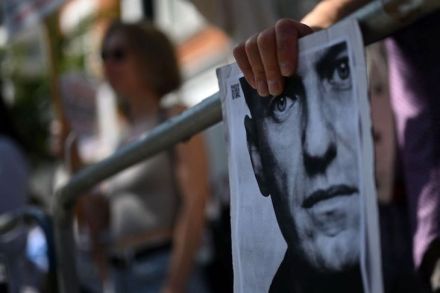
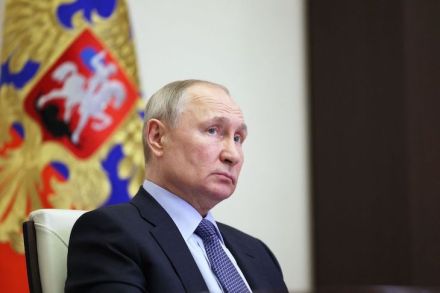
The 19-year extended prison sentence handed out to Putin opponent Alexei Navalny on Friday may seem, to many, meaningless and the stuff of Kremlin fantasy. Putin himself is unlikely to be with us in 2042, and his regime will be history long before that. Nor do we know whether his successor will issue an amnesty to those Putin has singled out for persecution or take an even harder line with them. Rarely has the Russian future seemed so elastic – yet the conditions under which Navalny will be incarcerated now are anything but.

The joys of provincial repertory theatre    

From our UK edition

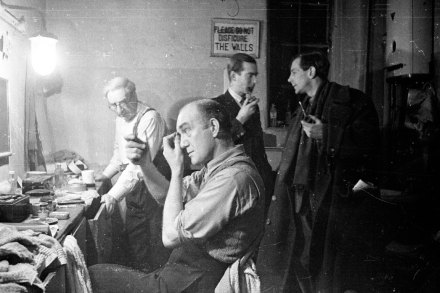
Provincial repertory theatre, in which a semi-permanent company of actors performed a varied diet of plays for their community, week-in, week-out, has all but died out in Britain. Local theatres have become venues for visiting productions, one-off events and numerous outreach schemes, but the old continuity – a kind of magic – has gone. I caught the last of it as a child. I was nine years old when in 1979 the brand-new playhouse in my area – the Wolsey Theatre, Ipswich – opened its doors to the public, and for the next four years it would be the centre of my world. If I wasn’t watching shows there (and I saw some half a dozen times), I was dreaming about it, reading scripts or writing to a local photographer for black-and-white photos of the company’s players.

Igor Girkin’s arrest was a long time coming

From our UK edition

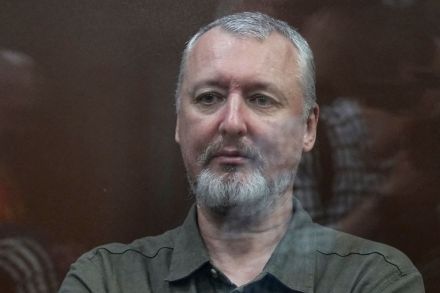
With the reported arrest on Friday of Igor Girkin (aka ‘Strelkov’ or ‘Igor the Terrible’) the career of one of the Russia-Ukraine war’s most infamous, larger-than-life characters may finally have hit a dead end. Girkin, the career-killer with the sensitive face and soulful eyes, has played numerous parts in his time: activist, blogger, FSB colonel, executioner, convicted war criminal and eternal thorn in the side of the Russian Ministry of Defence. A self-professed nationalist, and founder member of the ‘Club of Angry Patriots’, he has consistently lambasted Putin’s ‘special military operation’ for its failures and perceived half-measures, calling repeatedly for martial law and mass-mobilisation to avert a likely defeat.

How the Unbearable Lightness of Being enthralled a generation

From our UK edition

If during the 80s and 90s you were any kind of book lover, Milan Kundera – who died this week aged 94 – was one of that small clutch of modern novelists you absolutely had to read. In the late stages of the Cold War, the Czech-born Kundera not only gave us news about what was happening on the other side of the Iron Curtain – how those brought up under communism joked, suffered, survived and made love – but his irony and playfulness, oddly hard-nosed, caught the spirit of the times. To read him as a teenager was in many ways to be wrenched into adulthood and realise there were other countries, other ways of seeing – in fact, quite different moral systems – beyond your own. So many of us fell under his spell and have never quite emerged from it.

Rostov returns to reality after Wagner’s botched coup

From our UK edition

Since Russia’s invasion of Ukraine last year, it always seemed likely that the war would come back to Rostov-on-Don, the city which until then had been my home. Rostov isn’t just close to the border but feels it. Most of my university students were from the Donetsk and Lugansk, refugees from the 2014-2022 war. It’s the military hub of southern Russia, the first major city you come to from the Donbass. It felt like a sitting invitation. It was also somewhere I knew intimately and had been part of my life since my half-Russian daughter’s birth a decade ago. I took to Rostov-on-Don with an outsider’s greed for all four corners of the city, but lived bang in the centre.

Rostov-on-Don: scenes from an occupation

From our UK edition

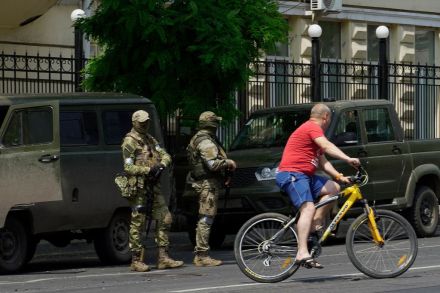
The main thoroughfare of Rostov-on-Don is today crawling with military vehicles and masked soldiers carrying automatics, and the entrance to that circus – which backs onto the Rostov military headquarters – is blocked aggressively by a tank. The city is now controlled by the Wagner Group, Yevgeny Prigozhin’s private army out on the rampage and rebelling against the Russian military high command. It is a city now under occupation, and many of its citizens, under ‘official advice’, are staying home.

How does the Russian public view the invasion of Ukraine?

From our UK edition

‘It’s too soon,’ said an anti-war Russian friend about the crop of books which have been emerging since late last year on Putin’s invasion of Ukraine. Perhaps he is right. Yet, mindful of Lenin’s maxim that ‘there are weeks when decades happen’, many may feel the period since February last year to have been one of the longest of their lives. Amid the fog of war – an endless news cycle in which events pile up, too enigmatic or episodic for the big picture to emerge – one is grateful to any writer who sets out to give the wider narrative. ‘To look at Russia now, as someone who loves the country, is to despair’ One such is Serhii Plokhy, the Zaporizhzhia-born historian and Ukrainian specialist, in The Russo-Ukrainian War.

The Kakhovka dam and the cheapness of western rhetoric

From our UK edition

Following the destruction of the Nova Kakhovka dam in Ukraine, politicians in the West have followed the familiar dance of condemnation. ‘If it’s intentional,’ said PM Rishi Sunak, it would be ‘the largest attack on civilian infrastructure in Ukraine since the start of the war’ and represent ‘new lows’ in Russian aggression. France’s President Macron described it as ‘an atrocious act, which is endangering populations.’ Olaf Scholz, Chancellor of Germany, talked about the importance of continuing to ‘support Ukraine for as long as necessary’, while the EU spluttered that ‘attacks on critical civilian infrastructure may amount to war crimes.’ If it’s proved beyond doubt that Russia is culpable for the calamity, will we get more than words?

The haunting words of Russia’s jailed Putin opponents

From our UK edition

How many memorable quotes has the Russia-Ukraine war produced so far? Along with Snake Island’s defiant ‘F*** you Russian warship’, we’ve had president Zelensky’s refusal to leave Kyiv at the beginning of the war with the words: ‘I need ammunition, not a ride.’ We also have his ‘Bravery takes you through the most unimaginable hardships to lead you to victory’ and his ‘No one’s going to break us. We are strong. We are Ukrainians’, though these are perhaps less interesting; the first a bit like something from a Disney poster (two kittens find their way home across the desert), the second awkwardly conjuring up memories of the Rocky films. Better, perhaps, the wry and tongue in cheek.

Should we ignore Putin’s criticism of the West?

From our UK edition

Not much happens in Russian families without the say so of the babushka. Russia's high divorce-rate, and a situation where fathers are often absent and the mother out at work, makes it normal for grandmothers – who often hold the family purse-strings – to raise children themselves. This doesn't, of course, mean that the younger and older generation see eye to eye: babushka tends not to use the internet or understand modern technology, and might hold conservative opinions radically different from the grandchild’s. Yet there is often a spirit, in the political scientist Ekaterina Schulmann’s words, of ‘hopeless obedience’ to her. Something similar is at play in the way many Russians view Putin.

The barbarity of Russia’s white phosphorus attack on Bakhmut

From our UK edition

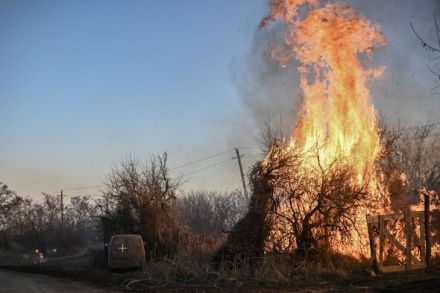
There is something oddly Christmassy about the scene: a night-time city bathed, festooned in twinkling white lights, the smoke around them almost luminous. A shower of brilliant sparks falls calmly from the air, lighting up the dark sky – the town below seeming to celebrate something, over and over, with a spectacular firework display: flares, starbursts, dry-ice and Roman Candles. But the visual beauty is a sick joke, the town is Bakhmut at the end of a nine-month siege, and the illuminations appear to be an attack by Russian forces with white phosphorus – so the Ukrainian government claim – one of the most lethal incendiary chemicals in use today.

Why are some Russians still in denial about their troubled past?

From our UK edition

Few books change your life but one that heavily influenced mine was Among the Russians (1983), Colin Thubron’s travel book about the late Brezhnev-era USSR. Catching me as a 20 year-old, it launched me on a lifetime of living and travelling in the former Soviet Union. Returning in 1999 from a long trip to Minsk, Kazan and Volgograd I reread it, marvelling at how uncannily it evoked my own experience of the country. Other travel books merely informed you about Russia – this one, dense with metaphor and luminously described human encounters seemed, in its 200 or so pages, to transport you there and make you feel it. You couldn’t quite remember afterwards whether the experiences were Thubron’s or your own.

The Internet Archive’s troubles are bad news for book lovers

From our UK edition

The Internet Archive (archive.org), a San Francisco-based virtual lending library, is one of the quiet wonders of the modern world. A digital collection of seven million books and nearly 15 million audio-recordings, it was ambitiously intended by its founder Brewster Kahle – a member of the internet ‘Hall of Fame’ – to be a kind of online ‘Library of Alexandria’. The IA loans out its titles free of charge, the main beneficiaries being those who can’t get to a real ‘brick and mortar’ library – the housebound, those living far from cities, or people in need of rare books their own local library doesn’t stock and can’t get hold of quickly enough.

The pipes are calling: confessions of a pipe-smoker

From our UK edition

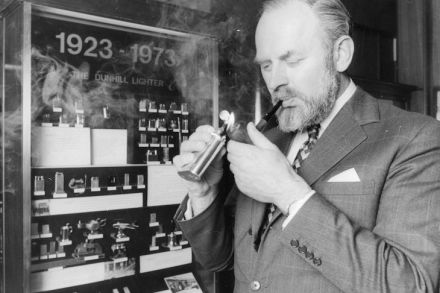
This morning, like so many other mornings, I spent at least half an hour, over coffee, staring at online pictures of pipes. This does not make me an aspiring plumber, or someone with a fetish for u-bends or draining units. I’m talking about briar pipes, tobacco pipes: for though I know I should quit the habit, I’m one of the dwindling band of pipe-smokers in the world. This isn’t an aesthetic choice, nor an activity I undertake outside the house. No one is more attractive with a 150mm briar-wood appendage sticking out of their mouths – apart possibly from Sherlock Holmes, Tony Benn or Gunther Grass, and I don’t want to look like I think I’m any of them. But it remains true that pipe-smoking, of all the vices and addictions I’ve explored, is my favourite.

Putin’s feminist crackdown won’t crush the spirit of Russia’s women

From our UK edition

In the wake of draconian laws against ‘LGBT Propaganda’ introduced in Russia at the end of last year – namely, speaking with anything but flagrant condemnation about LGBT matters in public – Russia’s politicians seem to have sunk to a new low: feminism could soon be reclassified as an ‘extremist’ activity. A draft law setting out this crackdown has been put together by Oleg Matveychev, member of United Russia, Putin-supporter and deputy chairman of a state Duma committee. It’s currently being chewed over by the ‘Commission for Investigation of Foreign Interference in Russia’s Internal Affairs’ and, if judged a runner, will then pass to the state Duma for ratification.

Who is torching Russia’s military recruitment centres?

From our UK edition

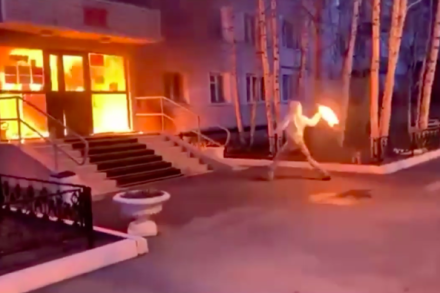
The last twelve months or so in the post-Soviet sphere have been, among other things, the year of the Molotov Cocktail. Who can forget those clips, amidst the outbreak of war last February, of Ukrainian women calmly packaging up bottles with petrol, rags and grated polystyrene, as though at a local sewing bee? Or of the boxes of Molotov cocktails loaded up for different areas, as if they were cases of Beaujolais Nouveau? In the recent protests in Tbilisi, Molotov cocktails also featured prominently, in battles between protesters and police. But less well known is the resurgence Molotov’s DIY incendiary bomb has enjoyed in Russia of late.

Why was the West so slow to see Putin’s true colours?

From our UK edition

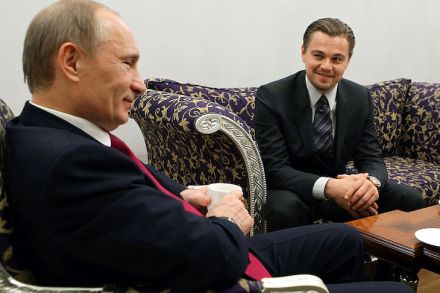
Cast your mind back just over a decade, to a charity benefit gig in St. Petersburg in 2010. Sharon Stone, Kevin Costner, Gerard Depardieu, Vincent Cassel, Goldie Hawn and Monica Belluci are in the audience. But the star-turn is performed by a man from another branch of entertainment altogether (‘show-business for ugly people’) who in a warbling voice is giving us his rendition of Fats Domino’s ‘Blueberry Hill.’ The stars clap and beam at this new addition to their ranks – the man then taking time off as president to play Russia’s prime minister and, on special occasions, chanteur to the stars: Vladimir Vladimirovich Putin. In this, you might argue, the celebrities are only following fashion. In 2007, Putin was named ‘Person of the Year’ by Time magazine.

My type: a love note for the typewriter

From our UK edition

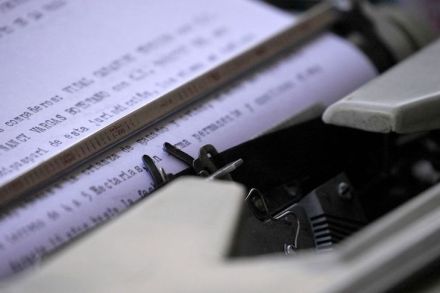
The last manual typewriter, after 150 years of commercial production, was manufactured in the UK in 2012. Yet like all design classics, it refuses to lie down and die. There is a roaring trade in old models on eBay, and dealers such as the Typewriter Man in the UK and Mytypewriter.com in the US sell them to hipsters and steampunks, among whom they are cult objects. The latter store, awash with Hermes, Remingtons and Underwoods, even has a list of famous writers and the machines they used – from John Ashbery to P.G. Wodehouse – so that you can buy a model to match your literary tastes.  They’re also, in various institutions, still in use.

Is Putin’s security service under attack?

From our UK edition

Few people in Rostov-on-Don will weep over the news that a local FSB building in the city caught fire yesterday. Just the mention of the acronym for the Security Services (formerly KGB) was, when I lived there, enough to still and silence a room. When a girl in one of my classes announced rather proudly that her boyfriend worked for the service, there was a ripple of discomfort in the room and, subsequently, fellow students once expansive got notably more guarded. At a local pipe club I attended, one of the members worked for them too, a well-built man with brushed back hair, a Stalin moustache, and a set – unlike the rest of us – of the most expensive Dunhill pipes (a decent income is just one of the job’s advantages). Everyone at the club deferred to him.

How the Kindle lost its spark

From our UK edition

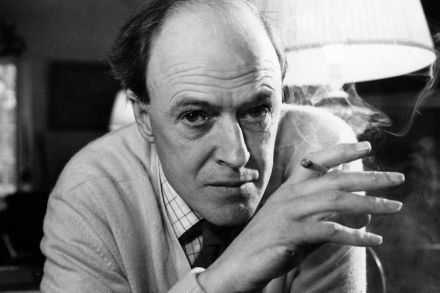
With the recent news that Kindle and other e-readers are automatically updating Roald Dahl’s books to sanitised versions, an entire era has come to an end for readers like me. Who in future will feel safe buying an electronic copy of anything? Publishers’ plans here may be modest, but the point about the puritan is that their work is never done. Martin Amis, Evelyn Waugh, Nancy Mitford, George Orwell, Charles Dickens – any one of them feels vulnerable now. If in copyright, the author and their estate can be strong-armed by the publishers; if out of copyright, laying your hands on the right edition will be a minefield. Nor does it seem clear that publishers’ revisions are being done by skilled writers.