Robin Ashenden

Robin Ashenden is founder and ex-editor of the Central and Eastern European London Review. His detailed accounts of the media attacks on Lionel Shriver and Toby Young can be read on his substack ‘Letting the Child Run Riot’.

I’ve been priced out of East Anglia

From our UK edition

We have finally found a buyer for my late mother’s Suffolk house, but I’ve fallen into something of a trap. After the money’s divided and the bills are paid, I shall have a lump sum but nowhere near enough to buy a home. I’m 54 next month, not much more than a decade off official retirement age. Having taken a year off to do up the house for sale, I have little salary to show any mortgage-lender that won’t make them call security or simply giggle. Completion date is in February, and I have nowhere concrete (quite literally) to go to. I spent 2022, having grabbed my two cats and fled from a Russian suddenly-at-war, staying at a series of dirt cheap, pet-friendly hotels in the Caucasus and Southern Italy (where I have a daughter).

Why New Year trumps Christmas in Russia

From our UK edition

What a difference a decade makes. Exactly ten years ago, Russians celebrated New Year by watching Goluboi Ogoniek (‘Little Blue Light’) the traditional TV programme – full of glitz, music, Moët and laughter – which ushers in 1 January. Three men dominated Goluboi Ogoniek that particular year. On YouTube, anchorman Vladimir Soloviev can be seen smiling like a pussycat over the merrymaking. Co-presenter is Maxim Galkin, the Soviet-born Israeli comedian married to singing legend Alla Pugacheva. But the biggest surprise is the third of the trio – a compact, intense little man with black hair and a gravelly voice, singing, capering and cracking up the Russian audience with his one-liners.

Can Jilly Cooper wreck your life?

From our UK edition

What do the names Octavia, Prudence, Harriet, and Imogen all have in common? If you don’t know the answer to that, you’re probably – unlike our current prime minister – not a fan of Jilly Cooper. Cooper has just published her latest bonkbuster Tackle, one of the doorstep-sized Rutshire Chronicles series that also includes Riders and Rivals. These books are set in a fictionalised Cotswolds and are as reliably comforting as a tin of Quality Streets. But in the good old, bad old days of the seventies and early eighties many of us came to this writer through her ‘name-books’ – six romantic novels (and one collection of short stories) which always had a young woman’s Christian name as the title.

Where did the Christmas magic go?

From our UK edition

It’s late December 1982 or thereabouts, and I’m standing in a Suffolk church before hundreds of people, wearing a cassock and surplice, with a churning stomach. This year, at my prep school carol service, it’s my turn to sing the opening solo to ‘Once in Royal David’s City'. The trouble is, the solo is sung acapella – the organ will give you the opening note, but if you go a semi-tone off-kilter halfway through before the full choir come in with ‘He came down to earth from heaven’, there’ll be the most awful discordant balls-up and everyone will know. Luckily it went off well, my final note dovetailing neatly with the choir’s opening one, and the ensuing relief made this the best school carol service ever.

Streaming killed the video star

From our UK edition

One small but significant loss to culture that streaming sites like Netflix or Amazon Prime have ushered in is the slow death of the DVD commentary. Usually given by a film’s actors or director (or both), they could be played over the film and were packed with insights on filmmaking, the artists’ take on life or simply acute observations of human psychology. Masterclasses from people like Tarantino, Scorsese, Gary Oldman or Sharon Stone, DVD commentaries were, as Alexander Larman (of this parish) pointed out in a 2020 essay, often fascinating and ‘far cheaper and even more comprehensive than a film school degree.’ Their emergence, in fact, softened the blow of programmes like The South Bank Show and Arena (and what they represented) being sidelined so much in British cultural life.

Letting go of my mother’s house

From our UK edition

My mother passed away last year and it fell to me to sort out her house. Returning from four years in Russia and the Caucasus, I moved into her Suffolk home to get it ready for selling. There was a huge amount to do. Alongside organising my mother’s headstone – no small or hasty business – there was an entire house and a life to sort through. This involved going through endless knick-knacks, glasses, crockery, clothes – and 15 or more rubble sacks of papers and old letters. The last was both cathartic and disconcerting. These are written relics of a life that existed before I came along, one that may well have been richer and more hopeful.

What fiction can teach us about terrorism

From our UK edition

The first decade of this century, following Al Qaeda’s attack on the Twin Towers and the Pentagon in September 2001, was something of a golden age for films about terrorism, a spate of them following in quick succession. In the light of Hamas’s 7 October mass-killing of innocent Israelis, it’s interesting and informative to watch one or two again – and see how the nature of terrorism changes little. We get the terrorist as preening popstar, surrounded by women, whose every act of violence is like the release of a new album A good place to start is Antonia Bird’s The Hamburg Cell (2004), which tells the story of the terrorists who flew the planes that day and had made the west German city their base.

Hungary, the autumnal civilisation

From our UK edition

A couple of weeks ago, I made the dish I always make at this time of year. It’s a Hungarian gulyás – or more correctly, a pörkölt – a mixture of beef, onions, peppers, tomatoes and paprika, stewed very slowly and served with plenty of sour cream. It’s appropriate this dish should be from Hungary, as no season suits the country better. Come to that, no country suits the season better either. It isn’t just that the Buda Hills look ravishing once the trees start to turn rust and golden or that the city’s bridges look more graceful and melancholic than ever. It isn’t even the mist – not to say fog – that comes off the Danube, suspending buildings like their majestic parliament house or Citadella fortress in ghostly silhouette.

I’m sick of streaming. Films were better on Blu-ray

From our UK edition

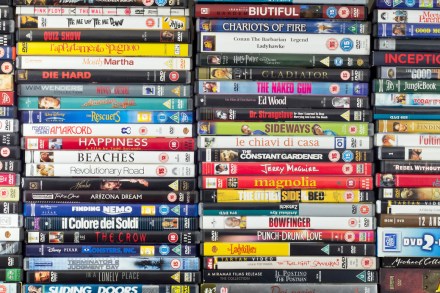
The digital world, I’m realising, is a bit of a racket. Recently most of my iTunes library disappeared from my iPhone, and I just don’t know if I can be bothered to go through all the different hoops, portals, queueing systems and long forgotten passwords to get them back again. I’ve also had the repeated experience of trying to view a film I’ve downloaded on Amazon, only to get that little square in the middle of the screen telling me that the player’s having issues at the moment, and would I, could I try again later? Meanwhile, the CDs and DVDs reproach me from my shelves like an abandoned spouse. ‘We were once your rock,’ they remind me, ‘And you traded us for tech-tinsel, a piece of cyber-skirt. How are you feeling now?

Have we forgotten the lessons of Shoah?

From our UK edition

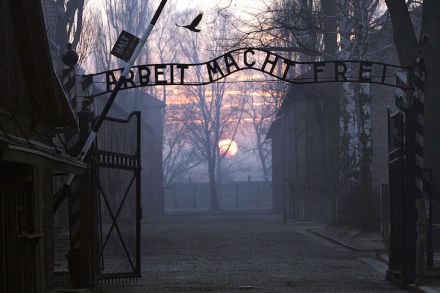
Since Hamas’s assault on innocent Israelis, a wave of anti-Semitism has swept across the world. Jews in Europe feel distinctly unsafe. There’s been an arson attack on a German synagogue, the desecration of a Jewish cemetery in Austria, and, last weekend, in Lyon, a Jewish woman was stabbed twice, a swastika sprayed on her door. Meanwhile, in Britain, as the Guardian newspaper proclaims that ‘Israel must stop weaponising the Holocaust,’ the Metropolitan Police report antisemitic attacks to have increased in early October by 1350 per cent. You wonder what the late director Claude Lanzmann would have made of it.

The drudgery of airports

From our UK edition

Having a child growing up in Italy means regular flights there and back from Stansted airport. This is unfortunate, as I find nearly any other form of transport preferable. It isn’t so much the flying itself – I lack the imagination to envisage what it really means to hover 38,000 feet above the earth in a fragile aluminium tube – but the malarkey which surrounds it. I am talking about airports: getting to them, getting through them, getting out of them. The tunnel of trauma, the concentrated drudgery, the dismal, dehumanising price you must pay for your place in the sun.

Paul Wood, James Heale and Robin Ashenden

From our UK edition

23 min listen

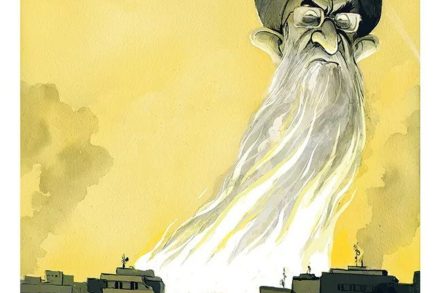
This week Paul Wood delves into the complex background of the Middle East and asks if Iran might have been behind the Hamas attacks on Israel, and what might come next (01:11), James Heale ponders the great Tory tax debate by asking what is the point of the Tories if they don’t lower taxes (13:04) and Robin Ashenden on how he plans to introduce his half Russian daughter to the delights of red buses, Beefeaters and a proper full English (18:36).

The full English: how to fall in love with this country

From our UK edition

My nine-year-old half-Russian daughter has arrived in England for the first time since she was a baby. As she knows almost nothing about British culture apart from Peppa Pig and Willy Wonka, my job is to put together a week-long programme before she goes back to Italy, where she currently lives with her mother, my ex-partner. They were living in Russia but left following Vladimir Putin’s invasion of Ukraine. Ideally, my daughter will go home enthused about all things English and wanting a lifetime more. But where do I start? Peppermint Aeros and Crunchie bars are the things I want to pass on, far more than the music of Elgar First, there’s the question of food.

I’ve given up on my dreams… apart from the sports car

From our UK edition

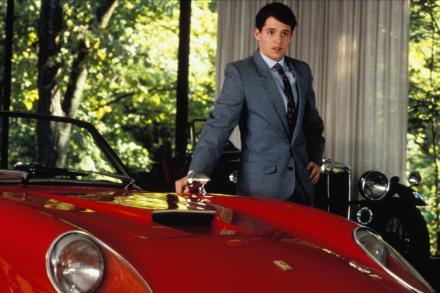
They say that, against all expectations, after the age of about 50 you actually get happier, and that much of this happiness is tied in with the merciful death of your dreams. Once over the hill – and I can vouch for this – you feel unrealistic visions that have guided you your whole life simply exit the stage, albeit with a few well-aimed parting kicks. You don’t lament their passing – young people may want an emotional switchback, but in maturity (well, relative maturity) you’ll happily (well, relatively happily) swap it for solid ground under your feet and a little stability of mind. Hope, thankfully, doesn’t always spring eternal. After your first half-century, it’s more like the stubborn dripping of a wonky tap.

What happened to the Russia I loved?

From our UK edition

I first came to Russia as a travelling English literature-lecturer in the late 1990s. This wasn’t a job given to me but one I’d devised myself, sending off snail-mail begging letters to different university departments all over the Former Soviet Union – Barnaul to Minsk – outlining my services and occasionally, weeks or months later, being taken up on the offer. With a rucksack full of books, I’d catch a train – sometimes a days-long journey – to the next destination, where I’d be given a list of students to teach, a guided tour of the city and three weeks in a student hall of residence. Here cockroaches could outnumber humans 100-1, but there was always a bottle going round and someone with a guitar to supply entertainment in the evenings.

So long, summer!

From our UK edition

Summer is now officially over and who laments its passing? Some may rhapsodise about the period between June and September, but for many of us, it is a hiatus and trial, the period of the year we most dread. It’s the bill for autumn and winter, the season we’d live better without.   The pavements of cities seem to fizz and reek, your feet balloon in work shoes, the underground turns into a cattle truck I cannot understand why so many people like summer. It unites some truly awful things: nocturnally whining mosquitoes, hot, sleepless nights, oozing sweat, high blood pressure, and above all, bright, unforgiving light, so you feel you’re constantly being observed in some bizarre lab experiment by hostile scientists.

The dazzling classic The Red Shoes has several unfashionable lessons for us today

From our UK edition

The Red Shoes, Michael Powell and Emeric Pressburger’s 1948 film about a ballet and its company, is 75 this month, and its birthday is being marked with great fanfare. From October to December, the BFI is putting on a major retrospective of the films of Powell and Pressburger, with an accompanying exhibition and nationwide screenings of The Red Shoes itself. A companion book to The Red Shoes by Pamela Hutchinson – stuffed with insight and background – is being published, as well as a lavish volume, The Cinema of Powell and Pressburger, complete with pictures and essays (almost love letters) about the late filmmakers from artists such as Tilda Swinton and director Joanna Hogg.

How to make excuses and infuriate people

From our UK edition

It started as a fairly pleasant train journey. A woman with a half-shaved head and multiple tattoos got on pulling a French bulldog on a lead. We got to talking about dogs, and breeds, and whether Staffordshire Bull Terriers had an unearned bad reputation, and about her cats too, and was she a dog or a cat person? She said she was both, and I agreed it was hard to choose, and soon we were swapping pictures of our cats and discussing different Norfolk villages, and was Swaffham a nice place did she think or not? Both of us, I suspect, enjoyed connecting on the topic of animals with someone so unlike ourselves. In fact, we were chattering away so cordially that we didn’t notice that 15 minutes had gone by and our train – usually punctual - was seriously late leaving the station.

A tribute to the lost art of letter writing

From our UK edition

There are many good reasons, we’re constantly told, for millennials and Generation Z to resent their elders. What they can barely imagine, we took for granted: affordable housing, state-paid education, free dentistry and slow, misspent youths on unemployment benefit. But there is another justification for their envy, one that is hardly ever mentioned: we wrote letters to each other. Mine was the very last generation to do so. Bleak and empty was the day you didn’t find a stuffed envelope, in handwriting you recognised, waiting for you on the doormat. As well as being a sign you weren’t forgotten, letters could, at their best, be sources of sheer delight. Many went on for pages – it wasn’t unusual to find five folded sheets inside, written on both sides.

What Brits don’t understand about life in Russia

From our UK edition

When I tell people in England I’ve just returned from several years abroad and they find out the country was Russia, it is a real conversation stopper. Their minds short-circuit, they seem to gulp in front of you. What question do they ask next? Do they mention the war? Talk about Tolstoy? ‘Ah… Interesting,’ one woman said to me finally, as though looking at someone’s awful etchings and wanting to be polite. ‘That must have been...difficult for you,’ said another. How can I get across to them that, before February last year, it might have been ‘interesting’ but wasn’t difficult at all? It's depressing when a country you have warm memories of develops a poisonous reputation, and even sadder when that reputation has been earned.