Robin Ashenden

Robin Ashenden is founder and ex-editor of the Central and Eastern European London Review. His detailed accounts of the media attacks on Lionel Shriver and Toby Young can be read on his substack ‘Letting the Child Run Riot’.

The sad decline of stationery

From our UK edition

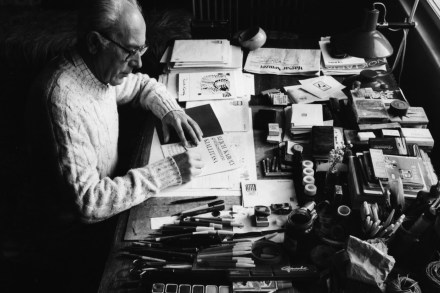
The news that WHSmith is facing closure seemed inevitable. Good stationery may be one of the pleasures of life, but is anyone actually buying much any more? Of course, people will always need pens, string, bubble wrap and so on, yet the heyday of stationery has definitely passed. There was a time, when people still wrote letters to each other or used writing implements as a matter of course, that it was a large part of our shopping, especially if you were a school kid. We wrote in pen and ink (no biros), and for a child of the 1970s or 1980s, this usually meant the choice between a Sheaffer No Nonsense pen, chunky and with a screw-on top, or a Parker 25, stainless steel and, with its ‘stepped down’ barrel, faintly futuristic.
Kemi Badenoch has a secret weapon in the fight against Nigel Farage

From our UK edition

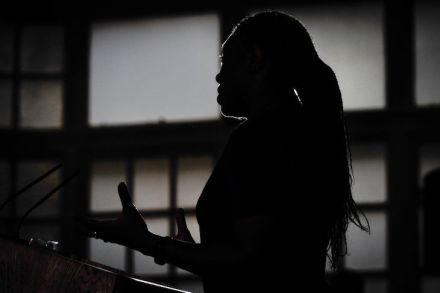
Things are currently looking choppy for Kemi Badenoch. Polls last weekend were bad enough, seven of them showing Reform leading the Conservatives by a point. But now it seems this gap may have widened dramatically. A poll on Thursday showed Reform pushing the Tories in to third place, with Farage’s party on 25 per cent and the Conservatives trailing on 22 per cent. It’s when Kemi speaks from her own experience that a gap between the Conservatives and Reform seems to open up ‘The message that’s coming from this is very, very clear,’ Farage has crowed. ‘Not only do we have momentum but if you want to beat Labour, if you want to get them out at the next general election, don't waste your vote with the Conservatives.

Italy is most beautiful in winter

From our UK edition

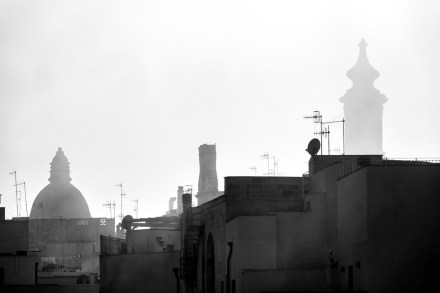
Monopoli, Puglia Monopoli is an elegant little seaside town in Puglia, the heel of the Italian boot, and in summer it’s unbearable. Tourists flock from everywhere. Squares you could normally zip through in a few seconds take ten minutes to cross, and the queues for Bella Blu, the ice cream parlour in Piazza Garibaldi, remind you of the Ryanair check-in desk. That struggling little pizzeria you patronised loyally throughout the autumn and winter now asks you to come back in an hour’s time and still can’t find you a table when you do. Monopoli, which seemed to be begging for it on every previous visit, suddenly has options. It’s offhand with you, looks at its watch and plays hard to get.

Holocaust Remembrance Day isn’t enough

From our UK edition

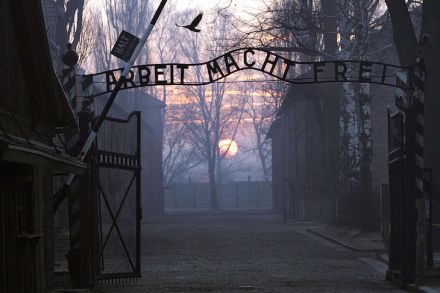
As Holocaust Remembrance Day comes round again, actual remembrance of the Holocaust seems fainter than ever. The arson attacks on synagogues in France and Australia, the mass-assault on Israeli football supporters in Holland last autumn, or the shocking recent scenes at the Oxford Union, where Jewish speakers were taunted, booed and sworn at by the audience, are a horrible echo from history, almost unimaginable a few decades ago. At Auschwitz, Primo Levi wrote, nothing was morally clearcut Much of this may be due to demographic change, as sworn enemies of Israel migrate in large numbers to the West.

Britain’s unending fascination with the Cambridge spies

From our UK edition

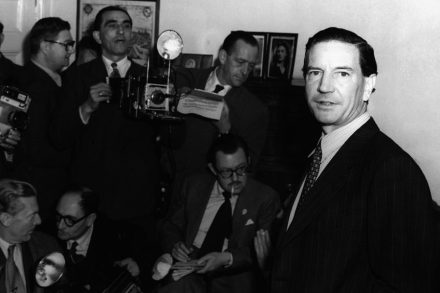
Will we ever tire of the Cambridge spies? Kim Philby, Anthony Blunt, Burgess and Maclean – and to a lesser extent John Caincross, the fifth man in the circle – are names as familiar to us now as certain brands of detergent or the line-up of the Beatles. To compliment the countless books, dramas and documentaries about them, this week the national archives declassified MI5 files on the subject. They cover Philby’s recruitment and subsequent flight to Moscow, as well as the Queen’s nine-year unawareness that Blunt (who worked for Buckingham Palace) had confessed to his past as a Soviet agent. It seems that whatever we think of Burgess, Maclean and co.

Life is not a piece of cake

From our UK edition

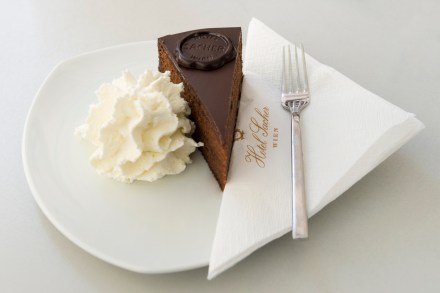
On a recent trip with my daughter to Trieste, the north Italian seaside city on the border with  Slovenia, I thought it would be nice to take her to Café Sacher for some sachertorte, which has been in culinary fashion since its creation in 1832. Trieste, once a thriving Austro-Hungarian port, is as reminiscent of Vienna as it is of Italy, and to eat this famous Austrian cake in the establishment of the same name would, I thought, be an experience my chocolate-loving daughter would remember. Sachertorte is nothing fancy compared to other Viennese cakes – merely a dark sponge with some apricot jam filling and coated in a layer of smooth chocolate, but that plainness is part of its charm.

Vodka and the Beatles on a New Year’s Eve in Narva

From our UK edition

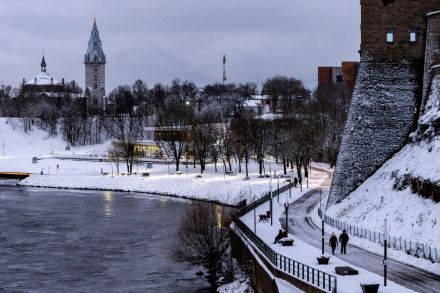
Narva, the northern Estonian city right on the border with Russia, has been much in the news of late. Not only is it where the Estonians expect any Russian invasion to take place – most of the rest of the frontier passes straight through the middle of Lake Peipus – but it has also become the scene of constant provocations from the Kremlin. There have been border-demarcation symbols snatched by night, local sat-nav jamming, and a host of psychological wind-ups. In the past month reports have come of a clunky Russian surveillance-zeppelin flying over Narva, sporting the letter ‘Z’. This city – in which an estimated 96 per cent of people speak Russian as their first language – is one we may well be hearing more of in the next few years.

The triumph of When Harry Met Sally

From our UK edition

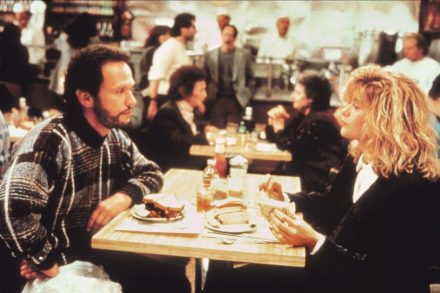
Look at any list of the ‘greatest ever romcoms’ and you’ll find When Harry Met Sally near the top of the list, if not heading it. This 1989 movie, directed by Rob Reiner and written by the late Nora Ephron – with terrific performances from Billy Crystal and Meg Ryan as the title characters – is about as good as the genre got, the high peak of romantic comedy before its slump to the present day. With its New Year’s Party ending and rendition of ‘Auld Lang’s Syne’, it's also the perfect film to watch in the week after Christmas (hence, no doubt, the BBC’s decision to screen it this coming 30 December). New York looks blow-dried, glossy and gleaming. Central Park in autumn is ravishingly on fire Is there anyone over 35 who hasn’t seen it?

Life lessons, from Orwell to Didion

From our UK edition

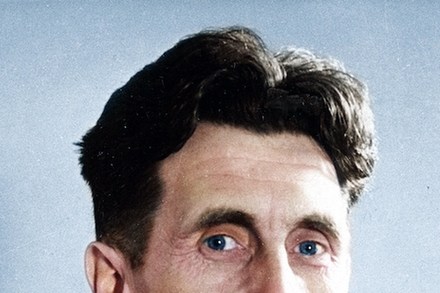
Anyone without time to read an author’s long works (most of us these days) might want to consider simply going to the top of the tree and reading their table-talk instead. Conversations with Writers, a series of books from the University of Mississippi Press, has hundreds of titles featuring collected interviews with different authors, from Sam Shepard to Graham Swift, Joan Didion to Nabokov, Edna O’Brien to Ken Kesey, nearly all of whom supply insights about writing or life itself on every page. ‘Worse things can happen than to write a novel and not have it published’ In many cases these books, with their reverence for literature and fascination with the creative process, depict a vanished world and remind you of something lost.

Keir Starmer, the Christmas Grinch

From our UK edition

If someone were to read the runes, this first Labour Christmas would not augur well. Not only have we had Keir Starmer’s excruciating ‘illuminations countdown’ in Downing Street – a joyless event if ever there was one – but also the cut-price Christmas Tree in Trafalgar Square – perhaps the mangiest conifer the Norwegians, in their gratitude, have ever been able to dump on us. A Hampshire priest has been savaged for telling children that Santa Claus doesn’t exist and now, we’re informed, Gen Z have declared an outright hostility to turkey and trimmings.

The attack on Ben Judah is nothing to celebrate

From our UK edition

Readers of The Spectator may remember the 2021 defenestration of author and teacher Kate Clanchy, which saw her part company with her publisher Pan Macmillan. This was after whole extracts of her award-winning book Some Children I Taught and What They Taught Me were slated for rewriting, more or less at the behest of a Twitter mob. Clanchy, in her book, had described one student’s ‘almond eyes’, another’s ‘chocolate skin’ and a third’s ‘fine Ashkenazi nose’. For this she was viciously lambasted by three fellow writers and – barely believably – compared by one of them to Nazi eugenicists.

Only another Bill Clinton can save the Democrats now

From our UK edition

In the weeks since Donald Trump won the US election, Democrat supporters, amidst much gnashing of teeth, have offered up a range of post-mortems. While The View host Sunny Hostin and MSNBC presenter Joy Reid have blamed Kamala’ Harris's defeat, predictably enough, on American ‘racism’ and ‘misogyny’, others have been more constructive. Last week, onetime Obama strategist Steve Schale said in an op-ed that the party – ‘a shell of itself’ – had turned off groups like Hispanics with ‘socialism talk’ and special-interest issues irrelevant to their lives. Democrat veteran Bernie Sanders echoed him, calling out his party for becoming one of ‘identity politics’ rather than trying to appeal to the American working class.

My Desert Island Discs

From our UK edition

Withnail and I’s Uncle Monty found it crushing to realise that he was never going to be given the part of Hamlet – ‘I shall never play the Dane!’ – for many of us, an equal disappointment is realising, sooner or later, that we’ll probably die uninvited onto Desert Island Discs. This programme has run almost unchanged since 1942 and is the nearest thing – after a knighthood or a CBE – to a nod of recognition from the Establishment, a sign you’ve finally arrived. I imagine most people in public life occasionally ponder the eight discs they’d take should the call from Radio 4 ever come, or which luxury or book (along with Shakespeare and the Bible) would go into their knapsack.

The pundits’ attacks on farmers would make Alan Partridge blush

From our UK edition

In the weeks since Rachel Reeves’s Budget and its shock attack on agricultural property relief, we’ve seen various armchair pundits pontificate on farmers’ lives – a source of mounting exasperation for farmers themselves. The peak of pundit-on-ploughman contempt came, unsurprisingly, from LBC's James O’Brien First, there have been the panicky announcements from the government – that the threshold for agricultural tax relief is £1 million, or that no, actually, it’s £3 million if you’re under 5’8” and are married to a woman called Susan or…“Ooh, look over there! A bird!

Things can only get worse for Keir Starmer

From our UK edition

Finally a date has been set – 29 January 2025 – for the government to debate points posed by the now infamous ‘Call a General Election’ petition. ‘I would like there to be another General Election,’ reads the blurb on the website. ‘I believe the current Labour government have gone back on the promises they laid out in the lead up to the last election.’ Many of the nearly three million who signed – unless they’re fantasists – will have done it more in agreement with the second statement than hope of the first. But how did we get here in under five months? Will Keir Starmer, at his announced 'reset' this Thursday, acknowledge the sheer speed of voter-disillusionment with Labour under his leadership?

What’s the best film about US politics?

From our UK edition

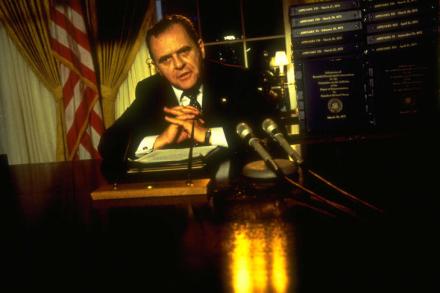
After Donald Trump’s election-win, many junkies of US politics will be needing another fix. But if you’ve already overdosed on Megyn Kelly post-mortems on YouTube or had your fill of Estee Palti’s Kamala imitations, where do you go to head off the pangs till inauguration day next year? Anyone without time for the entire West Wing series could do a lot worse than watch the films below. The first is Nixon (1995), Oliver’s epic three-and-a-half hour movie starring Anthony Hopkins as America’s disgraced 37th president – a surprisingly generous portrayal of a man as reviled by the Left, in his day, as Donald Trump is now.

Blackpool is cheap, tacky and wonderful

From our UK edition

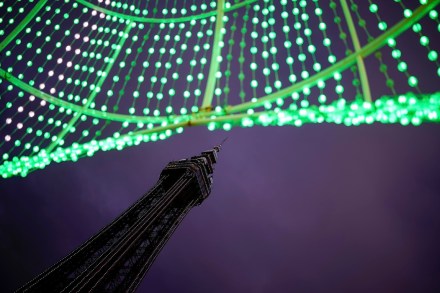
Arriving in Blackpool by train is just as I’d always dreamed. At the Pleasure Beach station, I disembarked right by the roller coasters, which rear up like Welsh hills beside you and, with the seagulls, welcome you with shrieking riders and clattering wheels. There are vast coasters in wood and metal weaving in and out of each other. Curvaceous and sprawling, they’re Gina Lollobrigida in steel. I’ve wanted to visit Blackpool for years. Spending my early childhood near Clacton-on-Sea, I got used to the delights of a tacky seaside town, and Blackpool is surely the mother of them all – even if it’s a mother with too much blusher and mascara on, who looks as though she’d scratch your eyes out if provoked.

Is it time to ban boxing?

From our UK edition

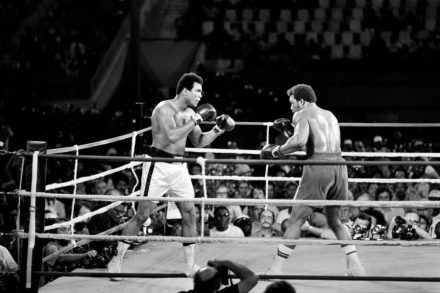
This year, as almost every year, there have been calls for a complete ban on boxing. Two fighters, Ardi Ndembo and Sherif Lawal, have died as a result of the sport since April, with more than twenty meeting the same end in the last decade alone. Steve Bunce, BBC’s ‘voice of boxing’, seemed in a recent interview to encapsulate the central dilemma: ‘I’ve been in waiting rooms, I’ve been there when doctors have told loved ones that their son, husband and father has died. Nobody in their right mind is going to defend that.

Kemi Badenoch’s early troubles are no reason to despair

From our UK edition

A consensus seems to be forming, with unreasonable speed, that Kemi Badenoch isn’t exactly smashing it at Prime Minister's Questions. Much of the harsher criticism comes from expected quarters – ‘Tory Gloom as Gaffe-Prone Kemi Badenoch Endures Another Miserable PMQs’ says a headline in the Huffington Post, while John Crace snarks in the Guardian that ‘Kemi Badenoch is turning out to be the gift that keeps on giving… to the Labour party.’  On the James O’Brien show there was a ‘more-in-pity-than-contempt’ snigger-fest between the host and political editor Natasha Clark: ‘Are we flirting with the possibility that she actually did better last week?’ the host chortled gleefully.

The curse of cool

From our UK edition

One of the freedoms of later life, if you’re not Keith Richards, is that you no longer have to worry about being cool. Cool, far more than money, is the currency of youth, and as a teenager I knew who had it and who didn’t. But what was cool, all those decades ago? Who possessed it, and why did it matter? Coolness, in my youth, seemed in the DNA, something you either had or didn’t There were various things that defined ‘cool’ when I was a teenager, and most of us in some way fell short. It was the ability not to get too excited about things. To feel enthusiasms but show them obliquely. To wear clothes that hinted at certain trends but never to copy anyone else’s style too slavishly. To hang out with beautiful women but not develop crushes on each of them in turn.