Robin Ashenden

Robin Ashenden is founder and ex-editor of the Central and Eastern European London Review. His detailed accounts of the media attacks on Lionel Shriver and Toby Young can be read on his substack ‘Letting the Child Run Riot’.

The frugal luxury of a pod hotel

From our UK edition

Right beside the airport I often use to fly home from Italy, there is a pod hotel where I am becoming a regular client. These, as most will know, are dirt-cheap places where sleep is stripped down to its absolute core. For about £35 a night here, you get a tiny berth of a room – a ‘capsule’ about 4ft wide and 6.5ft long – with a narrow bed, a socket to recharge your devices and, if you want to work, a fold-down mini-table for your laptop. It is a bit like you imagine a rather poky Swedish prison cell, decorated with Nordic minimalism: white bed, white walls, fluorescent light, no windows. ‘We make every traveller’s dream come true,’ the leaflet says.

Is Labour taking Britain back to the 1970s?

From our UK edition

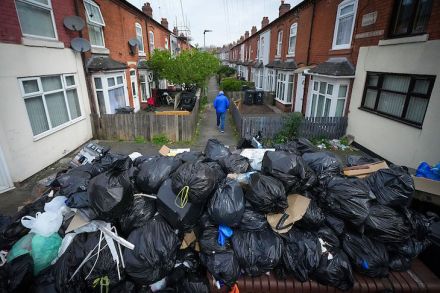
As the Birmingham binmen’s strike, full on since 11 March, grinds well into its second month, there is talk of similar action spreading nationwide. A crop of lurid headlines have been appearing in the press: ‘My Mercedes was destroyed by rats’, exclaims the Daily Telegraph, while the Daily Star announces that ‘Psycho seagulls and super rats team up to spread disease in Birmingham trash mountains.’ Residents, meanwhile, have begun to complain about marauding urban foxes, and of infestations of cockroaches and ‘rats as big as cats.’ With Deputy Prime Minister Angela Rayner calling in the army to help with the crisis, there is, as so often with Keir Starmer's government, a sense of déjà vu: such scenes recall the darkest days of the 1970s.

How Turin made Primo Levi

From our UK edition

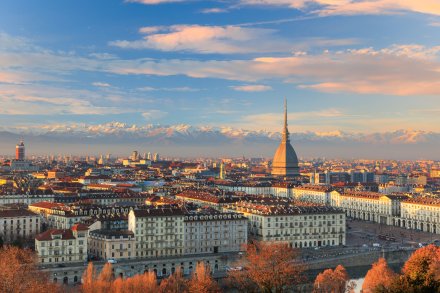
My first night in Turin, I thought of all the things I could be doing in this north Italian city, if I was there strictly for tourism. I could have gone to the Cathedral and seen a digital display of the Turin Shroud (the real thing is hidden away from prying eyes), or visited the National Museum of Cinema, housed at the Mole Antonelliana, that magnificent, spired tower – a failed synagogue – in the city centre. I could have drunk Barolo wine or Vermouth (another Turinese product), striking up conversations with the local Piedmontese to find out if they really are as cold, correct and altogether un-Italian as other regions in Italy often claim them they are.

Jim Callaghan’s greatest achievement was to be himself

From our UK edition

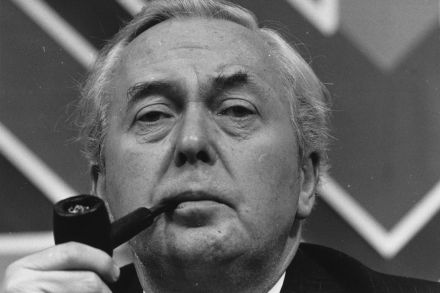
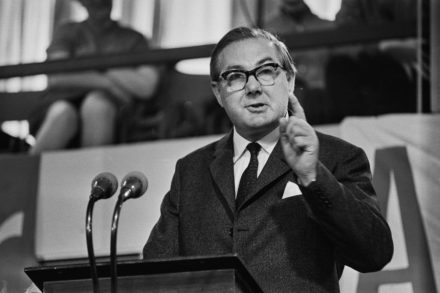
The government’s recent, palpable turn to the right seems to be gaining pace. In the past few weeks, Keir Starmer has slashed overseas aid, proposed a radical downsizing of the civil service, abolished NHS England and vowed to make serious cuts to welfare. As the Labour left pick up their weapons and prepare to do battle, conservative commentators are lauding the Prime Minister as being ‘to the Right of the Tories’ and cheering him on.  For all his quiet bonhomie, Callaghan never flinched from levelling with the public when it counted The situation calls to mind an earlier Labour prime minister who died exactly 20 years ago today and took his government in a similar direction: Jim Callaghan.

Will TfL kill off another London institution?

From our UK edition

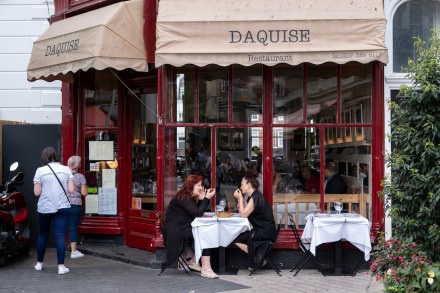
Following the closure of Hungarian restaurant the Gay Hussar in 2018 – that Soho institution and virtual museum of Labour party history – it seems Londoners are about to lose another Central European landmark. The Polish restaurant Daquise has finally had time served on it by Transport for London, who wish to redevelop the buildings round South Kensington station, where Daquise has been serving its loyal customers for nearly 80 years. Formerly a wartime canteen for Polish officers, Daquise opened as a restaurant in 1947. Even its name is rather romantic – a portmanteau word put together by the restaurant’s uxorious founder (he was Dakowski, his wife Louise, therefore Daquise).

Trump’s war on Europe should not surprise anyone

Has there been a more cataclysmic year for US-Europe relations than 2025? It began with J.D. Vance’s “sermon” to EU leaders at the Munich Security Conference last month, in which he berated Western Europe for its policies on immigration and free speech. This year has also seen the growing threat of NATO falling apart after 76 years of peace in Western Europe, with the White House seemingly tilting toward Russia and Trump demanding that alliance members such as Germany, France, and the U.K. dramatically increase their defense spending. This week, as the Trump administration imposes tariffs on Europe and Europe retaliates, there are even signs of a full-scale trade war.

Europe

Trump’s war on Europe should not surprise anyone

From our UK edition

Has there been a more cataclysmic year than 2025 for US-Europe relations? It started with US Vice President J.D. Vance’s ‘sermon’ to EU leaders at the Munich security conference last month – in which he berated Western Europe for its policies on immigration and free speech. The year so far has also taken in the danger of the Nato alliance falling apart after 76 years of peace in Western Europe, with the White House apparently tilting towards Russia and Trump demanding that members of the alliance such as Germany, France and the UK massively up their defence spending. This week, as the Trump regime imposes tariffs on Europe and Europe responds in kind, we’ve even seen the rumblings of a fully-fledged trade war.

Help, I’ve become a news junkie!

From our UK edition

I’ve always been something of a news addict, but recent events in America and Ukraine have turned me into the kind of junkie films get made about. ‘Trump Derangement Syndrome,’ an affliction you once sniggered at in others, is now sweeping the world faster than Covid-19, and is oddly easy, at the moment, to fall into. Speaking of the White House’s pivot to Russia and apparent abandonment of Europe, a friend said it was like ‘sitting in an articulated lorry being driven by someone who’s just downed an entire quart of bourbon.’ Another remarked: ‘There’s this complete, jaw-dropping disbelief at what’s happening. Each time I turn on the TV for the news, it feels like I’ve taken hallucinogenic drugs. How much longer can this go on?

Why should Zelensky be grateful to Trump?

From our UK edition

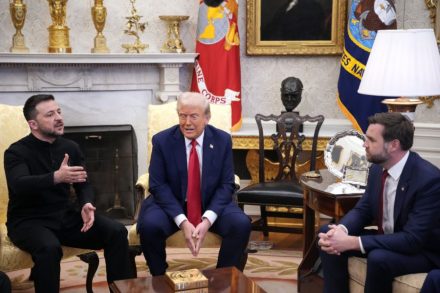
A consensus seems to be forming, in certain quarters, that the debacle at the White House meeting on Friday – which played out before an incredulous world – was in large part Volodymyr Zelensky’s fault. Ukraine's president is certainly paying a heavy price: overnight, Donald Trump has halted military aid to Ukraine. "We are pausing and reviewing our aid to ensure that it is contributing to a solution," a White House official has said. Aside from the Republican politicians racing to side with Trump following the White House row, there have been voices nearer home.

Britain is reliving the 1970s

From our UK edition

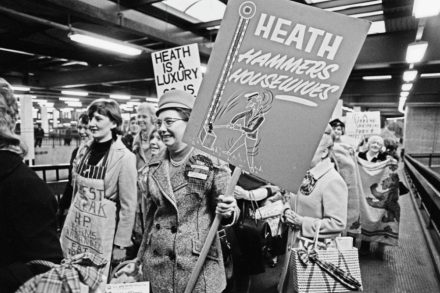
Is Britain going back to the 1970s? Even under the Conservatives in 2022, the Financial Times was warning we were in danger of reliving that ‘relentlessly awful decade’. Since Starmer’s accession to power, the similarities have become only clearer.   Millionaire hotelier Rocco Forte drew the same comparison in the autumn, saying we’d ‘come full circle’ and that the new Labour government was ‘doing a lot based on socialism, but not a lot on common sense'. 'They talk about growth, but everything they’re doing is anti-growth,’ he added. Broadsheet newspapers warn us that the return to 'stagflation' – that perilous mash-up of high inflation and stalling development – is taking us right back to the dismal era of Heath, Wilson and Callaghan.

What does it mean to be British?

From our UK edition

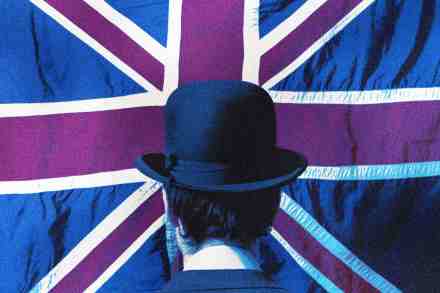
The comic writer George Mikes, who died nearly 40 years ago, knew he had made it when he received a fan letter one day from Albert Einstein. Mikes, the scientist said to him, was blessed with ‘radiant humour… Everyone must laugh with you, even those who are hit with your little arrows.’ Chief among Mikes’s targets were the British people, whom the writer – a refugee from Hungary – had chosen to spend the greater part of his life among. He had come to the UK on a visit in 1938 and wisely, given what would happen to his country in the years that followed, decided never to leave. Though it describes an England now long vanished, his 1946 book How to be an Alien, a comic study of the country and its foibles, brought him fame and acceptance.

Is Trump Putin’s useful idiot?

From our UK edition

Those whose mouths have been left hanging open by Donald Trump’s pivot towards Russia in the past fortnight, and the ruthlessness with which the Ukrainians (and Europe) have been thrust off the stage, haven’t been paying attention. The love-in between the two leaders has been going on now for a decade. It started properly in 2015, when the foreplay between the two ‘strongmen’ was conducted, like so many great flirtations, at a coy distance. Trump told CBS network he and Putin would ‘probably get along… very well,’ while Putin, to show willing, responded that Trump was ‘a very outstanding person, talented, without any doubt.

The sad decline of stationery

From our UK edition

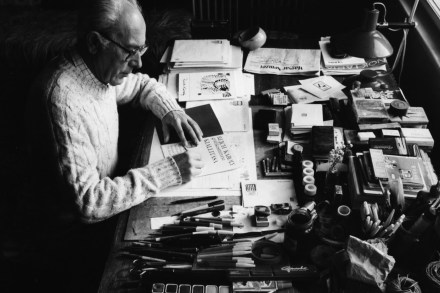
The news that WHSmith is facing closure seemed inevitable. Good stationery may be one of the pleasures of life, but is anyone actually buying much any more? Of course, people will always need pens, string, bubble wrap and so on, yet the heyday of stationery has definitely passed. There was a time, when people still wrote letters to each other or used writing implements as a matter of course, that it was a large part of our shopping, especially if you were a school kid. We wrote in pen and ink (no biros), and for a child of the 1970s or 1980s, this usually meant the choice between a Sheaffer No Nonsense pen, chunky and with a screw-on top, or a Parker 25, stainless steel and, with its ‘stepped down’ barrel, faintly futuristic.

Kemi Badenoch has a secret weapon in the fight against Nigel Farage

From our UK edition

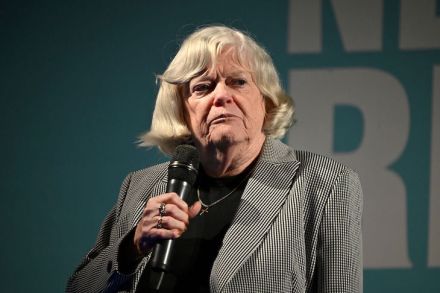
Things are currently looking choppy for Kemi Badenoch. Polls last weekend were bad enough, seven of them showing Reform leading the Conservatives by a point. But now it seems this gap may have widened dramatically. A poll on Thursday showed Reform pushing the Tories in to third place, with Farage’s party on 25 per cent and the Conservatives trailing on 22 per cent. It’s when Kemi speaks from her own experience that a gap between the Conservatives and Reform seems to open up ‘The message that’s coming from this is very, very clear,’ Farage has crowed. ‘Not only do we have momentum but if you want to beat Labour, if you want to get them out at the next general election, don't waste your vote with the Conservatives.

Italy is most beautiful in winter

From our UK edition

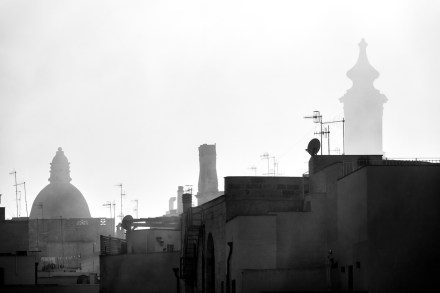
Monopoli, Puglia Monopoli is an elegant little seaside town in Puglia, the heel of the Italian boot, and in summer it’s unbearable. Tourists flock from everywhere. Squares you could normally zip through in a few seconds take ten minutes to cross, and the queues for Bella Blu, the ice cream parlour in Piazza Garibaldi, remind you of the Ryanair check-in desk. That struggling little pizzeria you patronised loyally throughout the autumn and winter now asks you to come back in an hour’s time and still can’t find you a table when you do. Monopoli, which seemed to be begging for it on every previous visit, suddenly has options. It’s offhand with you, looks at its watch and plays hard to get.

Holocaust Remembrance Day isn’t enough

From our UK edition

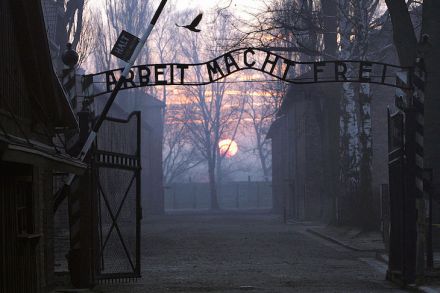
As Holocaust Remembrance Day comes round again, actual remembrance of the Holocaust seems fainter than ever. The arson attacks on synagogues in France and Australia, the mass-assault on Israeli football supporters in Holland last autumn, or the shocking recent scenes at the Oxford Union, where Jewish speakers were taunted, booed and sworn at by the audience, are a horrible echo from history, almost unimaginable a few decades ago. At Auschwitz, Primo Levi wrote, nothing was morally clearcut Much of this may be due to demographic change, as sworn enemies of Israel migrate in large numbers to the West.

Britain’s unending fascination with the Cambridge spies

From our UK edition

Will we ever tire of the Cambridge spies? Kim Philby, Anthony Blunt, Burgess and Maclean – and to a lesser extent John Caincross, the fifth man in the circle – are names as familiar to us now as certain brands of detergent or the line-up of the Beatles. To compliment the countless books, dramas and documentaries about them, this week the national archives declassified MI5 files on the subject. They cover Philby’s recruitment and subsequent flight to Moscow, as well as the Queen’s nine-year unawareness that Blunt (who worked for Buckingham Palace) had confessed to his past as a Soviet agent. It seems that whatever we think of Burgess, Maclean and co.

Life is not a piece of cake

From our UK edition

On a recent trip with my daughter to Trieste, the north Italian seaside city on the border with  Slovenia, I thought it would be nice to take her to Café Sacher for some sachertorte, which has been in culinary fashion since its creation in 1832. Trieste, once a thriving Austro-Hungarian port, is as reminiscent of Vienna as it is of Italy, and to eat this famous Austrian cake in the establishment of the same name would, I thought, be an experience my chocolate-loving daughter would remember. Sachertorte is nothing fancy compared to other Viennese cakes – merely a dark sponge with some apricot jam filling and coated in a layer of smooth chocolate, but that plainness is part of its charm.

Vodka and the Beatles on a New Year’s Eve in Narva

From our UK edition

Narva, the northern Estonian city right on the border with Russia, has been much in the news of late. Not only is it where the Estonians expect any Russian invasion to take place – most of the rest of the frontier passes straight through the middle of Lake Peipus – but it has also become the scene of constant provocations from the Kremlin. There have been border-demarcation symbols snatched by night, local sat-nav jamming, and a host of psychological wind-ups. In the past month reports have come of a clunky Russian surveillance-zeppelin flying over Narva, sporting the letter ‘Z’. This city – in which an estimated 96 per cent of people speak Russian as their first language – is one we may well be hearing more of in the next few years.

The triumph of When Harry Met Sally

From our UK edition

Look at any list of the ‘greatest ever romcoms’ and you’ll find When Harry Met Sally near the top of the list, if not heading it. This 1989 movie, directed by Rob Reiner and written by the late Nora Ephron – with terrific performances from Billy Crystal and Meg Ryan as the title characters – is about as good as the genre got, the high peak of romantic comedy before its slump to the present day. With its New Year’s Party ending and rendition of ‘Auld Lang’s Syne’, it's also the perfect film to watch in the week after Christmas (hence, no doubt, the BBC’s decision to screen it this coming 30 December). New York looks blow-dried, glossy and gleaming. Central Park in autumn is ravishingly on fire Is there anyone over 35 who hasn’t seen it?