Robert Tombs

Robert Tombs

Robert Tombs is an emeritus professor in history at the University of Cambridge and the author of This Sovereign Isle: Britain in and out of Europe (Allen Lane, 2021). He also edits the History Reclaimed website

England vs France is far more than a football match

From our UK edition

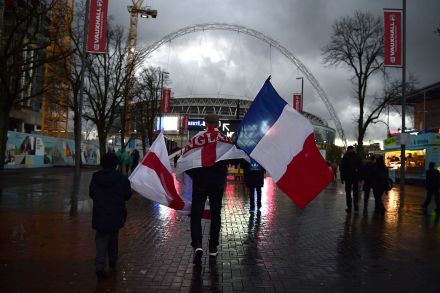
When England play France tonight, more will be involved than just a game of football.  We all know why. Even those with an enviable indifference to history will have vague notions about Agincourt, Joan of Arc, Waterloo, Napoleon and General de Gaulle. When I first went to France decades ago I was surprised to be asked fairly regularly why we had fired on the French fleet at Mers-el-Kébir – an event which, despite my history degree, had largely passed me by.  From the Norman Conquest to the Tudors, England was in a formative and often abusive relationship with France. Our language was changed by the influx of French, but on the other hand the first works of French literature were written in England.

The new vandals

From our UK edition

31 min listen

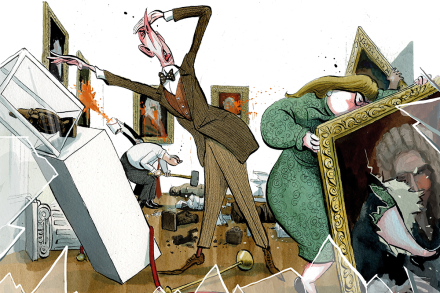
This week: In his cover piece Douglas Murray writes that museums are turning against their own collections. He is joined by the historian Robert Tombs to discuss whether a culture of self-flagellation is harming British museums (00:56). Also this week: For the magazine The Spectator’s assistant editor Cindy Yu writes that the tune is changing in China. She is joined by Professor Kerry Brown, director of the Lau China Institute at King’s College London to consider what the recent protests could mean for the Chinese Communist Party (13:24). And finally: Nicholas Lezard writes in The Spectator about how to beat London's expanding Ultra Low Emissions Zone. He is joined by journalist Tanya Gold to investigate an elegant loophole in the plans (24:56).

Fifa’s president has exposed the trouble with ‘decoloniality’

From our UK edition

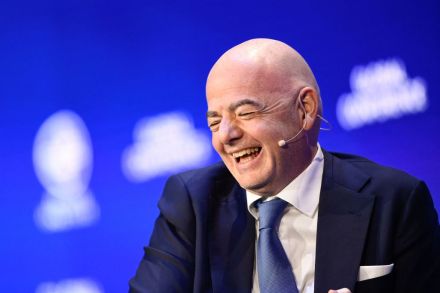
I laughed aloud when I heard Gianni Infantino, president of Fifa, identifying himself sanctimoniously with a whole list of disadvantaged people because he too was a victim: he was teased at school for having ginger hair.  I had teenage spots, so can I claim unique insight into the sufferings of the Uighurs?  That some of those he listed owed their disadvantage to Qatar and its Fifa partner – exploited migrant workers, notably, and gay fans – seemed not to disturb his tranquil assumption of the moral high ground. In its rambling incoherence, shameless narcissism and bare-faced hypocrisy, his speech put its finger on some of the key absurdities of what passes for progressive ethics in 2022.

These polemics against Brexit both fall into the same trap

From our UK edition

It is good for historians to take the plunge into political writing, using their knowledge where they can to illuminate our present predicament. I declare an interest: I have tried it myself, on the other side of the debate. One has to be open with the reader as to one’s intentions and willing to expose one’s own opinions to the test of evidence. Otherwise, the result is something like these intriguingly confused and confusing books, which are really polemics against Brexit while purporting to be something else. Though very different in style and assumptions, their prejudices lead to the same intellectual dead end.

What Netflix’s RRR gets wrong about the British Raj

From our UK edition

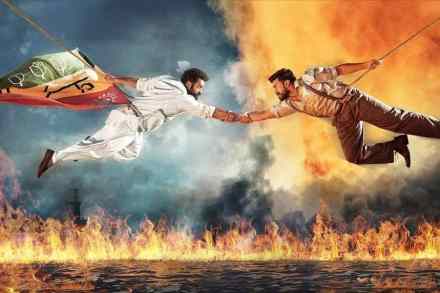
Netflix is promoting a new pseudo-historical blockbuster. RRR, which stands for Rise, Roar, Revolt, is an Indian film which has been playing to packed houses at home. Those expecting the usual Indian crowd-pleaser featuring magic, romance, stiff-upper-lip male heroism, and improbably gory violence will not be disappointed. RRR is set in the 1920s, when India was still in the British empire. The villains are British. No surprises there. But the portrayal of the two main British characters, ‘Governor Scott’ and his wife, is unusually nasty and at the same time amazingly silly. Among other incidents, the Scotts kidnap an Indian child and try to murder the mother. Hapless Indians are brutally tortured by assorted Brits.

Backing Badenoch is a risk the Tories should take

From our UK edition

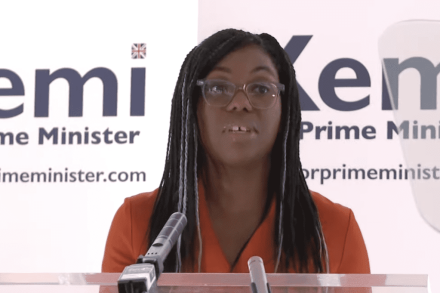
Whoever is chosen to lead the Conservative party will be plunged into a storm of problems needing rapid and decisive action. This will require a fresh mind, boundless energy and courage. In short, the attributes of youth. This puts Kemi Badenoch and Rishi Sunak – both 42 years of age – at an advantage. Sunak, the current frontrunner, came across as suave and impressive in his leadership pitch yesterday. But Badenoch looks to be the better option for a Tory party – and for a country – in need of radical change. Too many leading politicians seem exhausted by office. At a time of soaring inflation and the threat of a summer of strikes, this is no time for an old hand.

Why is St Paul’s Cathedral commemorating a Benin slave trader?

From our UK edition

The Church of England is rightly sensitive to the evils of slavery and racism. It has announced energetic measures to combat racism within its membership and to remove flagrant commemorations of slave owners in its churches. Following the Black Lives Matter protests, Archbishop Justin Welby remarked that: 'Some (statues and monuments) will have to come down'. It is a policy he continues to advocate. The anti-racism taskforce set up by the Archbishops of Canterbury and York has commented that: 'We do not want to unconditionally celebrate or commemorate people who contributed to or benefited from the tragedy that was the slave trade.' But does it always practise what it preaches?

Can Russia ever coexist with the West?

From our UK edition

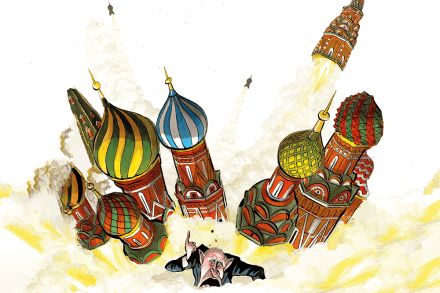
Seeing Vladimir Putin’s bloated face and listening to his increasingly unhinged rhetoric makes it tempting to assume that the current conflict in Ukraine is all about him. His actions and threats take Europe back not just to the 1930s, or even to the 1860s and Bismarck’s cold-blooded ‘cabinet wars’, but to the 1740s when Frederick the Great blatantly grabbed Silesia and set Europe ablaze. In attacking a peaceful sovereign country, Putin has regressed long before the United Nations Charter, and even before 1815, when the war-weary states that defeated Napoleon created a ‘Concert of Europe’ to keep the peace – with tsarist Russia one of the guarantors.

Cambridge’s Jesus College is guilty of double standards

From our UK edition

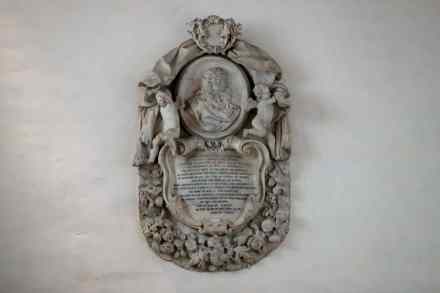
An event took place in Cambridge last week that was rare enough to reach the national press: a public hearing by the Diocese of Ely Consistorial Court in Jesus College chapel. It was brought about by a group of alumni who were opposing a move by the Master and Fellows of the College to remove a commemorative plaque to one of their greatest benefactors, the 17th century courtier and financier Tobias Rustat. His financial bequest was equivalent to over £4 million in present values, and his munificence is – or rather, was – celebrated in an annual College feast. I attended much of the hearing, spread over three days.

‘Wokeness’ and the collapse of intellectual freedom in the West

From our UK edition

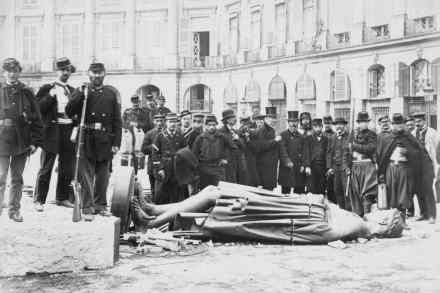
When observing the state of our academic life and public culture, I have an uneasy feeling of déjà vu. When I started life as a historian, going to France to do a PhD in the 1970s, French universities were held in a tight ideological grip. The subject I was working on — the Paris Commune of 1871 — turned out, to my naïve surprise, to be a hot topic. Two older French academics who became my mentors were both convinced (I think with reason) that their careers had been blighted because they had written things that the then mighty French Communist party disapproved of. The Commune was the party’s pride and joy: the first proletarian revolution (it claimed) and hence the forerunner of the Bolshevik revolution of 1917.

The race report critics are guilty of gaslighting

From our UK edition

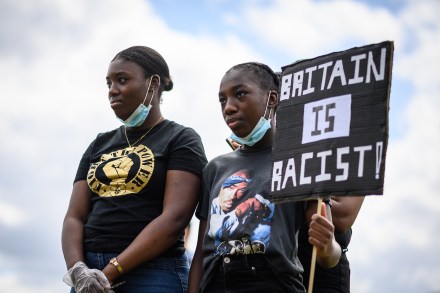
The Sewell Report on race and ethnic disparities is courageous, thoughtful and measured. Its relative optimism has triggered a torrent of bile from those personally or professionally wedded to the idea that Britain is a systemically racist society. They accuse the report of disregarding what is fashionably called ‘lived experience’ — in other words, anecdotal evidence and subjective impression. Its use of carefully considered objective data, the critics allege, devalues the lived experience of ethnic minorities. Lived experience has validity, but — by definition — only for those who have lived it. It proves nothing beyond itself, and certainly nothing systemic.

The distortion of British history

From our UK edition

The British Museum has announced the appointment of a curator to study the history of its own collections. On the face of it, nothing could be more anodyne. The history of collecting has been a fashionable topic in academic circles for decades. What sort of people collected, why, and how, tells us much about their cultural assumptions and their ways of seeing the world. It would be mildly surprising that the BM has been so slow to catch on – except that there seems more to it than scholarly pursuit of knowledge. While the research will indeed cover ‘wider patterns’ of collecting, the Museum announced that it is ‘likely that issues such as the role of the slave trade and empire... will be relevant to some of the research undertaken’.

The EU knew what it stood to lose and backed down

From our UK edition

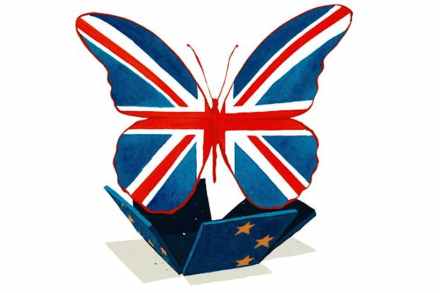
From the very beginning, the whole question of British and European integration has turned fundamentally on the question of sovereignty, as Ursula von der Leyen accepted this afternoon. Those who favoured membership then and now dismiss sovereignty as a meaningless or outdated notion in a world of interconnection. The events of the last four years, and perhaps even more the last few days, should have made them think again. The question of fishing had the merit of making sovereignty concrete and understandable, which is why it became suddenly so crucial. You may decide to give or lend certain rights or powers to others, but who makes that decision? Who has the power to make the decision stick? In a nutshell, that is sovereignty, as fundamental today as ever.

Why Britain chose Brexit

From our UK edition

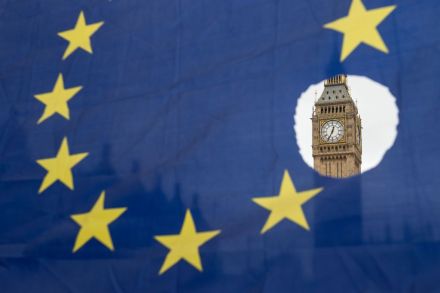
None of us will easily forget the emotional response to the Leave vote in 2016, the national and international lamentation and the angry reproaches and insults, heaped on the majority: they were ignorant losers, white, old, xenophobic and stupid, ‘gammon’ who would be better dead or disfranchised. But leave aside the arrogance and snobbery; more fundamental was the basic ignorance of Europe shown by these zealous Europhiles. They mistook Brexit for a British, or English, aberration. In fact, it was the manifestation of a pan-European disillusionment with the ‘European project’. Popular support for that project peaked 40 years ago, and has been in decline ever since. The French only just voted for the Maastricht Treaty even in 1992, the heyday of integration.

Emmanuel Macron’s great Brexit gamble

From our UK edition

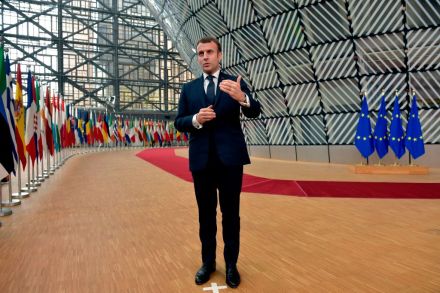
There is an intriguing pattern in our relationship with European integration. A Frenchman vetoed our attempt to join. A Frenchman threatens to veto our attempt to leave – or at least to leave with an agreement. General de Gaulle said we were too remote from Europe to join. Emmanuel Macron says we are too close to Europe to leave. I think de Gaulle got it right. I hope Macron doesn’t turn out to be right too, so that we end up stuck half in and half out, neither ‘at the heart of Europe’ nor ‘global Britain’. How individuals and nations react to the project of European federalism is determined not just by their calculation of what’s in it for them (though this is clearly paramount for some) but also by their notions of history.

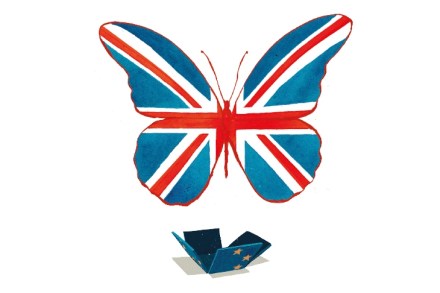
We should not accept Brexit in name only

From our UK edition

Given the seemingly highly technical nature of the current negotiations, members of the public who have normal lives to lead might be forgiven for thinking that the same issues are still being debated after more than four years. They might be forgiven for thinking this as much of the media, including the BBC, are happy simply to parrot the official line coming from Brussels: that this is just about compromise, both sides making necessary adjustments, and the EU simply acting in a normal and rational way. Rational it may be. Normal it is not. The EU is being rational in ruthlessly pursuing its own interests. But it is entirely abnormal to try to impose on the UK restraints that are incompatible with political autonomy.

Only a ‘good’ Brexit can stop Scottish independence

From our UK edition

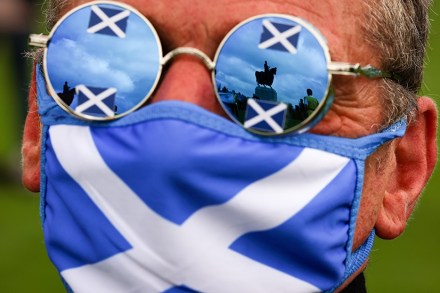
Victimhood has always been the core of nationalism. We are oppressed by Them: if We were free, our problems would be solved. This has been the lure of nationalism, and the reason why it is invariably disappointing once achieved. Scottish nationalists have their own myth of victimhood, but it has to go way back into the mists of time: to William Wallace (died 1305), Robert the Bruce (died 1329) and the Declaration of Arbroath (1320). More recent and relevant history does not so easily fit the victimhood bill. After all, the Stuarts had their eyes on the throne of England at least as much as the Tudors fancied theirs. Mary Queen of Scots was willing to assassinate Elizabeth to get it. Her son James actually succeeded. The Scots muscled their way into English politics during the Civil War.

Coronavirus has exposed the EU’s greatest flaw

From our UK edition

Politics begins and ends with sovereignty: the duty and right to make the legitimate final decision. We have seen this clearly during the pandemic. In every country, people have come to depend on their governments, whose authority rests on acknowledged sovereignty. This is as true, or even truer, in democracies: while monarchs and aristocrats could dispute sovereignty – and, where it suited them, divide up the cake amongst themselves – in a democracy there can only be one ultimate sovereign: the people. No sovereignty, no democracy. For years we have been told the illusion, if not a fraud, that sovereignty can be ‘pooled’. Who takes the final decision when sovereignty is ‘pooled’? If we cannot answer that question, then it shows the fallacy.

Is Prince Harry really prepared to face up to the Commonwealth’s past?

From our UK edition

When people such as Prince Harry say they want us to face up to the past, do they really mean it? It’s a demanding task, needing patience, humility, and effort. Some people spend their whole lives on it. It means understanding people from very different cultures with very different values. It means acquiring some feeling for the hard physical conditions they had to face, their insecurity, their limited resources, the always slow and often imperfect spread of information, and the frequent illnesses and pains they took for granted. It means gaining some insight into their beliefs about the universe, their understanding of their own history, their fears about their present, and their expectations of the future.

11 people who should have statues

From our UK edition

The Black Lives Matter movement and the ‘Topple the Racists’ campaign have reminded us that monuments in public spaces can make powerful statements, on the rare occasions when we get round to noticing them. If the campaigners’ energy does not slacken, we can expect to have quite a few vacant plinths, and this will give us an opportunity to ‘confront’ (as some like to say) our history, and perhaps educate ourselves about the links between Britain and the ending of the appalling trade in human beings between Africa and the Americas, and between Africa and the Muslim world. Many people will have ideas about this, and indeed have expressed them in the correspondence pages of the newspapers.