Robert Peston

Robert Peston

Robert Peston is Political Editor of ITV News and host of the weekly political discussion show Peston. His articles originally appeared on his ITV News blog.

Why Dominic Cummings’ departure may only be a ‘matter of time’

From our UK edition

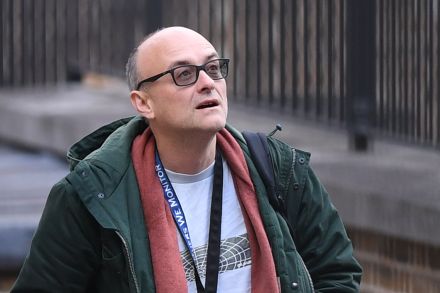
Dominic Cummings's role in government no longer looks sustainable, as members of the cabinet and Tory MPs turn against him - and in the words of one very senior member of the government, it is "only a matter of time" until the prime minister asks him to go. The problem for Cummings - and the prime minister - is summed up in a Tweet by the former minister Caroline Nokes: "My inbox is rammed with very angry constituents and I do not blame them." Nokes is typical, according to ministers and MPs. Like all prime ministers, Boris Johnson risks deep harm to his own authority and popularity if he ignores what his party is telling him.
The dilemma at the heart of the Cummings controversy

From our UK edition

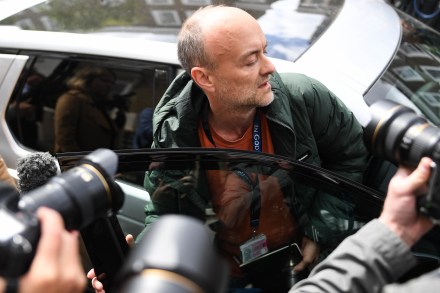
Dominic Cummings isn't resigning - or, at least, not by choice. That much is crystal clear from No. 10's statement that 'Mr Cummings believes he behaved reasonably and legally'. But it is striking that there is no endorsement from Boris Johnson or the government saying that it was appropriate for him to drive 250 miles with his spouse, who had Covid-19 symptoms, rather than quarantining for 14 days in their London home.  The bigger issue is about the tension between the public and private responsibilities of powerful officials So the debate about whether he should quit will rage for a bit.

Should we be using GPs to track and trace?

From our UK edition

A simple and compelling point was made on Peston by former WHO director Anthony Costello last night: the UK already has a potentially world class network for track and trace in its GP surgeries. But these are being sidelined as outsourcing giants Serco and Sitel have been hired to organise clinical and non clinical people to sit at the end of a phone to have conversations with symptom sufferers to get them tested, trace who they’ve been with and (presumably) monitor their progress. According to Costello, GPs are not even allowed to order a Covid-19 test for patients (those patients have to do it for themselves). https://twitter.com/itvpeston/status/1263236458451738624?

Why didn’t Boris act sooner against coronavirus?

From our UK edition

It is too easy to become obsessive in whole or partial lockdown. And my obsession for weeks now is why ministers and Whitehall failed to learn the big lesson of the 2007/8 banking crisis – namely that high impact, low probability risks wreak maximum damage, and if they have the potential to destroy your way of life, money and resource should be no object in warding them off. To start on a more positive note, Boris Johnson seems belatedly to have found the appropriate gauge of risk versus reward. Because although the PM on Sunday conceded that a vaccine may never come to 'fruition', he has nonetheless committed £93 million of our money to helping AstraZeneca create a vaccine manufacturing plant that could make 30 million doses as soon as this September.

Boris Johnson’s confusing lockdown rule change

From our UK edition

The miracle achieved by Boris Johnson's 50-page 'Plan to rebuild" strategy for 'Covid-19 recovery' is that somehow the PM succeeded in alienating the leaders of Wales and Scotland and create an apparent rift between the nations, when the liberation from lockdown he is offering the people of England is so slight as to be barely perceptible. There is a tonal shift in respect of work, namely that the PM would like to see businesses that are not on the proscribed list, such as factories and building sites, operating again. But that's a wish, not an order. And the overarching message is unchanged, namely that it is far better to work from home where that is possible. In other words, the PM would much prefer Nissan motorcars to be handcrafted in workers' front rooms.

Two big gaps in Boris Johnson’s lockdown statement

From our UK edition

There were three messages in Boris Johnson's address to the nation, and quite a lot of important gaps. The messages were: Because the Covid-19 epidemic has been tempered but not eliminated, lockdown continues – though will be modified very gradually;It would be a jolly good thing if a few more of us could return to work, especially on construction sites and in factories, so long as that can be done in a way that does not imperil health;The pace at which lockdown is modified, and whether it is modified at all, is in the collective hands of the British people, and will be wholly determined by whether we continue to obey social-distancing rules. So what were the gaps?

Covid-19 is not under control in care homes and hospitals

From our UK edition

What worried cabinet ministers today was the disclosure to them that the rate of transmission of Covid-19 is not properly under control in either hospitals or care homes. In the community, R – the rate of transmission – is probably as low as 0.5/0.6, which means its savage progress through the population has been arrested. But in the very places where the frail and sick are supposed to be shielded, too many people are still being newly infected. Ministers were especially shocked to learn that some hospitals are really struggling to manage the rate of spread of illness. That is why Dominic Raab announced today that for the UK as a whole, R has deteriorated a bit and is in the range of 0.5 to 0.9. And 0.

The tragic case of Damian Holland

From our UK edition

Damian Holland, the former district Crown prosecutor for Luton and Bedfordshire, died in his bed at home in Chorley, Lancashire of Covid-19, just over a week ago. He was 56. His sister, Caroline Heaton, brother, Gregory Holland, and cousin, Chris Hughes, told me about the events leading up to his death. They believe he was let down by the NHS he revered, and in particular the NHS 111 gateway service to hospital. The story they tell of Damian’s final two weeks is upsetting and troubling. This is what happened: On 14 April, Damian went into isolation, having displayed Covid-19 symptoms, along with his partner Shirley Harwood, who works at a care home and also had symptoms.

Do antibodies deliver immunity to coronavirus?

From our UK edition

Assume an alert flashes on your NHSX Covid-19 tracking app that you've been in contact with someone who has the virus. This means that you and those you live with are supposed to self-quarantine for 14 days (not seven). Now if you have symptoms, you would be allowed to have a test to ascertain whether you do in fact have the virus. But you would not be allowed a test if you don't have the symptoms; you just have to sit at home and see if you develop symptoms. So if you are unlucky enough to constantly be bumping into people with symptoms, you could find yourself in a new steady state of repeated 14-day household lockdowns.

Is the PM an example of why those with Covid-19 should be hospitalised earlier?

From our UK edition

There is so much to ponder in the prime minister's interview about how Covid-19 almost killed him. But, in respect of the effort to protect us all, what stood out for me was how and when he was persuaded to move from Downing Street to St Thomas's Hospital. ‘I wasn't struggling to breathe but I just wasn't in good shape and it wasn't getting better,’ he told the Sun on Sunday. ‘Then the doctors got anxious because they thought that my readings were not where they wanted them to be. ‘Then I was told I had to go into St Thomas's. I said I really didn't want to go into hospital...

How the lockdown could be relaxed

From our UK edition

We'll get a fairly detailed plan from the PM next week encouraging businesses to start operating again, public transport to increase its shrunken capacity, and children to return to school. But there'll be no firm date for any of that to happen – only a condition that even such modest returns to normal life must not risk a dangerous resumption of rapid viral spread. The transport and schools stuff is hardest, because social distancing on a train or on the London Underground is not going to be easy to organise, and keeping young children far enough apart to prevent infection will also be tricky.

Why the furlough scheme needs to be redesigned

From our UK edition

The road to that unmentionable destination, the lockdown 'exit', is long and will take at least nine months. Which means economic recovery will be longer still. And that requires the Chancellor to plan now to make the decline and recovery as benign as possible. Probably the most important economic therapy (and certainly the most expensive) has been the Coronavirus Job Retention Scheme, which has persuaded hundreds of thousands of businesses to retain millions of employees on their books, rather than sacking them - but which urgently needs a redesign for the next phase. That is what business leaders and some ministers tell me. And they have a point. There are three issues of concern.

Rishi Sunak to give 100 per cent guarantees on business loans

From our UK edition

There's a confident expectation among those in government and banks that Chancellor Rishi Sunak will offer 100 per cent guarantees on emergency loans to small businesses. But last week the chancellor stated categorically that the 80 per cent government guarantee for the Coronavirus Business Interruption Loan Scheme (CBILS) would not be changed (which the Prime Minister's official spokesman also confirmed last week). The squaring of the circle, to be at least hinted at later today, is that the Treasury will launch a new loan scheme for smaller businesses, with 100 per cent government guarantees, rather than modifying the existing scheme. The economic impact of this new scheme would be the same as modifying CBILS. Though the politics may be easier for Sunak.

The viral transmission rate will be key to relaxing the lockdown

From our UK edition

The next big event in the saga (I choose my words carefully) of our Covid-19 lockdown is the preliminary results in early May of the Office for National Statistics (ONS)/University of Oxford survey to find out who has had the virus. Officials and ministers hope this will help them to judge how far the current social-distancing rules have depressed the rate of viral transmission, or the notorious ‘R0’ – which is the estimated number of people infected by a person who is infected. The point is that ministers, advised by the chief medical officer and chief scientific adviser, have decided they can modify – though not end – lockdown when R0 is close to 0.5.

Have we reached the peak?

From our UK edition

At the risk of breaching lockdown etiquette, I feel it would be remiss not to mention that the stats on Covid-19 infections, hospital admissions and deaths have been stable or falling for around a fortnight. Since 5 April, there have been many more tests for coronavirus carried out, but numbers testing positive have been falling, which is significant. Also, today's reported deaths of 449 are considerably fewer than half the peak of 10 days ago – and although we all know the daily reported total of deaths is less than the actual total, and that there is often a dip after a weekend, that trend is like-for-like, so it is relevant.

Why is Britain not using its testing capacity?

From our UK edition

The government's excuse for why it didn't engage in a comprehensive testing and tracking approach to contain Covid-19 after it started to spread throughout the community was that – unlike Germany and South Korea – it did not have the sufficient number of labs to process the tests. Well that excuse is almost exhausted, because testing capacity is increasing rapidly. Take for example the new super lab being built in Cambridge by AstraZeneca (AZN) and GlaxoSmithKline (GSK), using equipment and technology made in the UK by Primer Design, the molecular diagnostics division of Novacyt. AZN's chief executive Pascal Soriot tells me that tests will start any day now and that it will have the capacity to process 30,000 tests per day as soon as early May.

The government’s coronavirus mantra avoids its systemic problem

From our UK edition

Paul Marshall makes the compelling point that mistakes have almost certainly been made by scientists and Public Health England. However, in the British system, power lies not with the scientists and officials, but with elected politicians. And I have been concerned since the start of this outbreak that ministers were using the expert advice of the scientists and epidemiologists, and the recommendations of the assorted expert committees, as a reason not to take responsibility for life-and-death decisions. ‘We're following the science’ has been the ministerial mantra and cliché of this crisis. And if we've learned anything in this crisis it is the limits of scientific knowledge in respect of a new virus. What matters, I think, is not the precise date of the lockdown.

The scientists are now running the country

From our UK edition

What we learned on Thursday is that, at least while the Prime Minister is convalescing, the boffins of the government's Scientific Advisory Group for Emergencies are, in effect, running the country. Dominic Raab, who is deputising for Boris Johnson, made it crystal clear that he and his fellow ministers – who met on Thursday in Cabinet and the Cobra committee – simply followed the advice of SAGE, which is chaired by Sir Patrick Vallance, in extending total lockdown for a minimum of three weeks. As other ministers have confirmed to me, there was no pushing back on SAGE's view that easing any of the current unprecedented constraints on our basic freedoms would lead to another surge in Covid-19 infections that would damage our health and the economy.

Has the furlough scheme removed the incentive to work?

From our UK edition

Before the government announced its Covid-19 economic safeguarding scheme to pay up to £2,500 a month to 'furloughed' or rested employees – the 'Coronavirus Job Retention Scheme' – a number of business owners and managers talked to me about their creative ideas to continue operating and trading on a different model after lockdown. But as soon as they were told that they could in effect shut down and still pay something to their staff with government subsidies, they gave up on those imaginative routes to operating and went into hibernation. For example, the PM in a press-conference before he became ill, tried to encourage pubs, cafes and restaurants to convert into home delivery services. A few did. Most didn't.

The contradiction at the heart of ministers’ coronavirus response

From our UK edition

The stories I hear from what healthcare workers call 'the frontline' – code for those working directly with Covid-19 patients – are traumatising. 'I am seeing scores of death,' says one senior doctor. 'It's hideous... I'm palliating [giving temporary relief to] people in their 70s to 90s on the wards who were never remotely suitable for intensive care and who are dying horribly quickly, and nastily too, if they don't get the proper care. 'The ward staff don't have the experience and the poor patients don't have a loved one by their side acting as their advocate'.