Robert Peston

Robert Peston

Robert Peston is Political Editor of ITV News and host of the weekly political discussion show Peston. His articles originally appeared on his ITV News blog.

Keir Starmer has shown he’s serious about winning power

From our UK edition

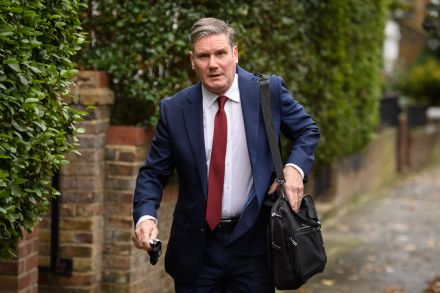
It's not as though Jeremy Corbyn wasn't put on warning. Well he would have been put on warning, if he had bothered to wait even five minutes before putting out his own statement in response to the EHRC verdict that Labour on his watch had made ‘serious’ failures in tackling anti-Semitism. Because his successor Sir Keir Starmer said in a prepared statement at 11.05 am that anyone who thought that verdict was ‘all exaggerated or a factional attack... should be nowhere near the Labour party’. Just a few minutes earlier Jeremy Corbyn had said ‘the scale of the problem was... dramatically overstated for political reasons by our opponents inside and outside the party, as well as by much of the media’.
Is Boris Johnson ready to blow up a free trade deal?

From our UK edition

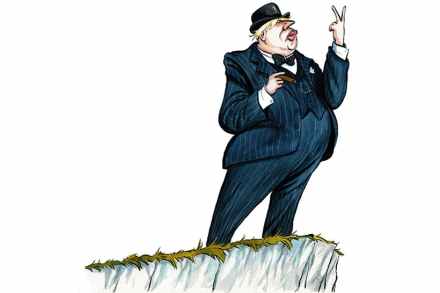
As far as I can gather, the EU has only one genuinely non-negotiable red line that could prevent a resumption of talks on a free trade agreement with the UK – which will be made clear by its negotiator Michel Barnier in a telephone call on Monday with the UK negotiator David Frost. Barnier and the EU are insisting the UK adhere to the EU’s framework for limiting subsidies to businesses, what is called ‘state aid’, and there should be a UK enforcement mechanism for those state aid rules. The prime minister, counselled on this issue by Dominic Cummings, has been saying this is unacceptable because: 1) Boris Johnson wants the freedom to subsidise as much or as little as he likes.

Is Boris wise or foolish to ignore the scientists?

From our UK edition

It is important to understand the gap between the Prime Minister and the scientists on the Scientific Advisory Group for Emergencies (Sage) because it is huge. On 21 September, when evidence was accumulating that infections were on the rise, Sage recommended a series of national measures. These included the closures of pubs and restaurants or an even more severe restriction on our freedoms in short sharp national 'circuit breakers'. Instead, Boris Johnson has adopted a regional approach to stamping out coronavirus. And even the 'baseline' measures he is imposing on 'very high risk' areas such as Merseyside are seen as inadequate by his scientific advisers — as his chief medical officer, Chris Whitty, told me at the press conference yesterday.

The Covid rules haven’t been simplified

From our UK edition

The new three tier ‘Covid alert levels’ unveiled by the PM are supposed to help all of us better understand how and why our freedoms are being restricted, and improve compliance, at a time when both infection levels and suppressive measures are significantly different across England and across the UK. But it is not clear that our understanding will be massively improved – partly because some of the rules remain complicated and confusing, partly because some of them are not exactly intuitive, and partly because some of them seem unfair. Let's look at just one aspect of the rules, those relating to pubs and restaurants.

How strict will the new Covid restrictions be?

From our UK edition

I have a few points to make about the new three tier system to be announced today for restricting our lives and businesses, to suppress Covid-19. 1) Last Wednesday, the government was so worried about the spread of coronavirus in the north of England that it was planning to impose new restrictions on places like Liverpool, Manchester and Newcastle before announcing the three-tier framework. Because of opposition from city mayors and local authorities, that is now not going to happen. The three-tier framework will come first. 2) However, it is probable that there will be new restrictions announced today for Liverpool, if agreement with the Mayor Steve Rotheram is reached in time – which seems highly likely.

Ministers close to closing northern pubs and restaurants

From our UK edition

We are at a critical moment in the second surge of coronavirus. Ministers, scientists and officials are deeply concerned about the rate at which Covid-19 is increasing in the North West, North East and Yorkshire and Humberside: they believe the daily quantum of infection is doubling every five to seven days in large chunks of northern England. They see the course of the virus as very similar to what happened in Italy in the first phase of the illness, where infections were concentrated in the north. Ministers are therefore feeling their way towards imposing more severe restrictions on socialising in those areas. They are likely to impose closure of all hospitality venues – pubs and restaurants – for a period.

Boris’s speech was all sunshine and no substance

From our UK edition

Probably the most significant feature of Boris Johnson's speech at the Tory conference is what it said about him rather than what he said. To put it another way, the Prime Minister seemed bouncier than he has in many months, thanks — he said — to shedding 26 pounds of flab since falling seriously ill with Covid-19. But this was not a speech that will be remembered for much else, partly because Johnson wants us to set our sights on 2030 whereas millions of us are more fixated on who will be in work or in decent health tomorrow. Only some will be offended by Boris Johnson's 2030 country: the air clean, the people more tolerant and productive, the UK still four nations. But it was pretty much all hope rather than plan.

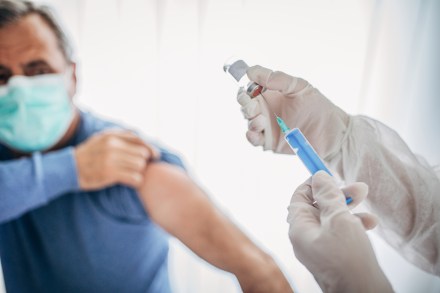
Why won’t the UK vaccinate the whole population?

From our UK edition

In Kate Bingham's interview with the Financial Times, where she says that vaccinating the whole population is ‘not going to happen’ and would be ‘misguided’, she is deferring the holy grail of herd immunity for months beyond next spring, and saying we will be living with the virus for years. Because as chair of the UK Vaccine Taskforce, she is saying that only the old, vulnerable and those working in healthcare settings will be vaccinated. In other words, the vaccine would be protection for those most likely to become acutely ill or whose services are most needed. But all the evidence shows that young people are the principal spreaders of the virus, which would still be in the community.

The reason coronavirus cases ‘tripled’ this weekend

From our UK edition

The dramatic jump in UK coronavirus cases from 7,000 reported on Friday, to just under 13,000 on Saturday, to a fraction below 23,000 on Sunday is not a dire as it seems – though it is not good news. What has inflated the numbers for Sunday and Saturday are a staggering 15,841 cases where the specimens were taken between 25 September and 2 October. In other words, there was a serious lag between a swab being taken and the result appearing in the government's official figures. The reason for the confidence-destroying lag was a glitch in two of Public Health England's ‘legacy’ computer systems, which meant that data was not being transmitted properly. Or at least that is what a senior official tells me. The glitch has apparently now been fixed.

Will Rishi Sunak’s Job Support Scheme work?

From our UK edition

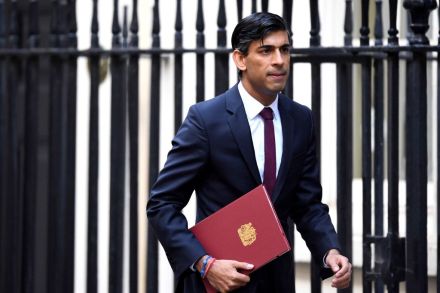
Rishi Sunak's Job Support Scheme may represent the most ambitious programme to socialise or nationalise work in British history – because at a time when so many companies face bleak demand for their goods and services, it subsidises employers to put their staff on short hours, or turn them into part-time workers, as an alternative to sacking them. The Treasury is not publishing estimates of how many employees will be on the scheme over the six months of its existence. But its designers 'guess' that there may up to four million people on it – which would cost the Exchequer around £1.2 billion a month or £7.2 billion in total. On the basis of my research for a film about the looming unemployment crisis – which airs this evening on ITV at 7.

Do the new restrictions go far enough?

From our UK edition

The Prime Minister announced a raft of measures that will significantly delay the UK’s economic recovery, but whose impact on the spread of coronavirus is profoundly uncertain. The important point is that there is only one significant new measure, namely closing pubs and restaurants between 10 p.m. and 5 a.m. Pretty much everything else is either: A toughening up of existing measures — such as more compulsory mask-wearing in shops and restaurant, and banning indoor five-a-side football;Or freezing the planned re-opening of the economy, such as a return to work in offices that the PM urged only days ago or permission for us to go to football and other sports matches and attend business exhibitions.

How do we avoid another coronavirus lockdown?

From our UK edition

Probably the most interesting new bit of information we received today on Covid-19 was from Sir Patrick Vallance, the chief scientific adviser, who implied that he and the government are now assuming that fewer than one in 200 people who are infected with the virus will die. That still means this form of coronavirus is a terrible scourge. It is not exactly conventional good news. But this Infection Fatality Rate of 0.4 per cent is less than half the circa one per cent he and the chief medical officer Chris Whitty employed as their rule of thumb or heuristic only a few months ago.

Labour’s four economic pillars

From our UK edition

The first big speech by Labour shadow chancellor Anneliese Dodds was highly significant for what it did not do — in that it was all about competence rather than ideology. Her speech had four main elements:  a need for government to subsidise those hundreds of thousands of people forced into part-time working by the virus;a need to mount a massive national retraining programme for those whose industries are in irreversible decline;the imperative of avoiding debt delinquency and a default cliff edge for companies next March when their emergency Covid-19 loans from the Treasury become repayable;and an urgent need to avoid waste in contracts awarded by the government.  Many Tory MPs would say this is eminently sensible.

Brace yourselves for more Covid lockdown restrictions

From our UK edition

I've been bombarded with emails and messages from data scientists who firmly believe that the trend to Covid-19 infections, based on when a specimen was taken, is flattening or even falling. On the basis of that analysis, they are convinced the government is overreacting by threatening to impose new social distancing measures. And if you look at the government's Covid-19 dashboard, you will be struck that the seven-day average for positive results is sharply on the rise, whereas there is a modest fall in the seven-day average of results by the date the specimen was taken.

With scientists divided, it’s time for politicians to decide

From our UK edition

Later today, the ONS coronavirus survey will confirm that Covid-19 is on the march again everywhere, not just in regional pockets — though there are regional variations. And it will also show that infection is rising in all age groups, though the incidence of the illness is highest by a margin among those aged 17 to 29.  Which is why, as I reported earlier in the week, the government is looking at introducing additional social-distancing measures on a national basis — such as forcing pubs, clubs and restaurants to turf out customers at 10 p.m., or reverting to closing them altogether, for a couple of weeks or so.

A tighter lockdown could be two weeks away

From our UK edition

Significant further restrictions on our freedom to mix with people, in social or work settings, could be introduced in a fortnight, if the 'rule of six' does not lead to behavioural change and a flattening of the coronavirus infection rate. I have spoken to members of the government and to its scientific advisers, and am struck by how anxious they are that the virus may be spreading out of control again. One member of the Scientific Advisory Group for Emergencies (SAGE) told me : 'My big worry now is that we might be too late again to avert a major second wave. If we wait for deaths to go up again before taking decisive action we will be in trouble again.' A senior member of the government told me he was acutely aware of the scientists’ concern.

Tory faith in Boris is wavering

From our UK edition

Having won that 80 seat majority for his party in December, it is really quite an achievement by Boris Johnson that so many Tory MPs want to talk to me about whether he'll stand down – willingly or not – next year.  There is even talk that no-confidence letters are already sitting in Graham Brady's bottom drawer calling for a leadership contest. Truthfully I don't take the notion of an organised coup seriously. But what should worry the PM – and what the chief whip should be telling him – is that many of those who were his enthusiastic supporters in last June's leadership contest say things to me like 'everything that's happening is on Boris', 'this is all about him' or, 'he's got till next year to turn this around'.

What’s behind the testing shortage?

From our UK edition

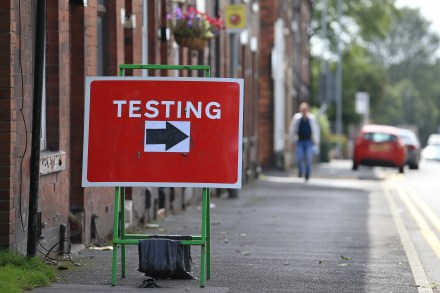
I am being inundated with messages from people with what they fear may be Covid-19 symptoms who cannot work because they can’t get a test. So what's going on?  It's not all about the growing incidence of the virus. Though that is part of it. Here is what a source from NHS Test and Trace tells me:  Demand for testing has gone through the roof. It’s almost like the loo roll phenomenon early on the year. We are doing more testing per head of population than other European countries but at current demand even once we have doubled that testing capacity (which we will do by end Oct) we will still have the problem you describe.

Could the Lords reject Boris’s Brexit bill?

From our UK edition

A senior Tory tells me the House of Lords will turn the Salisbury-Addison convention – which says the upper house won't block legislation that stems from a government's election manifesto – on its head, when it comes to the two bills amending the Withdrawal Agreement. He points out that the Tory manifesto describes Boris Johnson's renegotiated Withdrawal Agreement as ‘a great deal’ and ‘signed sealed and delivered’. There were no qualifications. So their lordships could rationally argue that by rejecting Johnson's attempt to modify the WA, through the internal market and finance bills, they would be compelling him to honour the promise he made to the electorate. Far from breaching Salisbury-Addison, they would be embracing its underlying logic.

A Brexit question Boris Johnson must answer

From our UK edition

The question for Boris Johnson is why he signed a Withdrawal Agreement that gives the EU the power to decide whether British agricultural products are fit for export to Northern Ireland. There was no secret that this is in the Withdrawal Agreement. It is there in black and white. Critics of the deal cited it from the start. It is why more sanitary and phytosanitary checks will be required on livestock and agrifoods going from Great Britain to Northern Ireland.  So why would Boris Johnson sign a deal knowing from the outset that its terms were such that in plausible circumstances they might lead him to breach international law? Or was he was unusual in simply not knowing?