Robert Peston

Robert Peston

Robert Peston is Political Editor of ITV News and host of the weekly political discussion show Peston. His articles originally appeared on his ITV News blog.

Where’s Boris’s plan to stop the economic chaos?

From our UK edition

Interest payments on the national debt rose 70 per cent last month to £7.6 billion (compared with a year earlier) – largely because of the impact of inflation on income paid to holders of index-linked gilts, which are inflation-protected government bonds. More worryingly, this was 49 per cent more than the official forecast made in March by the Office for Budget Responsibility (OBR). It suggests the OBR’s forecast that the government will have to pay £87.2 billion in interest payments (a colossal sum) may be too low, especially since the ONS is not factoring in the most recent inflation figures in its calculations of the monthly bill.
Boris Johnson’s inflation contradiction

From our UK edition

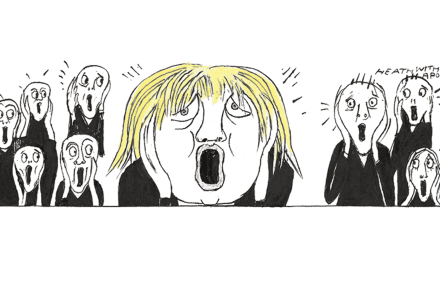
As Boris Johnson tries to limit pay rises to bring down inflation, ministers have no explanation for why planned rises in the state pension and benefits would be less inflationary than increasing teachers’ and nurses’ pay. The government is attempting to limit public sector pay to 3 per cent, while allowing pensions and benefits to rise to around 10 per cent.  This is not to argue against protecting the poorest through the standard indexation of pensions and benefits. But it is to say that Mr Johnson’s pay policy is confusing. And he cannot pretend there is no pay policy. Even refusing to engage directly in pay talks with rail workers – despite owning the network and funding services – is a policy.

The Northern Ireland Protocol is a problem Boris created

From our UK edition

If Boris Johnson was elected on a single slogan, it was ‘Get Brexit done’. He then claimed it was done at the end of 2019 in the terms for leaving the EU he agreed. Not so. Today legislation will be introduced by the Foreign Secretary Liz Truss to unilaterally overhaul a central pillar of the UK’s negotiated exit from the EU, the Northern Ireland Protocol – which is seen by the EU, whatever the government may claim, as a breach of the UK’s international treaty obligations.  Economic relations with the EU, still the biggest market for our exporters by a country mile, were already bad. They are about to become appallingly bad.

Boris’s moment of maximum danger is yet to come

From our UK edition

Much as Boris Johnson wants to 'bash on', deliver popular populist policies, and characterise Monday's confidence vote as the catharsis that purges him and his party of the partygate poison, his struggle to re-establish his credibility and authority will be the challenge of his life. First of all, most of the 148 Tory MPs who rejected him cannot be bought off, because they typically want him out not for the policies he espouses but rather for what they see as his character flaws – and they are doubtful he can change his spots. I asked one rebel what was the new plan, after the rebels failed to muster the 180 votes needed to unseat him. The answer:  'A process for securing 30 extra votes.

The dilemma facing Tory MPs

From our UK edition

There are two questions for Tory MPs today. One, do they believe that the PM will cost them or save them their seats at the next general election. Two, how pernicious to confidence in the important institutions of government is the widespread perception that the politician at its apex is dishonest. The first question is about the future of the Tory party. The other is about the future of the UK. They are of course linked. Tory critics of Mr Johnson say that he is now, in the words of one, ‘our Jeremy Corbyn’, by which they mean large numbers of potential Conservative voters will never again vote for their party while he is leader.

I’m not exaggerating partygate

From our UK edition

A veteran Tory MP, who I've known for almost 30 years, just laid into me – and my colleagues in much of the media – for allegedly exaggerating the seriousness of how Covid laws were systematically broken in 10 Downing Street. He hadn't read Sue Gray's report into the rule-breaking parties and did not attend the PM's statement on her findings. He has already decided that all is for the best in Boris Johnson's best of all possible worlds. His decision to ignore Gray's report is not what most voters would expect from their elected representatives. What many would see as his negligence is all the greater because in my lifetime there has never been a report into misconduct at the heart of government as damaging as Gray's.

A Treasury cost-of-living help package could be imminent

From our UK edition

A £10 billion package of help with fuel bills and the cost of living targeted at those on lowest incomes could be announced as soon as Thursday, I am told. No final decisions have been made, but the prime minister wants to reset his administration before the Queen’s Jubilee parliamentary recess and after the publication tomorrow of Sue Gray’s report into Downing Street parties - which is expected to be damaging to the PM’s reputation.

The unspoken argument behind a windfall tax

From our UK edition

The Financial Times story on Rishi Sunak looking at a possible windfall tax on energy firms captures how difficult such a tax is for any government, especially a Tory one. Because it begs questions why, when electricity suppliers suffered unsustainable losses in autumn and winter, when under the price cap they suffered huge and unsustainable losses – what you might call a reverse windfall – they were allowed to go bust. If you believe in capitalism and competition, you believe in swings and roundabouts: windfall profits in good times are the obverse of extreme losses in the bad. Kwasi Kwarteng repeated that mantra as failing electricity suppliers would not be bailed out.

How does Boris Johnson save the economy?

From our UK edition

'For the first time since records began, there are fewer unemployed people than job vacancies,' the ONS says. The number of unemployed people in January to March was 1,256,846 whereas vacancies in February to April 2022 rose to a new record of 1,295,000. At a time when we may already be in recession, and we certainly face it later this year, this is extraordinary. Part of the explanation is that hundreds of thousands of people have voluntarily left the Labour market, as the Bank of England’s governor Andrew Bailey told MPs yesterday. One explanation is that large numbers of people have long Covid and cannot work. Others are clinically vulnerable and are choosing not to work because they don’t wish to take the health risk when Covid remains prevalent.

Boris is gearing up for a new round of the Brexit wars

From our UK edition

As prime minister, Boris Johnson does not follow the normal rules. To put it mildly. And this year's Queen's Speech, announcing his legislative programme for the coming parliamentary session, is no exception. That's because probably the most important piece of planned legislation, a new law to waive parts of the contentious Northern Ireland Protocol, is not mentioned, even though it almost certainly will be announced at the end of this week (and by the Prime Minister). The reason this matters is because there is a constitutional crisis in Northern Ireland following last week's elections to its Assembly. The runners up in the election, the unionist DUP, won't allow the NI executive or government to be formed unless and until the Protocol is binned.

Why Starmer had to put his job on the line

From our UK edition

Keir Starmer had no option but to say – as he has done – that he will resign if fined for breaching Covid rules, as I already pointed out on Friday when Durham police announced it was investigating whether his beer and curry last April was work sustenance or an illegal party. There were two reasons why he had to put his job on the line. First, he would never get over the charge of grotesque hypocrisy had he failed to do this, given that he and his party have repeatedly and urgently called on Boris Johnson and Rishi Sunak to quit, after they received fixed penalty notices for attending the PM’s birthday party.

Partygate could still sink Boris Johnson

From our UK edition

There are two big questions in UK politics, neither of which has been decisively resolved by local election results in England so far – and probably won't be by the time all UK results are announced over the coming few days. They are: Will and should Conservative MPs remove Boris Johnson as their leader and the country's prime minister? And has Keir Starmer set Labour on a path that could see the party win the next general election? In London, the swing from Tory to Labour of three symbolically important councils – Barnet, Wandsworth and above-all Westminster – is humiliating for a Prime Minister who still boasts of his erstwhile popularity as two-time London mayor.

Why is Boris Johnson suppressing the incomes of the poor?

From our UK edition

As the Prime Minister pointed out this morning, looming recession and soaring inflation are not uniquely British problems – though right now the UK economy is slowing faster than many of our rich country competitors. In the US for example, the IMF’s former chief economist Ken Rogoff has warned just today that the Federal Reserve’s official interest rate may have to go as high as five per cent to suppress rampant inflation. Which is one of the reasons I was nonplussed when the PM told Susanna Reid on ITV's Good Morning Britain that he’s reluctant to increase universal credit and benefits and protect poorer people from the ravages of inflation because doing so would stoke inflation and force the Bank of England to put up interest rates.

What’s going on with the Met and partygate?

From our UK edition

I don't understand the logic behind how the Met Police is conducting its probe into unlawful parties at Downing Street and the Cabinet Office. My confusion reached brain-aching proportions after my ITV colleague Anushka Asthana disclosed on Friday that officials had received fixed penalty notices – fines – for attending perhaps the most famous of all the Downing Street events, the Bring Your Own Booze garden party on 20 May 2020, revealed by an email leaked to ITV News. The point is that I know of at least two relatively junior officials who have been informed by the police that they've been fined. So there is no longer any doubt this was a law-breaking party.

What’s wrong with the Rwanda plan?

From our UK edition

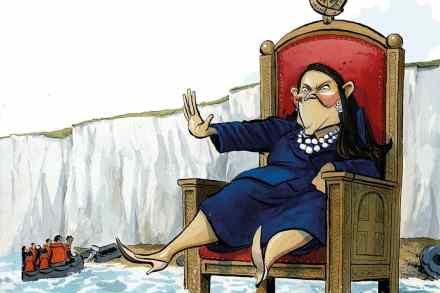
There are many unanswered questions about the government’s new policy of compelled expulsion to Rwanda of uninvited asylum claimants. Here are just a few. 1) What is the estimated cost per expelled refugee? None of the briefings give a clue. In its absence, how can the policy be assessed for its value for money, compared with the status quo? 2) What is the UK’s responsibility – moral, legal – if bad things (illness, accident, attack) happen to the expelled refugees after arrival in Rwanda? This would be a concern even if Rwanda did not have a recent history of trampling on civil liberties and basic human rights (see this report from the US state department).

This is a constitutional crisis

From our UK edition

The police have today concluded that Boris Johnson, the Chancellor and the PM’s wife all attended illegal parties that breached Covid laws written by the PM. This is most serious for the prime minister of the three of them because it was he who told MPs on 8 December that he had been ‘repeatedly assured’ there were no parties and that no Covid rules were broken. He now has the challenge of his life to prove that he did not willfully and knowingly mislead MPs – because if he did deliberately mislead MPs then he has no choice but to resign under the code of conduct for ministers, which he signed off and approved in keeping with normal practise on becoming PM.

How Boris misled MPs over partygate

From our UK edition

The significance of today's announcement by the Met Police that 20 individuals who unlawfully attended parties in Downing Street and the Cabinet Office will be fined is that it confirms the Prime Minister misled the House of Commons on 8 December. On that date he told Sir Keir Starmer, Labour's leader:  What we don't know, of course, is whether the Prime Minister knowingly misled the House of Commons 'I have been repeatedly assured that the rules were not broken. I repeat that I have been repeatedly assured since these allegations emerged that there was no party and that no Covid rules were broken.

Putin’s war is pushing Finland towards Nato

From our UK edition

There is important precedent for a small, determined, patriotic army saving a nation from falling under the sway of Russia. And that precedent is the 105-day Winter War in 1939-40 between Finland and the Soviet Union, the precursor to Vladimir Putin’s Russia. The courage of the Finns inflicted huge losses on their fearsome adversary, as the Ukrainian army is doing today. Helsinki eventually sacrificed 10% of Finland’s territory to the Soviets, in return for a peace that has endured since the end of World War Two. To learn the lessons, I travelled to Finland for On Assignment in the days around the anniversary of the end of the Winter War on 13 March.

Has Rishi Sunak just destroyed his relationship with Boris?

From our UK edition

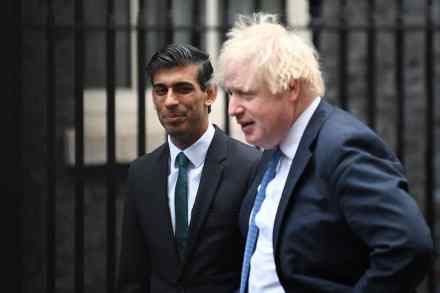
I said yesterday that I expected the Chancellor to increase universal credit by more than planned. I was misled. I was wrong. Today, Rishi Sunak's official forecaster, the Office for Budget Responsibility, is explicit about how painful Sunak's refusal to increase benefits will be for those who rely on them. It says:  'Lags in CPI (or inflation) uprating of benefits mean they fall almost five per cent in real terms in 2022-23, reducing their real value by £12bn, and take up to 18 months to catch up fully with higher inflation'. It means those who are unemployed, on very low incomes, or who rely on the state pension, are going to be in dire trouble in coming months.

What to expect at the spring statement

From our UK edition

The big story of Wednesday's spring statement by the Chancellor will be the impact of inflation – which has soared from almost zero just over a year ago to perhaps 10 per cent in coming months – on living standards and the public finances. I expect Rishi Sunak to provide limited protection from the ravages of inflation to those on low and middling incomes, probably by increasing universal credit and the threshold for paying national insurance.  But quite how far the Chancellor inflation-proofs the take home pay of low earners will be the most important question he will answer tomorrow.