Robert Peston

Robert Peston

Robert Peston is Political Editor of ITV News and host of the weekly political discussion show Peston. His articles originally appeared on his ITV News blog.

Britain’s Brexit fate is now in Emmanuel Macron’s hands

From our UK edition

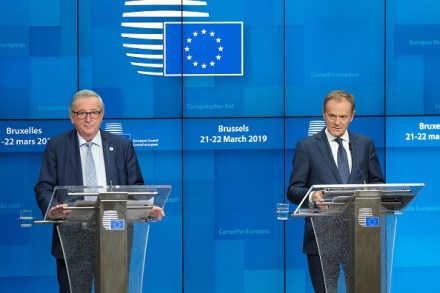
Our Brexit fate is in the hands of France's president Macron – which is "not a wholly comfortable state of affairs," in the euphemistic words of a minister. What this minister means is the Prime Minister and her close colleagues are a long way from being convinced Macron will underwrite EU president Donald Tusk's proposal for the UK to be granted a year's delay to Brexit, with a break clause to allow us to leave the EU earlier if all the political and legal niceties can be completed earlier.

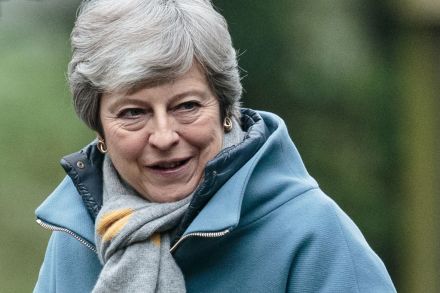
Could Theresa May cancel Brexit?

From our UK edition

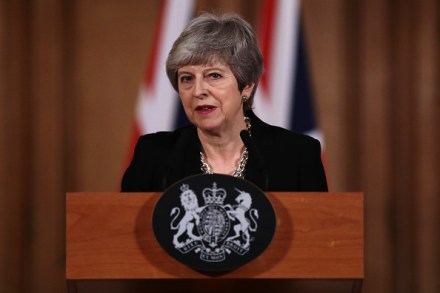
Is the de facto Brexit default now revoking Article 50 this week rather than a no-deal Brexit on 12 April? I ask because the Prime Minister is now explicitly saying the choice is a binary one between some version of her negotiated deal and not leaving at all (that is what she said in her sofa chat yesterday). The point is that she has no power to prevent a no-deal Brexit on 12 April by delaying Brexit; for a delay, she needs the unanimous agreement of the EU's 27 leaders. But she does have the unilateral power to prevent a no deal by cancelling Brexit altogether, by revoking the Article 50 application to leave the EU.

The Brexit headache is just beginning

From our UK edition

Pretty much everyone I meet says they want all the Brexit uncertainty to end, one way or another. But that is now impossible: even agreement - which seems remote - on some version of the PM’s deal to take us out of the EU would only be a beginning of a sort, not an end, with so much left to decide on what kind of future relationship we need and deserve with the EU. And if there is no backing from MPs for the Withdrawal Agreement that is the divorce from the EU, then we are into a series of choices whose consequences would be to lead to various forms of national and international fission.

Has a Brexit breakthrough been reached at last?

From our UK edition

There has been considerable and widespread cynicism about the talks between the Government and Labour about a compromise that could break the Brexit deadlock. But those close to the negotiations, led today by David Lidington and Keir Starmer, believe there is at last a "plan with a chance," of securing a positive vote from MPs for the PM’s Withdrawal Agreement, without which there can be no managed exit from the EU. It would involve a Government committing to staying in the Customs Union, "dynamic" alignment with EU rules covering workers’ rights and the environment and giving the Commons a vote on whether the whole package would be subject to confirmation in a referendum. "Is all this real?" I asked informed sources. "Yes," they said.

How talks between Labour and the Tories reached breaking point

From our UK edition

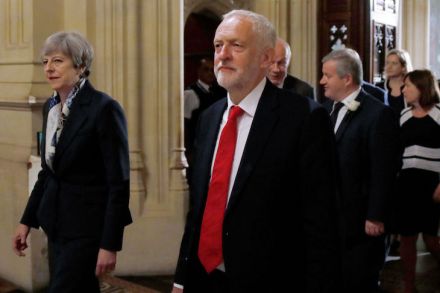
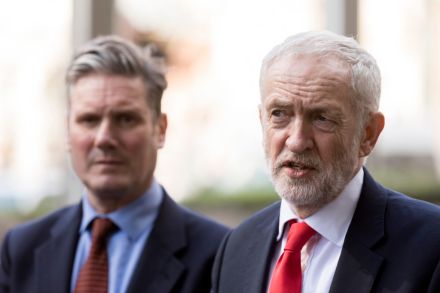
I am not sure whether it’s me or ministers who are the more naive. Because last night I was persuaded by Cabinet sources a breakthrough was nigh in talks to resolve the Brexit deadlock between the Government and Labour. But the talks are already on the verge of collapse - with each side making charges it is the other side which is negotiating in poor faith. Labour sources say the memorandum sent by the PM to Jeremy Corbyn this afternoon shows Theresa May has not shown the flexibility her colleagues expected. What has disappointed Corbyn and his Shadow Brexit Minister Keir Starmer is - they believe - the government is ruling out asking the EU to rework the Political Declaration on the UK’s future relationship with the EU.

Philip Hammond has ignited Tory tensions over Brexit

From our UK edition

The magnitude of the gulf between the cabinet and perhaps a majority of Tory MPs over how to deliver Brexit was on display like an oozing wound on my show last night. The Chancellor was his normal phlegmatic, unsugaring self when revealing the government is reconciled to a long Brexit delay till at least the end of the year - and that the best the prime minister can hope for from the emergency EU council on Wednesday is that the EU’s 27 leaders would allow her a break clause, so that if a Brexit deal is fully approved on all sides earlier, the UK could leave the EU at that earlier juncture. But even so, he conceded there is now no escape from preparing to participate in European parliamentary elections, at considerable financial and emotional cost to the UK.

May’s Brexit plan could blow up the Conservative party

From our UK edition

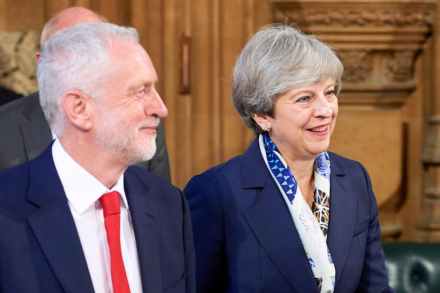
It is hard to overstate the magnitude of what happened in Cabinet today - because the prime minister and her senior ministers concluded over a record-breaking seven-and-a-half hours that Brexit was too hard for them to deliver on their own and they would now seek to enlist Jeremy Corbyn and Labour in finding a solution. 'There was a very significant shift to a softer Brexit,' said a senior minister. 'There is no turning back'. And there you have captured the magnitude of the risk the PM is taking. First, she is hoping Corbyn will negotiate in good faith - which may well be the triumph of hope over experience since he can legitimately query why she didn't offer proper cross-party negotiations months ago.

Three reasons why Theresa May’s Brexit decision is so crucial

From our UK edition

Today’s cabinet meeting could be the most important of Theresa May’s term in office – and possibly of the last 50 odd years. Because the time to prevaricate on Brexit is almost exhausted – with an emergency EU summit having been convened for Wednesday next week to decide if the UK will leave without a negotiated settlement or whether Brexit day will be delayed again, but this time by many months. The PM and her ministers have to choose, and probably now, if Parliament is to have any say on it and if EU leaders are to be briefed adequately ahead of the council.

Will Labour MPs back a bid to revoke Article 50?

From our UK edition

Labour has not tabled a motion for today’s indicative votes on a way through the Brexit mess – which feels like an important moment, perhaps because it has recognised that its proprietary version of Brexit is dead and its role instead is to work with all MPs to identify a deliverable alternative (which could be no Brexit at all) to the Prime Minister’s thrice rejected plan. Presumably the thrust of Labour’s effort in the hours ahead will be to secure support for the Kyle/Wilson call for a “confirmatory” referendum (a referendum on any Brexit deal approved by parliament). But even so, the prospect of a majority of MPs backing a people’s vote today is slim.

May can still pass her Brexit deal on the fourth try – here’s how

From our UK edition

Some allies of the prime minister are desperate for a majority of MPs to back Ken Clarke’s motion to keep the UK in the customs union, at the close of round two of the Letwin process of the Commons bossing the government, Monday night. Yes you heard me right. They want MPs to vote for a plan that would drive a coach and whole herd of horses through the Tory election manifesto and would cleave the Conservative Party in two. To be clear, these are not ministers and officials who themselves are keen for the UK to agree a deal with the EU that would remove the requirement for customs checks to be reintroduced after Brexit. Au contraire.

A no-deal Brexit or general election are now likelier than ever

From our UK edition

Maybe I am simply in the thrall of the powerful emotions manifested by MPs in their debate on Friday, but their rejection of the Withdrawal Agreement just now feels the most significant event to date on the long and tortuous road to Brexit or revocation. Because the EU just a week ago bent its rules to accommodate the Prime Minister's request for a modest Brexit delay, and also tried to make it easier for her to ratify the deal by saying only the divorce part – the Withdrawal Agreement – would need MPs' approval to secure a postponed Brexit date of May 22 for leaving the EU. Parliament has thrown the compromise offered by the EU's 27 leaders back in their faces.

The PM is setting herself up for humiliation today

From our UK edition

Truthfully I don't really understand why the prime minister is holding a vote tomorrow to approve the Withdrawal Agreement she negotiated with the EU - other than the symbolism of showing that on the day she originally set as Brexit day, 29 March 2019, she is still working hard to extricate the UK from the EU. Because I don't see how she wins it. It's almost irrelevant that tomorrow's vote won't be a 'meaningful vote', under the terms of the EU Withdrawal Agreement act. It is to all intents and purposes a meaningful vote: if the motion laid tonight is passed tomorrow, MPs WOULD be approving Brexit, under the terms laid down by the EU 27's leaders a week ago.

Rees-Mogg: it’s Cameron’s fault that May could not bully me

From our UK edition

On a very odd day, perhaps the weirdest moment on my show last night was when Jacob Rees-Mogg effectively blamed the current Brexit mess - for which some would say he shares some responsibility (ahem) - on David Cameron and Sir Oliver Letwin, for making it very hard to call general elections. The chairman of the Tory Brexiter European Research Group said that he would probably not have voted against the prime minister's deal in January, when she held her first meaningful vote, if she had made that vote a confidence motion - such that losing it would have triggered a general election and seen him thrown out of the party he loves.

A snap election simply cannot happen – and yet it might

From our UK edition

Here are the reasons why there must be and cannot be a general election. First, the drivers of a general election: 1) Tomorrow, MPs will start the process of identifying, via so-called indicative votes, a route through the Brexit mess that a majority of them can back. 2) This process is likely to continue next Monday, when a range of Brexit or no-Brexit options should be whittled down to one. 3) There will then be a vote, maybe the following day, compelling the prime minister to negotiate with Brussels whatever MPs have decided. It is too early to say what option MPs will coalesce around. And maybe they are too fractious and divided to coalesce around any practical solution.

Theresa May’s Brexit deal is heading for a third defeat

From our UK edition

Here is the measure of today's events in Parliament: probably the least important question is whether the PM names her own departure date when she sees a rowdy meeting of Tory MPs at 5pm under the umbrella of the 1922 Committee. This is not to trivialise whether or not she confirms she would stand down on May 22nd or shortly afterwards, subject to her Brexit deal being ratified later this week. If she conveys in any way when she's going, and her colleagues have no idea whether or not she will, that's huge. But every Tory MP knows she is a short-dated Prime Minister. Whatever Theresa May says today, none of her MPs expect the leadership election that would select her successor to be held later than the summer.

Why Theresa May can’t ignore the result of the indicative votes

From our UK edition

This matters. I am told that the cabinet secretary Mark Sedwill and the attorney general Geoffrey Cox informed Cabinet that if at the end of the Letwin process MPs pass a motion mandating the PM to pursue a new route through the Brexit mess - perhaps a referendum, or membership of the customs union, or some other softer future relationship with the EU - the PM and government would be in breach of the ministerial code and the law if they fail to follow MP's instructions. Or to put it another way, the PM would be obliged to endeavour to negotiate with the EU the revealed will of MPs, even if that revealed will involved a Brexit delay that requires the UK to participate in May's European parliamentary elections, or is at odds with the Tories' manifesto.

How many ministers will Theresa May lose this week?

From our UK edition

Theresa May conveyed no sense at Cabinet as to whether her ministers will be allowed to vote with their consciences tomorrow on Sir Oliver Letwin's indicative votes, to find a solution to the Brexit mess. She has been warned by MP Anne Milton that there could be 20 resignations from junior ranks of government to add to the three on Monday, if she does not allow a free vote. Ministerial sources tell me that the four in the cabinet, justice minister David Gauke, Amber Rudd, Greg Clark and Scottish minister David Mundell, who are seen as the leaders of the anti-no-deal rebels, won't resign.

A snap election simply cannot happen – and yet it might | 26 March 2019

From our UK edition

Here are the reasons why there must be and cannot be a general election. First, the drivers of a general election: 1) Tomorrow, MPs will start the process of identifying, via so-called indicative votes, a route through the Brexit mess that a majority of them can back. 2) This process is likely to continue next Monday, when a range of Brexit or no-Brexit options should be whittled down to one. 3) There will then be a vote, maybe the following day, compelling the prime minister to negotiate with Brussels whatever MPs have decided. It is too early to say what option MPs will coalesce around. And maybe they are too fractious and divided to coalesce around any practical solution.

Will MPs get a free vote on alternatives to the PM’s Brexit plan?

From our UK edition

A point of significant tension at this morning’s cabinet will be over whether the PM is to allow her ministers and MPs to vote with their consciences on the indicative votes today and tomorrow to find any Brexit – or no-Brexit plan – that a majority of MPs can support AND on the statutory instrument (SI) that will delay the 29 March date in law for exiting the EU. Apparently the whips want a free vote on the SI, so ministers – including some of them – can vote against it and keep their jobs. And more remainy ministers – led by Greg Clark, Amber Rudd and David Gauke – want a free vote on the indicative votes, so they can signal their support for a softer Brexit or a referendum without losing their jobs. How will the PM jump?

May promises Brexiters she will resign in exchange for their votes

From our UK edition

I am reliably told that Theresa May told Boris Johnson, Iain Duncan Smith, Steve Baker, Jacob Rees-Mogg, David Davis et al at Chequers that she will quit if they vote for her deal, including the backstop they hate. But she gave no specifics. So there is not a lot of trust she would actually quit. And the problem is that even if she persuades all Tory ERG MPs to vote for her unamended Withdrawal Agreement, which she won’t (because although Mogg and his supporters may succumb to her call for loyalty, Baker and the Brexiter purists will resist her blandishments) and she also successfully woos Northern Ireland’s 10 DUP, she still does not have the numbers.