Robert Peston

Robert Peston

Robert Peston is Political Editor of ITV News and host of the weekly political discussion show Peston. His articles originally appeared on his ITV News blog.

Boris Johnson’s Brexit plan could soon be dead

From our UK edition

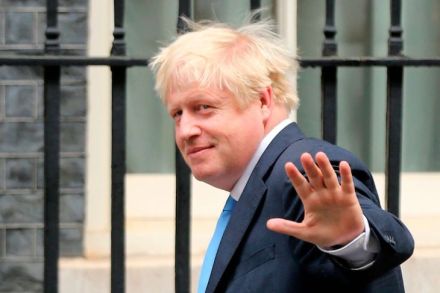
Boris Johnson's Brexit offer to the EU is not dead on arrival - but it may well be dead within the next 48 hours. And that could become clear as Michel Barnier, the EU's chief negotiator, briefs EU ambassadors and MEPs about what he sees as the deficiencies of the proposals. The biggest hole, as you would expect, is that EU government heads are being asked to take on trust that all the legal and technical preparations necessary for checks on goods and food flowing from Great Britain to Northern Ireland, and all the legal and technical preparations for customs checks away from the Northern Ireland border, will be completed by the end of 2021 at the very last.
The pros and cons of Boris Johnson’s Brexit proposal

From our UK edition

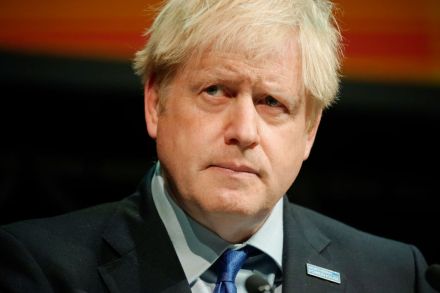
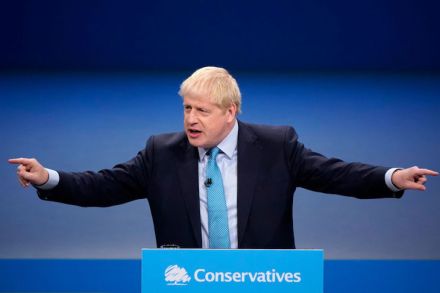
Boris Johnson's new Brexit offer to the EU comprehensively rips up the backstop agreed by Theresa May – but it contains one proposal that may upset some Brexiter purists, namely that Northern Ireland should more-or-less remain in the single market for goods, food and agricultural products, subject to rules set by Brussels. At 3pm this afternoon Boris Johnson sent a four page letter to the president of the European Commission, Jean-Claude Juncker, outlining the PM's plan to break the Brexit impasse. Along with the letter, Johnson's negotiator David Frost will present a six page explanatory note, and 40 pages of legal text to replace the controversial Northern Ireland protocol in the Withdrawal Agreement. The main elements of Johnson's plan are: 1.

Boris Johnson’s threat to MPs and the EU: ‘Back me or sack me’

From our UK edition

In setting the scene for Boris Johnson's first and potentially historic speech as Prime Minister to Tory party conference, Downing Street made two statements that sounded a lot like threats, both to EU leaders and to opposition MPs. In tearing up the 2107 Joint Report that underlies the so-called backstop to keep open the border on the island of Ireland – that foundation of the Brexit deal agreed by Theresa May and ditched by Johnson – Downing Street said "officials have made it clear that if Brussels does not engage with the offer...then this government will not negotiate further until we have left the EU".

Boris has five days to make a Brexit deal

From our UK edition

The prime minister is about to launch himself on the most important and arduous challenge of his time in office, and arguably of his life. In the course of just the next five days he will try to secure a Brexit deal from an EU deeply sceptical he is prepared to make the compromises they say they need, and with a British Parliament largely hostile to his vision of life outside the EU. As I mentioned yesterday, he’ll announce the big headline of what he wants in his conference speech tomorrow.

It’s now or never for Boris Johnson if he wants a Brexit breakthrough

From our UK edition

There is only one speech that matters this week, here in Manchester at Tory party conference. It will be Boris Johnson’s on Wednesday and it will be significant – potentially historic – for what he has to say about how and whether he hopes to break the impasse with Brussels on negotiating an alternative to the Northern Ireland backstop and therefore strike a new deal to leave the EU. Intriguingly, perhaps weirdly, cabinet ministers are ebullient with optimism that Johnson is on the verge of striking a deal with Juncker and Barnier that is sellable to most Tory MPs, Northern Ireland’s DUP and even enough Labour MPs to carry it across the line in a Commons vote.

Why Margaret Beckett could become caretaker prime minister

From our UK edition

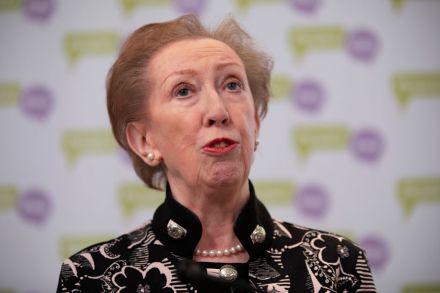
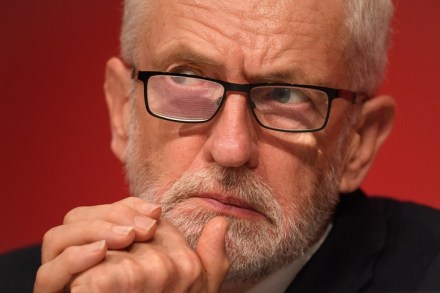
Dame Margaret Beckett – the former Labour deputy leader and ex-foreign secretary – is emerging as the most likely compromise candidate to be caretaker prime minister, according to sources involved in opposition talks about ousting Boris Johnson. As I mentioned last week, the Scottish National Party would be prepared to accept Jeremy Corbyn as temporary PM, with the express purpose of securing a three month Brexit delay and holding a general election. But it has become clear in talks between the opposition parties that the Lib Dems and expelled or self-exiled Tory MPs won’t agree to install Corbyn as PM. "We cannot win a vote of no confidence if Corbyn is the candidate," said a senior opposition MP.

We will find out in a few days whether Brexit will happen

From our UK edition

There is probably now just a week or so from the end of the Tory conference for Boris Johnson to make a breakthrough on a Brexit deal, or for talks to end. Why? Well, government sources tell me the EU Commission has been told by British negotiators in no uncertain terms that Johnson will not quit to avoid being forced by the Benn Act to ask for a Brexit delay. And Brussels was also told that if Johnson is still prime minister on October 19, he will find a way to get round the law and refuse to ask for a delay. So Barnier and Juncker have literally no time to decide if Johnson is bluffing and if there is scope for backstop compromise.

Revealed: The SNP’s plan to back Corbyn as temporary PM

From our UK edition

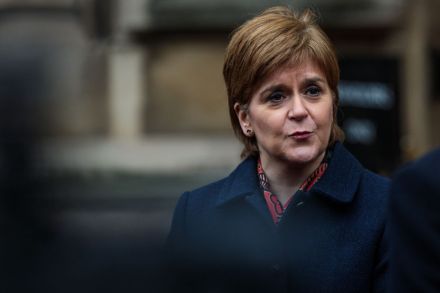
The Scottish National Party has come round to the idea that Jeremy Corbyn may shortly have to become temporary caretaker prime minister, in order to prevent a no-deal Brexit on 31 October and immediately afterwards hold a general election. A source close to the SNP leadership tells me that Ian Blackford, leader of the SNP in Westminster, and Nicola Sturgeon, Scotland's First Minister, are deeply concerned that it may now be impossible to prevent a no deal Brexit unless Boris Johnson is removed from office. One said: "It is increasingly clear that we will have to install a new prime minister via a vote of no confidence, so that we can request a delay to Brexit and hold an election.

Why Boris Johnson should request a Brexit delay from the EU

From our UK edition

Boris Johnson wants a general election now. Jeremy Corbyn and Nicola Sturgeon both say they want an election but not till after they are sure that the provisions of the Benn Act have been effective and the UK is NOT leaving the EU without a deal on October 31. As far as I can see the only way for Johnson to break the impasse is for him to do precisely the opposite of what he has promised. He should request a Brexit delay from the EU – and for the explicit purpose of fighting an election to determine whether or not the British people would give him a mandate for a no-deal Brexit.

The Supreme Court has put MPs in charge. What will they do now?

From our UK edition

There is no precedent for the Supreme Court finding that a PM acted unlawfully when advising the serving monarch. There is no precedent for the Supreme Court ruling that an order in the Privy Council to prorogue parliament is null and void. There is no precedent at all for the august and magisterial ceremony in parliament that sends MPs and Lords home being ruled by judges as a pointless exercise that should now be viewed as never having taken place. There is no precedent for judges to have ruled that parliament is in effect still sitting, that legislation that had been thought to have been lost is in effect still alive, after MPs and Lords had been told by the PM that their services were not required for five weeks.

Boris Johnson would be foolish to underestimate Labour

From our UK edition

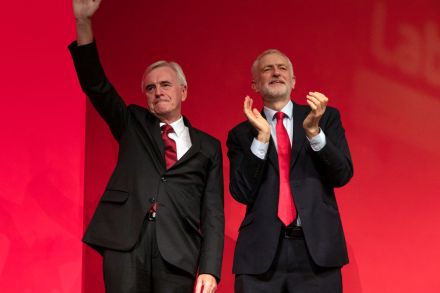
In the next election, as in the last one, McDonnellism will prove a serious challenge to the Tories. John McDonnell, as chancellor, confirmed that in government, he and Jeremy Corbyn would make a full frontal attack on 40 years of economic and industrial orthodoxy, the precepts that markets know best and that our prosperity depends on trusting the private sector. During the first 30 years, this orthodoxy may have delivered relatively steady income growth for the economy as a whole. But over the full 40 years, we've seen the greatest shift in history between the share of national income that accrues to workers and what is taken by the owners and providers of capital.

Labour conference begins in confusion over Brexit and Tom Watson

From our UK edition

Welcome to Labour’s Twilight Zone, its ruling NEC, whose members don’t know whether they have or haven’t approved a draft policy statement in favour of a referendum combined with militant agnosticism on Leave versus Remain. Some members of the NEC said they opposed the policy, because they see it as a backdoor route - orchestrated by Milne, McCluskey and Murphy - to move the party towards becoming a Brexit party all over again. Yesterday the NEC chair Wendy Nichols asked for amendments to the statement. There were too many for a compromise to be found. Another meeting was scheduled for 8am this morning, and then summarily cancelled after 11pm last night.

Will the Supreme Court end the prorogation of Parliament?

From our UK edition

At the close of Supreme Court proceedings on Thursday, there was quite a lot of to and fro about what it would actually mean if the judges find the prime minister unlawfully misled the Queen when proroguing parliament. Which was understandably interpreted by some knowledgeable observers as a signal that the judges may indeed find that Boris Johnson unlawfully prevented MPs from sitting at this critical time for the UK. The big issue they have to decide is whether they have a locus at all, whether the PM’s use of the royal prerogative to send MPs home for five weeks is - in the jargon - justiciable, or an issue for any court. The consensus among lawyers is that those arguing for the prosecution, Pannick and O’Neill, had the best of this argument.

Why the Supreme Court’s Brexit case is so crucial

From our UK edition

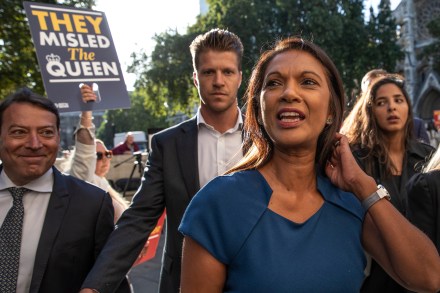
The opening session of the epic Supreme Court hearing into whether Boris Johnson misled the Queen and broke the law when proroguing parliament did not disappoint. Because Lord Pannick, for one of the plaintiffs Gina Miller, captured with the clinical precision of a brain surgeon quite what is at stake. Summing up, he asked the law ladies and lords to consider that if they were to conclude there is no case for the PM to answer, a future PM might well feel licensed to suspend parliament for six months or a year, as and when MPs become bothersome, rather than “just” the five weeks Johnson has chosen to shut down parliament? What is at stake, Pannick implied, is the role and power of the courts to prevent a PM choosing to become an elected dictator.

What Jean-Claude Juncker learned from Boris Johnson

From our UK edition

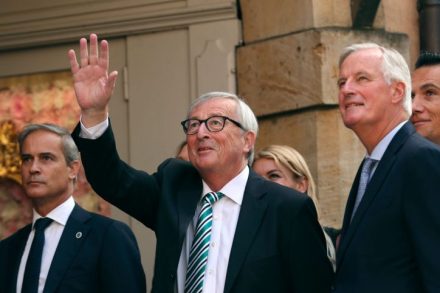
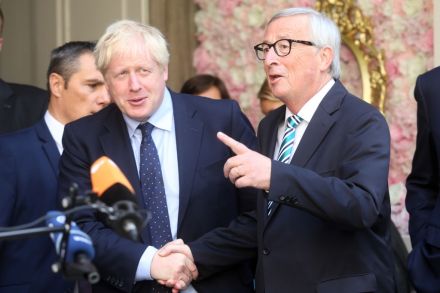
I am told Jean-Claude Juncker learned just one thing from Boris Johnson on Monday in Luxembourg. In the words of one of his colleagues there was "confirmation that the UK (under Johnson) wants more of a border on the island of Ireland than the previous government". Which is the nutshell of the whole of what the PM seeks qua new deal and what the EU’s 27 leaders need to evaluate either as deft compromise or as brutal betrayal of Dublin and the Good Friday Agreement. This dispute harks back to the December 2017 joint agreement between the UK and EU which pledges to prevent the creation of "a hard border including any physical infrastructure or related checks and controls".

Is Jeremy Corbyn preparing to purge moderate Labour MPs?

From our UK edition

Ahead of the looming general election, moderate Labour MPs are understandably upset by an instruction they say the party has given to suspend the selection of new candidates in seats where the serving MP is retiring or has defected. They've been told the reason is to 'concentrate on the trigger ballot processes' – or the deselection of usually moderate MPs who have alienated activists. See the below email by a Labour official for detail. What moderate MPs fear is that there is tacit support from Labour’s leadership for a purge of MPs from the right of the party.

We are facing the biggest test of British democracy since 1939

From our UK edition

It is almost 11 years to the minute since we reached the eye of the banking-crisis storm. And even though I was right in the middle of it, reporting on it day and night, I feel much more anxious today as I chronicle our political and constitutional crisis. The reason is simple. However egregious the harm to our living standards of the financial shock, markets and economies always bounce, always recover, eventually. Part of the widespread collapse in trust in our leaders stems from how much our living standards suffered and the slowness of the recovery. But a kind of Newtonian law applies: what falls must bounce back.

Has the Cabinet seen Boris Johnson’s legal advice on prorogation?

From our UK edition

Has any member of Cabinet seen the full legal advice given to the Prime Minister, which persuaded Johnson proroguing or suspending parliament is lawful? Julian Smith asked for it, on the day Cabinet was bounced into agreeing prorogation. Amber Rudd asked for it subsequently. I am not aware that either got it. Instead they received a 'trust me' from Boris Johnson. This could be a problem for him and ministers because the ministerial code, amended after Chilcott Enquiry into the legality of going to war in Iraq, says all ministers have right to see full legal advice – not just summaries – on all contentious issues. Will Cabinet now get the advice after today’s Court of Session judgement?

Labour will not endorse Remain in a general election

From our UK edition

Very important breaking news. Which is that trade unions, in their TULO meeting with Jeremy Corbyn, have tonight endorsed the Labour leader's position that in a general election Labour should campaign for a referendum that would have a "credible leave option and remain" on the ballot paper. The reason this matters is that those senior members of the shadow cabinet, such as Keir Starmer, Emily Thornberry, John McDonnell and Tom Watson, who want Labour to adopt an unambiguous remain position have been defeated. "It is important that voters who want to leave as well as those who want to remain can vote Labour. What we've rejected is the Trumpian no-deal position of Boris Johnson".