Robert Macfarlane

Robert Macfarlane: Is a river alive?

From our UK edition

40 min listen

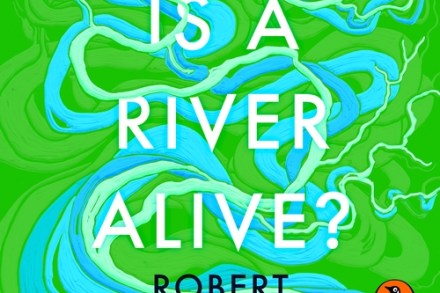
Sam Leith's guest on this week’s Book Club podcast is Robert Macfarlane. In his new book Is A River Alive? he travels from the cloud forests of Ecuador to the pollution-choked rivers of Chennai and the threatened waterways of eastern Canada. He tells Sam what he learned along the journey – and why we need to reconceptualise our relationship with the natural world.
From one extreme…

From our UK edition

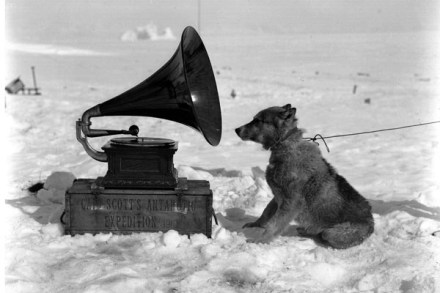
A century ago, Antarctica was a seriously tough place in which to be a scientist. In February 1912, a German expedition established its research station on an ice-shelf in the Weddell Sea, only for that section of shelf to break loose ‘with an explosive boom’, and drift away — pursued by the German ship. When Apsley Cherry Garrard journeyed to the emperor penguin rookery at Cape Crozier in July 1911, to investigate the embryology of the birds, he and his companions carried reindeer-fur-lined sleeping bags which froze solid during the days, weighed 21 kg at their heaviest, and could take up to 45 minutes of melting and wriggling to enter each night.

Diving into darkness

From our UK edition

In 1972 Tim Robinson — a Yorkshireman by birth, a Cambridge mathematician by training, and an artist by vocation — moved to live on Inis Mor, the largest of the three Aran Islands that lie off the Galway coast. His first winter there was hard and ominous: long nights, big storms, and a series of accidental deaths among the islanders, by falling or drowning. Enough to send anyone home. But Robinson stayed, and shortly afterwards began work on what is, to my mind, one of the most remarkable non-fiction projects undertaken in English. He started to walk his island, obsessively and in all weathers, pacing off its coastline and traversing its interior. And as he walked he mapped: recording the location and lore of each bay, cliff, wall, house, field, grave and significant stone.

A long hike from China

From our UK edition

‘To follow the Silk Road is to follow a ghost,’ writes Colin Thubron at the start of this magnificent book, ‘it flows through the heart of Asia, but it has officially vanished, leaving behind it the pattern of its restlessness: counterfeit borders, unmapped peoples.’ This pattern is the ‘shadow’ of his title — the marks left on the present by an ancient trade route whose infrastructure has been all but abolished by centuries of war, weather and modernisation. The Silk Road, which ran 7,000 miles from Antioch in Turkey to Xian in China, was the first information superhighway. Along it moved not only people and goods, but also ideas, rumours, inventions, dreams, and songs.

The heart of whiteness

From our UK edition

Happiness writes white, it's said: so too, one would think, does Antarctica. How is it possible to describe an environment which tolerates almost no life, which is derived from a single substance, and which is for the most part a single colour? Early explorers were simultaneously horrified and enthralled by the continent's awesome singularity. Scott wrote of its 'silent, wind-swept immensity'; Shackleton's surgeon, Alexander Macklin, of its 'same unbroken whiteness'. Given Antarctica's unsurpassed simplicity as a landform, one might expect writers to have shied away from it. And yet this fearsomely meaningless place has, especially in the 20th century, generated an enormous literature.

Eureka proclaimed too loudly

From our UK edition

James Watson has all the makings of a great biographical subject. He is notoriously volatile, splenetic, and aggressive. During his career he has not fought shy of public controversy. And of course he is globally famous for a single achievement: having been one of the two men who, in 1953, 'discovered' the double-helix structure of DNA. The discovery was, as one peer put it, 'a scientist's dream: simple, elegant, and universal for all organisms'. It brought the pathologically ambitious Watson a Nobel Prize at the age of 34, and 'triggered and sustained a revolution in science that affects us all'. The story of how that discovery occurred, like that of most scientific epiphanies, exists in several forms. It has, as a chemist might put it, multiple allotropes.

Articles of faith

From our UK edition

Richard Dawkins loves fighting. More precisely, he loves winning. To be Dawkinsed, as this selection from his essays of the past 25 years makes painfully clear, is not just to be dressed down or duffed up: it is to be squelched, pulverised, annihilated, rendered into suitably primordial paste. Those who incur this treatment have one thing in common: all are enemies of truth, Dawkins-style. Which is to say, all are enemies of science. In the current volume, his targets include postmodernists, bishops, religious leaders of other denominations (or 'cloth-heads', as he mollifyingly calls them), faith healers and New Ageists. Arch-rationalists will love these essays: others will find them by turns brilliant, boorish and idiotic. Dawkins hasn't always been like this, of course.