Richard Bratby

Richard Bratby is the chief classical music critic of The Spectator

Modest means, but striking results: Opera North’s La rondine reviewed

From our UK edition

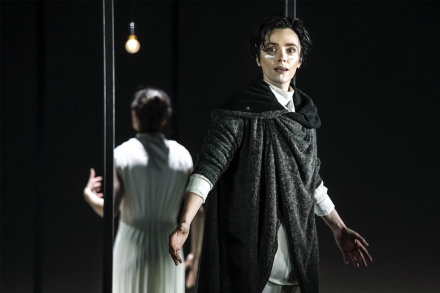
Opera North is ending its autumn season with a big-hearted production of a lopsided opera. There’s much to love about Puccini’s La rondine, and much to drive you up the wall. This bittersweet love story about an older woman and a younger man, set in Paris and Nice and channelling the operetta sweetness and sparkle of Puccini’s great friend Lehar, ought to sweep you off your feet. Instead, it tempts critics into that most shameless form of condescension, the armchair rewrite. Giacomo, old chap, isn’t five minutes into Act One a bit soon to be introducing your big hit aria? We’re halfway through Act Two: shouldn’t the lovers be together by now? And isn’t this basically just La traviata played for lower emotional stakes? Come on, man, you wrote Bohème.

The miracle of watching a great string quartet perform

From our UK edition

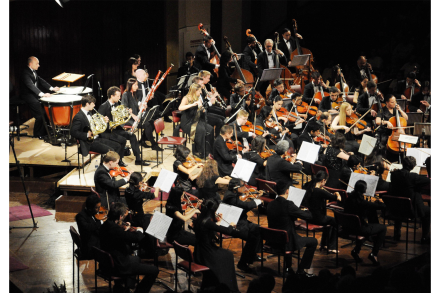
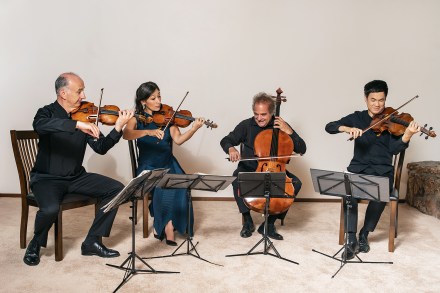
Joseph Haydn, it’s generally agreed, invented the string quartet. And having done so, he re-invented it: again and again. Take his quartet Op. 20, No. 2, of 1772 – the first item in the Takacs Quartet’s recital last week at the Wigmore Hall. The cello propels itself forward and upward, then starts to warble like a bird on the wing. The viola sketches in a rudimentary bass line; the second violin – higher than the cello on paper, but actually playing at a lower pitch – shadows the melody in its flight. The first violin? Nothing: the leader (or so you might imagine) of the group is entirely silent until finally, blissfully, he isn’t. It’s the opposite of how a string quartet is supposed to begin, and it’s perfect.

Juicy solution to the Purcell problem: Opera North’s Masque of Might reviewed

From our UK edition

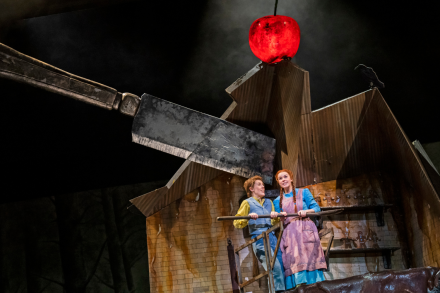
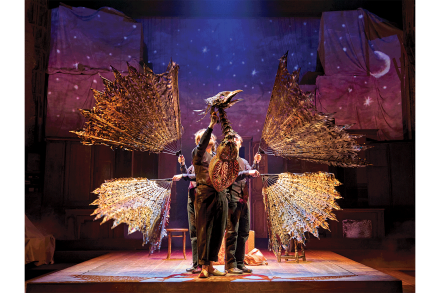
Another week, another attempt to solve the Purcell problem. There’s a problem? Well, yes, if you consider that a composer universally agreed (on the strength of Dido and Aeneas) to be a great musical dramatist left only one stageable opera (that’d be Dido and Aeneas), but hour upon hour of theatre music that’s effectively unperformable in anything like its original context: i.e., yoked to text-heavy Restoration dramas. How to get this stuff back on stage?  The story is rudimentary – just enough to support song, dance and a thumping great moral Masque of Might, David Pountney’s new extravaganza for Opera North, is one solution, and it’s rather a fun one.

Ebullience and majesty: Opera North’s Falstaff reviewed

From our UK edition

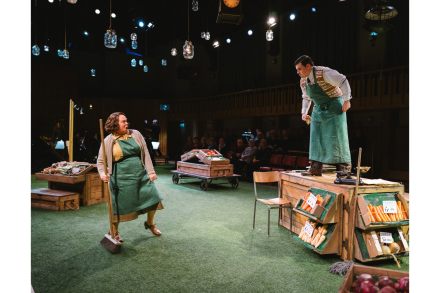
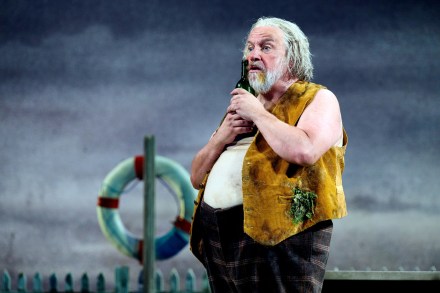
Opera North has launched a ‘Green Season’, which means (among other things) that the sets and costumes for its new Falstaff are recycled. On one level, that’s nothing new: this eternally underfunded company has been performing miracles of sustainability for years now, and there’s usually at least one production each season that looks like it’s been cobbled together from the lumber room. A few seasons back, when ON rebooted their ‘little greats’ season of one-act operas, they mixed ’n’ matched sets between wildly different operas, with cheerful abandon.

ENO’s Peter Grimes shows a major international company operating at full artistic power 

From our UK edition

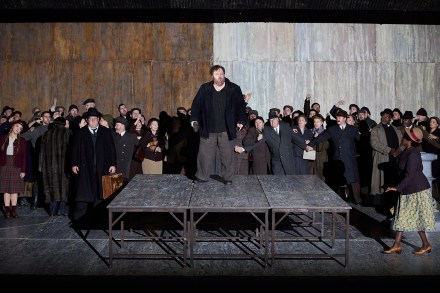
In David Alden’s production of Peter Grimes, the mob assembles before the music has even started – silhouetted at the back, muttering and menacing. Ah, Britten’s mob: simultaneously the source of some of the most electrifying, elemental choral writing since Mussorgsky and a licence for British directors to indulge in premium-strength snobbery. Fully endorsed by the composer, of course: it’s essential to Britten’s artistic schema that we believe the inhabitants of small-town England are only ever one beer away from forming a lynch mob. As their hatred boils over, Alden has them pull out little Union Flags, completely without pretext. There’s no trace of political nationalism anywhere in the libretto or score.

Wagner rewilded: Das Rheingold, at the Royal Opera House, reviewed

From our UK edition

In Northern Ireland Opera’s new Tosca, the curtain rises on a big concrete dish from which a pair of eyes gaze down, impassive. Walls of scaffolding tower on three sides of the stage, creaking as they expand under the heat of the stage lights. Point taken: Cameron Menzies’s production (the sets are by Niall McKeever) is a semi-abstract updating. It’s a fairly standard contemporary approach to Puccini’s Napoleonic thriller, though whether you get the full impact that comes with a more period-specific setting – that sense of individuals being crushed beneath the wheels of history – is another question.

A euphoric meat-and-two-veg programme: Tonhalle-Orchester Zürich/Paavo Jarvi, at the Proms, reviewed

From our UK edition

We used to call it a ‘meat and two veg’ programme, back in my concert planning days: the reliable set menu of an overture, a concerto and a symphony. It was an unfortunate term. No artistic planner likes to feel that they’re playing it safe, still less (and sources report that this goes double at the BBC) that they’re giving the public what they want. Traditional formats, familiar warhorses, dead white males: yawn! Then Paavo Jarvi and the Tonhalle-Orchester Zürich rock up at the Proms with a Beethoven overture, a Tchaikovsky concerto and Dvorak’s New World symphony and what do you know? The Royal Albert Hall was packed.

Doesn’t get better than this: The Threepenny Opera, at Edinburgh International Festival, reviewed

From our UK edition

It’s the Edinburgh International Festival, and Barrie’s back in town. Once, Edinburgh was pretty much the only place that you could see Barrie Kosky directing in the UK; there was a satisfyingly transgressive thrill about an opera director whose priorities were so self-evidently about the whole art form that he’d happily stage Monteverdi as a tango-powered revue. In recent years, Baz the Knife has supplied increasingly rare moments of discovery amid the EIF’s all-you-can-eat buffet of touring orchestras and reheated prestige productions. But he’s not the rare bird he was. In fact, with a Carmen in rep at Covent Garden and a new London Rheingold coming soon after his Dialogues des Carmélites at Glyndebourne and the Proms, he’s starting to look like a fixture.

Fast cars, minimalist design and en suite bathrooms: the real Rachmaninoff

From our UK edition

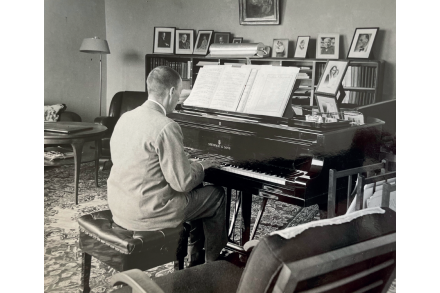
The train from Zurich to Lucerne tips you out right by the lakeside, practically on the steamboat piers. A white paddle-steamer takes you out of the city, past leafy slopes and expensive-looking mansions. Tribschen, where Wagner wrote the ‘Siegfried Idyll’, slides away to the right as you head out across the main arm of the lake. At the foot of Mount Rigi, shortly before the steamer makes its whistle-stop at the lakeside village of Hertenstein, is a promontory where – if the sun is coming from the west – a yellow-coloured cube shines among the trees. This is the house that Sergei Rachmaninoff built between 1931 and 1934: Villa Senar, his last attempt to make a home outside Russia in Europe.

Imagine a school concert hosted by Bela Lugosi: Budapest Festival Orchestra and Ivan Fischer, at the Proms, reviewed

From our UK edition

‘Audience Choice’ was the promise at the Budapest Festival Orchestra’s Sunday matinee Prom, and come on – who could resist the chance to treat one of the world’s great orchestras like a colossal jukebox? Actually, this wasn’t the latest wheeze of some clueless BBC head of music: it’s a favourite party trick of the BFO and its conductor Ivan Fischer. The audience has a ‘menu’ of some 275 individual works and symphonic movements; they vote for six of them and the BFO plays their selection, unrehearsed, on the spot. Orchestral musicians never do anything unrehearsed. They hate it. But the BFO does it anyway, because they’re the best, and they know they are.

An absolute romp framed by dutiful tut-tutting: Semele at Glyndebourne reviewed

From our UK edition

If directors will insist on staging Handel oratorios as if they’re operas, it makes sense to pick Semele, which is practically an opera already. Under George II, opera was banned in London theatres during Lent (too exotick, too irrational), so Handel slipped his best material past the authorities by presenting it in concert format, set to biblical stories. Possibly by 1744 he was getting a bit careless, because there’s nothing remotely biblical about lovely, pouting Semele’s 24/7 shagathons (‘endless pleasure’, apparently) with King of the Gods and all-round studmuffin Jove. Handel’s sometime collaborator Charles Jennens denounced Semele as ‘no oratorio but a bawdy opera’: all the tunes, double the outrage.

The future of opera – I hope: WNO’s Candide reviewed

From our UK edition

Bernstein’s Candide is the operetta that ought to work, but never quite does. Voltaire’s featherlight cakewalk through human misery, set to tunes from the West Side Story guy: what’s not to like? And what can be so wrong with its twinkle-toed score that the combined rewriting efforts (and this is not remotely the full list) of Lillian Hellman, Dorothy Parker and Stephen Sondheim have all failed to make it work as theatre? For my money it’s the ending. Voltaire coolly pricks his own bubble and tells us to get on with tending our gardens. Bernstein, the all-American idealist, just can’t, and he kills the whole thing dead with ‘Make Our Garden Grow’, a Hallmark moral drenched in gooey musical uplift. Unless you can solve that, Candide simply can’t be fixed.

Was Vera Brittain really this insufferable? Buxton Festival’s The Land of Might-Have-Been reviewed

From our UK edition

‘Ring out your bells for me, ivory keys! Weave out your spell for me, orchestra please!’ It’s lush stuff, the music of Ivor Novello, and when the Buxton International Festival announced a new musical ‘built around’ his songs, the heart took flight. Novello is one of those fringe passions that are, one suspects, a lot less marginal than fashion might suggest. If his great hit operettas of the 1930s and 1940s – The Dancing Years, King’s Rhapsody and the rest – really are unrevivable (and the jury is still out on that), a sympathetic, newly constructed showcase for his finest material in the manner of the Gershwin reboot Crazy For You might be the next best thing.

Featherweight fun: La Cenerentola, at Nevill Holt Opera, reviewed

From our UK edition

‘Goodness Triumphant’ is the subtitle of Rossini’s La Cenerentola, and you’d better believe he delivers. It’s the sweetest thing imaginable; true, the stepsisters are awful, but their spite bubbles over in streams of such sunny major-key effervescence that it’s hard to hold it against them. As for their father Don Magnifico, you can’t seriously hiss a villain whose principal ambition is unhindered access to the palace wine cellar. It’s testimony to just how deftly Rossini handles his material that the final scene – in which the now-royal Cinderella asks only that her stepfather address her, for the first time, as ‘daughter’ – can still make you go as gooey as a chocolate fondant.

Electrifying: the Grange Festival’s Queen of Spades reviewed

From our UK edition

In opera, as in so much high-budget entertainment, expectation management is half the battle. With its massive Greek Revival mansion, approached through miles of rolling parkland, The Grange Festival has the grandest setting of any of the summer festivals; and that might have something to do with why the opera served up there has so often felt less than overwhelming. Possibly I’ve been unlucky in my choices at the Grange since it relaunched under the current management in 2017. But many different elements need to fall precisely into place at precisely the right time if an opera is really to catch light, and quite often, under those wide Hampshire skies, that necessary spark has been absent. Not this time.

Why the Chester Mystery Plays are more popular than ever

From our UK edition

Hang around for long enough at Chester Cross, and theatre is pretty much guaranteed. It’s a Saturday morning in May: a human statue holds his pose, a remote-control buggy zips about advertising the spring sale at MenKind and three connoisseurs of discount cider are making their views known from the bench outside St Peter’s Church. All normal for Chester, and when the Town Crier strides up, crowds gather on the first-floor Rows like the audience at a Tudor playhouse. Oyez! The people of the city seek permission to stage the latest cycle of the city’s medieval Mystery Plays and tradition dictates that the Banns be read in public some six weeks before the first performance. You might wonder what tradition has to say about what comes next.

Taut as a drumskin: Dialogues des Carmélites, at Glyndebourne, reviewed

From our UK edition

The three Just Stop Oil protestors were sitting in the stalls, somewhere near the middle of the front row. Someone had shelled out a cool £600 for those tickets – navigating the Glyndebourne website without, somehow, clocking the company’s loudly proclaimed commitment to sustainability (they even produce their own dyes for costumes these days, using plants from the estate) and then arriving at the venue without noticing the hilltop wind turbine, visible for miles around, which makes Glyndebourne probably the only opera house on Earth to be powered entirely by renewable energy. That kind of commitment to protest, coupled to that level of dim-bulb unawareness, commands a certain respect.

To die for: Grange Park Opera’s Tristan & Isolde reviewed

From our UK edition

There are a lot of corpses on stage at the end of Charles Edwards’s production of Tristan & Isolde for Grange Park Opera. At this stage in the drama, directors tend to fade out the bloodbath, the better to focus on Isolde’s final dissolution into bliss. But as Michael Tanner argues, Tristan, like the Ring, offers no bearable solution to its central problem, however much the music – that great deceiver – might try to persuade us otherwise. You want art to tell you the truth? Wagner knew that you can’t handle the truth. He declared that in Tristan ‘from the first to the last, love shall for once find utter fulfilment’. So it does, and the result is carnage. So yes, here’s to the corpses, and to many other aspects of this attractive staging.

The final scenes are a knockout: Glyndebourne’s Don Giovanni reviewed

From our UK edition

Are you supposed to laugh at the end of Don Giovanni? Audiences often do, and they did at the end of Mariame Clément’s new production at Glyndebourne. It’s usually the bit where Donna Anna’s fiancé Don Ottavio suggests that they get married sharpish, and she immediately asks him for a year’s delay. Readers of Middlemarch will know that a year’s formal mourning after the death of a close relative was a common pre-modern convention, and Mozart’s writings suggest that he (if not his librettist) questioned neither the sanctity of marriage nor the reality of Hell. That doesn’t bother many modern directors, though, and if they’ve presented Anna as a kickass girl boss and Ottavio as a clingy milksop (not that hard, to be fair) it generally gets a reliable guffaw.

Alert, inventive and thoroughly entertaining: Scottish Opera’s Carmen reviewed

From our UK edition

Scottish Opera’s new Carmen begins at the end. ‘Take me away: I have killed her,’ intones a voiceover and as the prelude swaggers out, José is in a police interrogation cell, where an investigator is attempting to piece together his story. In other words, it’s CSI: Seville. In converting Meilhac and Halévy’s libretto into a police procedural, director John Fulljames has created a Carmen that’s ideally gauged to a TV-literate audience: told in flashback, with any confusion swiftly cleared up by spoken dialogue that never feels clunky because interrogation is central to the genre. And unless you want to be surprised by the dénouement, it works a treat. Is that whopping spoiler really such a big deal?