Richard Bratby

Richard Bratby is the chief classical music critic of The Spectator

Handel as Netflix thriller: Royal Opera’s Theodora reviewed

From our UK edition

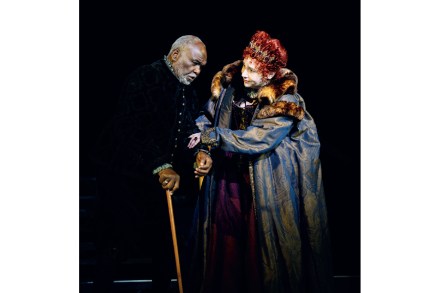
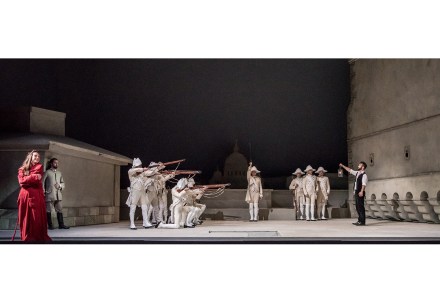
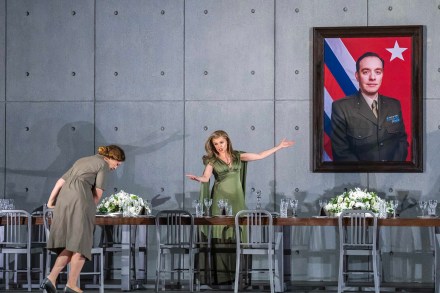
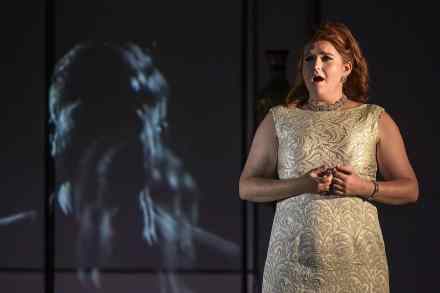
The Royal Opera has come over all baroque. In the Linbury Theatre, they’re hosting Irish National Opera’s production of Vivaldi’s 1735 carnival opera Bajazet; unsurprisingly, its first appearance at Covent Garden. Upstairs in the big room, they’re doing Handel’s Theodora: premièred at Covent Garden in March 1750 and then ignored by the Royal Opera and

Ralph Vaughan Williams: modernist master

From our UK edition

To look at a picture of Ralph Vaughan Williams is like contemplating an image of a mountain. Not the elegant, keen-eyed Edwardian intellectual whom we sometimes glimpse on CD sleeves or in concert programmes; I’m thinking of the portraits from the last decade of his long life. By the 1950s ‘RVW’ had been the father

Clear, complex and gripping: Opera North’s Rigoletto reviewed

From our UK edition

Say what you like about that Duke of Mantua, but he’s basically an OK sort of bloke. A bit of an arse, sure; the kind of TOWIE-adjacent, skinny jean-wearing reality star who’d commission photographic portraits of himself and recruit an entourage of hipsters and B-boy wannabes. But really, his worst crimes are against taste. His

A booster shot of sunlight: Unsuk Chin’s new violin concerto reviewed

From our UK edition

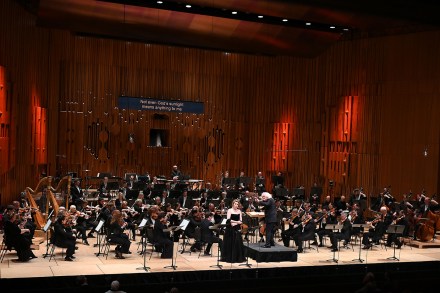
Sir Simon Rattle and the London Symphony Orchestra began the year with a world première. Unsuk Chin’s Second Violin Concerto opened with the soloist, Leonidas Kavakos, completely alone in front of a silent orchestra, playing phrases that rocked back and forth until, suddenly, they were striking sparks. As well they might; Kavakos, after all, is

Musical conservatives ought to love identity politics

From our UK edition

It’s 2022 and classical music is, again, dead. It’d be surprising if it wasn’t. In 2014 the New Yorker published a timeline by the industry analyst Andy Doe showing the precise chronology of the decline and fall. Ageing audiences in the 21st century, the gramophone in the 20th, the dangerous new technology of the pianoforte

The genius of Tchaikovsky’s Nutcracker score

From our UK edition

By all accounts, Tchaikovsky struggled to compose The Nutcracker. It wasn’t his idea of an effective ballet scenario, and he was unimpressed with the choreographer Marius Petipa’s prettified storyline. Mid-composition, he learned of the death of his younger sister Alexandra. ‘Even more than yesterday, I feel absolutely incapable of depicting the Kingdom of Sweets in

In defence of the earworm

From our UK edition

That strain again… it’s the morning after the concert and one tune is still there, playing in the head upon waking, running around and around on an unbreakable loop over breakfast. I’ve never liked the term ‘earworm’. It suggests an alien parasite, an aural violation, when in fact some part of the musical brain is

Hockney’s Rake’s Progress remains one of the supreme achievements

From our UK edition

With Glyndebourne’s The Rake’s Progress, the show starts with David Hockney’s front cloth. The colour, the ingenuity, the visual bravura: 46 years after this production’s first appearance in 1975, it’s still capable of halting you in your tracks. So drink it in. No blockbuster art exhibition will ever give you such ideal viewing conditions, or

This is how G&S should be staged: ENO’s HMS Pinafore reviewed

From our UK edition

Until 1881, HMS Pinafore was the second-longest-running show in West End history. Within a year of its première it had broken America too; at one point there were eight competing productions on Broadway alone. The single most wrongheaded notion that still clings to Gilbert and Sullivan’s operas is that they’re somehow low-rent or parochial. They

Very much NSFW: Jean-Efflam Bavouzet/Quatuor Danel at Wigmore Hall reviewed

From our UK edition

‘Drammatico’, wrote César Franck over the opening of his Piano Quintet, and you’d better believe he meant it. The score bulges with clues: piu dolce; espressivo sempre; eventually (and steamiest of all if you’re even slightly attuned to the absinthe-dazed atmosphere of French Wagnerism) tenero ma con passione — ‘tenderly, but with passion’. It was

We’ll be talking about Royal Opera’s Jenufa two decades from now

From our UK edition

Leos Janacek cared about words. He’d hang about central Brno, notebook in hand, eavesdropping on conversations and trying to capture their exact rhythm and intonation in scribbled semitones and quavers. So there’s a tidy irony in the fact that the opera that made his name isn’t really called Jenufa at all. Janacek called it Jeji

Hits you where it hurts: Welsh National Opera’s Madam Butterfly reviewed

From our UK edition

‘It’s generally agreed that in contemporary practice, this opera proposes significant ethical and cultural problems,’ says the director Lindy Hume in the programme book for her new production of Madam Butterfly, and if you’ve just shelled out 75 quid in the expectation of attractive scenery and luscious tunes, that’s you told. In truth, it’s rarely