Richard Bratby

Richard Bratby is the chief classical music critic of The Spectator

I’m an unrepentant sportsphobe

It’s 1 a.m. in our small cathedral city and car horns are honking in jubilation. From down the street comes the sound of smashing bottles, and a deep bellowing roar, growing louder as the ‘whooahs’ and the chants echo off Georgian terraces. Well, it’s a country town on a Saturday night; a certain amount of lairiness is priced in. But God, this lot seem loud. Football? Rugby? I’m sure I read somewhere that an Olympics is due. One thing is clear, though: the sports people are doing sports stuff again and no power on earth will stop them. All you can do about it – all you’ve been able to do about it for your entire adult life – is tug the duvet about your head and wait for it to go away.

Sparky and often hilarious: Garsington’s Un giorno di regno reviewed

Hang out with both trainspotters and opera buffs and you’ll soon notice that opera buffs are by far the more trainspotterish. It’s the pedantry, the one-upmanship (‘Really? You should have heard it with Goodall in 1976’). Above all, it’s the impulse to collect. You can’t actually buy little pocket books with lists of obscure operas to be underlined in biro once you’ve seen them (blue for a full staging, red for a concert performance) but there are certainly opera-goers who compile their own lists of personal stats – and they let you know it. The completist urge is powerful. Hardcore opera-spotters will cheerfully cross continents to cop a rare performance of Schreker’s Der Schatzgräber or César Franck’s Hulda.

An ensemble achievement that dances and sparkles: Glyndebourne’s Giulio Cesare reviewed

A classic opera production ages like wine. When David McVicar’s staging of Handel’s Giulio Cesare first opened at Glyndebourne in 2005, Michael Tanner – writing in these pages – loathed it. ‘A quite hateful betrayal’ was how he described a production that is now widely regarded as a classic. It would be easy to brandish those words now he’s gone – ha ha, no one ever erected a statue to a critic – ignoring the truth that any first night review can only ever be a snapshot, and that the big story back then was the hyperactive, neon-lit debut of Danielle de Niese as Cleopatra. Tanner did predict that de Niese would do well out of it, though no one guessed that she’d end up marrying the owner of the theatre.

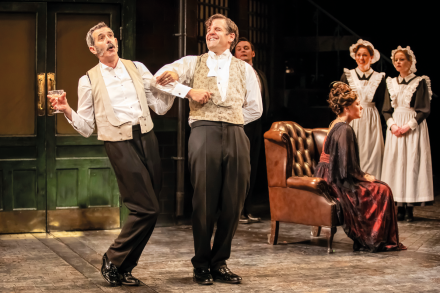
‘Zings off the stage’: My Fair Lady, at Leeds Playhouse, reviewed

If you want to kill a musical, make it into a movie. Cats, Phantom of the Opera, South Pacific… cinema history is littered with dud remakes of world-conquering theatrical sensations. But it’s almost worse when a film musical succeeds on its own terms, and – like a mask eating into the face – proceeds to write over the original show in the collective memory. I once saw a newspaper describe a West End revival of The Sound of Music as a ‘stage version of the classic movie’, which is a bit like describing Pride and Prejudice as a novelisation of the hit BBC drama. Her coloratura is like sunlight on water.

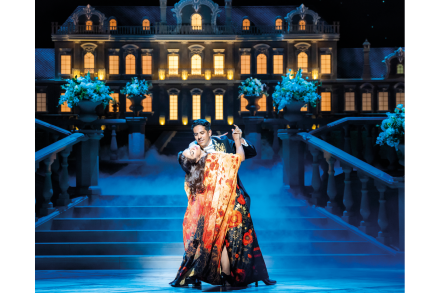
A sugar rush for the eyes: Glyndebourne’s The Merry Widow reviewed

In 1905, shortly before the world première of The Merry Widow, the Viennese theatre manager Wilhelm Karczag got cold feet and tried to pull it. He offered Franz Lehar hard cash to withdraw the score, and when that failed, he rushed it on under-rehearsed, using second-hand sets from an older show. Or so the story goes anyway. Karczag couldn’t know that within a decade The Merry Widow would become the most successful piece of musical theatre in human history up to that point: an all-conquering global brand that gave its name to hats, corsets, cigarettes and a rather nice cocktail (equal measures gin and vermouth, splashed with absinthe, Bénédictine and bitters, in case you’re curious). In the 1920s an American firm even marketed Merry Widow condoms.

‘I want every production I do to be the funniest’: an interview with Cal McCrystal

There are certain things that you don’t expect at the opera. Laughter, for example. Proper laughter, that is; not the knowing sort that ripples politely across the auditorium five seconds after the punchline appears in the surtitles. We’re talking unconstrained laughter; laughter that gives you an endorphin rush and sends you straight online to tell your friends that they must see the show. But that’s Cal McCrystal’s whole business. He’s the director who devised James Corden’s delirious plate-spinning capers in the National Theatre’s One Man, Two Guvnors and whose face (in motion-capture) provided the elastic expressions of a small Peruvian bear in Paddington. ‘I want every production I do to be the funniest I’ve ever done.

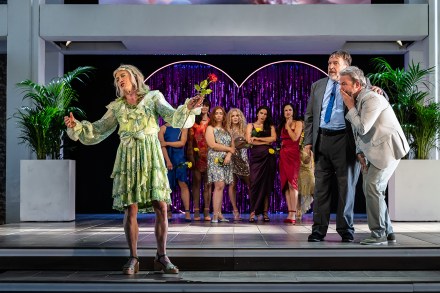
Shiny, raunchy, heartless spectacular: Platée, at Garsington, reviewed

Fast times on Mount Olympus. Jupiter has been shagging around again and now his wife Juno has bailed on their hit reality show Jupiter & Juno, storming off set in a thundercloud of gold lamé and wheeled luggage. The producers are freaking out. Production runners scamper in all directions until Bacchus sends out to Starbucks and they all sit down to brainstorm a route out of ratings Hades. Meanwhile the luxury villa lies silent, its jacuzzi empty and the fake grass scattered with cardboard coffee trays. Cupid, it turns out, might have a plan – she knows a wannabe called Platée and, hilariously, she’s a total minger. Garsington’s new Platée is Greco-Roman mythology restaged as Celebrity Love Island And that’s just the prologue.

When Fauré played The Spectator

Gabriel Fauré composed his song cycle La bonne chanson in 1894 for piano and voice. But he added string parts later and he premièred that version in April 1898 at the London home of his friend Frank Schuster: 22 Old Queen Street, the building currently occupied by this very magazine. I’m not sure how much Fauré gets played at Spectator HQ these days; his music certainly hasn’t been a feature of recent summer parties. Perhaps Fauré himself caressed the ivories where James Delingpole and Toby Young now prop up the bar. Imagine Verlaine’s poetry drifting out into the garden to mingle with Rod Liddle’s cigarette smoke on the moonlit air. L’heure exquise, indeed.

Bristol’s new concert hall is extremely fine

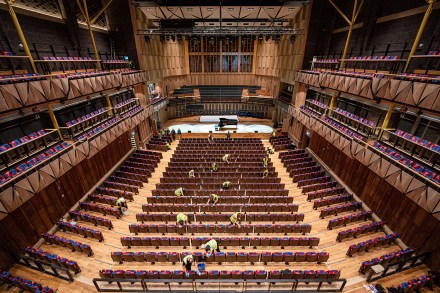
Bristol has a new concert hall, and it’s rather good. The transformation of the old Colston Hall into the Bristol Beacon has been reported as if it was simply a matter of upgrading and renaming. There were probably sound reasons for doing so, but in fact (and despite protests from the Twentieth Century Society) the postwar auditorium has been demolished outright and replaced with a wholly new orchestral hall designed on the best current principles: shoebox-shaped, with much use of wood and textured brick. Butterworth sears his melodies on to the eardrums. Isn’t it weird we still think of the Edwardians as inhibited? Acoustically, it’s extremely fine – not a glamorous sound, but a remarkably transparent one.

Meet the man who says improvisation is the key to Mozart

In August 1993, the pianist Robert Levin sat down in Walthamstow Assembly Rooms with the conductor Christopher Hogwood and the Academy of Ancient Music (AAM) to record the complete piano concertos of Wolfgang Amadeus Mozart. Mozart was big – the bicentenary celebrations of 1991 had made a global impact. And Hogwood and the AAM were big too. After their groundbreaking period-instrument Mozart symphony cycle a decade earlier, the 27 piano concertos seemed like a wholly achievable ambition. What could go wrong? ‘For Mozart’s contemporaries, what surpassed even his virtuosity was his ability to improvise’ Only, as it turned out, the entire classical record industry. The project was meant to take a decade but in 2000 the record label, Decca, lost its nerve and pulled the plug.

Across Britain punters are lapping up ultra-trad opera – the Arts Council will be disgusted

Another week at the opera, another evening with an elitist and ethically dubious art form. I love it; you love it; but the authors of the Arts Council’s recent report on opera in England are less enamoured. One issue they identified was that ‘the stories which opera and music theatre tells are failing to connect fully with contemporary society’. Possibly the memo never reached the promoters of Ellen Kent’s spring tour, which since January has visited 40-odd venues not typically served by major opera companies, and has done so without public subsidy. You might imagine that the only commercial outfit to make live opera pay in Wolverhampton, Ipswich and Sunderland would have featured prominently in the Arts Council’s research, but they don’t appear to have been consulted.

I’m driven mad by tailgaters

It’s the flash that shocks you first. It’s night and you’re driving in the outside lane of the motorway at a speed that isn’t exactly the national limit, but isn’t so wildly in excess that it would raise eyebrows. Suddenly your car floods with the light of a thousand suns. The flash in the rear-view mirror alone is enough to dazzle. It’s not a speed camera – you know from bitter experience that it’s too fast, too furious for that. Has Putin detonated a tactical nuke over the last junction? That would actually feel less threatening. The flash comes again, and as your eyes readjust the mirror shows a pair of headlights roughly ten feet behind your neck. Alarm shades into cold fury: you’re being tailgated.  Because it is usually a BMW, isn’t it?

You could have built a tent city from all the red chinos: Aci by the River reviewed

The Thames cruise for which Handel composed his Water Music in 1717 famously went on until around 4 a.m. The boat trip downstream that formed part of the London Handel Festival’s Aci by the River was a bit zippier. We piled onto a chartered Thames Clipper at Westminster Pier, and a quartet of wind players were already huddled in the gangway, playing suitably aquatic Handel favourites. A bassoonist gave an anxious grimace as the captain floored the throttle and the boat lurched forward. If our craft had been wrecked on some enchanted isle, we could have built a tent city from the red chinos You do get to see an older, more Hogarthian city from the river, even if the skies were London-drab rather than the hoped-for Canaletto blue.

Svitlana Morenets, Mary Wakefield, Max Jeffery, Sam Leith and Richard Bratby

35 min listen

On this week’s Spectator Out Loud: In light of the help Israel received, Svitlana Morenets issues a challenge to the West to help Ukraine (1:15); Mary Wakefield questions the slow response to the Ministry of Defence being daubed in paint (7:33);  Max Jeffery discusses the aims and tactics of the group responsible for the protest, Youth Demand (13:25); Sam Leith reviews Salman Rushdie's new book (18:59); and Richard Bratby pays tribute to Michael Tanner, The Spectator critic who died earlier this month (27:34). Produced and presented by Patrick Gibbons.

Baffling and vile: ETO’s Manon Lescaut reviewed

In 1937, John Barbirolli took six pieces by Henry Purcell and arranged them for an orchestra of strings, horns and woodwinds. Nothing unusual about that: arranging baroque music for modern symphony orchestras was what famous conductors used to do. Beecham and Hamilton Harty re-upholstered Handel. Mahler did something similar with Bach, then directed the result from a grand piano, and wouldn’t you give anything to have heard him? All good clean fun in those innocent days before the advent of historically informed performance. ‘Can you tell me what was happening?’ asked a woman on the way out It’s unusual to hear these things revived now, and curiouser still when the person doing the reviving is Thomas Adès, currently artist in residence with the Hallé.

What would Tanner say?

On the train home from the Royal Festival Hall I learned of the death of Michael Tanner, who wrote this column from 1996 to 2014 and beyond. The Orchestra of the Age of Enlightenment had been playing Sibelius’s Fifth Symphony, and it’s not strictly true to say that the news made me wonder about his likely reaction to their performance, had he been able to hear it. But that’s only because, for anyone who came of age reading his criticism, asking ‘What would Michael say?’ is already a reflex – and will be for as long as we think or write about music.

Think flute-playing Sir Keir will rescue opera? Look at Labour-run Wales

A tale of two opera companies from the Land of Song. After its distinctly gamey new Cosi fan tutte, Welsh National Opera has sprung dazzlingly back to form with a new production of Benajmin Britten’s final opera, Death in Venice. It’s directed by Olivia Fuchs, in collaboration with the circus artists of NoFit State, and in a word, it’s masterful. Fuchs’s Serenissima is a city of shadow, its landmarks glimpsed distantly in smudged, restless scraps of black and white film. The tourists and locals wear monochrome period dress; only Aschenbach (Mark Le Brocq) is in a noncommittal grey. The colour has drained from his world and from the peripheries of the stage he gazes, impotent, at the figures who dance and sport in the light, played by the acrobats and aerialists of NoFit State.

’Allo ’allo, have you got a licence for that model engine?

As far back as I can remember, I always wanted a steam engine. When I was five my parents promised that I could have one when I was 12: I think they thought I’d forget. I didn’t, and seven Christmases later I unwrapped a model traction engine made by the Birmingham firm of Mamod. It was chunky and basic, and its bright green and red paint gave it a toy-like appearance. But its brass valves and copper pipes were unquestionably the real thing. Out in the garden, Dad and I lit it up. The engine grew warm, it hissed; its flywheel whirred into life. And a glorious aroma filled the morning air: a blend of hot metal, WD40 and the sweet, chemical fragrance of burning fuel tablets. One breath and I was hooked.

An engrossing new two-hander about Benjamin Britten

Ben and Imo are composer Benjamin Britten and his musical assistant, Imogen Holst. But those cosy pet names tell us where we stand – or at least, where we think we do. The illusion of being inside an artistic clique is at the heart of Mark Ravenhill’s new two-hander, which began life as a BBC radio drama and which he has now opened out into a two-act play about the pair. Alan Bennett did a Britten play a few years back but Ravenhill is sharper, and as directed by Erica Whyman, Ben and Imo just about supports its own length. His Benjamin Britten is bravura – neck stretching forward, then springing back, like a tortoise Which is more than can be said for its subject, Britten’s 1953 coronation opera Gloriana.

It’s disturbing how proud some music-lovers are about detesting Bruckner

There was a pleasing simplicity about the Glasshouse’s Big Bruckner Weekend. Five concerts, five major works, just one composer. You went big or you went home, and in truth that’s usually the deal with old Anton; in the words of the The Bluffer’s Guide to Music: ‘Bruckner just didn’t write pleasant little recommendable pieces.’ But it was striking how much more manageable he felt in this context. With a single work per concert, even the most obstinate Brucknerphobe was confronted with no more than 80 minutes of music at a sitting. No distractions, then – with the added sweetener of hearing a state-of-the-nation showcase of four leading British orchestras before teatime on Sunday. It certainly made for a fascinating thought experiment.