Richard Bratby

Richard Bratby is the chief classical music critic of The Spectator

Very much NSFW: Jean-Efflam Bavouzet/Quatuor Danel at Wigmore Hall reviewed

From our UK edition

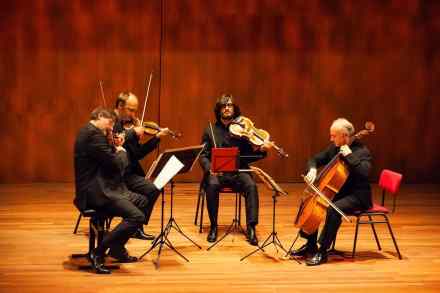
‘Drammatico’, wrote César Franck over the opening of his Piano Quintet, and you’d better believe he meant it. The score bulges with clues: piu dolce; espressivo sempre; eventually (and steamiest of all if you’re even slightly attuned to the absinthe-dazed atmosphere of French Wagnerism) tenero ma con passione — ‘tenderly, but with passion’. It was too much for Camille Saint-Saëns, who played the piano in the world première in 1880. The gossip was that Saint-Saëns knew of Franck’s infatuation with the composer Augusta Holmès, and was repulsed by music that — to jealous ears — sounded like the one-handed diary of a 58-year-old lecher.

Small but perfectly formed: the Royal College of Music Museum reopening reviewed

From our UK edition

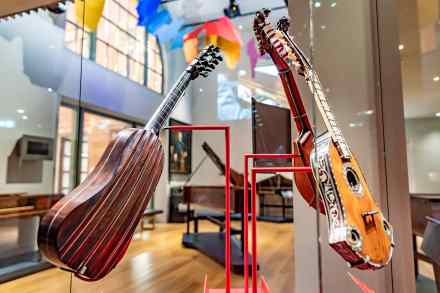
Haydn is looking well — in fact, he’s positively glowing. The dignified pose; the modest, intelligent smile: it’s only when you squint closely at the portrait that Thomas Hardy painted in London in 1791 that you clock the full peachy-pink smoothness of his complexion. It’s curious, because Haydn suffered disfiguring smallpox as a child, and a contemporary waxwork bust in Vienna is cratered like a moon in a periwig. Hardy’s portrait is a promotional image, commissioned by the music publisher John Bland. This is the Georgian equivalent of a celebrity headshot: a photoshopped, endlessly-reproduceable selling tool, so potent that it’s still being used to shift recordings 230 years later. Well, of course it is.

We’ll be talking about Royal Opera’s Jenufa two decades from now

From our UK edition

Leos Janacek cared about words. He’d hang about central Brno, notebook in hand, eavesdropping on conversations and trying to capture their exact rhythm and intonation in scribbled semitones and quavers. So there’s a tidy irony in the fact that the opera that made his name isn’t really called Jenufa at all. Janacek called it Jeji Pastorkyna, and if it’s easy enough for non-Czech speakers to understand why that was never likely to travel, it’s not without consequence. Another woman drives this story, and in the original title she’s present but unnamed: Jenufa’s stepmother, described simply as Kostelnicka, or churchwarden. Jeji Pastorkyna translates roughly as ‘Her Stepdaughter’. No matter.

Hits you where it hurts: Welsh National Opera’s Madam Butterfly reviewed

From our UK edition

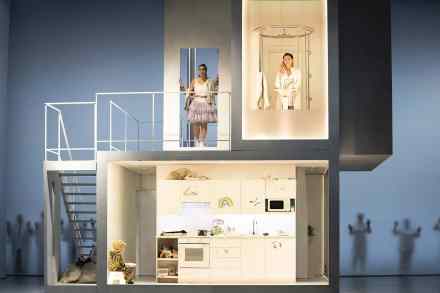
‘It’s generally agreed that in contemporary practice, this opera proposes significant ethical and cultural problems,’ says the director Lindy Hume in the programme book for her new production of Madam Butterfly, and if you’ve just shelled out 75 quid in the expectation of attractive scenery and luscious tunes, that’s you told. In truth, it’s rarely advisable to read what a director thinks about their own work, at least until after the show, when it can serve as a bemusing footnote to the evening’s entertainment. Ah, so that’s why they were wearing pink beehive wigs! If a director is any good at their job, it’ll come across on stage without any need for commentary.

See it while it’s still hot: Royal Opera’s Rigoletto reviewed

From our UK edition

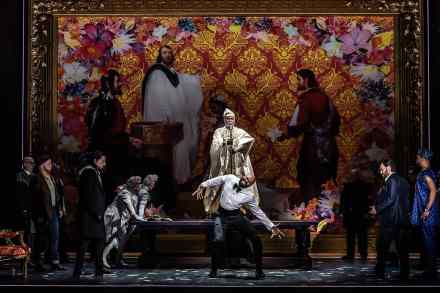
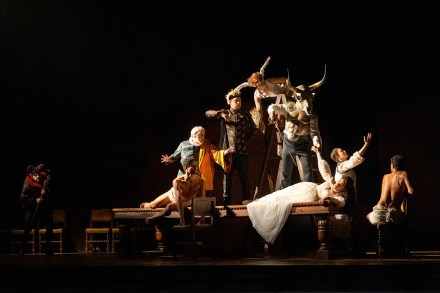
In Oliver Mears’s new production of Verdi’s Rigoletto, the curtain rises on a work of art. The stage is in deep shadow, the backdrop glowing with the rich impasto of an old master painting. Out front, and lit like a Caravaggio, the Duke of Mantua poses amid a mass of human figures in sculptural attitudes. It’s a living representation of some allegorical Renaissance swagger portrait and, as we’re about to see, this Duke is something of a connoisseur. A colossal Venus of Urbino reclines lasciviously above the Act One orgy, replaced in Act Two by an equally gigantic Rubens: Europa riding a wild-eyed bull. Anyway, it looks classy and suitably historic. The offstage band chunters away, and the audience can breathe a sigh of relief.

A terrific night of opera: Zanetto/Orfeo ed Euridice, Arcola Theatre, reviewed

From our UK edition

For a one-hit composer, we hear rather a lot of Pietro Mascagni. His reputation rests on his 1890 debut Cavalleria Rusticana, the one-act Sicilian shocker that’s usually yoked (not always to its advantage) to Leoncavallo’s Pagliacci. But in recent years we’ve also seen the cod-medieval car crash of Isabeau, and a couple of outings for Iris, an opera that fuses orientalist opulence with tentacle porn, but not in a good way. In fairness, there have been winners too: Opera Holland Park revived L’amico Fritz in July, and this sun-kissed romcom about an Alsatian cherry farmer slipped down like a Negroni with audiences thirsty for a strong, sweet triple-shot of escapism, verismo-style.

Opera della Luna is a little miracle: Curtain Raisers at Wilton’s Music Hall reviewed

From our UK edition

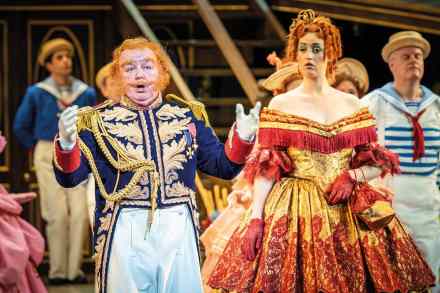
Arthur Sullivan knew better than to mess with a winning formula. ‘Cox and Box, based on J. Maddison Morton’s farce Box and Cox’ reads the title page of his first comic opera, composed to a libretto by F.C. Burnand a good five years before he latched up with W.S. Gilbert. ‘Those boys hit on a brilliant idea,’ Billy Wilder is supposed to have said when he saw the musical that Andrew Lloyd Webber and Don Black had created from his movie Sunset Boulevard. ‘They didn’t change a thing.’ Gilbert’s comic beats are sharper and faster; and he’d doubtless have shortened it by about 15 minutes.

Exuberance and class: Ariadne auf Naxos at Edinburgh Festival reviewed

From our UK edition

For some reason, I’d got it into my head that the main work in the Gringolts Quartet’s midday recital at the Edinburgh Festival was going to be Beethoven’s Quartet in C sharp minor, Op.131. No problem with that, of course; it’s exactly the sort of big serious work you’d expect a big serious international violin soloist like Ilya Gringolts to play when he forms a string quartet, and then to bring on tour to a big serious international festival like Edinburgh. Still, it’s not a piece that you can really listen to before lunch without a certain amount of mental preparation; and it was while revisiting the Festival website that I saw that I’d got it all wrong. They were actually due to play the Quartet Op.106 in G major by Antonin Dvorak.

The central performances are tremendous: Glyndebourne’s Luisa Miller, reviewed

From our UK edition

Opera buffs enjoy their jargon. We all do it, scattering words like ‘spinto’ and ‘Fach’ like an enthusiastic pizza waiter with an outsize peppermill. It’s principally a means of signalling that you’re part of the club. But occasionally it’s genuinely useful, and Glyndebourne’s new production of Verdi’s Luisa Miller had me thinking about the concept of ‘tinta musicale’, a term used to describe Verdi’s sense that each of his operas should have its own distinctive sonic colour. The late-summer warmth that suffuses Falstaff, for example, or the maritime translucence of Simon Boccanegra. Or take La traviata: the enervated violins of the prelude, the hectic brilliance once the curtain rises.

Neither Tristan nor Isolde quite convinced: Glyndebourne’s Tristan und Isolde reviewed

From our UK edition

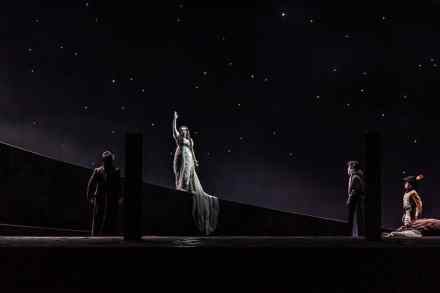
Glyndebourne is nothing if not honest. ‘In response to the ongoing Covid-19 restrictions our 2021 performances of Tristan und Isolde will be presented as a concert staging, after the 2003 production by Nikolaus Lehnhoff’, says the programme, and what we get is not a full production but a compromise imposed by the peculiar circumstances of August 2021. The London Philharmonic Orchestra huddles on stage. Behind them the back wall glows and fades in washes of blue and pink; in front, a stepped apron extends over the redundant orchestra pit. The singers slip on and off from the wings or, in a basic but effective trick of lighting design, appear to materialise from the embracing darkness. It’s an approach to Wagner that can work well.

Ecstasy from Birmingham Opera Company: Wagner’s RhineGold reviewed

From our UK edition

At the end of Birmingham Opera Company’s RhineGold, as the gods stood ready to enter Valhalla, Donner swung a baseball bat and summoned a rainbow bridge of human bodies — crawling, abject, before the new lords of creation. It was pretty much what we’ve come to expect from BOC’s founder Graham Vick, a director who never hints at a contemporary social message when he can ramraid our consciousness with one. Here, though, there was another twist of the knife. The human bridge was made up of delivery couriers, complete with branded cagoules and cycle helmets. Didn’t someone describe lockdown as ‘middle-class people hiding while working-class people bring them things?’. A smart touch, and vintage Graham Vick. Except Vick wasn’t there.

Springtime for Putin: Grange Park’s The Life and Death of Alexander Litvinenko reviewed

From our UK edition

Alexander Litvinenko lies in a London hospital, dying of polonium poisoning. That photograph from 2006 haunts the memory: the medical robe, the electronic monitors, Litvinenko’s accusing gaze and bald, ravaged head. But in case we needed reminding, Grange Park Opera handed out copies of Death of a Dissident, the account of the crime by Litvinenko’s widow Marina, and the principal source for Anthony Bolton and Kit Hesketh-Harvey’s new opera The Life and Death of Alexander Litvinenko. Minutes later, a hospital bed rolled on stage replicating that exact image. And then Litvinenko — the tenor Adrian Dwyer — opened his mouth and started to sing. Opera plays a high-stakes game with dramatic realism at the best of times, but this was startlingly upfront.

Zips along with enormous vim: Malcolm Arnold’s The Dancing Master reviewed

From our UK edition

Malcolm Arnold composed his opera The Dancing Master in 1952 for BBC television. It never appeared, the problem being the source material — William Wycherley’s 1671 farce The Gentleman Dancing Master. Jokes about wedding nights and ‘scarlet foppery’ might have flown in the reign of Charles II but the New Elizabethans at Broadcasting House were altogether more shockable. ‘Too bawdy for family audiences,’ was Auntie’s official verdict, leaving The Dancing Master largely forgotten until a premiere recording late last year, and now — conducted by John Andrews and using almost the same cast — its first ever professional production, at the Buxton International Festival.

A short history of millionaire composers

From our UK edition

Let me tell you about the very rich. They are different from you and me, though if you’ve spent much time in the world of classical music, and you hadn’t realised just how different, you could do worse than attend an opening night at Grange Park Opera. True, Grange Park’s founder, Wasfi Kani, is famously adept at cultivating donors: you don’t build an opera house on the late Duchess of Roxburghe’s Surrey estate without a certain fundraising flair. It was when Joanna Lumley shimmered on stage in a midnight-blue ball gown and suggested that we might each like to leave the company at least £25,000 in our wills that I really choked on my prosecco.

Comedy genius: Garsington Opera’s Le Comte Ory reviewed

From our UK edition

Melons. An absolutely cracking pair of melons, right there on a platter: the centrepiece of the banquet that the chaste, all-female inhabitants of the castle of Formoutiers have provided for their surprise guests, a band of nuns. Except these sisters all seem to be singing well below the stave, and judging from the way she adjusts her crotch, Mother Superior has something more than a chastity belt beneath her habit. We all know where this is going. You can’t get your melons out on stage unless, sooner or later, some great hairy bloke in a wimple is going to shove them down his front. It’s the law.

Wow, this is good: Grange Park Opera’s Ivan the Terrible reviewed

From our UK edition

There are worse inconveniences than having to wear a face mask to the opera. But there’s one consequence that hadn’t really struck home until an hour into Rimsky-Korsakov’s Ivan the Terrible. The citizens of Pskov are massing in the streets. The Tsar’s army is approaching, and Rimsky is building one of those surging Russian crowd scenes: bass-heavy chorus blazing away while ominous bell sounds — basses, horns and rasping gong — shake the orchestra to its bones. Suddenly a bloodstained figure staggers in and collapses; a refugee from nearby Novgorod. ‘Your brother-city sends its greetings, and asks you to arrange its funeral,’ he gasps.

A new concerto draws cheers in Liverpool: RLPO/Hindoyan reviewed

From our UK edition

There was no printed programme for the Royal Liverpool Philharmonic Orchestra’s first concert under its music director designate Domingo Hindoyan. Nothing to download either; just a piece of paper the size of a train ticket, handed out by a steward with a conspiratorial air, containing a bare listing of the pieces we were about to hear. Stravinsky, Ravel and Prokofiev: fair enough. Known quantities. But about the second item on the programme — the world première of a new Trombone Concerto by Dani Howard —there was no information at all beyond that all-or-nothing title. All to the good, you might think: pure music and unprejudiced listening. There’s no such thing, of course.

The promoter the critics love to hate: an interview with Raymond Gubbay

From our UK edition

When Raymond Gubbay left school, he was articled to an accountant’s firm. Fascinated by opera and depressed at the prospect of life as a Golders Green beancounter, he wriggled out of it in a matter of months, and into an assistant’s job at Pathé Newsreels. Sensing that newsreels had a looming expiry date, he asked Arnold Wesker (a family friend) to wangle him an interview with Victor Hochhauser, Britain’s leading promoter of mass-market classical concerts. Hochhauser sat behind a desk in his office above a fridge shop in Kensington and asked the 17-year-old Raymond three questions. Where did you go to school? Are you a Jewish boy? And can you start on Monday? Six decades later, even three questions feel unnecessary.

Lush, elegant and vivid: Der Rosenkavalier at Garsington reviewed

From our UK edition

At the turning point of Richard Strauss and Hugo von Hofmannsthal’s Der Rosenkavalier, all the clocks stop. Octavian has arrived at the house of the teenage bride-to-be Sophie von Faninal as bearer of the silver rose — the symbol of a love that is simultaneously as artificial and as eternal as any human creation can be. Sophie smells real roses; yes, says Octavian, there is a drop of Persian fragrance amid the silver petals. ‘Like a heavenly, not an earthly rose’, sings Sophie: and her voice soars higher and purer than anything we’ve heard so far, suspended in stillness while Strauss’s orchestra shimmers around her. The thing is, in Bruno Ravella’s new staging for Garsington Opera we already know the rose’s secret.

Hit every auditory G-spot simultaneously: CBSO/Hough/Gardner concert reviewed

From our UK edition

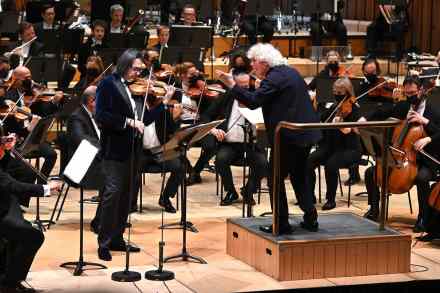
Rejoice: live music is back. Or at least, live music with a live audience, which, as Sir Simon Rattle admitted, addressing the masked and socially distanced crowd immediately before the LSO’s first full-scale public performance for 14 months, is kind of the whole point. Yes, he said, they’d streamed online concerts from the Barbican, but the silence of emptiness is a very different proposition from the silence of a hall containing 1,000 human beings. He’s right, of course. Those 14 months have tested to destruction the notion that digital platforms can offer the same sort of emotional nourishment. Once again, then — rejoice! And nobody mention the Indian variant.