Richard Bratby

Richard Bratby is the chief classical music critic of The Spectator

Ralph Vaughan Williams: modernist master

From our UK edition

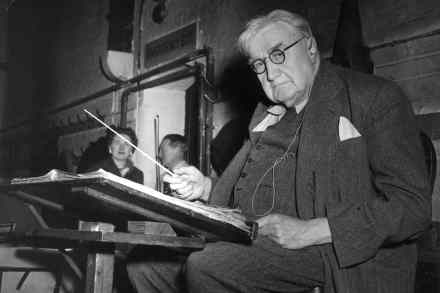
To look at a picture of Ralph Vaughan Williams is like contemplating an image of a mountain. Not the elegant, keen-eyed Edwardian intellectual whom we sometimes glimpse on CD sleeves or in concert programmes; I’m thinking of the portraits from the last decade of his long life. By the 1950s ‘RVW’ had been the father of British music for so long that he already seemed like part of the landscape, and he looked it too. The craggy jowls, the weathered thatch of grey hair; that questioning gaze — and beneath it all, those great, tumbling scree slopes of rumpled tweed. In his 150th anniversary year he’s still there, towering in the middle distance of national memory.
Clear, complex and gripping: Opera North’s Rigoletto reviewed

From our UK edition

Say what you like about that Duke of Mantua, but he’s basically an OK sort of bloke. A bit of an arse, sure; the kind of TOWIE-adjacent, skinny jean-wearing reality star who’d commission photographic portraits of himself and recruit an entourage of hipsters and B-boy wannabes. But really, his worst crimes are against taste. His neon-lit crib might be hung with hideous religious art, but his parties are relatively free of the nudity, quaffing and non-consensual dry-humping that tends to characterise Act One of Verdi’s Rigoletto. In Femi Elufowoju Jr’s new staging for Opera North, the Duke lays on a hog roast for his posse but doesn’t forget to order pizza for his security staff. The Deliveroo courier got a big laugh as they pedalled in across the stage.

Not pleasant, and not in tune, but unarguably compelling: Royal Opera’s Nabucco reviewed

From our UK edition

Nabucco, said Giuseppe Verdi, ‘was born under a lucky star’. It was both his last throw of the dice and his first undisputed hit, composed after the failure of Un giorno di regno and the death of his young wife and two children had driven him to abandon music outright. The story (at least, as Verdi told it) was that the director of La Scala had forced him to accept a libretto on the Biblical story of Nebuchadnezzar, and that when a page fell open on the chorus ‘Va, pensiero’ the muse returned. Citation needed, possibly, but there’s no question that the ‘Chorus of the Hebrew Slaves’ is one of those once-in-a-lifetime melodies; a tune (as Elgar might have put it) to ‘knock ’em flat’.

A booster shot of sunlight: Unsuk Chin’s new violin concerto reviewed

From our UK edition

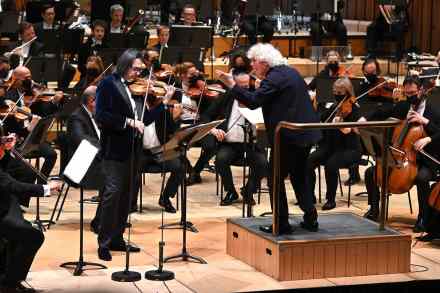
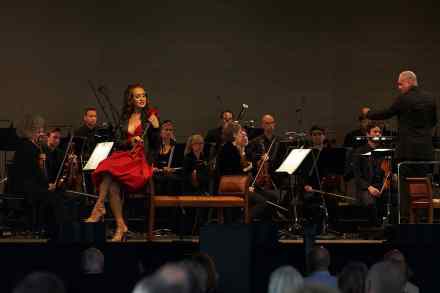
Sir Simon Rattle and the London Symphony Orchestra began the year with a world première. Unsuk Chin’s Second Violin Concerto opened with the soloist, Leonidas Kavakos, completely alone in front of a silent orchestra, playing phrases that rocked back and forth until, suddenly, they were striking sparks. As well they might; Kavakos, after all, is the reason that the concerto exists — the violinist whose ‘burningly intense’ (the composer’s words) artistry has prompted Chin to break her self-imposed rule of writing only one concerto for any given instrument. She explained in the programme notes that ‘the solo violin part forms the foundation of the whole score, the soloist triggering all of the orchestra’s actions and impulses.

Musical conservatives ought to love identity politics

From our UK edition

It’s 2022 and classical music is, again, dead. It’d be surprising if it wasn’t. In 2014 the New Yorker published a timeline by the industry analyst Andy Doe showing the precise chronology of the decline and fall. Ageing audiences in the 21st century, the gramophone in the 20th, the dangerous new technology of the pianoforte in the 1840s: all, in their time, were considered proof that the rot was terminal. Doe traced the root of the problem back to a papal bull in 1324, giving new potency to Charles Rosen’s remark that ‘the death of classical music is perhaps its oldest continuing tradition’. Anyway, the fatal blow this time is the Great Awokening.

The genius of Tchaikovsky’s Nutcracker score

From our UK edition

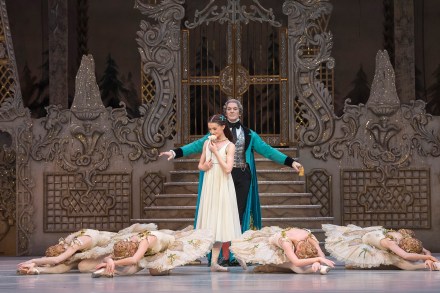
By all accounts, Tchaikovsky struggled to compose The Nutcracker. It wasn’t his idea of an effective ballet scenario, and he was unimpressed with the choreographer Marius Petipa’s prettified storyline. Mid-composition, he learned of the death of his younger sister Alexandra. ‘Even more than yesterday, I feel absolutely incapable of depicting the Kingdom of Sweets in music,’ he wrote. But inspiration can be counterintuitive. On a good day, Tchaikovsky could write as fluently as any Victorian serial novelist, churning out forgettable piano pieces (as he put it) ‘like batches of pancakes’. Projects like The Nutcracker put him through purgatory but the result, with hindsight, was nothing less than the sound of Christmas.

Reprehensible – but fun: Orpheus Chamber Orchestra’s Complete DG Recordings reviewed

From our UK edition

 Grade: B It must have been an interesting day in the Orpheus Chamber Orchestra’s press office when Blair Tindall’s memoir Mozart in the Jungle hit the bookshops in 2005. ‘He sat in the desk chair, pushed aside the first oboe part of Rossini’s Italian Girl in Algiers and tapped a pile of cocaine on the glass’ runs a typical anecdote. Even in 2005, it wasn’t really what anyone expected to hear from a former member of Orpheus — a youthful, conductor-less New York outfit who used to pose for album covers dressed in spotless white.

In defence of the earworm

From our UK edition

That strain again… it’s the morning after the concert and one tune is still there, playing in the head upon waking, running around and around on an unbreakable loop over breakfast. I’ve never liked the term ‘earworm’. It suggests an alien parasite, an aural violation, when in fact some part of the musical brain is clearly in love with this scrap of melody, and getting a microgram of a dopamine hit every time it presses ‘repeat’. It’s consensual, even pleasurable. Why fight it? There’s an Arthur C. Clarke story about a scientist obsessed by the finale of Sibelius’s Second Symphony.

40 per cent sublime, 60 per cent ridiculous: ENO’s The Valkyrie reviewed

From our UK edition

It’s the final scene of The Valkyrie and Wotan is wearing cords. They’re a sensible choice for a hard-working deity: practical but with a certain retro flair. Slumbering under a red puffer jacket lies his daughter Brünnhilde, and as Wagner’s music yearns and flickers, the Lord of Ravens shuffles slowly around on all fours, methodically attaching the carabiners for the climactic flying effect. First one, then another. Then another. Four more to go! Possibly we’re not meant to be seeing this. Possibly it was meant to be obscured by the ‘large final fire effect’ that a slip in the programme tells us has been cut (‘despite extensive planning’) at the last minute.

Hockney’s Rake’s Progress remains one of the supreme achievements

From our UK edition

With Glyndebourne’s The Rake’s Progress, the show starts with David Hockney’s front cloth. The colour, the ingenuity, the visual bravura: 46 years after this production’s first appearance in 1975, it’s still capable of halting you in your tracks. So drink it in. No blockbuster art exhibition will ever give you such ideal viewing conditions, or so much time with a single artwork. And no mock-up or faded video will ever be able to restore to Hockney’s sets and costumes the meaning and the impact that they possess when they’re peopled by living performers and accompanied by Stravinsky’s score. Come for the backdrops, stay for the opera. This is one revival that nearly does send you out whistling the scenery.

This is how G&S should be staged: ENO’s HMS Pinafore reviewed

From our UK edition

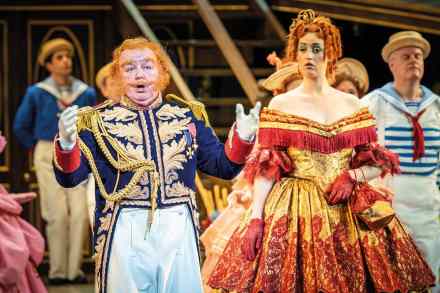
Until 1881, HMS Pinafore was the second-longest-running show in West End history. Within a year of its première it had broken America too; at one point there were eight competing productions on Broadway alone. The single most wrongheaded notion that still clings to Gilbert and Sullivan’s operas is that they’re somehow low-rent or parochial. They were blockbuster international hits, superbly written, lavishly staged and exported far beyond the Anglosphere. Pinafore was performed in Denmark as Frigate Jutland and in Vienna, Johann Strauss was driven off stage by the runaway success of The Mikado. In the words of the operetta historian Richard Traubner, Gilbert and Sullivan’s collaborations were ‘simply the best musical productions of the Victorian age’.

Very much NSFW: Jean-Efflam Bavouzet/Quatuor Danel at Wigmore Hall reviewed

From our UK edition

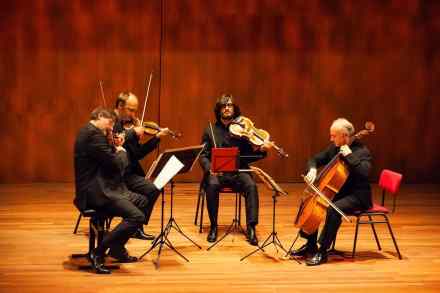
‘Drammatico’, wrote César Franck over the opening of his Piano Quintet, and you’d better believe he meant it. The score bulges with clues: piu dolce; espressivo sempre; eventually (and steamiest of all if you’re even slightly attuned to the absinthe-dazed atmosphere of French Wagnerism) tenero ma con passione — ‘tenderly, but with passion’. It was too much for Camille Saint-Saëns, who played the piano in the world première in 1880. The gossip was that Saint-Saëns knew of Franck’s infatuation with the composer Augusta Holmès, and was repulsed by music that — to jealous ears — sounded like the one-handed diary of a 58-year-old lecher.

Small but perfectly formed: the Royal College of Music Museum reopening reviewed

From our UK edition

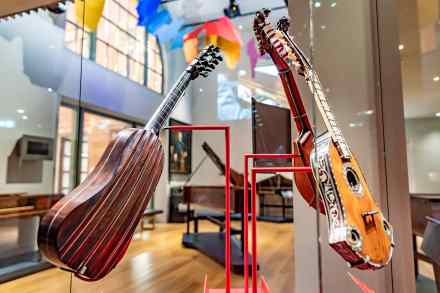
Haydn is looking well — in fact, he’s positively glowing. The dignified pose; the modest, intelligent smile: it’s only when you squint closely at the portrait that Thomas Hardy painted in London in 1791 that you clock the full peachy-pink smoothness of his complexion. It’s curious, because Haydn suffered disfiguring smallpox as a child, and a contemporary waxwork bust in Vienna is cratered like a moon in a periwig. Hardy’s portrait is a promotional image, commissioned by the music publisher John Bland. This is the Georgian equivalent of a celebrity headshot: a photoshopped, endlessly-reproduceable selling tool, so potent that it’s still being used to shift recordings 230 years later. Well, of course it is.

We’ll be talking about Royal Opera’s Jenufa two decades from now

From our UK edition

Leos Janacek cared about words. He’d hang about central Brno, notebook in hand, eavesdropping on conversations and trying to capture their exact rhythm and intonation in scribbled semitones and quavers. So there’s a tidy irony in the fact that the opera that made his name isn’t really called Jenufa at all. Janacek called it Jeji Pastorkyna, and if it’s easy enough for non-Czech speakers to understand why that was never likely to travel, it’s not without consequence. Another woman drives this story, and in the original title she’s present but unnamed: Jenufa’s stepmother, described simply as Kostelnicka, or churchwarden. Jeji Pastorkyna translates roughly as ‘Her Stepdaughter’. No matter.

Hits you where it hurts: Welsh National Opera’s Madam Butterfly reviewed

From our UK edition

‘It’s generally agreed that in contemporary practice, this opera proposes significant ethical and cultural problems,’ says the director Lindy Hume in the programme book for her new production of Madam Butterfly, and if you’ve just shelled out 75 quid in the expectation of attractive scenery and luscious tunes, that’s you told. In truth, it’s rarely advisable to read what a director thinks about their own work, at least until after the show, when it can serve as a bemusing footnote to the evening’s entertainment. Ah, so that’s why they were wearing pink beehive wigs! If a director is any good at their job, it’ll come across on stage without any need for commentary.

See it while it’s still hot: Royal Opera’s Rigoletto reviewed

From our UK edition

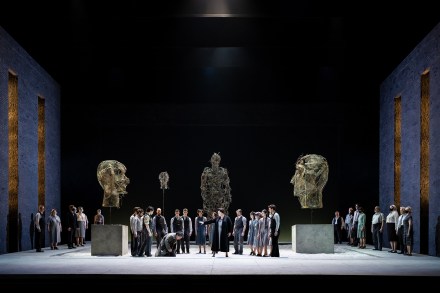
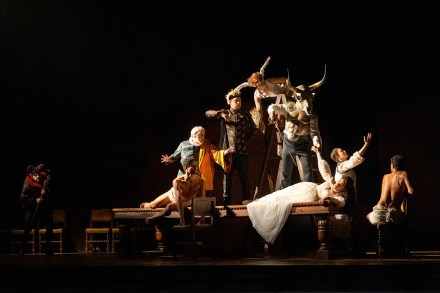
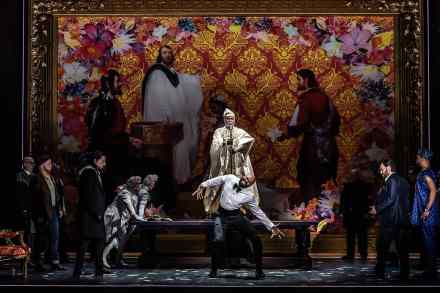
In Oliver Mears’s new production of Verdi’s Rigoletto, the curtain rises on a work of art. The stage is in deep shadow, the backdrop glowing with the rich impasto of an old master painting. Out front, and lit like a Caravaggio, the Duke of Mantua poses amid a mass of human figures in sculptural attitudes. It’s a living representation of some allegorical Renaissance swagger portrait and, as we’re about to see, this Duke is something of a connoisseur. A colossal Venus of Urbino reclines lasciviously above the Act One orgy, replaced in Act Two by an equally gigantic Rubens: Europa riding a wild-eyed bull. Anyway, it looks classy and suitably historic. The offstage band chunters away, and the audience can breathe a sigh of relief.

A terrific night of opera: Zanetto/Orfeo ed Euridice, Arcola Theatre, reviewed

From our UK edition

For a one-hit composer, we hear rather a lot of Pietro Mascagni. His reputation rests on his 1890 debut Cavalleria Rusticana, the one-act Sicilian shocker that’s usually yoked (not always to its advantage) to Leoncavallo’s Pagliacci. But in recent years we’ve also seen the cod-medieval car crash of Isabeau, and a couple of outings for Iris, an opera that fuses orientalist opulence with tentacle porn, but not in a good way. In fairness, there have been winners too: Opera Holland Park revived L’amico Fritz in July, and this sun-kissed romcom about an Alsatian cherry farmer slipped down like a Negroni with audiences thirsty for a strong, sweet triple-shot of escapism, verismo-style.

Opera della Luna is a little miracle: Curtain Raisers at Wilton’s Music Hall reviewed

From our UK edition

Arthur Sullivan knew better than to mess with a winning formula. ‘Cox and Box, based on J. Maddison Morton’s farce Box and Cox’ reads the title page of his first comic opera, composed to a libretto by F.C. Burnand a good five years before he latched up with W.S. Gilbert. ‘Those boys hit on a brilliant idea,’ Billy Wilder is supposed to have said when he saw the musical that Andrew Lloyd Webber and Don Black had created from his movie Sunset Boulevard. ‘They didn’t change a thing.’ Gilbert’s comic beats are sharper and faster; and he’d doubtless have shortened it by about 15 minutes.

Exuberance and class: Ariadne auf Naxos at Edinburgh Festival reviewed

From our UK edition

For some reason, I’d got it into my head that the main work in the Gringolts Quartet’s midday recital at the Edinburgh Festival was going to be Beethoven’s Quartet in C sharp minor, Op.131. No problem with that, of course; it’s exactly the sort of big serious work you’d expect a big serious international violin soloist like Ilya Gringolts to play when he forms a string quartet, and then to bring on tour to a big serious international festival like Edinburgh. Still, it’s not a piece that you can really listen to before lunch without a certain amount of mental preparation; and it was while revisiting the Festival website that I saw that I’d got it all wrong. They were actually due to play the Quartet Op.106 in G major by Antonin Dvorak.

The central performances are tremendous: Glyndebourne’s Luisa Miller, reviewed

From our UK edition

Opera buffs enjoy their jargon. We all do it, scattering words like ‘spinto’ and ‘Fach’ like an enthusiastic pizza waiter with an outsize peppermill. It’s principally a means of signalling that you’re part of the club. But occasionally it’s genuinely useful, and Glyndebourne’s new production of Verdi’s Luisa Miller had me thinking about the concept of ‘tinta musicale’, a term used to describe Verdi’s sense that each of his operas should have its own distinctive sonic colour. The late-summer warmth that suffuses Falstaff, for example, or the maritime translucence of Simon Boccanegra. Or take La traviata: the enervated violins of the prelude, the hectic brilliance once the curtain rises.