Puzzle | 7 December 2017
From our UK edition
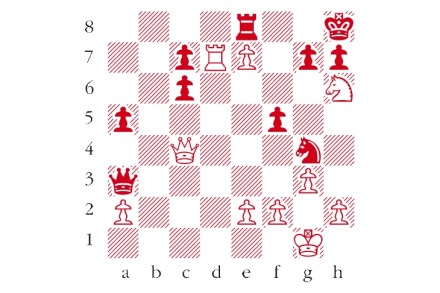
White to play. This position is from Timman-Short, Tilburg 1990. Can you spot Timman’s classic finish? We regret that this is not a prize puzzle owing to Christmas deadlines.
From our UK edition
White to play. This position is from Timman-Short, Tilburg 1990. Can you spot Timman’s classic finish? We regret that this is not a prize puzzle owing to Christmas deadlines.
From our UK edition
The London Classic gets underway this weekend in Olympia. The line-up is formidable, including the world champion Magnus Carlsen, his predecessor Viswanathan Anand, and Sergei Karjakin, who challenged Carlsen for the title last year. The remaining contestants are as follows: Lev Aronian, Maxime Vachier-Lagrave, Fabiano Caruana, Wesley So, Ian Nepomniachtchi, Hikaru Nakamura and Michael Adams. Carlsen comes fresh from his triumph in St Louis against the elite Chinese grandmaster Ding Liren. In a mixture of fast-play formats Carlsen triumphed by the overall score of 67-25, winning the match with 13 rounds to spare.

From our UK edition
White to play. This position is from a variation from Carlsen-Aronian, London Classic 2012. Black had already anticipated what was in store here and had resigned. What had he foreseen? Answers to me at The Spectator by Tuesday 5 December or via email to victoria@spectator.co.uk. There is a prize of £20 for the first correct answer out of a hat. Please include a postal address and allow six weeks for prize delivery.
From our UK edition
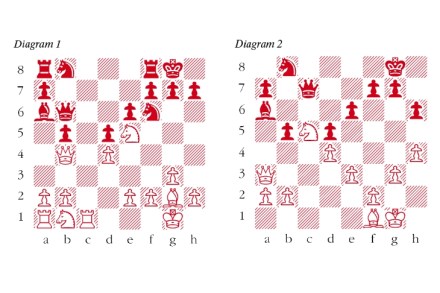
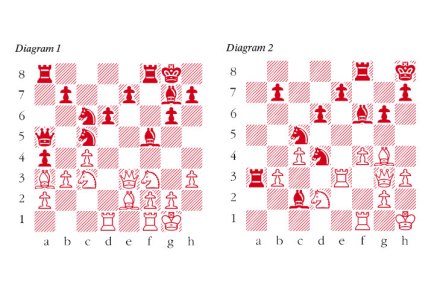
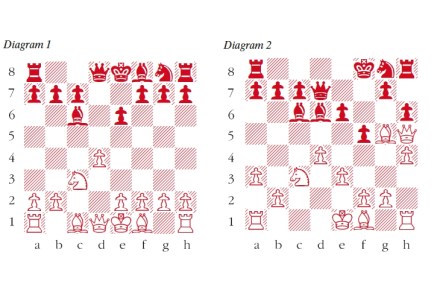
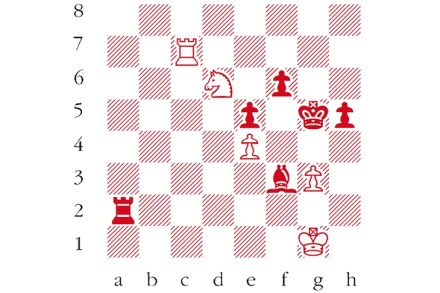
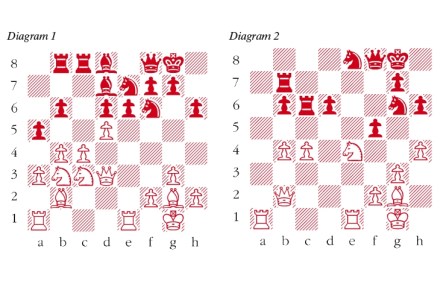
Garry Kasparov was without a doubt Alekhine’s creative heir. The 1985-2000 world champion said himself that he became entranced at an early age by Alekhine’s dynamic style, and that he was particularly impressed by Alekhine’s sudden attacks which came like lightning from a clear sky. This week some further examples of Alekhine’s genius, and a clear case where the great man’s influence could be detected in the play of his admirer. Torres-Alekhine, Simultaneous display, Spain 1922 (see diagram 1) Black’s next sets up a deadly double check. 28 ... Qxh3! 29 gxh3 Nf2+ 30 Kg1 Nxh3 mate Alekhine-Colle, Paris 1925 (see diagram 2) 30 Qxd7!

From our UK edition
White to play. This is from Alekhine-Feldt, Blindfold Simultaneous, Tarnopol 1916. White has sacrificed a knight. Can you spot his brilliant finish? Answers to me at The Spectator by Tuesday 28 November or via email to victoria@spectator.co.uk. There is a prize of £20 for the first correct answer out of a hat. Please include a postal address and allow six weeks for prize delivery.
From our UK edition
Alexander Alekhine was one of the two world champions (the other being his fellow native Russian Mikhail Botvinnik) who won, lost and regained the supreme title. In fact 2017 represents the 90th anniversary of Alekhine’s victory over the Cuban world champion José Raúl Capablanca at Buenos Aires 1927, and the 80th anniversary of his revenge match against Max Euwe, played on the Dutchman’s home turf, where Alekhine retrieved the title he had lost in 1935. On re-examining Alekhine’s games recently, I was struck by the proliferation of queen sacrifices which characterise his vigorous creative approach, several against the leading exponents of the day.
From our UK edition
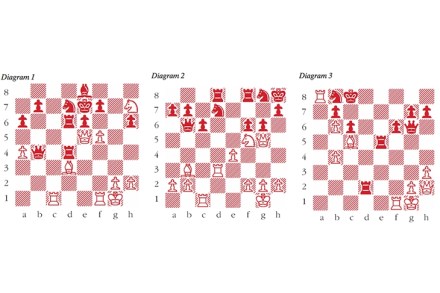
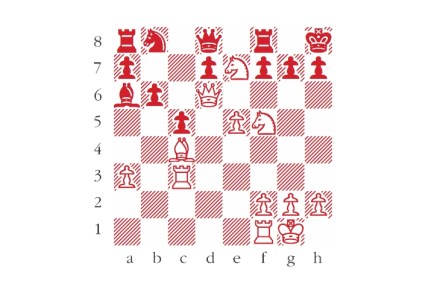
White to play. This position is from Alekhine-Supico, Blindfold Simultaneous, Lisbon 1941. Can you spot White’s remarkable finish, which is based on an idea first played by Frank Marshall in 1912? Answers to me at The Spectator by Tuesday 21 November or via email to victoria@spectator.co.uk. There is a prize of £20 for the first correct answer out of a hat. Please include a postal address and allow six weeks for prize delivery.
From our UK edition
While researching some early games in the Bf4 version of the Queen’s Pawn openings favoured by world champion Magnus Carlsen, I came across an epic publication which called to mind that fine, seminal and instructive writer, Polish grandmaster Savielly Tartakower. His 500 Master Games of Chess, co-written with J. Dumont, contains readable annotations to virtually ever game of importance played from the days of Philidor in the 18th century, up to the period immediately pre-dating the second world war. Apart from an excellent eye for selection of the best games, thus providing an effective tour d’horizon of the development of chess strategy and tactics over one and a half centuries, the erudition and pithiness of the comments make every game a pleasure to follow.
From our UK edition
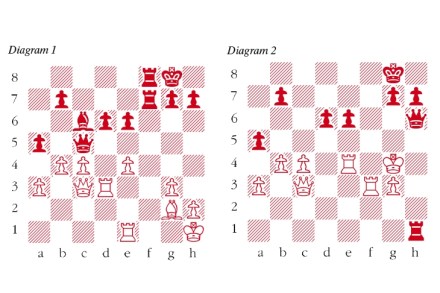
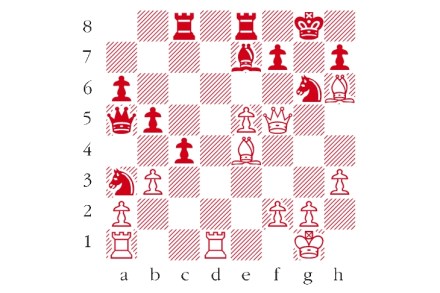
White to play. This position is from Rasmussen-Nyback, Crete 2017. How can White win at once? Answers to me at The Spectator by Tuesday 14 November or via email to victoria@spectator.co.uk. There is a p rize of £20 for the first correct answer out of a hat. Please include a postal address and allow six weeks for prize delivery. Last week’s solution 1 Rg7+ (1 ...
From our UK edition
Nigel Short, who challenged Garry Kasparov for the world title in 1993, has made a reputation for employing slightly offbeat openings in order to derail opponents who are unused to non-standard situations. As part of his repertoire, Short has a penchant for the ancient Chigorin Defence, and has even employed a version of this in a game against Kasparov himself. Earlier this month Short triumphed handsomely in the Negros Open in the Philippines, taking first prize with 8 points from 9, well clear of the runners-up, Karen Grigoryan and Nguyen Duc Hoa, who finished on 7. In round one, Short wheeled out the Chigorin to great effect.
From our UK edition
White to play. This position is a variation from Bologan-Short, Crete 2017. How can White now penalise Black for his overambition? Answers to me at The Spectator by Tuesday 7 November or via email to victoria@spectator.co.uk. There is a prize of £20 for the first correct answer out of a hat. Please include a postal address and allow six weeks for prize delivery. Last week’s solution 1 ...
From our UK edition
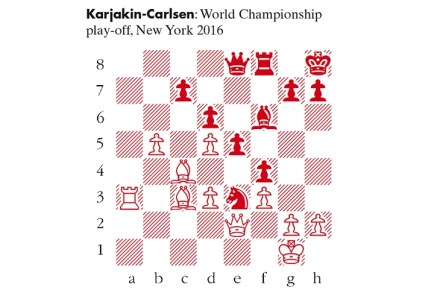
Books on the world championship matches used to appear regularly, with some having multiple written accounts. In recent years, though, these have declined, not least because of the decision by Fidé, the World Chess Federation, to keep reducing the length of the matches. When Labourdonnais and Macdonnell clashed in London in a series of contests during 1834, the total number of games played was 85. This was the first competition which (although it took place over a series of smaller consecutive events) might be regarded as the inaugural chess match to pitch the two acknowledged frontrunners of the day against one another. The longest world championship match to take place since then was the first meeting between Karpov and Kasparov, in 1984/1985, which extended to 48 games.
From our UK edition
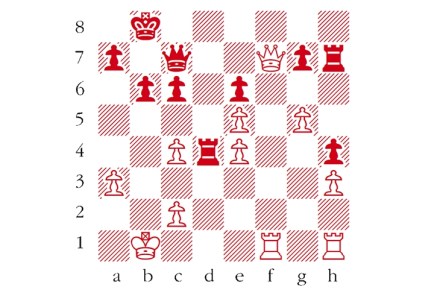
Black to play. This position is from Arda-Melia, Antalya 2017. How can Black win? Answers to me at The Spectator by Tuesday 31 October or via email to victoria@spectator.co.uk. There is a prize of £20 for the first correct answer out of a hat. Please include a postal address and allow six weeks for prize delivery. Last week’s solution 1 ...
From our UK edition
The American grandmaster William Lombardy died last week (4 December 1937–13 October 2017). He was an amazing talent in his youth, winning the Junior World Championship of 1957 with a 100 per cent score. During the early 1960s Lombardy had the potential to rival the American genius Bobby Fischer, but he decided instead to abandon chess and become a Catholic priest, though he also later renounced that vocation. As a chess-playing man of the cloth, Lombardy was the strongest since the Revd John Owen in the 19th century, who was a regular opponent of Paul Morphy. Having abandoned his religious calling, Lombardy returned to chess but never quite recaptured the promising sparkle of his youth.
From our UK edition
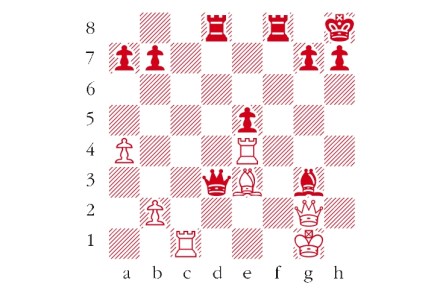
Black to play. This is from Sanal-Arnaudov, Antalya 2017. How did Black finish off the horribly exposed white king? Answers to me at The Spectator by Tuesday 24 October or via email to victoria@spectator.co.uk. There is a prize of £20 for the first correct answer out of a hat. Please include a postal address and allow six weeks for prize delivery.
From our UK edition
Twelve-year-old Rameshbabu Praggnanandhaa scored a sensational result in the recent Isle of Man Masters. At the age of ten years and ten months, he achieved the extraordinary distinction of becoming the youngest official international master in the history of chess. The youngest ever grandmaster is last year’s world championship challenger Sergei Karjakin, who was elevated to the chess peerage when he was 12 years and seven months old. Praggnanandhaa now has five months in which to break that record. In the Isle of Man Praggnanandhaa scored a respectable 50 per cent (4½/9) and notched his first win against a grandmaster rated 2700+ — the former British champion David Howell. Here is Praggnanandhaa’s amazing victory. Praggnanandhaa-Howell: chess.
From our UK edition
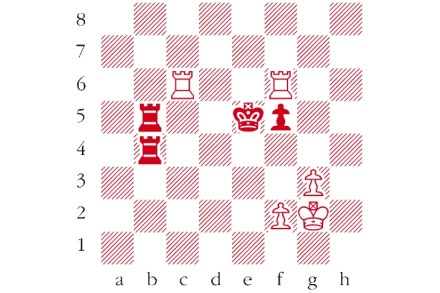
White to play. This position is from the above game, Praggnanandhaa-Howell, chess.com Masters. What is the accurate move White needed to play here? Answers to me at The Spectator by Tuesday 17 October or via email to victoria@spectator.co.uk. There is a prize of £20 for the first correct answer out of a hat. Please include a postal address and allow six weeks for prize delivery.
From our UK edition
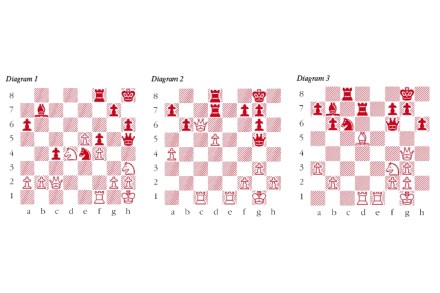
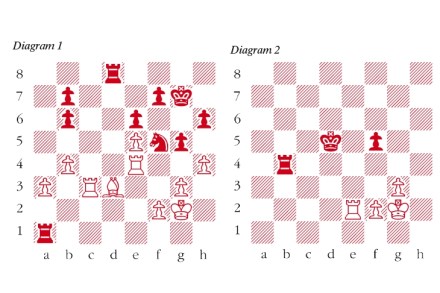
Congratulations to the organisational team of the Isle of Man Masters, which concluded last weekend. They assembled what must have been the strongest ever field for an open tournament in the history of international chess. Magnus Carlsen showed the kind of dominance he can achieve when he moves into overdrive. Leading results were: Carlsen 7½/9, Viswanathan Anand and Hikaru Nakamura both 7, with Michael Adams, Fabiano Caruana and the former world champion Vladimir Kramnik sharing 4th prize. Perelshteyn-Carlsen: chess.com Masters Isle of Man 2017 (see diagram 1) Although Black is a pawn down, his compact pawn structure and active play give him the advantage. 36 ... Rh4 37 Bc3 Rbh8 38 g3 Rh1+ 39 Kg2 R8h2+ 40 Kf3 g4+ After this the white king becomes exposed.

From our UK edition
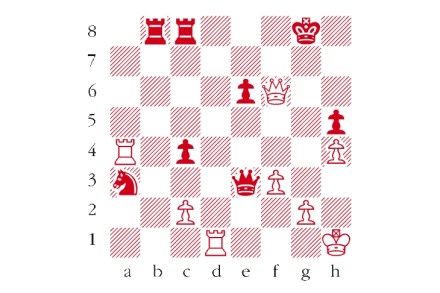
White to play. This is from Anand-Esserman, Isle of Man 2017. White now killed off the exposed black king. What was the key move? Answers to me at The Spectator by Tuesday 10 October or via email to victoria@spectator.co.uk. There is a prize of £20 for the first correct answer out of a hat. Please include a postal address and allow six weeks for prize delivery.
From our UK edition
The triskelion, or three-legged emblem, has been on the coat of arms of the Isle of Man since the late 13th century. The Isle of Man has now attracted one of the strongest ever lineups for an open competition in the history of formal chess tournaments. The lists include world champion Magnus Carlsen, former champions Vladimir Kramnik and Viswanathan Anand, and Hikaru Nakamura as well as the former world title challengers Boris Gelfand and Nigel Short. The British contingent is joined by Michael Adams, the newly minted British champion Gawain Jones, and David Howell. Doubtless the munificent prize fund of £133,000 is a lure.