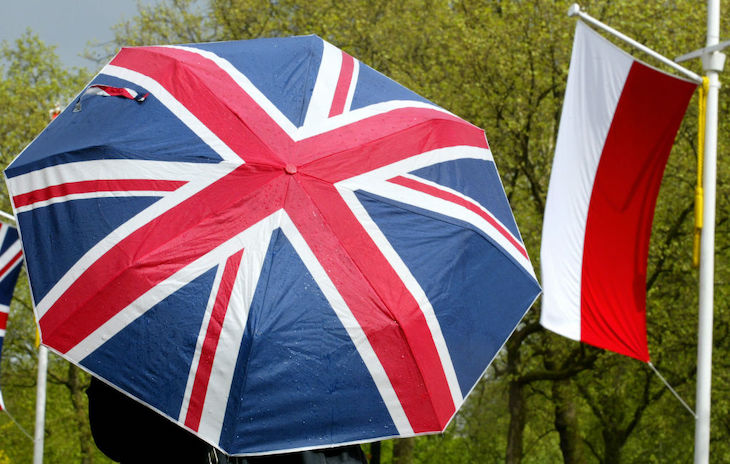
When Keir Starmer and Poland’s prime minister Donald Tusk met at RAF Northolt to sign a Polish-British security and defence treaty, the choice of place was more than ceremonial. Northolt is not just a London airfield. For Poles, it belongs to the moral geography of the Second World War: Polish pilots, the Battle of Britain, exile, service, sacrifice and unfinished history. A treaty about the future of European security was being signed in a place dense with Polish memory.
London was not merely a refuge; for a time, it was a temporary Polish capital
That moment, at the end of last month, captured something essential about London’s place in Polish life. For generations, Poles have sometimes thought of London as the other Polish capital – not constitutionally, but because history made it so. Here exile acquired institutions, archives, newspapers, schools, churches and rituals of statehood. In moments of danger and displacement, London became the place where Polish history found a second address.
The city has long played host to Polish exiles and institutions – not as a mirror of Warsaw, but as something more atmospheric: a capital of the Polish imagination. It was the Warsaw of exile, memory and manuscript, of émigré presses and Saturday school dictionaries. For decades, it was where Poland went when it had nowhere else to go.
London wears this legacy lightly, as the English tend to do. But scratch the surface, and the traces are everywhere. In Kensington, Polish bookshops once flourished, cafés buzzed with exiled argument, and neighbourhoods hummed in Polish. These were not just émigrés. They were a displaced intelligentsia, convinced that a country could be kept alive in editorials, archives, sermons, schoolbooks and tea-stained manuscripts.
One of the most moving places in Polish London remains the Polish Institute and Sikorski Museum. Named after General Władysław Sikorski, the wartime prime minister of the Polish government in exile, it is not simply a museum. Entering its rooms is like stepping into a state that no longer exists – except that, in some ways, it still does. Uniforms, letters, medals, maps and photographs of men who fought for a homeland they could not return to: this is history, but not merely commemoration. It remains stubbornly awake.
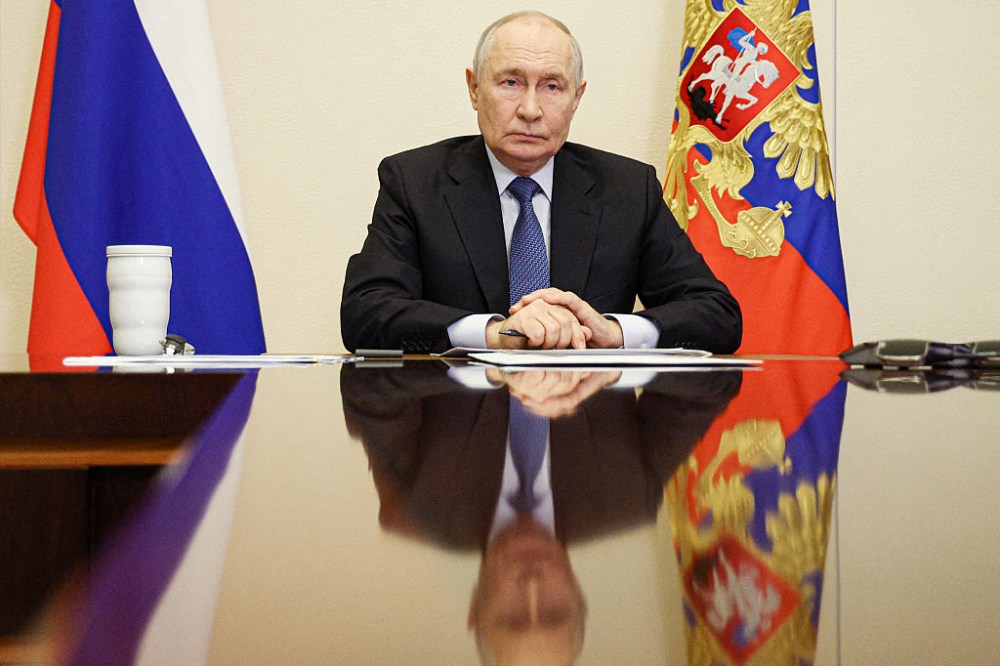
Britain hosted several exiled governments during the Second World War. But the Polish exile was distinctive in its duration. When the war ended, theirs did not. With Stalin’s regime entrenched in Warsaw, the Polish government in exile refused to disband. For decades it operated from London, complete with ministries, ambassadors and memoranda. London was not merely a refuge; for a time, it was a temporary Polish capital, the place from which the legal and symbolic continuity of the Republic was maintained.
The government in exile insisted that a Soviet satellite state was no legitimate heir to the Polish Republic. Only in 1990, did it hand over its insignia to Lech Wałęsa, with the quiet dignity of a government that had waited half a century for history to catch up with it.
But exile is not only about politics. It is also about life. Polish London was a city within a city: theatres, newsrooms, cafés, parishes, clubs and committees, with passions imported from Lwów and Wilno and rerouted through Hammersmith, Kensington and Ealing. Wiadomości, the émigré literary weekly, offered readers not just reviews and essays but continuity. A country could survive not only through armies and treaties, but also through syntax, memory and argument.
Today, that legacy is not merely archival. In 2026, Polish London is still visibly alive: in the crowded calendar of POSK in Hammersmith; in parishes, Saturday schools, book launches, debates and family gatherings that turn parts of west London, at least for an afternoon, into something remarkably Polish.
The old émigré London has not disappeared. It has been joined by a newer London of post-2004 migrants, bilingual children, entrepreneurs, students, academics, builders, bankers, artists, nurses and soldiers’ families – less melancholy than the world of exile, but no less important. POSK still hosts plays, concerts, lectures and exhibitions. The Sikorski Museum remains a sanctuary of memory.
The Saturday schools, more than a hundred of them across the United Kingdom, continue to teach the language and history that the wartime exiles feared might be lost. The Polish Catholic Mission in England and Wales, founded in the nineteenth century, has also helped sustain language, tradition and belonging.
Census data for England and Wales tells its own story. Polish remains the most common main language after English or Welsh: more than 600,000 people declared it as their main language in 2021. What began as wartime refuge, then became intellectual resistance, has settled into something more permanent: community.
Some old landmarks have faded. The bookshops are fewer. The émigré journals have ceased publication. Many voices that once defined Polish London – wartime officers, editors, poets, professors, priests, tireless committee members – are now part of history. But the spirit remains. In cafés of west London, one still hears arguments about history, delivered with that unmistakably Polish mixture of erudition and vehemence.
The signing of the new Polish-British treaty at Northolt was therefore not merely an episode in contemporary diplomacy. It reminded us that Polish-British relations have always drawn strength from memory as well as strategy. Northolt linked the pilots of 1940 with the security dilemmas of 2026; the war against Nazi Germany with the defence of Europe against Russian aggression; the old alliance of necessity with a new partnership of choice.
London was never simply another foreign city in Polish history. It became the other Polish capital: a city of exile, memory and persistence. For a time, in the most literal political sense available to a country deprived of sovereignty, it was also a temporary Polish capital. It was a place where a nation without a country managed, with remarkable stubbornness, to carry on.
And it remains a place where Poland continues to speak, pray, argue, remember, celebrate and imagine itself. London is rainy, stubborn, hospitable, reticent, half in love with the past and yet always being remade by those who arrive in it. Perhaps that is why Poles have recognised something of themselves here. Not a second Warsaw. Not a substitute homeland. But another Polish capital all the same.
This essay is a revised version of a chapter originally published in Piotr Wilczek’s new book, Entwined Histories: Essays on Poland, Britain, and Cultural Memory





Comments