Philip Patrick

Philip Patrick

Philip Patrick is an exiled Scot, who lectures at a Tokyo university and contributes to the Japan Times

Why are Japan’s trains so much better than ours?

From our UK edition

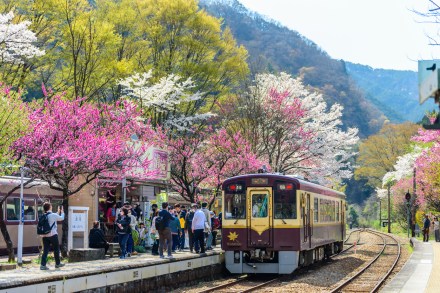
With six more months of train strikes recently announced it is getting hard to imagine a punctual, anxiety-free railway journey in the UK. Over in Japan it’s hard to imagine the opposite. Japan is one of those blessed countries where people understand the value of a modern, reliable, affordable and extensive railway network. In a 2019 global efficiency survey Japan, unsurprisingly, came out on top. And there hasn’t been a strike since the 1970s. If I had to think of one moment that crystallised all that I admire about Japanese trains it would be when I lost my paper ticket and had to negotiate the exit barrier.

Who cancelled Miss Japan?

From our UK edition

Karolina Shiino, a 26-year-old naturalised Japanese woman originally from Ukraine, has been obliged to give up her Miss Japan title after confessing to an affair with a married man. Shiino, whose parents are Ukrainian and who came to Japan aged 5, was awarded the title just two weeks ago. As the first non-ethnically Japanese woman to be crowned Miss Japan she had already generated a certain amount of controversy but the revelations about the affair, published in one of Japan’s weekly magazines, has brought her brief tenure to an inglorious end.

Japan’s naked men are no longer sacred

From our UK edition

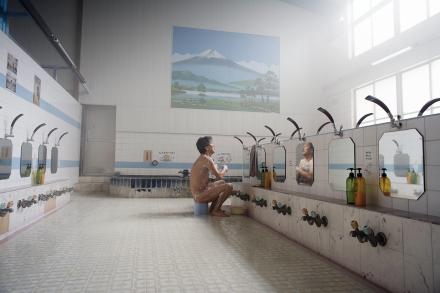
For the first time in its 1,250 year history, Japan’s Naked Man Festival is to admit women to its sacred rites and rituals – well, one sacred ritual anyway. Later this month, a cohort of 40 women, clothed, will be allowed to participate in the naoizasa ritual where they will carry bamboo grass wrapped in cloth into the local shrine. While hardly a stunning breakthrough for women’s liberation, the decision is nonetheless revealing. Sanitising rather bizarre local events is unlikely to make much difference It is less a reflection of changing opinions than shifting demographics, with Japan’s vast underpopulated rural areas having to be more flexible with their ancient customs in order to keep them alive.

Not everyone will miss Jurgen Klopp

From our UK edition

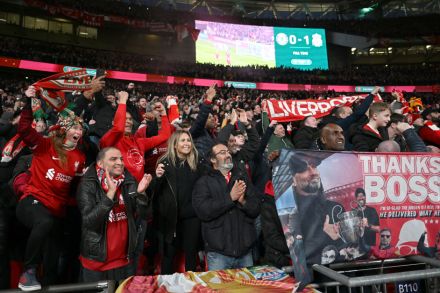
So, farewell then Jurgen Klopp. What memories you will leave us. You were exuberant, passionate and unorthodox. You ran up and down the touchline, gesticulating manically. You had a nice, albeit cosmetically enhanced, smile. You could be charming and witty. You won. seven trophies in nine years for Liverpool, most significantly the Premier League title that ended an excruciating generation long wait and a sixth Champion’s League. Your place in the Pantheon is assured and things will be duller without you. But is your leaving really a ‘disaster’? From the press reaction it would appear that your tenure at Anfield was an unbroken period of glory and joy the imminent cessation of which has precipitated something akin to mourning and existential angst.

Why no one in Japan is talking about the Fujitsu Post Office scandal

From our UK edition

‘They are a national disgrace.’ That was the response of a Japanese friend when I asked for her opinion on Fujitsu, the Japanese company at the heart of the recent UK Post Office IT scandal. But her answer was not in any way coloured by the company’s involvement in the affair (they supplied the dodgy software), of which she knew absolutely nothing. But then why should she? There has not been a single news item in the Japanese media. And ITVx is not yet available in Asia. The Japan Times, for example, found space yesterday for a piece on the ‘world’s oldest pyramid’ in Indonesia (which may in fact not be) and a piece on the viability of the Panama Canal.

Is Japan finally embracing immigration?

From our UK edition

Japan has long been known for its steadfast refusal to submit to the allure of large-scale immigration, as a country that puts social cohesion and societal harmony well ahead of any desire for diversity. Notoriously as hard to get into as Switzerland or Monaco for would be migrants, and even refugees, the ‘yokoso’ (welcome) sign that greets you at Narita Airport is clearly provisional and time limited. But is all that changing? There are signs of a major shift in policy, from an active dissuasion of foreigners to stay (Japan once paid laid-off Brazilian auto workers to go back home for good after the financial crash) to the door being flung open and a tatami welcome mat being rolled out to the world.

Japan’s earthquake has brought back painful memories

From our UK edition

The year 2024 began in the worst possible way for Japan. At least 30 people were killed by a powerful earthquake which struck the Ishikawa prefecture on the west coast of the country in mid-afternoon on New Year’s day. The death toll is expected to rise considerably. The quake registered 7.6 on the Richter scale, making it one of the most powerful in recent history. To give you some idea of the magnitude, it is a level that will knock you off your feet – I was unnerved enough by the swaying I felt in a Tokyo department store 180 miles away to hold on to a rail. Japan’s geospatial information authority has stated that the quake may have shifted land near the epicentre up to 1.3 meters to the west.

Why can’t the BBC leave Agatha Christie alone?

From our UK edition

I would like to report a murder. It took place in the evening of 27 December in millions of homes around the UK simultaneously. The victim was Dame Agatha Christie – well, one of her works, and to an extent her posthumous reputation. But unlike in the great Dame’s novels, there was no beguiling mystery about the culprit: it was the BBC, a serial offender. Yet again, in what has now entered the list of modern Christmas traditions, our national broadcaster chose to ‘reinvent’ and thus more or less kill, one of the Queen of Crime’s novels. Christie’s Murder is Easy was retrofitted to suit the BBC’s obsession with racism and colonialism. The hero Luke Fitzwilliam, in the book a retired English police detective, was recast as Nigerian.

The admirable humility of Japanese sports stars

From our UK edition

Who is the best paid sportsperson in the world? Cristiano Ronaldo perhaps? Or Kylian Mbappé? Lionel Messi? Novak Djokovic? LeBron James? Well, no. As of last week, it is someone even reasonably well-informed sports fans may not have heard of – a certain Shohei Ohtani, Japanese slugger and pitcher for the Los Angeles Dodgers. Ohtani’s ten-year, 700-million-dollar contract is the most lucrative in sporting history. Except technically Ohtani will not be the best paid sportsperson in the world, or at least not until the end of his term, as he has chosen to defer nearly all of his salary so that the bulk of the money can be invested by his new club in the team (he apparently has written assurances to that effect).

The deep affinity between Japan and Israel

From our UK edition

Tokyo Japan and Israel have a curious bond, which recent events have highlighted. A video showing a group of Japanese senior citizens singing ‘Japan loves Israel, and Israel loves Japan’ (in Hebrew) while waving Japanese and Israeli flags has received more than 900,000 views. The group, believed to be Christians, may be at the extreme end of Japanese philo-Semitism but their passion is generally shared. A crowd of 1,200 (big for Japan and probably greater than the number of Jews in the entire country) demonstrated in support of Israel in Tokyo earlier this month, just one of several similar events. The philosophy of the kibbutzim chimed with Japan’s collectivist culture There have been pro-Palestine demonstrations, but they have been small-scale and placid.

Does football really need sin bins to tackle bad behaviour?

From our UK edition

Here we go again. Just when you thought a period of welcome stasis might have descended on the world of football rules and regulations, we look set for yet more flux. On Tuesday, the International Football Association Board (IFAB) agreed to test a raft of new measures in the game. These include sin bins – a potential 10-minute detention for bad behaviour – and a new rule stipulating that only the captain is allowed to remonstrate with the referee. Trials could be held (including in the Premier League) as early as next season. IFAB has identified unsportsmanlike behaviour by players, including dissent, as ‘the cancer that [might] kill football’.

Everton’s problems are only just beginning

From our UK edition

Pity the poor Everton fans. Just as their once mighty club, now a perennial relegation battler, seemed to have a climbed a few ladders in recent weeks to low mid-table, they land on a snake. Yesterday the Premier League handed them a ten point penalty for financial irregularities, plunging them back down into the danger zone of relegation. Everton admitted the offences and pleaded mitigation: unexpectedly high interest payments on their new stadium project, the loss of a Russian sponsor due to UK government sanctions in the wake of the war in Ukraine and losses (estimated at £10 million) incurred as a result of criminal charges brought against a ‘player X’. They also stressed that they had cooperated fully with the investigation (unlike some others). But to no avail.

Japanese service is stiflingly polite

From our UK edition

One thing you can be sure of on a visit to Japan is that the service will be at the very least good, and quite often superb. The chances of being short-changed, snubbed, or slighted are virtually zero and truly bad service is so rare I almost, after 24 years in Tokyo, crave it now and again to break the monotony. ‘The customer is God’ as the Japanese say, and sometimes this exhortation to staff feels like only a slight exaggeration. I once witnessed a sad scene where an old lady tried to engage the cashier in a supermarket in casual conversation At its best, Japanese service can be glorious to behold. I once saw a customer drop money from her purse in the crowded food hall of Isetan (Japan’s version of Harrods). At the first tinkle of the coins, staff leapt into action.

Celtic’s Remembrance Day shame is the final straw

From our UK edition

A portion of the crowd at Celtic’s Parkhead stadium booed the minute's silence for Remembrance Sunday. It was abandoned after 30 seconds. This latest embarrassment comes just a week after the club suspended the season tickets of over 250 of its most zealously committed fans – a faction of ultras known as the ‘Green Brigade’. The members of this querulous group which occupies the north curve of Parkhead have been causing trouble/engaging in principled activism (depending on your take) for years, with the latest issue being the repeated display of pro-Palestinian flags and banners at matches, despite warnings from the club to desist. The two events were probably connected. The Green Brigade was founded in 2006 ostensibly to add colour and atmosphere.

Lost in Translation was Tokyo at its bizarre, dislocating best

From our UK edition

You can wait ages for a Japan themed Hollywood film and then three come at once. In an odd spasm of Japanophilia in 2003, Sophia Coppola’s sophomore effort Lost in Translation was swiftly followed by Tom Cruise’s Last Samurai and Quentin Tarantino’s Kill Bill Vol 1. The latter two may have made more money but Sophia Coppola’s film is the most interesting. On its twentieth birthday, Coppola’s vaguely unsettling and still controversial romantic (sort of) comedy is ripe for re-examination. The plot, if it can be called one, sees Bill Murray as a veteran Hollywood actor in Tokyo to film a Suntory whisky commercial, for which he will earn $2 million.

Is sumo wrestling dying out?

From our UK edition

For any young athletes harbouring ambitions of being a sumo wrestler, there was some good news this week. The Japanese Sumo Association (JSA) has decided to relax its height and weight requirements for young recruits, opening up the sport to those previously barred for being too short or too slight. Now all the beleaguered association needs to do is find them and keep them. Given that recruitment is just one of a host of problems the sport is facing, that won’t be easy. The rule change is in response to a precipitous drop in the number of applicants to train to be a rikishi (wrestler) and perhaps join the fabled ranks of legendary Yokozuna (grand champions) that adorn the walls of the Ryogoku sumo stadium in Tokyo, the sport’s version of Wembley.

Football’s shameful silence on Israel’s tragedy

From our UK edition

Few top-flight football matches these days kick off without an expression of solidarity with a cause or condolence. Along with the customary tributes to footballing legends or club stalwarts, just last week Premier League players took the knee, yet again, to show their opposition to racism. In recent weeks, we have had silences for the victims of the Moroccan earthquake and the Libyan floods. Support has been shown for Ukraine, and for the victims of terror attacks in Paris in recent years. And yet, strangely, no decision has apparently been made about honouring the now more than 1,000 victims of Hamas terrorism in Israel. Sunday's Premier League games – including the high-profile clash between Arsenal and Man City – unfolded without a tribute.

Is Fifa trying to destroy the World Cup?

From our UK edition

It’s official, well almost. Fifa has announced the location for the 2030 (centenary) World Cup. And the winner is… all over the place. In an extraordinary departure the tournament will be played in three continents with matches in Argentina, Paraguay, Uruguay, Spain, Portugal and Morocco. The decision, which will surely be rubber stamped at next year’s congress has been hailed by Fifa as ‘unit[ing] the world in a unique global celebration’ and by Football Supporters Europe (a body officially recognised by Uefa) as ‘Horrendous for supporters’ and ‘The end of the World Cup as we know it.’ It is tempting to speculate if Fifa is on a mission to destroy the world’s most popular and successful sporting tournament.

The excruciating pain of being a Manchester United fan

From our UK edition

Can there be a more wretched existence in football than being a Manchester United fan? Well, yes, would be the instant retort from legions of supporters around the country whose teams never get anywhere near the glamour palace of the Champions League; for whom grim, gritty survival in crumbling urinals is the order of the day. But at least those fans have the dignity and fellowship of the underdog, of hope, or a local derby drubbing of a hated rival, a cup tie giant-slaying. United fans have almost none of these thrills. For a club as proud as Manchester United, nothing less than domestic and European glory will really do, and those baubles seem forever out of reach.

The upside of living in Japan’s ageing society

From our UK edition

For the first time more than 10 per cent of the Japanese population are aged 80 or older, according to new official data. This reinforces Japan’s reputation as the world’s oldest society with 29 per cent of the population now aged 65 or more, a full 5 per cent ahead of Italy in second place. The evidence is there for all to see: walk around a typical Tokyo neighbourhood in the mid-afternoon and all you’ll see is old, often ancient people. You’ll think you wandered into a gated retirement community or an open air gathering of the Darby and Joan club.  The pandas in Tokyo zoo have been more prolific than the average Japanese youth The new data adds yet more weight to the already abundant evidence of Japan’s frightening demographic challenges.