Philip Patrick

Philip Patrick

Philip Patrick is an exiled Scot, who lectures at a Tokyo university and contributes to the Japan Times

Fifa’s great World Cup rip-off has gone too far

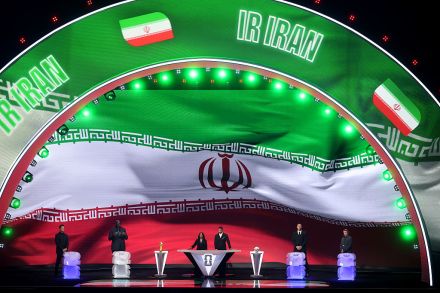
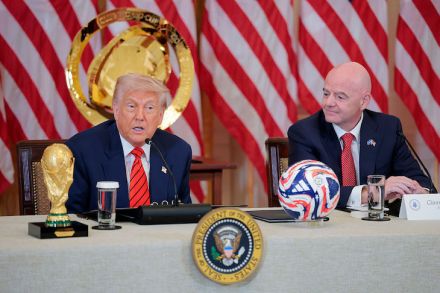
Today's World Cup draw in Washington, presided over by Fifa president Gianni Infantino with best buddie president Donald Trump at his side, is intended to whet appetites, set pulses racing and, most importantly, get fingers twitching on booking sites for tickets, flights, and hotels for next summer’s North American extravaganza. The World Cup 2026 is poised to be not just the biggest ever, but the biggest rip-off ever For those giddily contemplating the trip to North America next summer – not least we Scottish fans who have been denied a place at the party for so long – a cold, hard reality is about to bite. For the World Cup 2026 is poised to be not just the biggest ever, but the biggest rip-off ever.

‘Monster parents’ are terrorising Japan

If you want to make a Japanese high school teacher break out in a cold sweat and suffer heart palpitations, just whisper the word ‘monpa’ in their ear. For ‘monpa’ or ‘monster parents’, the bane of a Japanese educator’s life, are serial complainers notorious for their persistence, aggression, unreasonableness and irrationality. They have become such a problem that the city government has decided to take cation. There is nothing uniquely Japanese about overprotective, unrealistically ambitious or just plain pushy parents (‘helicopter parents’ are the US version) but Japanese monpa are in a league of their own.

Scotland’s win showed the beauty of international football

Scotland have qualified for the World Cup for the first time in 28 years. I can hardly believe that I have just written that sentence, so fantastical did this eventuality appear at times, and how specialised in failure Scotland’s once proud national team had become. But it is true. I’ve checked the score, and pinched myself several times.  We beat Denmark 4-2 last night (the classic World Cup scoreline) in what may well be the greatest Scotland international match ever played. As someone who was there in France 10,000 days ago the last time we qualified, it was a euphoric occasion and one that underscored that the true heart of football beats far more passionately now for the international game.

Is the British Council worth saving?

The British Council, the cultural arm of the UK government, is in deep trouble. The 91-year-old organisation is struggling to repay a £200 million-pound loan from the Covid era and there is anxious talk of up to 40 centre closures and a possible 2,000 job losses. Assets are being sold off to try and keep the show on the road. There is a problem that the Council does not really know what it is for – or perhaps it knows, but does not relish, its mission ‘We really need help on that loan,' says Scott Macdonald, the Council's beleaguered chief executive. 'The government has got to turn it into something viable for us and at reasonable termsWe are selling off everything.

Is Japan’s new PM the Thatcher to Trump’s Reagan?

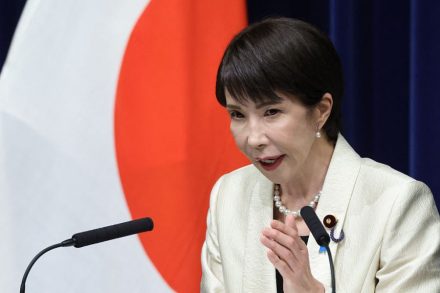
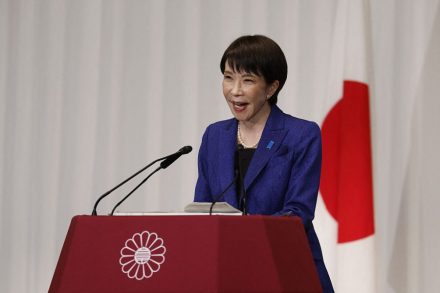
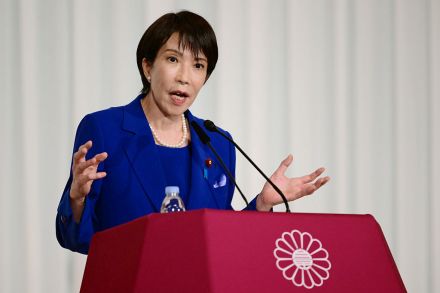
‘My wonderful ally and friend’ is how Japan’s brand new, and first female, prime minister Sanae Takaichi described President Trump in her recent tweet. As has been commented in Japan, this is a bit strong given that the two have spent a total of one day together (Trump is visiting as part of a tour of South Asian). The accompanying photo shows the two in couple-y proximity inside a US army helicopter at Yokosuka naval base. Trump looks relaxed and happy. Takaichi? Positively smitten. Could we be witnessing the emergence of a new geopolitical power couple in the mould of Thatcher and Reagan? Takaichi is known to have been inspired by the former Tory prime minister and has even taken to imitating the Iron Lady’s dress (Thatcherite blue with pearls).

How sumo wrestling bounced back

Sumo is the featured attraction at the Royal Albert Hall this weekend in a rare foray for the ancient sport outside of its spiritual home of Japan. The five-day tournament started on Wednesday and features 40 rikishi (wrestlers) (about six-tonnes’ worth) squaring off in a specially constructed dohyo (ring). Reinforced chairs and upgraded toilets have been installed for the exclusive use of the 28-stone ‘naked ambassadors’ (as they are being called here in Japan). Like test cricket, sumo wrestling is set apart and sustained by its antiquity It has been a huge success so far. Tickets sold out long ago but can be picked up for hundreds of pounds on the secondary market. Ring-side spectators have been warned about the danger of being squashed by a falling wrestler.

Japan has a bear problem

In a scenario out of a horror film, or Werner Herzog documentary perhaps, Japan is experiencing a spate of bear attacks, including a series of fatalities. Over the last few years, the number of encounters, attacks and deaths have all surged. This year alone, since April, 200 people have been attacked and six killed. The ongoing grisliness is threatening to seriously impact tourism in certain areas. Most attacks are in the northern island of Hokkaido, known as ‘Japan’s last frontier’ Some of the stories are the stuff of nightmares, such as when an 81-year-old woman in Iwate was mauled to death inside her own home in July – or the 26-year-old hiker found savaged on a mountain trail in Hokkaido in August.

Why Japan doesn’t care about having its first female leader

Japan is to have a female prime minister. Well, probably. Sanae Takaichi, the 64-year-old conservative veteran, has at the third attempt won the presidency of the Liberal Democratic Party (LDP) – which brings with it the bonus of being prime minister. Or at least it usually does. The LDP are currently in a coalition government, so Takaichi’s appointment will need to wait a couple of weeks to be confirmed at an extraordinary session in the diet (the national legislature). You might think the Japanese, feminists especially, would make something of having their first female prime minister, but the news has elicited not much more than a shrug here. There has been little fanfare and still less rejoicing.

Japan’s Asahi cyber attack is a national embarrassment

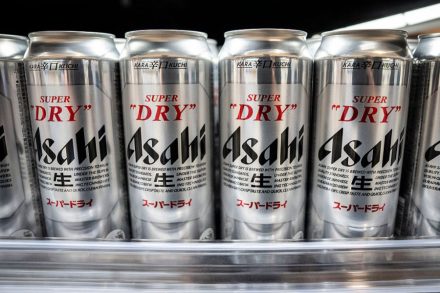
Could Japan be about to run out of beer? Or at least of one of its favourite brands Asahi, whose ‘Super Dry’ is the number one best seller in this nation of hop heads? This is the alarming and looming prospect in the country after a cyber attack on Asahi forced the company to close its production facilities. There are rumours of only a few days’ supply left in the convenience stores and izakayas (Japanese style pubs). If true, and if Asahi can’t solve the problem quickly, panic buying is a distinct possibility in a country with a per capita consumption of 34.5 litres a year. Then, with no indication of when production will restart, Japan really will be super dry. This isn’t the first such scandal to hit Japan. There has been a plague of such events in recent years.

A fitting encore for Spinal Tap

The long-awaited sequel to the documentary (or ‘rockumentary’) Spinal Tap, which told the story of a failing British rock band’s disastrous American tour, opened this month to decidedly mixed reviews. Robbie Collin in the Daily Telegraph advised us to dial down our expectations to -11 (ho ho) for The End Continues, which sees the band reform for a final, contractually obliged concert in Las Vegas. Collin mused that for many aficionados the first half at least would put them in mind of a description of one of Tap’s early albums, Shark Sandwich, which ran to just two words: ‘shit sandwich’. Mark Kermode seemed pained at the comparison with the original and deemed the new film a footnote of interest to die-hard fans only.

Who will succeed Shigeru Ishiba?

Here we go again. In what appears now to be an annual event, the Japanese prime minister has resigned. In a press conference on Sunday evening, Shigeru Ishiba, who had only been in the job since last October, explained that he was leaving because his continuation in post would prove divisive for his Liberal Democratic Party (LDP). It is time, he said, for the ‘next generation’ to take over.  Ishiba had lost his party’s majority in both lower and upper house elections (he headed a minority coalition government) and is now irredeemably tainted by failure. He has no faction or support group to stand up for him and couldn’t have credibly presented himself as the man to either unite and rebuild his declining party or make any headway in solving Japan’s myriad, complex problems.

Is the British Council really a ‘nest of espionage’?

I worked for nearly a decade at the British Council in East Asia. Every day, under the guise of teaching English and promoting awareness of British culture abroad, I would compile dossiers on people of interest, take pictures of government buildings and military installations and pass secret documents to couriers to smuggle back to Britain. I would sometimes meet contacts in parks where we would have brief, cryptic conversations beginning with a code line like ‘The geese are flying south early this year’, without ever directly looking at each other. Except of course I did none of these things and neither, I am convinced, did anyone else.

Man Utd vs Grimsby is what football should be about

Poor old Ruben Amorim. The sight of the hapless Manchester United manager cowering in the Blundell Park dugout seemingly praying that his billion-pound team could somehow scrape through on penalties against fourth-tier Grimsby in the Carabao Cup last night is now indelible. Perhaps only the tear drenched face of Rachel Reeves cowering in her own dugout in the House of Commons will compete this year for visual power. As you are probably aware, Amorim’s invocations were to no avail: after a marathon penalty shoot-out United lost. Though it wasn’t just Grimsby but football as a whole that was the winner.

What J.K. Rowling misses about Sturgeon’s memoir 

When someone one day writes a true history of Scotland during the baleful tenure of Nicola Sturgeon and reflects on what brought about her downfall as first minister, ‘Isla’ Bryson might be worth a footnote but J.K. Rowling surely merits a chapter. No one has managed to articulate the opposition case to Sturgeon with the verve, intelligence and penetrating wit of the Harry Potter author.   Rowling’s review of Frankly, Sturgeon’s recently published memoir, is in many ways as brilliant as her other mainly tweeted thrusts. It is incisive and damming, outclassing her adversary and doing so with courage humour and originality.

What Marcus Rashford gets right – and wrong – about United

Marcus Rashford, formerly of Manchester United, now of Barcelona, has opened up about his time at Old Trafford in a podcast interview with Gary Lineker (and an excitable Micah Richards) ahead of the start of the Spanish and English seasons on Friday. Despite Lineker interceding as often as possible to talk about his glory days in Spain (did you know he once played for Barcelona? and got a hat-trick against Real Madrid?) Rashford managed to get in some astute and revealing comments about the modern game and how topflight clubs (and one in particular) are often their own worst enemies.

Could Britain learn from Japan’s ‘vigilante’ groups?

A uniformed group of volunteers is planning to patrol the mean streets of Bournemouth in response to a recent surge in crime in the once sleepy south coast retirement haven. More than 200 have signed up so far, including ex-forces personnel. They will be equipped with radios, stab vests, and body cameras and have promised to be ‘non political and inclusive’. Given the widespread tensions surrounding migrant hotels (there are three in Bournemouth) this could be the start of a national trend, prompting the obvious question – do such groups work?

Women’s football is better without the politics

England did two remarkable things in Basel last night: winning an international title overseas and doing it by that most un-British method, penalties. You have to hand it to Chloe Kelly’s heroes, it was quite a triumph. ‘I’m proud to be English right now’ said the scorer of the winning goal in successive Euros – not something you hear too often these days. The media will tell us that the tournament was a glorious success but as always with women’s football one must resist exaggeration The scenes at the end were glorious. It crossed my mind that Donald Trump would have loved to be in the huddle as the trophy was held aloft, as he was with Chelsea a few weeks’ ago (on second thoughts, perhaps not a great idea).

The US trade deal may come too late for Japan’s prime minister

Relief. That was the overriding emotion in the Japanese financial markets and society at large today when, after months of speculation and discord, a trade deal was finally struck between President Trump and Japanese Prime Minister Shigeru Ishiba’s trade representative Ryosei Akazawa. The Japanese envoy, who has made eight trips to Washington in pursuit of an agreement, finally pulled it off just a week before the 1 August deadline (after which a hefty 25 per cent levy would have been imposed on all Japanese goods to the US). With the deal, that will be reduced to a probably manageable and reciprocal 15 per cent. Included in the package was an agreement that Japan would invest $550 billion in the US (details to be announced).

Japan’s prime minister is on borrowed time

‘It is a difficult situation and we have to take it very humbly and seriously’. This was the typically understated and solemnly delivered verdict of Japanese Prime Minister Shigeru Ishiba after his party and their coalition partners lost their majority in the Upper House elections on Sunday. It is the kind of wording used by Japanese doctors to inform patients that their illness is terminal (they never tell you directly). Ishiba insists he will stay on as PM, but long-term, he is probably doomed. Ishiba’s party, the Liberal Democrats (LDP), and their partners Komeito, needed fifty seats in yesterday’s election to hang on to a majority, but managed only 47.

Mark Mason, Mary Wakefield, Matthew Parris and Philip Patrick

26 min listen

On this week’s Spectator Out Loud: Mark Mason reminisces about old English bank notes (00:33), Philip Patrick wonders whether AI will replace politicians in Japan (04:04), Matthew Parris wonders why you would ever trust a travel writer (10:34) and Mary Wakefield looks at the weird world of cults (17:42).