Philip Patrick

Philip Patrick

Philip Patrick is an exiled Scot, who lectures at a Tokyo university and contributes to the Japan Times

Ukraine shouldn’t get a free pass to the World Cup

From our UK edition

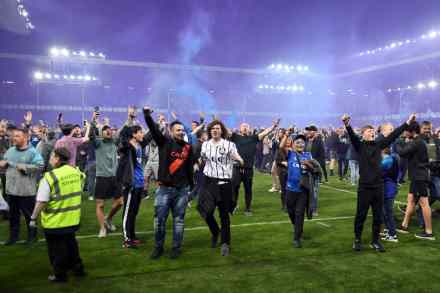
Should Ukraine be given a free pass into this year's football World Cup? Boris Johnson has given his support to the idea, but there's one downside: their entry into the tournament could come at the expense of Scotland or Wales. This hardly seems fair: Scotland will tonight feature in their first World Cup draw in 25 years; for Wales it is 64 years. Whatever the tragedy that has befallen Ukraine, it's wrong to expect Wales and Scotland to step aside. While we perhaps shouldn't take the notoriously football phobic PM at his word, far more football savvy commentators agree with Boris. Jim White in the Daily Telegraph called for Scotland and Wales to do the decent thing and withdraw, declaring that ‘Ukraine in Qatar is the thing everyone now craves’.

Does Putin’s Judo philosophy explain his sanctions response?

From our UK edition

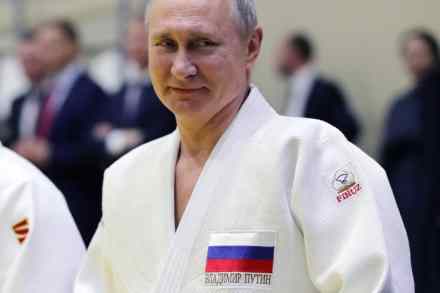
Contemplating leaders and their heroes can be a revealing business. Churchill had busts of Nelson and Napoleon at Chartwell (and a portrait of John Churchill by his bedside). Ronald Reagan had a bronze head of an anonymous cowboy in the Oval Office; Boris Johnson has a bust of Pericles (who took advice only from his mistress Aspasia) on his desk at No. 10. Napoleon had a bust of Hannibal. But what of Vladimir Putin? According to the man himself he owns several portraits and a ‘very beautiful’ bust of a certain Kano Jigoro. If you are neither Japanese nor a fan of martial arts that name may mean little. Kano Jigoro was the founder of Judo. But he didn’t just create a sport, he fashioned, according to Judo’s adherents, a philosophy of life.

Freddy Gray, Lionel Shriver and Philip Patrick

From our UK edition

21 min listen

On this week's episode, we'll hear from Freddy Gray on his time spent on the Poland–Ukraine border. (00:52)Next, Lionel Shriver on the return of actual badness. (06:28)And finally, Philip Patrick on the strange east Asian practice of hiring a ‘White Monkey’. (15:13)Produced and presented by Sam HolmesSubscribe to The Spectator today and get a £20 Amazon gift voucher.

In Japan, being a token westerner is big business

From our UK edition

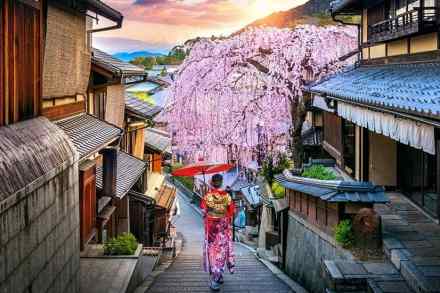
About ten years ago I was interviewed in Tokyo for a job as a fake Catholic priest, performing wedding ceremonies for Japanese couples who wanted the aesthetics of a Christian service without all the hassle of actually being Christian. In a room cluttered with tacky plastic religious paraphernalia I watched a training video of the company’s ‘top man’, an American Tom Cruise-lookalike in a cassock, ‘marrying’ a young couple. I was offered the job and it paid well but, fearing I might fluff my lines, collapse into giggles or, worst of all, come face to face with an ex-girlfriend approaching down the aisle, I turned it down.

Kicking Russia out of the World Cup would achieve nothing

From our UK edition

'There are more important things in life than football,' said the Polish football federation as they announced their intention to boycott a crunch World Cup qualifier against Russia next month. Sweden and the Czech Republic, who meet on the same night for the right to meet the winner of that now severely at-risk tie, have also indicated their refusal to meet Russia. The English FA have made the same pledge ‘for the foreseeable future’ (potentially jeopardising the Women’s European Championship to be held in England in July); while the French association also issued a sympathetic statement.

Is this Scottish anti-Brexit exhibition really ‘art’?

From our UK edition

‘Hate is not welcome in Scotland’, apparently, at least according to a public information film released in 2018 by the Scottish government. ‘We believe in acceptance, and it’s time you accept that’ continue the bright-eyed young people featured in the ad. Anyone who believes in this uplifting message might be puzzled if they pop into the City Art Centre in Edinburgh, where a new exhibition by artist Rachel Maclean seems to be very short on acceptance for Brexit and the awful Brits who voted for it. ‘Native Animals’ is a set of paintings and video installations which, according to the blurb are ‘examining the various motivations behind Brexit and its repercussions’.

How long can Japan keep foreigners locked out?

From our UK edition

A colleague has posted on the ‘Return to Japan’ Facebook page that his hotel quarantine at Tokyo’s Narita airport is set to be extended by ‘at least a week’. This is after testing positive with symptomless Covid on the point of his supposed release. He's already spent six days locked up in a tiny room with nothing but cold bentos (lunch boxes) for food. He now faces at least another week staring at the wall, worrying about whether his job will still be open when he finally emerges. In a sense my colleague is lucky. Thanks to his work visa, he will at least be allowed back into the country once he has established his non-Covid status. For many foreigners hoping to enter Japan, the borders remain firmly closed.

The march of South Korea’s anti-feminists

From our UK edition

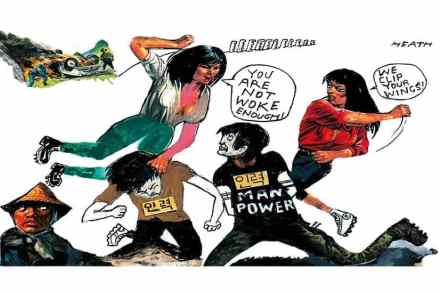
The two leading candidates for South Korea’s presidential election in March, Lee Jae-myung of the incumbent Democratic party and Yoon Suk-yeol of the conservative People Power party, have both made men’s rights central to their campaigns. They hope to appeal to the growing constituency of outraged men’s groups who vent their frustration at feminist overreach on internet message boards and sometimes even protest on the streets. And this is no fringe community: in a poll in May, more than three-quarters of South Korean men in their twenties claimed they had suffered gender discrimination. The ostensible provocation for this anger is the outgoing president Moon Jae-in’s self-declared ‘feminist’ administration.

Could Covid finally end the tradition of Japan’s dreaded ‘bonenkai’ parties?

From our UK edition

John Updike described America as a ‘vast conspiracy to make you happy’. Japan, a wonderful place to live in many ways, at times seems like the opposite; if not a vast conspiracy to make you unhappy, at least anxious, uncomfortable, and exhausted. This is especially true for those legions of salarymen and women sighing inwardly at the dread prospect of the ‘bonenkai’: the obligatory end of year company party.  It comes as little surprise to learn that many Japanese loathe these jamborees, which they have to attend, whether they like it or not. A survey for the Asahi Shimbun newspaper suggests many regard bonenkai as unpaid overtime, and would rather head home to their families, or bed.

Why COP26 flopped

From our UK edition

King coal is dead, long live king coal! That might be a fitting epitaph for COP26, which mercifully ended last Friday. It culminated with an agreement, which had not so much been watered down as to have virtually evaporated. Fossil fuels, it seems, are here for the foreseeable. What went wrong? That’s a question the ‘deeply frustrated’ COP26 president Alok Sharma might well be asking himself. He appeared to be close to tears at the denouement of the negotiations, pushed to emotional extremis by the last-minute wrangling over a single word: should we commit ourselves to phase out our use of coal, or phase- down our use of coal.

Is climate change scepticism growing in Japan?

From our UK edition

Fumio Kishida, the newly-installed Japanese prime minister, could have been forgiven for giving COP26 a miss. The opening ceremony in Glasgow coincided with the general election he was fighting back home. But Kishida, having won the election, did make the trip, where he gave a speech broadly but not unreservedly supportive of international efforts to cut Co2 emissions. The reward for his restrained tone and tepid assurances? Japan was named ‘fossil of the day’ by the Climate Action Network group, an ‘honour’ bestowed on countries deemed insufficiently devoted to the cause.

The enduring power of Japan’s doomsday cults

From our UK edition

 Tokyo It is now 26 years since the doomsday cult known as Aum Shinrikyu (‘supreme truth’) carried out the worst domestic terrorist attack in Japanese history. Led by their leader Shoko Asahara, Aum released sarin gas on to the Tokyo subway, killing 13 and injuring 6,000. It remains the only time a weapon of mass destruction has been deployed by a private organisation. The details were sickening: one woman had to have her eyes surgically removed because the nerve gas fused her contact lenses on to them. Despite Asahara’s execution in 2018, the death cult has (somehow) survived, changing its name to Aleph and spawning two splinter groups. Aleph is small but appears to be in rude health, with 1,650 members, considerable cash reserves and several properties.

Will Mako and Kei be the Japanese Harry and Meghan?

From our UK edition

A young royal, seen as a potential future star, falls in love with a commoner and chooses to leave the gilded cage and a life of dutiful service to marry and live a ‘normal’ life in America. The match is controversial for various reasons, not least the royal’s mental health and the non-royal’s family problems; but, after a certain amount of reflection, the marriage goes ahead. The couple settles into a new life stateside, and… Sound familiar? The tale of Princess Mako, the 29-year-old niece of Japanese emperor Naruhito, and her fiancé Kei Komuro is a sort of miniaturised inverted Japanese version of the Meghan and Harry story, albeit with a few twists.

Meet Japan’s latest unloved leader

From our UK edition

Japan will soon have yet another new prime minster: Fumio Kishida. He will be the country's third leader in as many years, and news of his appointment has been met with neither enthusiasm nor much concern – mainly because nobody really knows who he is, or what to expect from him. Kishida, the 64-year old former foreign secretary, was the most experienced of the four short-listed candidates. He has been a minister in various posts for the last fifteen years without anyone particularly noticing his existence. Kishida is a mild-mannered, self-effacing, former banker. He is a hereditary politician with three generations of his family having served in high office, and has clearly had his eyes on the top job for a while.

Why is Toyota so popular with the Taliban?

From our UK edition

While Taliban posing with newly acquired US military hardware has been a searing humiliation for America in recent days, here in Japan the debacle in Afghanistan has led to a different source of embarrassment. A recurring image of coverage from Kabul is of Toyota pick-up trucks ferrying gun-toting fighters around the city. It has given the iconic company’s management a serious PR problem, and not for the first time. The Taliban have been favouring the sturdy and reliable Japanese ‘Land Cruisers’ since the 1990s, but it is also the vehicle of choice for Al Qaeda and Isis. The appeal seems to be the suitability for rough terrain and the ease with which the trucks can be retrofitted with gun placements, or in other ways customised for combat or intimidation.

Farewell, Yoshihide Suga, Japan’s unloved leader

From our UK edition

Japanese prime minister Yoshihide Suga has fallen on his sword. Suga announced today that he will not be seeking reelection as leader of his party (the LDP), in effect resigning as prime minister in the process. The decision came without warning but wasn’t a huge surprise: Suga’s government is polling horribly at the moment and it was feared that the dour and unpopular leader would be a significant drag on his party’s prospects in the upcoming general election. Suga’s farewell after just a year in the job makes it feel like the good old days again, when a revolving door at the prime ministerial residence in Nagatacho saw Japanese premieres enter and exit at a rate of about one a year.

The rise and fall of the yakuza

From our UK edition

For the first time in history, an organised crime ‘yakuza’ boss has been sentenced to death in a Japanese court. Satoru Nomura, head of the Kudo-kai group in Fukuoka, was found guilty of murder and three assaults after a trial held without a jury due to fears of possible intimidation. If a planned appeal fails, he will be hanged. We’ll find out about it after it happens. What makes the case remarkable is that no evidence was presented linking Nomura directly with the crimes he was accused of. The judge nonetheless concluded that they took place on his orders and had the confidence to deliver the ultimate sentence. The case marks a new low in the seemingly terminal decline of the once fearsome crime syndicates.

Is Japan about to enter a ‘London-style lockdown’?

From our UK edition

Just like the Olympics, which ended a fortnight ago, the Paralympics is set to commence amid a drumbeat of doom. Japan appears to be in the middle of a Covid renaissance, with around 5,000 new cases a day in Tokyo. The games will take place, like the Olympics, in a ‘state of emergency’ that now covers 84 per cent of the country. But how serious is the situation, and what exactly does 5,000 daily cases mean? Like much of the vaccinated world, the majority of the afflicted this time round appear to be younger people and overall deaths in Japan remain extremely low.

Was the Tokyo Olympics a success?

From our UK edition

Yoshihide Suga, Japan’s Prime Minister, is a hard man to read. He has a sum total of one facial expression and lives up to the national stereotype of inscrutability. Still, I’m pretty sure I know what was going through his mind at the closing ceremony of the Tokyo Olympics on Sunday night: ‘Thank God, that’s over.' The games were not the disaster that many, including this writer, feared. Two weeks’ ago in Coffee House I wondered if Tokyo 2020/1 would be the worst ever Olympics – and for a brief panicky period, when an astonishing 11th hour cancellation was mooted, that actually looked optimistic. But in the end, the show did go on. And it was, just about, all right on the night.

In defence of Olympic football

From our UK edition

Spain takes on Brazil today in the final of the men’s Olympic football tournament. Not interested? Well, if so, you’re probably not alone — Olympic football has a popularity problem. For decades it has suffered from unfavourable comparisons with the big Fifa and Uefa behemoths to the extent that many see the whole thing as a bit of a waste of time. I disagree, and I will be tuning in. For one thing, to dismiss the tournament as an irrelevance is historically ignorant. Olympic football (and excuse my appalling sexism but I’m confining myself to the men’s game here) predates the World Cup by 30 years and for a couple of decades was the de facto world championship, playing a valuable role in building the foundations of the international game.