Philip Hensher

Philip Hensher is professor of Creative Writing at Bath Spa University and the author of 11 novels including A Small Revolution in Germany.

Fate, death and Alma

From our UK edition

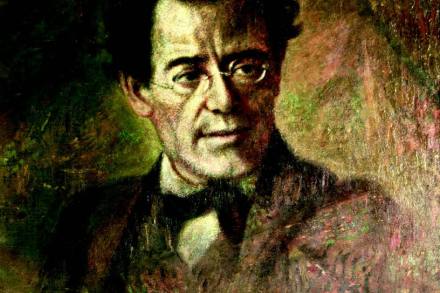
Gustav Mahler is the most subjective, the most autobiographical, of composers. Other composers, particularly in the previous century, have asked their audiences to show an occasional interest in their private lives, sometimes in rather coded ways. There are the allusions, which of course never were completely private, of Schumann’s piano cycles, Carnaval and Davidsbundlertanze; there are the heartbreaking bits of autobiography in the late Beethoven string quartets; there are significant mottos about private acts of adoration even in Brahms’s third symphony; and, much later, a hidden love affair to be decoded in the Berg Lyric Suite. But these were occasional diversions, for the most part, and music continued to be as impersonal, public and abstract an art as it ever was.

The modern vanitas

From our UK edition

Unexpected parallels between our age and another are a staple of the jobbing journalist’s trade. Unexpected parallels between our age and another are a staple of the jobbing journalist’s trade. Usually coinciding with a major exhibition at the Royal Academy, such arguments tend to claim that there are a surprising number of similarities between, say, the Byzantine Empire and the way we live now. Despite the fact that these arguments often result from a brain-storming session round the conference table, there is usually enough there to sustain a page or so. Human nature does not change so much, and some very unexpected idiosyncrasies recur at regular intervals. Ferdinand Mount has set himself a rather more ambitious task, and his argument is more intricate than usual.

For the simpler reader

From our UK edition

David Mitchell’s fifth novel, an exotically situated romance of astounding vulgarity, has some things to be said for it. David Mitchell’s fifth novel, an exotically situated romance of astounding vulgarity, has some things to be said for it. It will certainly entertain the simpler reader that lurks within all of us, the one that hungers for the chase and the mysterious Oriental maiden with a fascinating physical flaw, that enjoys the spurt of blood, thrills to the race against time and positively hankers after bald, inscrutable, mind-reading villains in blue silk robes; and to the reader who hardly cares how these things are put into prose.

For all time

From our UK edition

To review some new books about Shakespeare is not to note a revival of interest, but simply to let down a bucket into an undammed river. No one really knows the scale of the secondary bibliography. Published sources on any given topic in Shakespeare studies are innumerable and, as James Shapiro reminds us, so are books devoted to the idea that the works were written by someone else. There are two theories to account for why Shakespeare is still so enormously prevalent in cultural life nearly 400 years after he died. The first is the cynical one, that it suited the British empire, and Anglo-Saxon culture in general, to foist the values and standards of one of its own on the rest of the world.

Cynics or idealists

From our UK edition

There ought to be more mileage than there is in stories of diplomacy. Publishers long ago got wise to the memoirs of ex-ambassadors, which in a more servile age used to clog up their catalogues just as the ghosted anguish of reality starlets does now. I am a sucker for the autobiographies of politicians, however atrociously written, self-serving, drab or ‘humorous’; but I draw the line at the memoirs of ex-foreign secretaries. The subject of diplomacy sounds much more fun than it really is. Negotiations make for dull reading; Lord Salisbury, thinking about Castlereagh at the Congress of Vienna, said: ‘There is nothing dramatic in the success of a diplomatist. His victories are made up of a series of micro- scopic advantages.

No example to follow

From our UK edition

Ahundred years ago, a character in a novel who was keen on music would, like E.M. Forster’s Lucy Honeychurch or Leo- nard Bast, be as apt to stumble through a piece at the piano as listen to it at a concert. Ahundred years ago, a character in a novel who was keen on music would, like E. M. Forster’s Lucy Honeychurch or Leo- nard Bast, be as apt to stumble through a piece at the piano as listen to it at a concert. Given the relative- ly rare opportunities to hear a Brahms or Beethoven symphony before the invention of the LP, the easiest way to enjoy one was probably to play it in piano duet reduction.

Addle-pated modernist

From our UK edition

In 1564 a book was published calculating that there were 7,409,127 demons at work in the world, under the administrative control of 79 demon-princes. Eight years later, Michel Eyquem de Montaigne began to write his Essays, a book which still seems to speak to us directly with all the force of rational understanding and an identifiable human personality. If Montaigne marks the beginning of modernity, it is because he tells us exactly what he is like; how he sees the world, fallibly and yet honestly; and because there was no book in the world like it before, and we are still writing books rather like it today. Montaigne, in common with all great authors, has continued to be infinitely applicable.

A lost masterpiece?

From our UK edition

These long anticipated literary mysteries never end in anything very significant — one thinks of Harold Brodkey’s The Runaway Soul, falling totally flat after decades of sycophantic pre-publicity, or Truman Capote’s Answered Prayers, emerging in fragments in 1975, after 17 years of non-work, to scandal but no acclaim. These long anticipated literary mysteries never end in anything very significant — one thinks of Harold Brodkey’s The Runaway Soul, falling totally flat after decades of sycophantic pre-publicity, or Truman Capote’s Answered Prayers, emerging in fragments in 1975, after 17 years of non-work, to scandal but no acclaim. (I wouldn’t get your hopes up for the quality of anything J. D.

Nothing succeeds like excess

From our UK edition

‘Why are you laughing?’ they demanded again and again, as Cheever tittered at some grindingly miserable memory from his youth, or some cruelty he’d inflicted on his children. What his keepers were pathologising was the writer’s genius to see the hilarious in the chaotic, the respectable, the insulting and the desperate. Cheever was, above all, extremely funny, and he has been served now by a marvellous biography which, through it all, manages to keep its sense of humour. Blake Bailey’s Life is alarming, truthful, scabrous, but above all absurdly funny. You feel Cheever wouldn’t have wanted it any other way.

Voices of change

From our UK edition

Not every writer would begin a history of the 1950s with a vignette in which the young Keith Waterhouse treads on Princess Margaret by mistake. But David Kynaston is an unusual historian, rewardingly imbued with a sense of fun and convinced of the importance of the freakish; he is enamoured of the single incident and the obscure observer. Family Britain is as vivacious and alluring as Sabrina, the Ted’s pin-up, ‘symbol of opulent sex’, real name Norma Sykes, who pops up on page 608 between Peter Maxwell Davies and Sylvia Plath. I suppose she may still be alive. This is the second volume in a projected series, Tales of a New Jerusalem, chronicle rather than a history, which will eventually cover the period between 1945 to 1979.

Too much information | 23 September 2009

From our UK edition

Freemasons have been getting steadily less glamorous since their apotheosis in The Magic Flute. Nowadays, one thinks of them in connection with short-sleeved, polyester shirt-and-tie sets, pens in the top pocket, sock-suspenders and the expression ‘My lady wife’. I honestly can’t see them guarding the secrets of the universe. Dan Brown’s new conspiracy theory cosmic thriller, portraying freemasonry as a wise secret sect, starts at a considerable disadvantage. Ends there, too. Robert Langdon — was there ever a dimmer name for an action hero? — is lured away from his cryptological studies by an invitation from a wise old acquaintance, Peter Solomon, in Washington.

Reviving a reputation

From our UK edition

At the end of his thorough and considered life of William Golding, John Carey remarks that ‘nowadays mention of Lord of the Flies sparks recognition in a way that Golding’s own name does not, or so my admittedly limited market research has indicated.’ Can this really be true? Has Golding’s immense reputation diminished, in the 16 years since his death, to the authorship of that first novel? Carey refers elsewhere to a book signing in Oxford in 1984.

Moments of clarity

From our UK edition

By now, Alice Munro has established a territory as her own so completely, you wonder that the Canadian Tourist Board doesn’t run bus tours there. Perhaps they do, even though it presents an appearance more characteristic than inviting. To think of her world is to think of lonely houses at the edge of bleak, small towns; of unsatisfied backrooms looking over muddy fields; of suburbs, making do; of institutions imposed on half-made landscapes, and human disappointment reflected in the world about her characters. It is classic short-story territory, and over the years Munro has carved a substantial reputation without venturing very far from what she does best; the classic short story of disappointment and epiphany, in the landscape she knows and understands.

Reaching for the moon

From our UK edition

Some writers spend their careers happily producing variations on the same book. Others seem to rethink the sort of book they would like to write with each new work. Only a very few, however, have a career which looks like a planned trajectory into something completely new; you would not predict Tolstoy’s late fables from his first autobiographical sketches, or the opaque fantasy of James Joyce’s Finnegans Wake from the dogged realism of Dubliners. And yet all the steps in between are carefully considered, and the career makes perfect sense. Italo Calvino was very much one of those writers.

Straitened circumstances

From our UK edition

There are more lesbians in fiction than you could shake a stick at, of course. Graham Robb, writing about late 19th-century fict- ional lesbians, has observed that the fin-de-siècle lesbian was educated at a boarding school or a convent. She was frighteningly self-possessed, wore dark colours, read novels, smoked cigars, injected morphine or inhaled ether, suffered from excess hair except on the head, spent too much time in conditions suitable for tropical plants, and was prone to horrible diseases. She was such a common figure that historians are able to make generalisations about the usual descriptors. Still, when Sarah Waters started her delectable career with three novels about lesbians in the belle époque, one had the sense of a gap being filled.

Back to the future?

From our UK edition

With the economy in recession, the close attentions of the IMF, taxation rising to punitive levels and a general sense of our having lived beyond our means, reminders of the 1970s are all around us at present. Last week, both the death of the union leader Jack Jones and Alistair Darling’s extraordinary budget in their different ways took us back to the atmosphere of 30 years ago. Andy Beckett’s history of the political engagement of those years comes at a highly opportune time. He rightly focuses not on the familiar popular culture — there is no mention of flared trousers, the Osmonds, platform shoes or space-hoppers — but on the much stranger political landscape of the time.

Now universally acknowledged

From our UK edition

Jane’s Fame: How Jane Austen Conquered the World, by Claire Harman What does Mr Darcy look like? Anyone who has read Pride and Prejudice will be able to give an answer. I believe that he is tall, square-jawed, beetle-browed, slightly weather-beaten and dark-haired. Is any of that at all controversial? But on returning to the novel, we find a strange thing. The one feature in that list which I would have thought beyond dispute is that he has dark hair. This, however, is what Jane Austen has to say about his personal appearance. On his first entry, he is said to have a fine, tall person, handsome features, noble mien …The gentlemen pronounced him to be a fine figure of a man, the ladies declared he was much handsomer than Mr Bingley.

More gossip with less art?

From our UK edition

To say that this first volume of Samuel Beckett’s collected letters is a puzzle and a disappointment is to suggest that one might have had specific expectations of it. Where did this cryptic and poetic writer come from? What did so very affectless an author sound like when he was talking in his own voice to his intimates? And, considering the remote relationship most of his writing bears to the world, how did he look at it? Added to this specific anticipation is the knowledge that Beckett, in tthe Thirties, had an exceptionally interesting life. He was an intimate of the Joyce household, trusted by all members of it. He played an important role in the composition and development of Finnegans Wake.

Ending the Vile Traffic

From our UK edition

Sweet Water and Bitter: The Ships that Stopped the Slave Trade, by Siân Rees The narratives of slavery have, it’s safe to say, replaced the narratives of imperial adventure in our reading lives, and our moral compasses are orientated by indignation at suffering and exploitation rather than by the contemplation of our ancestors’ achievements. The slave trade, considered ‘relevant’ as well as a gruesome spectacle of human suffering on a colossal scale, is taught in schools and familiar to millions to whom ‘Nelson’ suggests only Mandela. And yet the abolition of the slave trade, over long, difficult decades, was one of the bravest and most serious endeavours of the British in the 19th century.

An unlikely bestseller

From our UK edition

2666, by Roberto Bolaño Not every writer would write a novel in the form of a completely invented encyclopaedia of imaginary writers and call the result Nazi Literature in the Americas. Not everyone, either, would write a novel in two paragraphs, the second less than 12 words long, or produce a novel about a torturer-poet who writes his work in jet-trails in the sky. As soon as Roberto Bolaño came to the attention of the world, it was clear that, however extraordinary his work seemed in formal design and subject, he might have something even more extraordinary under wraps. After his death in 2003, word emerged from the Spanish-speaking world of a gigantic novel called 2666.