Philip Hensher

Philip Hensher is professor of Creative Writing at Bath Spa University and the author of 11 novels including A Small Revolution in Germany.

Prophetic times

From our UK edition

The subject here is colossal, covering a substantial stretch of the later Roman empire, the last years of the Persian empire, the conversion of the Arabs, the spread of Christianity and what happened to Judaism. The time span runs, effectively, from the death of Jesus to the moment in the eighth century when the Abbasids acquired through violence the vast empire of the Umayyads, stretching from the Loire to the Hindu Kush, and founded Baghdad. The title of Tom Holland’s book is rather studiously general, but his central topic is unmistakable: the founding and establishment of Islam and its political and martial setting. If Holland didn’t want to make a point of this in his title, one couldn’t blame him.

‘A world dying of ugliness’

From our UK edition

Some writers’ lives are estimable, some enviable, some exemplary. And some send a shudder of gratitude down the spine that this life happened to somebody else. It isn’t necessarily about success or acclaim — most rational people would very much prefer to have had Rimbaud’s life rather than Somerset Maugham’s. But sometimes it is. In the ranks of Mephistophelean terror, there are few more frightening stories than the life of the Austrian novelist Joseph Roth. Everything went wrong for him, and it must have been simply appalling to have had to live within that head, with those thoughts. That he is also a great novelist merely adds to the horror that this collection of his letters conveys. He saw too clearly for his own sanity.

Mavericks need not apply

From our UK edition

Philip Hensher gives a critical insider’s view of the Creative Writing industry It has always been a challenge to get a novel or poem published. Twenty years ago, I went about it in the traditional way. I read a hell of a lot of books. I did a couple of literary degrees. I got an interestingly peculiar but rather gruelling job. I wrote a novel or two in the evenings or on holiday. Then I met a literary agent at a drinks party and he took one on and sold it to Hamish Hamilton — and has possibly regretted it ever since. The traditional way has, in the last few decades, been supplanted by a more professional sounding one called the Creative Writing degree.

Philip Hensher’s books of the year

From our UK edition

It was an exceptional year for the novel, with impressive books from Adam Mars-Jones, Ali Smith, Edward Docx, Edward St Aubyn, A.S.Byatt, Cressida Connolly, Ross Raisin, Amitav Ghosh, Tim Binding and Jeffrey Eugenides, just to mention a few. Many congratulations to the enterprising Hesperus for bringing a small but enchanting German classic, Hans Keilson’s Komodie in Moll, to English readers for the first time. The three new novels I’d particularly commend are, first, Robert Harris’s superb The Fear Index guaranteed to appeal to anyone who shudders when their laptop unaccountably fails to switch off. Secondly, my friend Alan Hollinghurst’s magnificent The Stranger’s Child, universally acclaimed as the best novel of the year.

Pure and simple

From our UK edition

It might be that the stage musical is now pretty well over as a form. Certainly, the gloomy parade of ‘juke-box’ musicals through the West End doesn’t give one much hope for the future. It is difficult to pick out a worst offender, but the Ben Elton We Will Rock You, confected from the Queen catalogue, is as bad as any. Its premise, of taking the work of a curious-looking, homosexual, Parsi, excessive genius like Freddie Mercury and turning it into an idiotic story about two clean-cut stage-school kids Putting the Show on Right Now says something truly terrible about the musical: it says that it can only deal with conventional views of conventional subjects.

1Q84: Book One and Book Two by Haruki Murakami, translated by Jay Rubin Harvill

From our UK edition

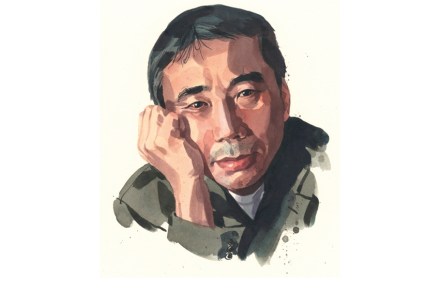
Haruki Murakami’s latest tale of good and evil has a thrilling, broad sweep, but the delicacy of his early work is missing, says Philip Hensher  The scale of the celebrity of the Japanese novelist Haruki Murakami is impossible to convey. From 1987, when his enchanted love story Norwegian Wood sold millions, he has been a huge presence in Japan. From the 1990s onwards, he has moved from being a cult favourite abroad to a general bestseller.

The Brilliance in the Room

From our UK edition

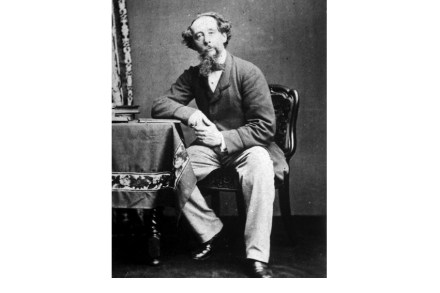
It is difficult to conceive of a writer more passionately loved by his audience than Dickens was. It went on for a very long time, too. We learn from the historian David Kynaston that, immediately after the second world war, Dickens was one of the five most borrowed authors from public libraries. My grandmother was probably a typical reader of Dickens: she left school at 14 before the first world war, yet had a cheap set of Dickens in the house (I think it was a promotional giveaway by the Daily Express at some point in the 1930s.) I have the set — the typeface and the acid paper nearly make your eyes and fingers bleed. And yet she read most of them a lot more than once: the copy of David Copperfield falls apart as you open it.

Day of reckoning | 3 September 2011

From our UK edition

No one could say that we didn’t have warning of these events in the most specific terms. A month before 11 September 2001, the President’s daily intelligence brief was headed ‘Bin Laden Determined to Strike in US.’ Other official warnings from this time and earlier were so specific, and so specifically ignored, that a former National Security Adviser at the White House, Sandy Berger, would on four separate occasions in 2002 and 2003 abstract official top secret documents from the National Archives by stuffing them in his socks. (Because of Berger, we now don’t know what these warnings consisted of). There were any number of commentators, too, who saw exactly what was coming.

French with tears

From our UK edition

The civilised world has always needed a lingua franca, through which educated people of international outlook can communicate with each other. For centuries that language was Latin, first the language of theology, then of learning — Erasmus, Milton and Thomas More communicated with a wide community of scholars in Latin. Nowadays, the international language of commerce and culture is English, and from Peru to Shanghai the employees of multinationals talk in their barbarous English idiolects of blue-sky thinking and learning curves, just as their children chant along to the lyrics of West Coast rap. Between the age of Erasmus and that of Ricky Martin, there occurred the supremacy of the French language.

Flouting all those pieties

From our UK edition

If not equal to his best novels, Kingsley Amis’s short stories are still wonderfully entertaining, says Philip Hensher Some writers of short fiction — there doesn’t seem to be a noun to parallel ‘novelist’ — are dedicated craftsmen, like Chekhov, Kipling, William Trevor, Alice Munro or V.S. Pritchett. Others, like Evelyn Waugh or E.M. Forster, are more haphazard, producing stories to commission, or as a sketch, to try something out in moments when an idea on a small scale seems to be all that inspiration can supply. The result, when the collected edition finally surfaces, is generally more varied in surface than the works of the specialist — just think of Dickens’s stories, written for odd occasions and generally at short order.

Honour the most exalted poet

From our UK edition

What’s your punishment going to be, when you get to Hell? At least as envisaged by Dante, you might be somewhat surprised. Hitler (mass murderer) is in the outer ring of the seventh circle, up to his eyebrows in a river of blood and fire. Still, that’s a little better than the innocent manager of your local HSBC (banker), who is in the inner ring, running perpetually on burning sand. Both get off much lighter than the poor lady who, the other day, told me how much she’d enjoyed something or other I’d written (flatterer). She’s a whole circle lower down in the second bolgia, or pit, sitting in excrement forever, which seems rather harsh. Corrupt politicians are immersed in boiling pitch, but they are nowhere near as far down as the impersonators.

Great among the nations

From our UK edition

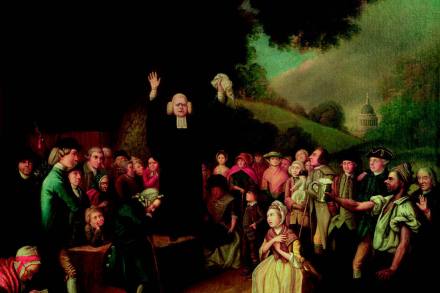
The King James Bible, while uniting the English-speaking world, gave birth to centuries of radicalism and Dissent. On its 400th anniversary, Philip Hensher examines the translation’s legacy Considered as a book, the Bible is far too long. Its characterisation is not all it should be: its hero, God, seems totally inconsistent, varying from a prankster with a bizarre sense of humour (Job) to a sensible dispenser of advice. You can’t help feeling that it is really rather patchy in quality: some of it is wonderfully entertaining, such as the Acts of the Apostles and the two Books of Kings, but some of it doesn’t seem to be interested in entertaining the reader one bit. (Look at the difference between the stonking first line of Kings and the droning way Chronicles kicks off.

‘This time it will be different’

From our UK edition

There used to be two rules of successful imperialism. First, don’t invade Russia. Second, don’t invade Afghanistan. As Rodric Braithwaite points out, invading the latter country itself offers no real difficulties. The Afghans abandon their strongholds and take to the hills, allowing the invader to enjoy the illusion of power in Kabul, with a puppet leader installed in the Bala Hissar, the old palace fortress. The problems come later, as a long war of attrition achieves little and finally obliges the invader to cut his losses and run. Anyone can see that this is what is happening at present to the British and American forces. And it has happened before. It happened to the British in the 1840s — a tragic venture about which I wrote a novel, The Mulberry Empire.

Why the heck not?

From our UK edition

Philip Hensher recounts how a handful of British mercenaries in the 1960s, headed by the Buchanesque Jim Johnson (pictured above), trained a rag-tag force of Yemeni tribesmen to defeat the full might of the Egyptian army in a conflict that Nasser later referred to as ‘my Vietnam’ ‘Enormous fun and a tremendous adventure,’ one of the participants called it afterwards, voicing the sentiments of every British soldier running amok since the beginning of time. Probably there were soldiers under Boadicea who said exactly the same thing. This little known story from the very end of the imperial adventure is redolent of cheek, bravado and the undertaking of a challenge for no other reason than thinking ‘Why the heck not?

A novel approach

From our UK edition

An interesting phenomenon of recent years is the novel about a real-life novelist. Of course, writers have often included fictitious members of their trade within their work — one thinks immediately of Thackeray’s Pendennis, Anthony Powell’s Nick Jenkins and Waugh’s Pinfold. Often, too, novelists have contrived extended tributes to favoured masters — Fielding features prominently in Kingsley Amis’s I Like It Here — without intruding into their social world. But, until recently, the novel which openly entered into biographical territory, writing a romance about the private lives of classical novelists or other artists, was rarely taken very seriously. Carl Bechhofer Roberts’s This Side Idolatry on the life of Dickens is long forgotten.

Classic makeover

From our UK edition

Philip Hensher finds Flaubert’s scorn for his characters relieved by hilarity Astonishingly, this is the 20th time Madame Bovary has been translated into English. I say ‘astonishing’ because, as everyone knows, great novels in foreign languages tend to get done once, if at all. Most of Theodore Fontane has never been translated, or Jean-Paul, or Stifter; only in the last few years have the antique H. T. Lowe-Porter translations of Thomas Mann been superseded, and if you want to read most of Balzac’s immense work you will have to resort to 19th-century collected editions. Couldn’t one of those translators or publishers have turned their attention instead to Balzac’s Louis Lambert, a novel Flaubert himself loved?

The man and the myth

From our UK edition

Tolstoy’s legend is not what it was; but sometimes the world needs idealised versions of ordinary men, argues Philip Hensher The truism that Tolstoy was the greatest of novelists hasn’t been seriously questioned in the last century. The nearest competition comes from Proust and Thomas Mann, I suppose. But when you compare two similar moments in the writings of Tolstoy and one of these other supreme novelists, a difference emerges. Both War and Peace and In Search of Lost Time culminate in a glimpse of the next generation.

Two of a kind

From our UK edition

They were ‘soulmates’ according to people who knew both of them. They were ‘soulmates’ according to people who knew both of them. The word has a double-edged quality; it may suggest that they got on well together because they presented such a problem to everyone else. Both Philip Larkin and Monica Jones found it difficult to suffer fools gladly, and in this collection of letters (ranging from 1946-84) from Larkin to his long-term companion and lover, the mean-spirited and misanthropic are given full rein. Larkin met Jones in 1946, and they soon became lovers. (So much for sexual intercourse beginning in 1963). She was a flamboyant presence in the English Department of Leicester University, remaining a junior lecturer until her retirement in 1981.

Family fallout

From our UK edition

Philip Hensher salutes ‘Freedom’, Jonathan Franzen’s latest great American novel Family is the engine that drives the novel. Relationships which are both fixed and constantly negotiated are what the novel, as a form, is about. We don’t choose our siblings, our parents, our children, but from day to day we choose, with the full volition of our existence, how those relationships will shape us. The interplay between our free will and the world which is wished upon us is the core, irreducible territory of the great novels. Perhaps now that family ties are growing more dependent on volition and goodwill (or bad) rather than on duty and obligation, family is becoming more of a fruitful territory for the novelist’s investigations, rather than less so.

Young man on the make

From our UK edition

We are not going to agree about Bruce Chatwin. The five books he published in his lifetime are, to some readers, magnificent works of art, setting out grand ideas about the human condition with reference to a closely observed local type — a Czech porcelain collector, Australian nomads, a displaced slave-king, taciturn British farmers and the communities of remotest Patagonia. In other eyes, he was an absurd pseud and show-off, whose work never extended much beyond a tremulous aesthete’s gush over exotic objects, half-digested history and anthropology. It is fair to say that the latter view has gain- ed ground since his death, and even his most passionate defenders would concede that his work was advanced, during his lifetime, by an unusually compelling personality.