Philip Hensher

Philip Hensher is professor of Creative Writing at Bath Spa University and the author of 11 novels including A Small Revolution in Germany.

The genius of Doris Lessing 1919-2013

From our UK edition

Doris Lessing died this morning, aged 94. The below is from the Spectator's archives. Doris Lessing’s Nobel win came as a surprise to everyone, the author apparently included. Despite her enormous, decades-long international reputation, she was less fancied than dozens of patently smaller writers. That could only have been ascribed to a cynical estimate of the way the Swedish academy works. On literary merit, no one would have questioned her right to it. She is one of the greatest of novelists in English. Her career is a matter of savage breakthroughs into quite new territory, as if her searching, sceptical intelligence could never be satisfied with stasis for long. It begins, dauntingly, with a novel of unmatched technical command, The Grass is Singing.

Why do we pounce on Wagner’s anti-Semitism, and ignore that of the Russian composers?

From our UK edition

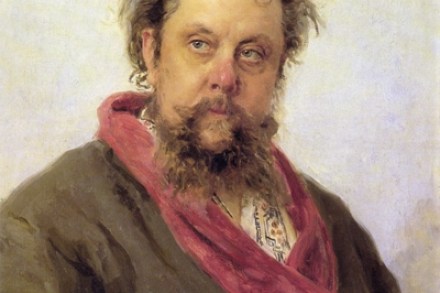
Before ‘nationalism’ became a dirty word, it was the inspiration for all sorts of idealistic and reform-minded people. This was never more true than in the history of music. Clearly, subsequent events have discredited some of those 19th-century ideals. It is striking, however, that we have become uncomfortable with Wagner’s German nationalism while continuing to regard Smetana’s Czech nationalism as an admirable, even inspiring quality. At times one feels that some musical nationalists are given too easy a ride — as if what happened in the opera house couldn’t conceivably affect anything outside it.

Donna Tartt can do the thrills but not the trauma

From our UK edition

Donna Tartt is an expert practitioner of what David Hare has called ‘the higher hokum’. She publishes a long novel every decade or so. Her first book, The Secret History (1992), was about some highly affected college students who took to studying ancient Greek in a cult and murdering one another in Dionysiac revels. It was a genuinely popular success — chic, macabre and supremely well-constructed. Her second, The Little Friend (2002), pursued a small girl through her attempts to pin the murder of her brother on the wrong culprit. It confirmed Tartt’s gift for an intricate plot, escalating into some furiously exciting action. The handling of suspense in both these novels was first-rate.

Salinger, by David Shields – review

From our UK edition

This biography has somewhat more news value than most literary biographies. Its subject worked hard to ensure that. After 1965, J.D. Salinger, having published one novel, a volume of short stories and two pairs of novellas, withdrew permanently from public life. His last publication, a long story entitled ‘Hapworth 16, 1924’, was never printed in hard covers. Subsequently, he went to some effort to control what was known, and could be written, about him. He retired to Cornish, New Hampshire, living comfortably on the immense, ongoing sales of his single novel, The Catcher in the Rye. From there, information occasionally leaked out. A fan might extract a couple of rebarbative sentences from his idol.

Theatre of the absurd

From our UK edition

Some novels gaze and report and argue: others just sing. There are some writers who love and respect the visual arts, and want to bring them into prose — Henry James is one. A work freezes into an act of contemplation and description, as in the Bronzino set piece in The Wings of the Dove. And there are novelists who have a fascination with music, whose prose moves dynamically in response to musical form and sound. These writers can have set pieces, too, like the performance of Beethoven’s Fifth in Howards End, but can also pattern their work in imitation of another art form that moves through time, has climaxes and a crescendo.

Philip Hensher reviews the Man Booker prize longlist

From our UK edition

The Man Booker prize has strong years and weak years. There have been ones when the judges have succeeded in identifying what is most interesting in English-language fiction and others when the task has been comprehensively flunked. With Robert Macfarlane as chairman, 2013 promises to be very good; 2011, which was in fact a strong year for fiction, was widely agreed to be a catastrophe; 2012, while an improvement, was disappointing in that it reflected the conventional tastes of academics. This year’s longlist shows a confident take on the direction of the English-language novel. There are certainly some sad omissions, including splendid novels by Evie Wyld and Michael Arditti.

Churchill and Empire, by Lawrence James – a review

From our UK edition

A fraught subject, this, and one which makes it difficult to sustain undiluted admiration for Churchill. Lawrence James is the doyen of empire historians, and has traced the great man’s engagement with the enormous fact of the British empire. What emerges is a sense of the individual nations being dealt with at the end of the day, when everything that really mattered had already been handled, and being subject to a series of trivial dismissals, outbursts of comic rage, and with little effort made to understand what might be an appropriate way to govern these immense territories. I am sorry to place a limit on anyone’s admiration for Churchill, but there it is.

How do you define a ‘northerner’?

From our UK edition

Obviously, now that every high street in England looks identical, and everyone under 30 uses exactly the same Australian rising inflection in speech, books of this sort are based on a false and wishful premise. But let us enter into Paul Morley’s game and ask the question he has asked again. What is ‘the north’ — or ‘the North’ — anyway? Obviously, as a geographical entity, we know (roughly) what we are talking about; we can argue about Derbyshire, but between Yorkshire and Scotland no one is going to dispute what the north is. Culturally, we may think we know what we are talking about, but all attempts to pin this down founder on the rocks of narrowness and outdated stereotype.

Complete Poems, by C.P. Cavafy – review

From our UK edition

Constantine Cavafy was a poet who fascinated English novelists, and remained a presence in English fiction long after his death in 1933. When E.M. Forster lived in Alexandria during the first world war, he got to know Cavafy — and essays, a celebrated exchange of letters and a guidebook by Forster resulted. Cavafy haunts Lawrence Durrell’s Alexandria Quartet, which shares with the poet an aesthetic of the transfixed gaze, of remote history running under everything. Robert Liddell wrote a restrained, elegant life of the poet — oddly dismissed by this translator, Daniel Mendelsohn, as ‘workmanlike.

‘Best of Young British Novelists 4’, by John Freeman (ed)

From our UK edition

The literary magazine Granta had the bright idea, in 1983, of promoting 20 British novelists under 40 by announcing that they were the ‘best’ around. The first list was a resounding success, taking Granta well out of its habitual mode by featuring some very un-Granta names, like Adam Mars-Jones and A.N.Wilson. Of course, there were some novelists there that anyone could have spotted at the time, such as Salman Rushdie, Ian McEwan and Martin Amis, but the judges also impressively noticed Kazuo Ishiguro after a single book and Rose Tremain long before she substantially justified it. Ten years later, the exercise was repeated, with another brilliant group including A.L.Kennedy, Louis de Bernières and Alan Hollinghurst, and ten years after that too.

West’s World: The Extraordinary Life of Dame Rececca West, by Lorna Gibb — review

From our UK edition

Lorna Gibb ends her book on Rebecca West by saying: ‘That she would be remembered because her work would go on being read was her greatest legacy.’ A more measured suggestion might be found in a sentence 20 pages earlier, from a 1973 TLS survey of her writing: ‘Dame Rebecca’s work has not fused in the minds of critics, and she has no secure literary status.’ It is always dangerous to declare what posterity will think, but West does seem to be on the slide. Some of her books are in print. They now seem quite mixed in quality. Of her novels, The Fountain Overflows is probably the best: a late-ish autobiographical novel, with some charming whimsy and some very unexpected turns in direction.

Be careful what you wish for

From our UK edition

Are things getting better? In some ways, undeniably. Progress is not altogether a fiction, or ‘modern myth’ in John Gray’s terminology, if we focus on such ultimately important ideas as medicine or science. Has life progressed since the discovery of antibiotics? Definitely. Would one seriously wish to have lived before the discovery of anaesthesia? Certainly not. In such areas, the existence of progress is, surely, undeniable. That isn’t John Gray’s focus, but the fact that progress certainly exists and is real in some areas of human endeavour makes one think that the evidence, in areas where he does address his attention in this interesting, original and memorable book, might be read in two ways.

An almost perfect catastrophe

From our UK edition

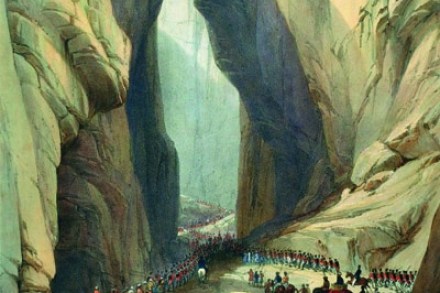
Lots of people have subsequently discovered this important imperial maxim: ‘Don’t invade Afghanistan.’ But the first western power to demonstrate the point of it was the British, in the late 1830s. The First Afghan War is the most famous of Queen Victoria’s ‘little wars’ for its almost perfect catastrophe. The British went in, installed a puppet emperor, and three years later were massacred. The story goes that only one man, Dr Brydon, survived the march back from Kabul to Jalalabad. Actually, there were a few more survivors, though not many. The celebrated canvas of Dr Brydon’s solitary arrival, Lady Butler’s ‘The Remnant of an Army’, has stuck in the communal mind.

Boxed and stalled

From our UK edition

What does fashion look like? When intellectual or artistic vogues change, how do we know when they have happened? The most popular men’s trousers in the UK at the moment are probably ones in a sort of indeterminate beige colour, if you go by the number of people wearing them. But I don’t think that’s fashion. The most read novel of 2012 is Fifty Shades of Grey. But nobody would regard that as an exemplar of the novelist’s art, or think of it as trendy in any way. The link between popularity — or ubiquity — and importance is a complicated one. Here, in an ingenuous way, is an object for a case study. Opera is not ‘popular’ in any sense at all. Almost nobody is interested in it, apart from you and me.

A family at war

From our UK edition

The Quest for Corvo started something rather peculiar in biography. A.J.A. Symons’s 1934 classic — described as ‘an experiment’ — set out the biographer’s search for his subject, and not just the results. This was justified in the case of an elusive and unusual figure like the ‘Baron’ Corvo. Nowadays, many biographies are written like this, and we have to hear about the author tramping from archive to library to study. Can it really be justified in the case of a 20th-century duke, whose papers are in the order in which he left them?

Smackhead cows in the backyard

From our UK edition

Krystal had never shot up before … but she knew how to heat the spoon, and about the tiny little ball of cotton wool you used to soak up the dissolved smack, and act as a filter when you were filling the syringe. She knew that the crook of the arm was the best place to find a vein, and she knew to lay the needle as flat as possible against the skin. Yes, J.K.Rowling is back — though I have to admit, I don’t myself recall passages like this in the Harry Potter sequence, nor all the f***s and c***s or detailed descriptions of a teenage boy’s enthusiasm for porn. It seems unlikely they appeared in the 300-odd pages of Harry Potter and the Half-Blood Prince that were left when I finally abandoned it, unable to put up with it any longer.

At the rising of the sun

From our UK edition

Niall Ferguson, in his impressive and exuberant book Civilization, published last year, sought to explain why Western civilisation triumphed in the centuries after the Renaissance with reference to six factors. He identified them as competition, science, property, medicine consumption and work, or a particular work ethic. These historical tours d’horizon are never without their critics, and Ferguson’s confident account of what one had thought an undoubted historical phenomenon found a memorable one in the  pages of the London Review of Books. The London-based writer Pankaj Mishra dismissed what he saw as a triumphalist tone, and refused to accept that those eastern civilisations which are now in the ascendant have learnt from the West.

End of a dry season

From our UK edition

The Letters of T.S.Eliot is a project which already seems to belong to another world, of leisure and detailed scholarship. It was conceived of decades ago, and the first volume, under the editorship of Eliot’s widow Valerie, came out in 1988. A second volume, with the support of the excellent John Haffenden, emerged 21 years later; this third takes us only up to 1927, with a good 40 years of a busy professional life to follow. There may be a dozen volumes to go, and the undertaking in the end will rival the great Pilgrim edition of Dickens’s letters in scale. The editing of the Eliot letters is exemplary in its detail, authority and quality of annotation. It is the closest thing to a perfect edition of a great writer’s correspondence that can be imagined.

A gallery of grotesques

From our UK edition

After the turn-of the-century memoir Experience, Martin Amis’s career has been widely perceived as somewhat rocky, shading into moments of disaster. If Experience, with its triple narrative of father, teeth and Fred West, was regarded as a compelling and masterly whole, Amis’s subsequent novels and non-fiction have not been as widely admired. Yellow Dog was quite a mess, getting some terrible reviews. The return to the knockabout vulgarian comedy that had made Amis’s name just lacked conviction. House of Meetings was more generally admired, being a fictional offshoot of a bizarre exercise, the non-fiction Koba the Dread. Both books were concerned with the crimes of Soviet Russia. The Pregnant Widow divided readers.

Here’s to you, Mrs Robinson

From our UK edition

From time to time, society rethinks what its institutions mean. Despite what fundamentalists will tell you, this may include — indeed, almost invariably does include — the institution of marriage. Previous rethinks have involved the admissibility of polygamy (mostly in non-Western societies), the marriageable status of the religious, and the precise borders of incest. Some societies admit the concept of marrying a dead person, as in France and China. The possibility of a man’s marrying the sister of a deceased wife was as energetically opposed, during most of the 19th century in Britain, as the possibility of his marrying another man is now.