Peter Jones

Boris Johnson is no Pericles

From our UK edition

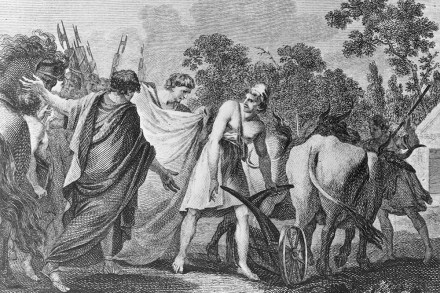
Boris Johnson’s Unleashed imagines him, like Cincinnatus, leaving his plough, saving Rome, and returning to it. But given that Boris is among the international elite, perhaps Alcibiades (c. 451-404 bc) would fit him better. Athenian elites had long had connections with the other power-brokers of the classical Greek world, Sparta and Persia. Born into such a family, the young Alcibiades, at the death of his father in 447 bc, was placed in the care of the great Athenian statesman Pericles, who chose Socrates as his mentor (we are told he tried to seduce Socrates but failed). A charismatic and handsome young man, he led a life of ‘lawless self-indulgence’ but, as a formidable strategist, he built an alliance to sustain the long war against Sparta, though it was defeated in 418 bc.

Plutarch’s lessons for Labour

From our UK edition

The lives of those daily in the public eye are bound to attract attention, especially when they are politicians telling us what to do. The Greek essayist Plutarch (d. c. ad 120) wrote at length on this topic. How does Labour match up to his ancient ideals? A politician’s aim, Plutarch said, was to win the trust of the people so that they would accept his authority ‘without being frightened off like a suspicious and unpredictable animal.’ To do this, the politician had to put his private affairs in order since the moral standard of the rulers determined the moral value of their regime. So he had to ensure his life was scandal free, because the public was interested in every aspect of it: ‘dinner parties, love affairs, marriage, amusements and interests’.

Will Rachel Reeves’s Iron Age morph into a Golden Age?

From our UK edition

Rachel Reeves seems to be promising us an initial Iron Age of misery which will mutate into a glorious Golden Age. How very classical of her. It is true that some ancient Greeks saw it the other way round. They argued that it was early civilisation that was the Golden Age, inhabited by men who lived ageless and free from hardship, while Nature poured forth its fruits, harvested by men at leisure (comic poets greatly enjoyed imagining a world in which it rained wine and pease porridge, hot sausage slices rolled down rivers and inanimate objects jumped to obey orders: ‘Table, come here! Cup, go wash yourself! Fish, turn over and baste yourself with oil and salt!’).

What would the Romans have made of Keir Starmer’s freebies?

From our UK edition

An ancient Greek, counting up the value of the gifts that Sir Keir Starmer had received over his spotless political career, might immediately have thought of the three mock goddesses of bribery that the comic poet Cratinus invented: Doro, St Give, Dexo, St Receive and Emblo, St Backhander. But a gift might be a bribe, or a genuine thank-you, or an act of altruism: after all, what are friends for? (Julius Caesar racked up gigantic debts.) Greeks agreed that gifts from rich to poor strengthened communal bonds and thought statesmen could serve their own interests if they were serving the interests of the people at the same time.

The ancients knew the value of practical education

From our UK edition

The welfare state was designed to serve everyone’s needs. But those needs were defined by the state. So schools teach fronted adverbials (but what about hindmost ones, eh?) and trigonometry, and may (absurdly) have to teach maths to all up to 18. Do these really fulfil the needs of all our children, far too many of whom are not (apparently) leading happy, useful lives? In the ancient world education was for the sons of the elite, to prepare them to run the country. But some elite Romans did without it. When Marius, who early on made his mark in battle and was picked out as a likely leader of men, became consul in 107 bc, the historian Sallust put a speech into his mouth in which he contrasted himself, the outsider, with the educated elite.

The lessons of Grenfell

From our UK edition

We have been told that committees will meet, urgent discussions will be held, the guilty will be punished, and steps taken to ensure that the Grenfell tower disaster will not happen again. Sophocles was not the only ancient to say that it was a foolish man that counted on the future. Fires were so common in densely packed Rome – perhaps a hundred a day? – that there was no point in talking about preventing them. For the architect Vitruvius (d. c. 20 bc), the collapse of wooden buildings was the main concern. He advised foundations should be as solid as possible, whether on rock, clay or loose ground, ‘of the soundest workman-ship and materials, and of greater thickness than the walls above’.

The first Olympian: what was there to celebrate about Heracles?

From our UK edition

However great the achievements of athletes at the Olympic Games – and even more so the Paralympics – there will always be those who have their doubts about their real value. Some ancient Greeks certainly felt like that about their Olympics. Complaints were made that an athlete’s physical fitness did nothing for the public health. No boxer would order the city better or stock her granaries, and surely it was valour in war that counted. A satirist pointed out that naked wrestlers covered in olive oil would not be much use in the front line of battle. Others expressed concern about the character of the Games’ founder, Heracles, the greatest mortal ‘winner’ of them all.

What ‘rot’ is Keir Starmer talking about?

From our UK edition

With the elections over, it might be time to reflect on what Sir Keir Starmer means by ‘rot’ in the ‘foundations of this country’. What foundations are those? Political? In the democracy (‘citizen-power’) invented by the Greeks, men over the age of 18 meeting in assembly took all decisions that our politicians take today and, aged over 30, all decisions in the courts. It lasted for 180 years (508-322 bc), but did not survive, being characterised as ‘the rule of the poor, looting the rich’.  The Romans invented republicanism (‘the people’s property’). The Senate, drawn from the elites, both made the laws and occupied the various official positions – legal, financial, military etc. – of government.

Should Labour be messing with the school curriculum?

From our UK edition

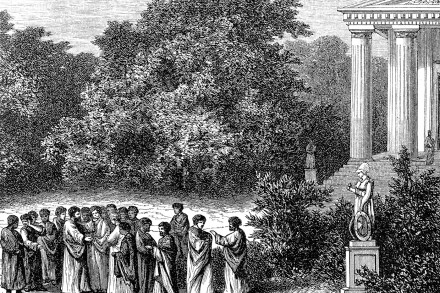
Labour’s new education secretary wishes, as usual, to change everything. She might consider the advice of the Roman educationist Quintilian (d. c. ad 100). In the ancient world education was for the elites, and its purpose was to prepare them to be statesmen and power-brokers. That required mastery of both history, since that was the only way to understand the future, and verbal persuasion, because power depended upon winning legal and political arguments. The building blocks of education were acquiring a firm grasp of grammar and right usage, and reading widely across history and the best literature, poetry and philosophy. But above all else, that education must produce good men – courageous, just, honest and self-controlled. The teacher was crucial.

How Ancient Greece handled riots

From our UK edition

Riots are difficult enough for us to deal with, let alone for the ancients, who had neither police nor prisons; and only late on housed troops in cities. Since Athenian citizens – the poor – made all political decisions, and the state and the rich funded them, there was little for them to riot about. The two riots organised by oligarchs to destroy democracy failed. But in republican Rome, political tensions between the rich and the poor could produce serious rioting, often designed to disrupt the voting. Tiberius Gracchus’ Bill (132 bc) forbade anyone from owning more than 120 hectares of public land (50 soccer pitches), the excess being distributed among the poor at 30 hectares per family. After blood-soaked rioting, it was passed.

The Greek guide to swearing an oath

From our UK edition

A lawyer who wished to serve on a jury but was no Christian was given permission to swear his oath in the name of a local river. He saw it as ‘his god’, as people did in the past, when the association between nature and divinity was widely taken for granted. Consider, for example, the ancient Greek understanding of the natural world. The farmer poet Hesiod (c. 700 bc), often drawing on Hittite and Babylonian myths, provided the West with its first account of how the world was made. First there was khaos, he said (that meant, ‘emptiness, void’, cf. ‘chasm’). Then there appeared Earth, Underworld and Eros (without which nothing could be generated), Night and Day.

Winning was all that counted in the ancient Olympics

From our UK edition

It is agreed that the National Lottery revolutionised British athletics, pouring money into the training of athletes with potential, especially in expensive sports like rowing. In the ancient Olympics, only the equine events demanded serious financial outlay – in theory any male could run, jump, throw or fight – but though we hear of goatherds and ploughboys winning events, the games were still the playgrounds of the rich. The point is that reaching the highest level of any sport requires time, training and doctors, i.e. money. Further, sport, like education, requires leisure, and only the rich could afford that. But the rewards in terms of public fame and acclaim were very high.

What Plato could teach Just Stop Oil

From our UK edition

Just Stop Oil is complaining about laws preventing their particular form of antisocial protests. It is all part of a feeling that our world is sinking under the weight of legal rulings. Even Plato had doubts about what laws were for. In his perfect state, Plato made education the key to everything. Its purpose, he claimed, should be to inculcate habits appropriate to age that would last a lifetime, e.g. as small children, being silent in the presence of their elders, giving up their seats to them, keeping themselves looking neat and tidy. But the last thing that was needed was to make laws about them. So too when it came to business: honest dealing in fulfilling contracts, paying dues and so on should be ingrained.

How Augustus would have solved the prisons crisis

From our UK edition

The Labour party is preparing to get weak on crime and release one batch of criminals to bang up another. What a difference that will make to the safety of our streets! The Roman emperor Augustus did things differently: when the system got blocked up, he released all those whom he considered to be held on vexatious charges. What blocked the system, however, was not imprisonment but the number of people detained while awaiting trial on charges relating to the civil war which brought Augustus to power. Those involved were the elites (for whom detainment was shameful) being ‘held on charges for the pleasure of their enemies’. It was all part of a legal system that went back a long way. Rome’s XII Tables (c.

Biden should approach ageing like the Romans

From our UK edition

Last week, Lionel Shriver wrote a characteristically sharp piece about the narcissism of the ageing Joe Biden, egged on by his wife, in standing again for the presidency of the United States. The Roman poet Lucretius (1st century bc) might well have offered a similar opinion, but he would have presented it as an example of a universal and destructive human failing which he described in his magnificent poem On the Nature of the Universe – the dread of death. Romans, Lucretius claimed, feared the whole idea of dying, because they believed that they had an eternal soul which, after death, would be subject to hideous tortures and punishments if they had been involved in any sort of wrongdoing.

Our new MPs should read Cicero

From our UK edition

It would make a pleasant change if every elected MP was to make it their ambition to be honestus, Latin for ‘honourable, moral, a person of integrity’. This brought a man high acclaim because by definition he would be useful, i.e. of benefit, to his country. So argued the statesman Cicero in his three-volume On Duties, composed over four frantic weeks in 44 bc, during the civil war and collapse of the Roman Republic after Julius Caesar’s assassination. In the first volume, Cicero identified the roots of moral integrity in man’s natural instincts and powers of reasoning. That turned him into a social being, while reason also instilled in him a desire for truth – an essential ingredient of justice, law, and a feeling for order and propriety in word and deed.

What British voters could learn from the Romans

From our UK edition

When the forthcoming election result is announced, the triumphant party will presumably proclaim: ‘The British people have spoken!’ That will come as quite a surprise to the British people, because all they will have done is crossed a box approving a farrago of implausible policies or reforms in matters over which they have had no say whatsoever. The Roman plebeians were more hands-on. Early Roman history is a complete mish-mash, much clearly invented well after the event. But it might have gone something like this: kings ruled Rome from 753 bc to 509 bc; they were advised by a senate of select tribal members called ‘patricians’; an assembly was set up to vote on laws and going to war, organised in such a way that the wealthy few could always outvote the rest.

Hunter Biden and the teaching of virtue

From our UK edition

Joe Biden, President of the United States, may not have any criminal charges on his record, but his son Hunter does. When ancient Greeks discussed whether aretê (‘virtue, moral excellence, goodness, bravery’) could be taught, or not, such examples came into play. Plato discussed the problem in a dialogue in which Socrates raised the question with the famous sophist Protagoras who claimed to be able to teach anything to make people better. Socrates’s example was Pericles: here was a man of supreme aretê, but his two useless sons simply ‘browsed randomly about like cattle, hoping to bump into it’. Protagoras answered as follows.

The Greeks were right: Trump shouldn’t live for revenge

From our UK edition

Donald Trump’s book on business Think Big and Kick Ass makes taking personal revenge a very high priority. Given recent events in a US court, it will clearly be a priority if he wins the forthcoming election. For ancient Greeks, it was taken for granted that, if you were harmed by someone, it was your duty to get your own back. So Greeks regularly took their grievances into the public arena. The orator Demosthenes told a jury that, because he saw a man who had wronged him injuring the whole city, ‘I proceeded against him in the belief that I had got a suitable opportunity for defending the interests of the city and at the same time obtaining revenge for what had been done to me.’ Rather Trumpian.

How would Athenians have dealt with Donald Trump?

From our UK edition

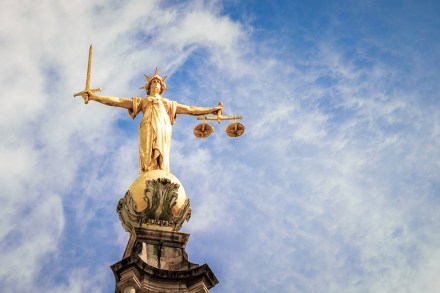
Has Humpty-Trumpty had a great fall, or a great bounce? That will depend on what the Great American Public thinks was at stake in his trial. It was ever thus in the democracy of ancient Athens. In the absence of a state prosecution service, all legal cases in ancient Athens were brought by individuals. But a jury trial often had to await the result of an attempt to settle out of court. This consisted of two mediation processes: one private and, if that failed, the other public under an appointed arbitrator. If there was still no agreement, the case went to trial before a randomly selected jury of between 200 and 1,000 Athenians, selected from an annually empanelled body of 6,000 male citizens in good standing, aged over 30.