Peter Hoskin

Labour to attack the “same old Tories”

From our UK edition

One of the major recent debates within the Labour party has been over how best to attack David Cameron and the Tories.  Well - if a briefing obtained by the Guardian is anything to go by - that debate has pretty much resolved itself.  It suggests that Labour should portray the Tories as a wolf in sheep's clothing - as a nasty party lurking beneath a veneer of compassionate conservatism.  This passage should give you a taste of what it's about: "Occasionally the mask slips [from Cameron's Tories] and we see the dangerous, old- fashioned Tory rightwing instincts hidden underneath. They believe in unfettered free markets, cuts in public services to fund tax cuts for the richest, and a smaller, less effective government.

Darling enters the lion’s den

From our UK edition

Is Alistair Darling in for a mauling at the TUC conference later today? The official line from the brothers is that he'll get a "frosty but polite" reception. But given that the Chancellor is most likely going to turn down calls for public sector pay rises, it's anyone's guess as to how long the politeness will last. Whatever happens, there's certainly an extra buzz about this latest union get-together. Rachel Sylvester nails it in her column today, when she writes: "[The TUC conference] in Brighton this week is worth watching ... because it could actually be a picture of the future.

Will the Cameroons accept the gift of British “special status”?

From our UK edition

You could say that pragmatism won out at today's Global Vision / Daily Telegraph conference on the future relationship between Britain and Europe.  On the one hand, you had the pro-Europe voice of Valéry Giscard d'Estaing arguing that Britain should more or less be able to pick 'n' mix what parts of the EU agenda it subscribes to. And, on the other, you had a largely (moderate?) Eurosceptic panel arguing that - well - Britain should more or less be able to pick 'n' mix what parts of the EU agenda it subscribes to.  Of course, there were differences of emphasis.  Giscard d'Estaing thought that Britain's "special status" should be enshrined in a power to "opt out" of future treaties.

A lesson in how not to end leadership speculation

From our UK edition

Here are the last few lines of the interview with Harriet Harman in today's Times: "Is it not time for another woman British leader? Does she want the job if Gordon Brown is ousted? Ms Harman looked flustered and consults her briefing paper. 'I cannot remember the answer to that.'" Ok, so it's a probably a joke, a sign that she's taking all the Westminster chatter with good humour. But I'm sure No.10 would have preferred something a little more unequivocal...

Brown’s sinking, but where are the alternatives?

From our UK edition

The story's familiar by now. A poll comes out; it puts the Tories 20-ish points ahead of Labour; and it contains a whole load of below-the-headline findings which are personally damaging for Gordon Brown. Today's Independent/ComRes poll certainly follows that pattern. It has the Tories on 44 percent, Labour on 25 percent and the Lib Dems on 17 percent. But the sting for Brown is in findings such as that 20 percent of people like Labour but not him, whilst only 8 percent like him but not his party. And that 34 percent of Labour voters say that they'd vote Labour in spite of Brown, and only 3 percent say they're backing the party because of its leader.

An Olympic let-down?

From our UK edition

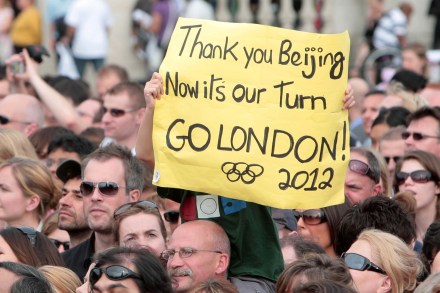
A couple of days ago, I wrote that - given the massive costs attached to the 2012 Games - taxpayers will want to see that the Government's promise to deliver a lasting "Olympics legacy" isn't an empty one.  Well, if a survey on the matter by Opinion Research is anything to go by, then there's not much confidence on that front.  A third of respondents think that the Olympics will deliver no significant, long-term benefits, and that the money should be spent on other public services.  And only 12 percent of people believe the Olympics will come in on budget, or within ten percent of budget.

Comments are working again

From our UK edition

Just to say that the comments facility is now working again. I've been assured that any comments made overnight (when it wasn't working) should still appear - although they may trickle through slowly throughout the day. If you think a comment you made may not have got through, feel free to e-mail me on phoskin @ spectator.co.uk, and I'll see what can be done. Apologies, again, for the earlier problems.

Have the energy companies damaged Brown’s hopes even further?

From our UK edition

Could the news that the Government won't give cash handouts to those struggling with rising energy bills be another nail in the coffin of Brown's premiership? The spin he's putting on it is that there were never plans to offer "short term gimmicks and giveaways". But the widespread assumption is that the opposite is true, and that the energy companies - rightly fearful of a windfall tax - blocked Brown's designs. Now the PM's peddling the message that "long term efficiency" is the solution to people's energy problems; i.e. that homes should be made more energy efficient, thereby - in Brown's words - "reducing bills not just temporarily, but permanently". Long term solutions?

“The outstanding politician of this era”?

From our UK edition

Amid all the Labour backbiting and leadership speculation, there remain some – almost comically enthusiastic – voices of support for Gordon Brown.  Here’s Tony Lloyd, chairman of the Parliamentary Labour Party, speaking to the BBC earlier: “The truth is most Labour MPs, the overwhelming majority, want Gordon Brown to be the one who delivers the policies, makes sure that they are implemented .... Anybody  who would have taken Gordon Brown on [in last year's Labour leadership contest] would have been crushed ... he continues to be the outstanding politician of this era." Of course, it's part of the PLP chairman's role to both promote and create the impression of unity.

Is a snap reshuffle coming on Monday?

From our UK edition

Just to point out Iain Dale's post suggesting that Brown will be holding a snap reshuffle on Monday.  The feeling around Westminster is increasingly that one's coming sooner rather than later.  But aside from whether and when it might be, the other major question is what's going to happen with Alistair Darling and David Miliband.  The speculation that they'd be swapped with each other has died away, and the safest bet now is probably that they'll remain where they are.  As I wrote the other day, it's certainly problematic for Brown - if he doesn't make some drastic changes, then there's the chance a reshuffle will be greeted with a collective shrug from the general public.

Grieve responds

From our UK edition

Here are Dominic Grieve's answers to the questions put forward by Coffeehousers: Alex R "Do you understand that your views on the ECHR are in contradiction to those of the huge majority of conservative supporters and potential conservative supporters. Do you understand why many people believe this should disqualify you from ever being Home Secretary in the next conservative government?" I disagree on both counts. I fully support the protections set out in the European Convention on Human Rights as does the Conservative Party. But, I also believe that the government’s approach to human rights – including the Human Rights Act – has created unnecessary uncertainty in Britain, whilst failing to protect key liberties.

Clarke’s not done yet

From our UK edition

Charles Clarke certainly didn't say all he wanted to in his New Statesman article yesterday. He's just filled in some of the gaps, and spelt things out more clearly, with a punchy interview on the Today programme. Sure, we know he's not keen on Brown, but the severity of what he said was surprising nonetheless. Here's a selection: "There are many, many people now who are concerned about his ability to win the election. That is an almost universal feeling. But there is no clarity about a course of action .... The first [option] is for the performance of the government needs to improve significantly or, the second is for Gordon Brown to stand down as prime minister with honour and have a proper leadership contest ....

Charles Clarke throws the cat among the pigeons

From our UK edition

As Nick Robinson suggests, this New Statesman article by Charles Clarke will throw the cat among the Labour pigeons.  There are two particularly incendiary quotes in it, both expressing the same sentiment: "...Labour's current course will lead to utter destruction at the next general election." And "There is, however, a deep and widely shared concern - which does not derive from ideology - that Labour is destined to disaster if we go on as we are..." Of course, we've heard similar from Clarke - and other Labour figures - before.  But it's the timing of this article which is especially worrying for Team Brown.

What chance a lasting Olympic legacy?

From our UK edition

One of the major factors behind London's successful bid for the 2012 Olympic Games was the promise to create a lasting "Olympics legacy" - to rejuvenate some of the poorer areas of London; to get more people participating in sport; to create a set of sporting facilities which will promise future success for British athletes, and so on.  But - as the Standard reports today - there are signs that the Government might fail to deliver on (at least some of) that promise. The figures they've got their hands on show that, whilst London as a whole met the Government's 2002 target to get 85 percent of schools providing their pupils with at least two hours of sporting activity a week, some 15 of the 32 London boroughs didn't.

The media register their vote of no confidence

From our UK edition

The media response to Brown's recovery package for the housing market feels like some kind of milestone.  It's negative pretty much across the board (as this useful summary by Jenny Percival points out) - picking up on all of the package's inconsistencies: how it won't have much of an effect; how it will place undue pressure on the public finances; and how it's encouraging potential buyers to catch a falling knife.  Of course, you could say that's exactly the right response, and I'd agree.  But the fact remains that Brown's measures - and particularly the stamp duty holiday - are, at least, easy to spin in a positive way.  It just seems that no one can now bring themselves to do so.

The economic storm clouds darken

From our UK edition

The respected Organisation for Economic Co-operation and Development has forecast that the UK economy will shrink by 0.3 percent in the third quarter of this year, and by 0.4 percent in the fourth. In other words, they’re predicting a recession for this year.  Ok, so it’s hardly surprising news. After all, the latest figures from the Office for National Statistics had the economy at 0 percent growth for the second quarter – indicating that we’re already in recession. But it does add weight to the argument that the Tories need to find an alternative to their “sharing the proceeds of growth formula” sooner rather than later.

Brown introduces a stamp duty holiday

From our UK edition

So Brown has introduced a stamp duty holiday as part of his rescue package for home owners and buyers. From tomorrow until 3 September 2009, properties costing less than £175,000 will be exempt from the levy. Oddly - even though plans for a stamp duty holiday emerged a few weeks ago - it's still a surprising announcement. Since that initial leak, the government has kept a tight lid on the proposal, and - right up until this morning - it was widely assumed that it had been ditched. There's evidence to suggest it could prove popular with a public which is increasingly feeling the fiscal squeeze. But I'm still not convinced it's the right thing to do.

The extent of the reshuffle

From our UK edition

As usual, Rachel Sylvester's column in the Times is essential reading. Today, she writes - contrary to Ben Brogan - that relations between Brown and Darling are poor. But goes on to suggest that Darling will hang on to his job in a "limited reshuffle" later this week. Here's the key passage:   "A limited reshuffle - focused on merging the Scotland, Wales and Northern Ireland jobs into a single constitutional secretary role - had been pencilled into the No 10 diary for this week. Mr Brown is being urged to postpone it and carry out a wider reshuffle involving Mr Darling. It would be wrong of the Prime Minister to pin the blame for his and the country's difficulties on the Chancellor - and foolish for him to sack someone who knows where the political bodies are buried.

Is bare-knuckle politics the way forward for Labour?

From our UK edition

As James wrote yesterday, Stephen Carter's alleged slide down the pecking order at No.10 suggests that his softly-softly approach to tackling Davids Miliband and Cameron has been thrown out the window.  The assumption now is that the Brownite attack dogs will be let off the leash, and we'll start seeing some bare-knuckle politics from Team Brown. One question doing the rounds, then, is whether that (potential) new approach will help Labour eat into the Tory poll lead.  I'm inclined to agree with Political Betting's Mike Smithson that it will do nothing ot the sort.  Two simple, interrelated reasons spring to mind: 1) There's plenty of evidence to suggest that David Cameron is extremely popular with the general public.