Paul Wood

Paul Wood was a BBC foreign correspondent for 25 years, in Belgrade, Athens, Cairo, Jerusalem, Kabul and Washington DC. He has won numerous awards, including two US Emmys for his coverage of the Syrian civil war

Ludere in Leone: who made money from the new pontiff?

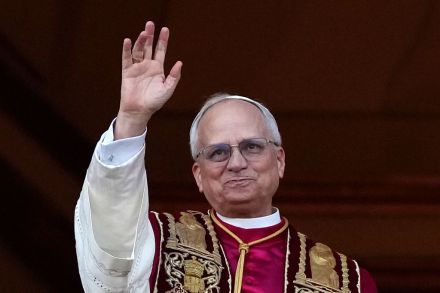
Was the first American Pope ushered in on a wave of suspect, last-minute betting? Something odd seems to have been happening on at least one online gambling platform – Polymarket – in the minutes before the new Pope was announced. I know because I happened to place a bet just before Pope Leo XIV walked out on the balcony of St. Peter’s – and watched the odds dramatically shortening before my eyes.   Before his election as Pope, Leo was Cardinal Robert Prevost. I’d barely heard the name until a week ago, when I joined a tour of the Vatican laid on by the Holy See press office. We were not, disappointingly, to be shown the Sistine Chapel, the world’s most splendid polling station for the few days of a papal election.

Pope

The secrets of ‘God’s influencer’

From our UK edition

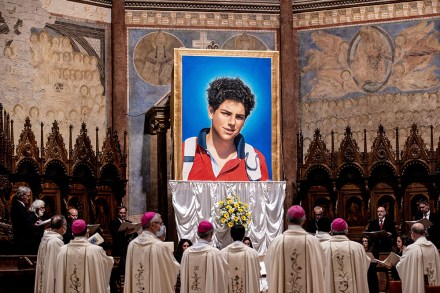
Assisi In a medieval church built of white stone, pilgrims and tourists shuffle past the body of a 15-year-old boy in a tomb with a glass side. The boy is handsome, with dark curly hair, and wears a blue tracksuit top, jeans and Nike trainers. Everyone peers through the glass and some realise, with a start, that the perfectly preserved face and hands are eerily lifelike silicone. The real remains, decomposing for almost 20 years, are inside the effigy. This is Carlo Acutis, the Italian teenager known as ‘God’s influencer’, who is about to become the first millennial saint of the Roman Catholic Church. The tomb is held up from behind and so appears to levitate, surrounded by a corona of bright light.

Paul Wood, Katy Balls, Olivia Potts, Benedict Allen, Cosmo Landesman and Aidan Hartley

From our UK edition

40 min listen

On this week’s Spectator Out Loud: Would Trump really bomb Iran, asks Paul Wood (1:38); Katy Balls interviews Health Secretary Wes Streeting on NHS reform, Blairism and Game of Thrones (8:38); Olivia Potts examines the history – and decline – of the Easter staple, roast lamb (18:25); the explorer Benedict Allen says Erling Kagge and Neil Shubin were both dicing with death, as he reviews both their books on exploration to earth’s poles (22:13); Cosmo Landesman reflects on what turning 70 has meant for his sex life (28:46); and, Aidan Hartley takes us on an anthropomorphic journey across Africa (33:55).  Produced and presented by Patrick Gibbons.

Would Trump really bomb Iran?

From our UK edition

A satellite picture shows six American B-2 Stealth bombers parked on the runway at Diego Garcia. The planes – each with a distinctive flying-wing shape, like a bat – are sinister, otherworldly, and seem like a portent. Surely that’s the idea. Donald Trump has warned the Iranian leadership there ‘will be bombing the likes of which they have never seen before’ if they don’t agree to limit their nuclear programme. The US is also sending a second aircraft carrier to the Middle East and anti-ballistic missile batteries to Israel. This is Trump’s ‘coercive diplomacy’, and so far, it’s working.

Saviour complex: Jonathan Powell is still trying to change the world

From our UK edition

In 2011, the Hampstead theatre put on an autobiographical play about a marriage strained by lies, betrayal and, as the exasperated wife says, the presence of ‘three of us’ in the relationship. The play was Loyalty by the journalist Sarah Helm, the third person was Tony Blair and the principal male character was a barely disguised Jonathan Powell, her husband and Blair’s chief of staff. The lies are about Iraq’s weapons of mass destruction, and the betrayal occurs when the Powell character goes along with the war despite not ‘really’ believing in it, siding with Blair over his partner. Two decades on, Powell is Keir Starmer’s national security adviser and may have more influence over foreign policy than anyone in government after the Prime Minister himself.

The age of the strongman, Tesla under attack & matinee revivals

From our UK edition

35 min listen

This week: welcome to the age of the strongman ‘The world’s most exclusive club… is growing,’ writes Paul Wood in this week’s Spectator. Membership is restricted to a very select few: presidents-for-life. Putin of Russia, Xi of China, Kim of North Korea and MBS of Saudi Arabia are being joined by Erdogan of Turkey – who is currently arresting his leading domestic political opponent – and Donald Trump, who ‘openly admires such autocrats and clearly wants to be one himself’. ‘This is the age of the strongman,’ Wood declares, ‘and the world is far more dangerous because of it.’  Despite their bombast, these ‘are often troubled characters’, products of difficult childhoods.

Will Trump join the strongman club?

From our UK edition

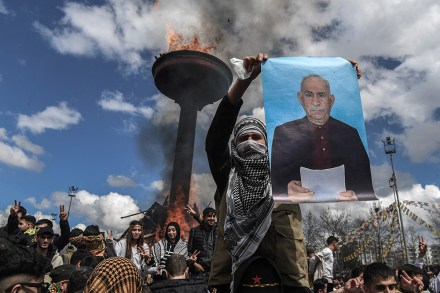
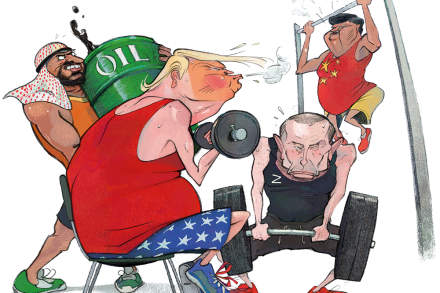
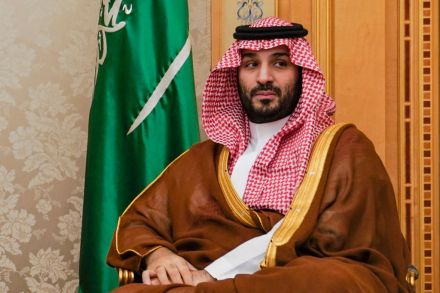
The world’s most exclusive club, of presidents-for-life, is growing. It already includes Putin of Russia, Xi of China, Lukashenko of Belarus, Sisi of Egypt and Kim of North Korea. Then there are the other permanent rulers, MBS of Saudi Arabia and the rest of the Gulf monarchies, not forgetting Khamenei of Iran, and half a dozen African leaders. Now Turkey’s president, Recep Tayyip Erdogan, is trying to join the club. He has engineered trumped-up charges of terrorism and corruption against the man who might beat him in forthcoming elections, Istanbul’s mayor. More importantly, Donald J. Trump openly admires such autocrats and clearly wants to be one himself. This is the age of the strongman – and the world is far more dangerous because of it.

Who trusts Saudi Arabia?

Imagine you’re MbS, newly installed as Saudi Arabia’s authoritarian ruler thanks to cunning and ruthlessness. You arrest a few of the most obvious thieves at court and hang them by their thumbs to find out where they hid the loot. You order your henchmen to grab critics of the royal family who fled abroad and bring them home to shut them up. But one of those critics is cut into pieces with a bone saw in the Saudi consulate in Istanbul, and the Turks go public. No one wants to come to your glitzy investment conference; no one wants their photo taken next to you. It’s a long road back. It takes a lot of oil and a lot of cash. But finally, you host talks between the US and Russia on Ukraine — and now Saudi Arabia is the Norway of the Middle East.

mbs

Massacre of the innocents, saving endangered languages & Gen Z’s ‘Boom Boom’ aesthetic

From our UK edition

37 min listen

This week: sectarian persecution returnsPaul Wood, Colin Freeman and Father Benedict Kiely write in the magazine this week about the religious persecution that minorities are facing across the world from Syria to the Congo. In Syria, there have been reports of massacres with hundreds of civilians from the Alawite Muslim minority targeted, in part because of their association with the fallen Assad regime. Reports suggest that the groups responsible are linked to the new Syrian president Ahmed al-Sharaa (formerly known as Abu Mohammed al-Jolani). For some, the true face of the country’s new masters has been revealed. Whether the guilty men are punished will tell us what kind of country Syria has become since the fall of Assad’s dictatorship.

Massacre of the innocents: the return of sectarian persecution in Syria

From our UK edition

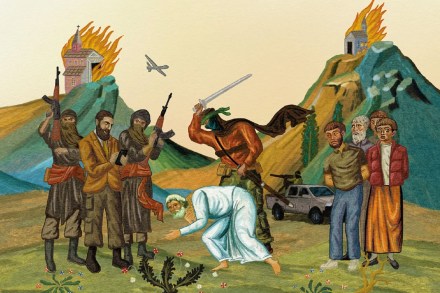
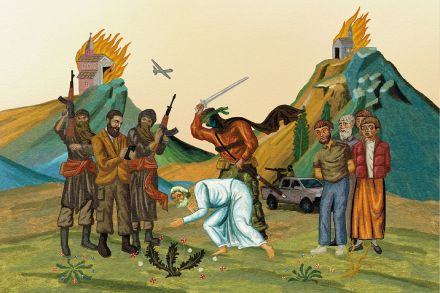
No one covers up their war crimes any more. They film them, celebrate them, post them on X. So we have videos from Syria this week showing Islamist fighters making terrified Alawite men get on their hands and knees and howl like dogs. In one video, the victims crawl along a street spattered with blood and gore as a bearded gunman clubs them with a wooden pole. The camera comes to rest on half a dozen bodies. Then we hear rifle shots. There has been a massacre of Alawites in Syria this past week: hundreds of civilians have been killed. The killings were perpetrated by the armed groups that put Syria’s new President, Ahmed al-Sharaa –formerly the militia leader known as Abu Mohammed al-Jolani – in power. For some, the true face of the country’s new rulers has been revealed.

Paul Wood, Matthew Parris, Ian Buruma, Hermione Eyre and Francis Young

From our UK edition

34 min listen

On this week’s Spectator Out Loud: Paul Wood reads his letter from the Vatican (1:17); Matthew Parris warns Conservatives from embracing causes that could lose them as much support as they would gain (7:31); reviewing Richard Overy’s Rain of Ruin: Tokyo, Hiroshima and the Surrender of Japan, Ian Buruma argues that the atomic bombs were not only immoral, but ineffective (15:35); Hermione Eyre examines the life and work of the surrealist artist Ithell Colquhoun (23:03); and, Francis Young provides his notes on Shrove Tuesday (29:12). Produced and presented by Patrick Gibbons.

The strange beauty of the vigil for the Pope

From our UK edition

Steady rain during the day stopped just before Monday’s evening prayers for Pope Francis in Saint Peter’s Square. A line of cardinals sat on a platform, an ageing politburo in black and scarlet. A couple of thousand of the faithful and the curious stood below. Vatican gendarmes, wearing kepis and carrying sidearms, directed people to their places. The Swiss Guard were not on duty. Their gaudy, striped uniforms would anyway have been too exuberant for the occasion, a tenth night in hospital for the Pope, dangerously ill with double pneumonia at the age of 88. Floodlights illuminated the great baroque façade of the most famous building in Christendom. Cobblestones glistened; fountains shimmered. There was a nasty chill in the air.

New world disorder, cholesterol pseudoscience vs scepticism & the magic of Dickens

From our UK edition

48 min listen

This week: the world needs a realist resetDonald Trump’s presidency is the harbinger of many things, writes The Spectator’s editor Michael Gove, one of which is a return to a more pitiless world landscape. The ideal of a rules-based international order has proved to be a false hope. Britain must accept that if we are to earn the respect of others and the right to determine the future, we need a realist reset. What are the consequences of this new world order? And is the Trump administration reversing the tide of decline, or simply refusing to accept the inevitable? Michael Gove joined the podcast alongside the geopolitical theorist Robert Kaplan, author of the new book Waste Land: A World in Permanent Crisis.

I was convinced by the cholesterol sceptics

From our UK edition

It’s never a good thing when your cardiologist sounds alarmed on the phone. Come in tomorrow, he said: we’ll get you on the table. He wasn’t talking about cracking my chest, thank Christ, but threading a wire in through a vein to get a look at the heart, blow up a tiny balloon to stretch the artery, and maybe leave behind a metal tube or three. I wasn’t keen on that last part. Then I thought: serves me right. I should have avoided all those bacon sandwiches and steaks fried in butter. ‘The wages of sin is death.’ Probably should have taken the statins, too. But if you are, understandably, unwilling to take a fistful of pills every day for the rest of your life, there are some medical mavericks to confirm your decision.

Does Trump deserve the Nobel Peace Prize?

From our UK edition

Donald Trump told reporters this week that he deserved the Nobel Peace Prize for helping to free some of the Israeli hostages in Gaza. But, he went on, ‘they’ll never give it to me’. Trump’s chances of putting on white tie and tails in Oslo have receded to a distant speck with his plan to Make Gaza Great Again – by removing the Palestinians.  This proposal may have doomed the brittle ceasefire and jeopardised further hostage releases. It has made the prospect of a deal between Saudi Arabia and Israel vanishingly small. It might also end up destabilising Jordan and Egypt. But the agent of chaos in the Oval Office is doubling down and no one, least of all Trump, knows how this will end.

The Donald’s plans for the Middle East

From our UK edition

The former US president Jimmy Carterdied, at the age of 100, just before news of an imminent deal to free the last of Israel’s hostages in Gaza. Carter’s presidency was crippled by his own hostage crisis, American diplomats held captive in Tehran. Freeing them became his administration’s highest priority, and he worked on it for every single one of the 444 days the crisis lasted, often to the exclusion of anything else. By contrast, the Israeli Prime Minister, Benjamin Netanyahu, resisted massive domestic pressure to do a deal for his hostages in order to pursue the war aim of destroying Hamas. You could call this statesmanship, or something else, but it is a kind of victory for Netanyahu.

Catherine Lafferty, Michael Simmons, Paul Wood, Philip Hensher, Isabel Hardman and Damian Thompson

From our UK edition

39 min listen

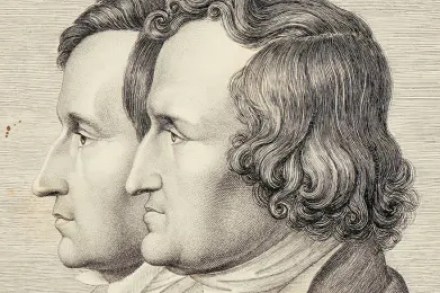
On this week’s Spectator Out Loud: Catherine Lafferty argues that the drive to reduce teenage pregnancies enabled grooming gangs (1:27); following Luke Littler’s world championship victory, Michael Simmons says that Gen Z is ruining darts (6:32); Paul Wood looks at the return of Isis, and America’s unlikely ally in its fight against the terrorist group (10:35); Philip Hensher reviews a new biography of the Brothers Grimm by Ann Schmiesing, and looks at how words can be as dangerous as war (17:57); Isabel Hardman highlights the new garden now open at the Natural History Museum (26:57); and, Damian Thompson reveals he watched videos of plane crashes to distract himself from the US election coverage – why? (31:40).  Produced and presented by Patrick Gibbons.

The truth about grooming gangs, ‘why I’m voting for the AfD’ & exploring YouTube rabbit holes

From our UK edition

47 min listen

This week: what does justice look like for the victims of the grooming gangs?In the cover piece for the magazine, Douglas Murray writes about the conspiracy of silence on the grooming gangs and offers his view on what justice should look like for the perpetrators. He also encourages the government to take a step back and consider its own failings. He writes: ‘If any government or political party wants to do something about the scandal, they will need to stop reviewing and start acting. Where to begin? One good starting point would be to work out why Pakistani rapists in Britain seem to have more rights than their victims.’ To unpack his piece in a little more detail, we were joined by journalist Julie Bindel, who has been reporting on the grooming gangs for almost 20 years.

America’s new ally in the battle against Isis: the Taliban

From our UK edition

Isis are back. In fact, to borrow Gerry Adams’s remark about the IRA, they never went away. Now, they are regaining some of their previous strength in Syria and Iraq, and moving into fresh territory in Africa. Of most importance to the West, the Afghan branch of Isis – Isis Khorasan – is said to be plotting more direct attacks on the ‘far enemy’, as well as pumping out propaganda to create so-called ‘lone wolves’. But with the stakes rising, it seems the United States may have found a new ally in the battle against Isis: the Taliban.

SAS betrayal, the battle for Odesa & in defence of film flops

From our UK edition

48 min listen

This week: SAS SOS The enemy that most concerns Britain’s elite military unit isn’t the IRA, the Taliban or Isis, but a phalanx of lawyers armed with the European Convention on Human Rights (ECHR), writes Paul Wood in The Spectator. Many SAS soldiers now believe that if they kill a terrorist during an operation, they’ll spend decades being hounded through the courts. Paul speaks to former SAS soldiers who say that stories of men being ‘dragged back to be screamed at in interview rooms’ are ‘flying around the canteens now’. Soldiers feel like ‘the good guys have become the bad guys – and the bad guys are now the good guys’. This is hurting morale and may eventually hit recruitment.