Paul Johnson

A weakness for beauty

From our UK edition

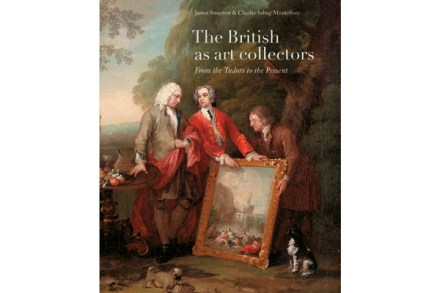
James Stourton is not only a successful auctioneer and chairman of Sotheby’s but also an accomplished writer, the author of the delightful Art Collectors of Our Time (2007). He has now produced a book about how the English, and subsequently the British, set about acquiring and presenting works of art. He has been helped by Charles Sebag-Montefiore, another successful businessman, who has assembled a magnificent art library on which the research for this volume has been based. It is a hefty tome which has the merit of showing, in most cases, what these private collections looked like in their original shape before their dispersal among public national or American collections. This is as it should be, for architecture is the basis of all English collecting.
Fearsome and devilish

From our UK edition

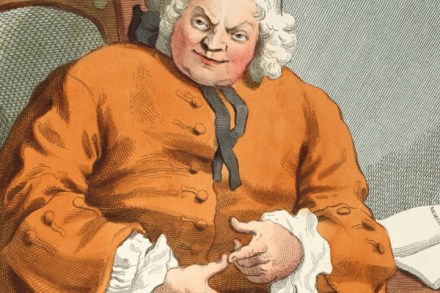
This life of the 11th Lord Lovat, executed on Tower Hill in 1747, in the aftermath of the ‘Forty-Five’ Rebellion of Bonnie Prince Charlie, is primarily a work of pietas. Its author is the daughter-in-law of the last Lord Lovat, who landed with the first fighting troops of the D-Day invasion of Europe, striding ahead of them accompanied only by his piper. But Sarah Fraser deserves to be acclaimed as a notable biographer, too, for she tells a complex and sometimes bewildering story which she has amassed from a vast quantity of often intractable material. This is a brave and meaty book. The years between the Glorious Revolution of 1688 and the accession of George III in 1760 constituted the great age of double-dealing in British politics.

Who are the losers now?

From our UK edition

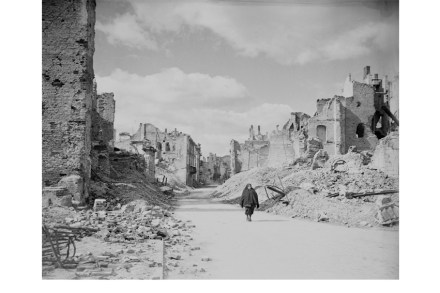
Keith Lowe’s horrifying book is a survey of the physical and moral breakdown of Europe in the closing months of the second world war and its immediate aftermath. It is a complex story and he tells it, on the whole, very well. Though the first world war took the lives of more uniformed young men, in the useless slaughter of the Flanders trenches, many more people, chiefly civilians, died in 1939-45. Soviet casualties were the greatest: 23 million killed, of whom two million came from Belarus and seven million from Ukraine. Next came the Poles, with losses of 6,028,000, the largest percentage of the population in any country. The Germans also lost six million, and the Yugoslavs over a million.

The age of achievement

From our UK edition

Doctors say it’s all downhill from 45. History suggests otherwise A study in the British Medical Journal suggests that our brains begin to deteriorate from the age of 45. Examining the vocabulary, comprehension and memories of 7,000 45- to 70-year-olds, the researchers found a 3.6 per cent decline in the second half of their forties. This will come as a surprise to students of history. Men and women have achieved positions of power at all stages of life, but it is remarkable how many have lived in obscurity until their forties and gone on to do remarkable things. A good example was Oliver Cromwell, who only stepped into the public sphere in his late forties (he was born in 1599).

Season’s greetings

From our UK edition

My recollections of Christmas Past are dominated by the fabrication of the family card. It was one of my father’s principles that Christmas was a family event and that any cards sent out should be created within the family. It was quite wrong to buy one. Happily he was an artist of the old-fashioned sort, skilled at all the various methods of reproduction — etching and drypoint, engraving, photogravure, lithography and various abstruse methods of printmaking. Indeed he taught them at his art school. Lithography was his favourite because it had a softness and fidelity to nature and avoided the harsh line of the other reproductive processes. We sent out around 150 cards each year, and by the end of November my father had drawn the master card on the stone.

A gimlet eye

From our UK edition

We should be grateful to families which encourage the culture of writing letters, and equally vital, the keeping of them. Leopold Mozart, for instance, taught his son not only music but correspondence, and as a result we have 1,500 pages of letters which tell us everything we know of interest about the genius. His younger contemporary Jane Austen also came from a postman’s knock background. We have 164 of her letters, from January 1796, when she was 21, to the eve of her death in 1817. Some have been cut by the anxious family, and some suppressed altogether, but the remainder are pure gold. As in her novels, she never wasted a word. These are not exercises in epistolary elegance but crammed with personal news and comment.

Paul Johnson’s books of the year

From our UK edition

The most nourishing book I have read this year is Armand d’Angour’s The Greeks and the New: Novelty in Ancient Greek Imagination and Experience. The author teaches classics at Jesus College, Oxford. He plays the piano beautifully, and also the cello, can talk fluently on art and literature and so is the ideal person to write this book, which ranges across the whole flow of culture. We all know that the ancient Greeks were the first to do many things, but d’Angour examines the underlying question: what did they think about novelty and why, given their conservatism in so many areas of conduct, did they regard it as desirable? His knowledge of Greek literature is exhaustive and he has a gift for the apt quotation, so every page glitters with gold nuggets.

The meanest flowers that blow

From our UK edition

Sarah Raven comes of a botanising family. Her father John, a Cambridge classics don, travelled all over the British Isles studying wildflowers. Like his own father, Charles Raven, he was a gifted watercolourist, and between them they drew almost every plant in the British flora. Sarah still possesses 18 volumes of their watercolours. Nevertheless, to illustrate her huge, learned and comprehensive book of 500 wildflowers, she chose a photographer, Jonathan Buckley. This was partly because she had written with him before on other books, but mainly because they could travel and work together. They visited over 100 sites to track down the specimens, often 20 or 30 in one favoured place, where he would ‘lie on his stomach for hours at a stretch photographing them’.

When the going got tough

From our UK edition

The acute emotional pain caused by his first wife’s infidelity was of priceless service to Evelyn Waugh as a novelist, says Paul Johnson Evelyn Waugh died, aged 62, in 1966, and his reputation has risen steadily ever since. His status as the finest English prose-writer of the 20th century is now being marked by an annotated complete edition of his works, sumptuously published by the Oxford University Press. As a prolegomenon, Penguin is issuing another complete edition in hardback, the first eight volumes of which are now available, priced £20 each. They include his life of Rossetti, three travel books, Labels, Remote People and Ninety-two Days, and his first four novels, Decline and Fall, Vile Bodies, Black Mischief and A Handful of Dust.

Sense and magnanimity

From our UK edition

People see William Rees-Mogg as an archetypal member of the Establishment. But this is not quite true. His father’s family had been modest landowners for centuries, but his mother was Irish-American and Mogg was baptised a Catholic. His religion has brought him such happiness as he has enjoyed, including a long and comfortable marriage, but it also had a direct effect on his education. The family school was Charterhouse, but Mogg sat for the Eton scholarship and did well. Lord Quickswood, the Provost, vetoed him on religious grounds. He was the former Lord Hugh Cecil MP, leader of the Ultra-Tory anti-Home-Rulers, a gang known as the Hughligans. The veto was never again exercised, and Mogg was the last schoolboy to be barred from Eton as a papist.

Heroic long-suffering

From our UK edition

English patriotism was still a force in 1914. On the first day of the war, my mother’s three brothers, and my father and his two brothers, all joined up together, in the Artists’ Rifles. On the first day of the second world war, which I remember well, there were some similarities, but they were superficial. Again, my elder brother joined immediately. But the mood was resignation, not enthusiasm. There was no rejoicing, no talk of a new and better world: just a despairing attempt to preserve what was left of an unsatisfactory old one. The truth is, the Great War knocked the stuffing out of the British. They have never been the same since, collectively. Of the 722,000 killed, the vast majority were volunteers, overwhelmingly young: the eager elite.

The power of a pocket

From our UK edition

In 1951, Winston Churchill, then leader of the opposition and aged 77, scored a humiliating Commons victory over the new chancellor of the exchequer, Hugh Gaitskell. Not for nothing did Aneurin Bevan call Gaitskell ‘a desiccated calculating machine’. His dry Wykehamist tone made his financial statements seem interminable, and this one soon had the House restless. Churchill made a diversion. He began to search his pockets. First the two side-pockets of his trousers. Then the two at the back. The top jacket pocket followed. The House gradually lost interest in Gaitskell and followed Churchill’s investigations as he moved to the inner and the side-pockets of his coat and then his six waistcoat pockets.

Sins of the fathers | 26 March 2011

From our UK edition

The trouble about writing a history of the popes is that there are so many of them. Usually elderly when elected, most of them have only lasted a few years. The longest reign was that of the mid-19th-century pope, Pius IX, Pio Nono, who clung on for 31 years. In our own times, Pius XII did 19 years, Paul VI 15 and John Paul II 18. But all were unusual. Closer to the average was poor John Paul I, who lasted 34 days. As a result there have been 264 popes. About some we know nothing and one or two may have been fictitious. ‘Pope Joan’ certainly was. So taking on the task of a comprehensive survey requires courage. Lord Norwich is a battle-hardened veteran of many popular histories. The Hon.

Failure of the feminists

From our UK edition

After 100 International Women’s Days, real achievement still trumps leftist ideology Nothing illustrates better the difference between political idealism and political realism than the campaign to advance women in power, now a century old. The idealists insist on universal principles, based on rights theory, which benefit all women equally. Realists grasp the point that gifted women, in actual office and able to exercise authority, do more to persuade the public of women’s fitness to rule than anything else. Women’s rights campaigners, suffragettes and feminists have achieved astonishingly little. One reason is that most of them were also radically engaged in advancing left-wing causes across the board as well as the specific demands of women.

Dirty rotten scholars

From our UK edition

Who was the dirtiest don in history? There must be many claimants for this title, especially in the 17th century, when all dons (except heads of houses) were bachelors. The diaries of Anthony à Wood bear witness. Actually my candidate for the title lived until 1940, and had a wife, too, though she was instrumental in his filth-accumulation. I know a bit about foul dons, having been up at Oxford over 60 years ago, when bathrooms were rare. I was tutored, happily briefly, by an ancient monster from outside my college, whose fingernails were an archaeological site and whose neck exhibited what Morland nannies used to call ‘tidemarks’. He once walked to the room in New Buildings where he taught me across the long grass of Magdalen deer park.

The plum pudding trick

From our UK edition

Which was the best Christmas party ever? Perhaps it took place on Boxing Day, Tuesday 26 December 1843, at the home of Nina Macready, wife of the famous actor. It was her birthday, but her husband was away on tour, and to cheer herself up she decided to give a children’s party, but invited a lot of grown-ups too. One of them was Jane Carlyle. Her grumpy husband, battling with his book on Cromwell, refused to go. She was feeling dyspeptic, having been obliged, for the first time, to stuff a turkey. Feeling horrible on the morning of Boxing Day, Jane was about to send an apology when a note arrived from a distraught Mrs Macready, imploring her not to ‘disappoint my poor little daughter’.

A race against time

From our UK edition

Lord Palmerston poses severe quantitative problems to biographers. His public life covered a huge span. Born in 1784, the year Dr Johnson died, he was nine years younger than Jane Austen and four years Byron’s senior. He died in 1865, the year Kipling, Yeats and Northcliffe were born. To put it another way, when he was a baby Reynolds was painting Mrs Siddons; when he died Manet was showing his ‘Olympia’, and Tolstoy had just published War and Peace. His long life was crowded with incessant political activity. He was on the Board of Admiralty in 1807, aged 23, even before he had a seat in parliament.

Welsh wizardry and venom

From our UK edition

Paul Johnson reviews Roy Hattersley’s life of David Lloyd George No politician’s life is so difficult to write as Lloyd George’s. All who have tried have failed, and wise heavyweight historians have steered clear. I applaud Roy Hattersley’s courage in tackling this rebarbative subject and congratulate him on his success in making sense of Lloyd George’s early life up to his emergence as a major figure in parliament. Thereafter, however, he tends to lose his way in the trackless jungle of endless political crises during Lloyd George’s 16 years in office, festooned as they are with the undergrowth of his financial fecundity and the florid canopy of his love affairs.

Not every aspect pleases

From our UK edition

Half a century ago I read W. G. Hoskins’s book, The Making of the English Landscape, when it first came out. It was for me an eye-opener, as it was for many people. Half a century ago I read W. G. Hoskins’s book, The Making of the English Landscape, when it first came out. It was for me an eye-opener, as it was for many people. It told us of the extent to which our landscape had been made by man, not God, and taught us to look much more observantly at it. Since then, landscape history has become a major subject. So has media and political interest in what we are doing to it. In addition, another subject has come up in the shape of ‘man-made climate change’.

For true democracy, bring back ostracism

From our UK edition

Among the many complaints I have heard about this unsatisfactory election is this one: it is impossible for the general public to get rid of a thoroughly unpleasant, or corrupt, or dangerous politician if he (or she) sits in a safe party seat or in the Lords. Such people can thumb their noses at us, and do. But there could be a thoroughly satisfying way of meeting this need, and one with wider applications than mere politics. The new parliament, which we all trust will be more responsive than the last one, might consider going back 2,500 years in time and copying from the resourceful ancient Greeks the admirable institution of ostracism. Most people understand the word but are unfamiliar with the process. I have been going into it while writing my present book, on Socrates and his world.