Paul Johnson

Will Asia ever match the cultural magnificence of Europe?

From our UK edition

It is all very well saying Asia is replacing Europe as the prime creator of wealth, but is there any evidence that new superpowers like China and India will be able to supply the cultural magnificence which once accompanied European productivity? We take European art for granted. But its profusion and variety, and the thoroughness of its penetration into every aspect of life, are unequalled. I have been repeatedly to the new medieval and Renaissance galleries at the Victoria and Albert Museum since they opened. Many wonderful artefacts never before seen, or at any rate never properly displayed, are now on view in all their opulence. They overflow with objects which testify sometimes to the genius but always to the ingenuity, invention, skill and taste of the craftsmen who created them.
A dangerous fellow

From our UK edition

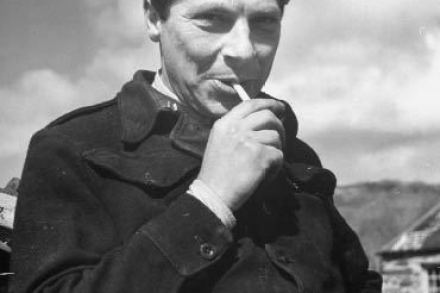
Do we need another huge life of Arthur Koestler? He wrote a great deal about himself, including three autobiographical works: Spanish Testament (1937), describing his experience as a death-row prisoner of General Franco, Arrow in the Blue (1952) and The Invisible Writing (1954). He also contributed to The God that Failed, the fascinating collection of testimonies by former Communists which Dick Crossman edited in 1949. He and his last wife wrote an unfinished joint memoir, published a year after their deaths as Stranger on the Square (1984). An ex-wife, Mamaine, contributed a volume, Living with Koestler (1985). Then a quarter-century after his death came a large-scale 640-page biography entitled Arthur Koestler: The Homeless Mind by David Cesarani (1998).

When dons were still happy to be egregious

From our UK edition

Before the advent of Political Correctness — the system of censorship which has settled over the English-speaking world like a dense cloud of phosgene gas — clever people were unashamed of being eccentric. This applied particularly to dons. I am reminded of this by browsing through a gigantic book, Magdalen College, Oxford: A History, edited by L.W.B. Brockliss. How lucky I was to go to that magical place when the people who ran it were still totally self-confident, and not afraid, as Belloc put it, ‘to shout the absolute across the hall’. This magnificent book, probably the finest college history ever put together, is a threnody for the weird personalities of the learned over more than four centuries.

A seasonal lament

From our UK edition

This Christmas my thoughts go out to the people of Cockermouth, perhaps my favourite little town in all England, as it was Wordsworth’s. Especially I think of its small shopkeepers, for what makes the town so delightful is its many tiny businesses, selling unusual and curious goods. So well-mannered and friendly are the people who serve in these shops that making a purchase, however modest, is a pleasure in itself. Most of them have been flooded, the stock ruined. Wordsworth was born there, and ‘fair seed-time had my soul’. He recalls, in ‘The Prelude’, walking, aged five, along the banks of the Derwent, ‘behind my Father’s House... along the margin of our Terrace Walk’.

Apologies, but no apologetics

From our UK edition

This is a massive work, 1,132 pages long, not counting the index. This is partly because the author, Professor of the History of the Church, at Oxford, seems anxious to downgrade the importance and uniqueness of Jesus of Nazareth in founding the religion which bears his name, and therefore deals first with the millennium which preceded his birth, tracing the roots of the religion in Greek and Hebrew culture. This takes up 73 pages, but is too cursory to be effective and should be skipped. The section on Jesus is not much more than 20 pages, and reflects all the most irritating aspects of modern Anglican New Testament criticism. The personality of Jesus never emerges, and one is left with the thought that if so little of it is true, what was all the fuss about?

One man and his dogma

From our UK edition

‘The second world war lasted for 2,174 days, cost $1.5 trillion and claimed the lives of over 50 million people. That represents 23,000 lives lost every day, or more than six people killed every minute, for six long years.’ This neat summary is characteristic of the way Andrew Roberts uses statistics to bring home to the reader the enormity, the waste and the horror of that terrible conflict. The book is long, but it is tightly written, every page packed with terse comment, well-organised facts and, often, telling details. It has a thesis: Hitler lost the war essentially because he was a Nazi, and allowed his race theories and ideological cruelty to get in the way of rational decision-taking.

The man who knew so much

From our UK edition

Enlightening: Letters 1946-1960, by Isaiah Berlin, edited by Henry Hardy and Jennifer Homes The Book of Isaiah: Personal Impressions of Isaiah Berlin, edited by Henry Hardy Isaiah Berlin was the most popular don of his time. While Maurice Bowra boomed, and David Cecil giggled and Trevor-Roper intrigued, Berlin talked his way into the hearts of men — and women. If you were at a party and he entered the room, your spirits rose. If he chose to sit near you, it was bliss. Some found his delivery too rapid, and occasionally a lecture of his turned into an incomprehensible disaster. You had to get firmly on to his wavelength. Once there, the warm wave of talk enveloped you.

And Another Thing | 28 March 2009

From our UK edition

Richard Strauss died 60 years ago this year. Not only is he one of my top ten favourite composers, he is also the one I would most like to be cast away with on an island so that I could pluck out the heart of his mystery. His subtleties are infinite, especially his constant, minute innovations, always designed to improve existing models but rejecting crude revolutions, so noisily intrusive in his time. I would like to explore his early works, like the tone poem Macbeth and his symphonies, Brahmsian exercises never performed today, and get to know all his operas including the weird Guntram (1892) and his last great masterpiece Capriccio, written 60 years later. But plucking that complex heart requires a knowledge of German.

And Another Thing | 21 March 2009

From our UK edition

One of my favourite parts of London, in easy walking distance of my house in Newton Road, is what I call the Ardizzone country. This stretches from the edges of Little Venice into Maida Vale and is, or was until the crunch, in the process of rapid gentrification. I call it after the artist because, from 1920 until his death in 1979, he lived (on and off) at 130 Elgin Avenue, and made hundreds, perhaps thousands, of little sketches of its people. He had not much artistic training, apart from a spell under Bernard Meninsky at the Westminster School of Art, but he had an extraordinary skill at doing rapid figure drawings, which he deepened by clever hatching and watercolour washes.

And Another Thing | 14 March 2009

From our UK edition

With one of those tremendous jolts to memory, I was taken back 60 years by the death of Conchita Cintron. She was the greatest of all women bullfighters and I was incredibly lucky to see her, in 1950, for that was the last year she was in the ring. Where did this take place?

And Another Thing | 7 March 2009

From our UK edition

A.J.P. Taylor liked to talk about the Great Depression of the Thirties. ‘It was all right for some, such as myself,’ he said, with satisfaction. ‘With a nice, safe job as a university don, I was sitting pretty. Prices were stable or going down. Don’t let anyone tell you deflation is a bad thing. It’s a jolly good thing for the middle classes with salaried jobs and savings. Life was good to us. Empty roads. You often had a railway carriage to yourself. You didn’t have to book a hotel room. Or a restaurant. Everyone glad to see you — service with a smile. You could buy a three-bedroom house for £600, new. If it hadn’t been for the rise of Hitler, I’d say it was the best time of my life, personally. Ha ha!

And Another Thing | 28 February 2009

From our UK edition

What are the salient evils of our time? They are two-fold. One is social engineering, the idea that human beings can be changed, improved and moved about as though they are quantities of cement or concrete. Today, virtually all regimes, whether democratic, dodgy or outright totalitarian, practise social engineering. Not least Gordon Brown’s crumbling New Labour set-up, where virtually all the innumerable quangos it has created are designed to engineer the population in a direction designated by government.

And Another Thing | 21 February 2009

From our UK edition

During the Arctic weather I re-read that finest of winter pastorals, ‘Snowbound’ by John Greenleaf Whittier (1807-92). It gripped me, as it always does, by its combination of intense realism about the present and its imaginative sympathy for the past. Whittier describes heavy snow sealing off a household in the early 19th century, about the time Wordsworth first moved to Rydal Mount. He uses the situation to bring back to life the faces and characters of all his family and friends, now dead, who once sat around the blazing log fire in the snowbound wooden house. It is a powerful work, by no means short — around 770 lines — and many would rank it the most perfect poem ever produced by an American.

And Another Thing | 14 February 2009

From our UK edition

Being a professional writer is a hard life. Producing a book, especially a long one, is a severe test of courage and endurance. For even after a successful day of writing, one must begin again the next morning, the blank sheet of paper in front of you: a daunting image to start the day, the mind empty, the brain groaning. I know. I have been at it for the best part of six long decades, and the number of books I have written is creeping up to 50. Several are over 1,000 printed pages. Think of the agony! I have no complaints, really. I have made a good living, and received more than my share of praise. But I like to mull over the special compensations which occasionally reward authors.

And Another Thing | 7 February 2009

From our UK edition

The more I see of the intellectual world and its frailties, the more I appreciate the truth of G.K. Chesterton’s saying: ‘When people cease to believe in God, they do not believe in nothing. They believe in anything.’ It is one of the tragedies of humanity that brain-power is so seldom accompanied by judgment, sceptical moderation or even common sense. The vacuum left by the retreat of formal religion is most commonly filled, today, by forms of pantheism. Zealots devote their lives to ‘saving’ the rainforests, deserts or habitats of endangered species. They believe, passionately, in pseudo-scientific myths like climate change, global warming and the greenhouse effect. Some worship science as a faith and a way of life. Others hate it.

And Another Thing | 31 January 2009

From our UK edition

What is simplicity? And is it desirable, on principle? A good question. My recent essay on the origins of the universe, arguing that the simple explanation, its creation by an omni-potent God, is more plausible than its sudden emergence as a result of infinitely complex (and disputed) events, angered some readers. They took the view that only the simple-minded see virtue in simplicity, and that a love of complexity is the mark of intellectual maturity. So, returning to the subject, let us look at complexity, and what promotes it. There seem to be three main factors. The first is constructive knowledge. Human beings are clever creatures and delight in their ability to create, and to put their creations to the test. This is particularly true of those who design machines.

And Another Thing | 24 January 2009

From our UK edition

It is a sobering thought that a year ago the nominal wealth of the world, as registered in bank holdings, stock and bond prices, real estate and company valuations, was twice what it is today. Where has all the money gone? Was it there in the first place? The $50 billion ‘invested’ with Bernard Madoff seems to have simply disappeared into a celestial, or infernal, black hole, leaving ‘not a rack behind’. I heard the other day of a man supposedly worth $6 billion a few months ago, now down to $500 million, so technically he is not even a billionaire any more. He did not actually do anything to cause his fortune to be divided by 12: just sat appalled, watching it vanish, on TV.

And Another Thing | 17 January 2009

From our UK edition

A Pantocrat who should be on everyone’s curriculum The decision by the authorities to drop Coleridge from the syllabus of state schools is intended as another nail in the coffin of English literature. He is to be replaced by a person unknown to me but apparently popular on TV quiz shows. No reason is provided for giving the old poet-philosopher the boot. Too difficult? A white, middle-class male? Not politically correct enough? It is true that, having been an extreme radical in his youth, planning to found a utopian settlement on the Susquehanna in America, in conjunction with Robert Southey and other idealists — it was to be called a Pantisocracy — he became conservative in middle age, and a pillar of Christianity, if rather an unusual and wobbly one.

And Another Thing | 10 January 2009

From our UK edition

Are you sophisticated? Here’s how to find out The word ‘sophisticated’, though commonly used, especially by persons who turn out on close investigation to be unsophisticated, is tricky, and truly sophisticated people avoid it altogether. Now, having got that off my chest, let us try to define it. One difficulty is that the root of the word can mean opposite things. Thus, a sophist can be either ‘a wise or learned man’ (OED), or ‘one who makes use of fallacious arguments’. Macaulay, in his History, ferociously calls Catholic theologians, especially casuists, ‘this odious school of sophists’. ‘Sophistry’ nearly always means ‘deceptiveness’.

And Another Thing | 3 January 2009

From our UK edition

This is the time of year when I repeat Christina Rossetti’s lines In the bleak mid-winter Frosty wind made moan, Earth stood hard as iron Water like a stone. November was as cold as I remember this once-muggy, foggy month. And December even harder. The Met Office says the rest of winter will be severe, and this is the first of a cold series. I am prepared. I have two lovely, comfortable scarves, one of white, of pure cashmere, bought at an Armani sale by that Prussian beauty Lady Niti Gowrie, which somehow found its way to me, and I also possess an immense long red thing of wool, from MoMA in New York, with matching gloves, a present from Drue Heinz to my wife, which I appropriated as the spoils of war. What war?