Patrick West

Patrick West is a columnist for Spiked and author of Get Over Yourself: Nietzsche For Our Times (Societas, 2017)

Let’s take no lectures from Emma Thompson on the climate

From our UK edition

The actors are out in force again, speaking politics. Only days after Brian Cox appeared on the BBC bemoaning that Brexit is reducing our GDP by 4 per cent, this weekend Dame Emma Thompson led thousands at a Restore Nature Now march in London. The protest was designed to draw attention to the plight of nature and the climate, and was attended by charities, businesses and direct action groups. Actors at their worst are a notoriously shallow and vain lot During the march, the national treasure, millionaire and jet-setter Thompson was asked if she supported Just Stop Oil, days after the group had vandalised Stonehenge. 'I think I support anyone who fights this extraordinary battle,’ she replied. 'We cannot take any more oil out of the ground. I mean, there's much argument about it.

How a dead French poet helped the Allies to victory on D-Day

From our UK edition

D Day, 6 June, 1944, saw put into action one of the most unlikely alliances in the history of warfare: that between the largest military invasion of all time, and French poetry. The episode in question concerned the role played by a poem by Paul Verlaine in that momentous event: an episode immortalised in the famous 1962 film, The Longest Day.  A mixture of confusion, hubris and complacency played its part in the German defeat The success of Operation Overlord, as the invasion of Normandy was code-named and which culminated 80 years ago today, was to depend considerably on the role of the French Resistance in acts of sabotage prior to the event. The Allies thus broadcast hundreds of coded messages to the underground in the months preceding the attack.

Gary Lineker and the problem with celebrity boycotts

From our UK edition

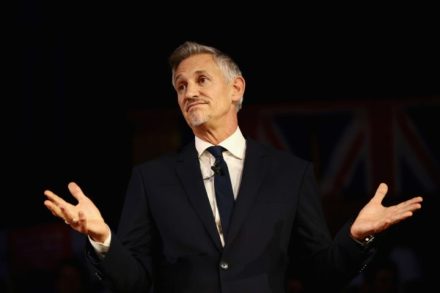
One of the country’s most cherished footballers, and one of its most irritating right-on social media commentators, Gary Lineker, has been at it again. In a post on X on Friday night the former Barcelona striker declared his support for their arch-rivals Real Madrid in the Champions League final. Why? Because, citing an account that monitors politics in football, Madrid's opposition, Borussia Dortmund, recently signed a three-year sponsorship agreement with the weapons manufacturer Rheinmetall, a firm that sells arms to Israel.

Trans ideology and the triumph of feelings over fact

From our UK edition

Most people who have been following the controversy over Kathleen Stock’s speech at the Oxford Union, and who have been observing this debate that combines transgender rights, the rights of women and free speech, might be tempted to conclude that the dispute has its origins in a sole ideology. That is, the transgender ideology which believes that one’s gender and one’s sex can be altered to accord to one’s authentic, inner self. This is true. It is all about an ideology. But trans ideology isn’t the ultimate issue here. It’s the ideology of ‘feeling’ that’s at the root of the debate we’ve been having – both of the trans phenomenon and the way we all talk about it.

Why we need the word ‘woke’

From our UK edition

Has the word ‘woke’ become a lazy, all-too-common cliché? The novelist and Spectator columnist Lionel Shriver thinks so. During an appearance at the Hay Festival, she has lamented how the word has become ‘horribly overused’. The author says: ‘I’m as tired of it as you are. There have been other people trying to coin something else, which we’d also get tired of, but they usually have more than one syllable so they don’t catch on.’ Readers of Shriver’s journalism and fiction will know she has become one of the most unforgiving critics of woke.

Why is it acceptable to mock the working class?

From our UK edition

You may laugh. You may have gasped in disbelief. But yes, it’s true, we now have a new socio-economic classification, known collectively as the ‘working class, benefit class, criminal class, and/or underclass’. This, is at least, is the latest addition to the list of ‘traditionally disadvantaged groups’ especially welcomed by The Camden People’s Theatre, North London, in a job advert – alongside the more familiar(-ish) categories of ‘D/deaf and/or disabled’, ‘neurodiverse’, ‘LGBTQ+’ and that other newby for our times: ‘global majority’. This new umbrella category was made known on X by charity worker Anne-Marie Canning on Monday, and the advert has since gone viral, attracting much derision, not least for its anachronistic and confused taxonomy.

The delusion of the pro-Palestinian campus protestors

From our UK edition

Much has been made in recent weeks, and especially in recent days, about the degrees of ignorance often displayed by those protesting for the people of Gaza and Palestine. To put it pithily, many don’t seem to know from which river and to which sea they chant about with such passion. Such ignorance has prompted some to conclude that these protests are less about showing solidarity with beleaguered Palestinians and more an excuse to vent incoherent anti-Western sentiment, or, more sinisterly, old-fashioned anti-Semitism. Some of the protestors have been replicating what they believe to be the conditions in Gaza Similarly, the cosplay in evidence at university campuses in the USA has also cast doubt on the authenticity of these demonstrations.

Tale of the tape: how cassettes made a comeback

From our UK edition

Move over vinyl: the cassette tape is back. According to the British Phonographic Industry, sales of this retro piece of technology last year came close to a two-decade peak. Having been the top-selling format for albums in the UK from 1985 to 1992 and then seemingly disappearing (selling only 4,000 units in 2012), last year saw more than 195,000 cassette tapes shifted. HMV, which recently announced that it will reopen its flagship store on Oxford Street after a four-year closure, plans to bring out cassettes for ‘specific new releases’ and has credited its return to profit with a growing interest in ‘collectable’ music from an analogue era.

Did Stephen Fry join the Garrick by mistake?

From our UK edition

The battle over sexism and equality at the Garrick Club continues to rumble on. It was revealed yesterday that several of its members, including Stephen Fry, Sting, and Dire Straits frontman, Mark Knopfler, had put their name to a letter threatening to quit the Garrick unless members vote to admit women. They have been joined by luminaries from the world of theatre, film and television, who had been warned that they were in an untenable position because of a ‘very public controversy’ over the issue. The broadcaster John Simpson pronounced on X yesterday that he and many others ‘would also find it impossible to stay’ if the club didn’t open its doors to women. This is the luvvie-spat that just won’t go away.

Why the smoking ban exposes the ‘right side of history’ delusion

From our UK edition

As a conservative non-smoker who in his youth was a libertarian twenty-a-day man, I can see both sides of the argument over the government’s recent anti-smoking legislation. Sure, cigarettes can be delicious, and it’s entirely up to the adult individual, not the state, whether he or she decides to light up. But as I finally came to accept eleven years ago, smoking is also a profoundly stupid habit, and if government interference can prevent people ever taking it up, then so be it. I was fervently against the 2007 smoking ban in pubs, but came to acknowledge that it greatly helped in the process of de-normalising smoking. And de-normalised smoking has thoroughly become. History has no guiding spirit, direction or end goal.

Why is the civil service being given lessons on ‘microaggressions’?

From our UK edition

Civil servants are being given lessons instructing them not to roll their eyes or look at their mobile phones while dealing with members of staff. Such behaviour can be deemed evidence of sexual or racial discrimination, examples of ‘microaggressions’. As the Times reports today, more than £160,000 has been spent by the government since 2021 on hiring public sector consultants to train staff to recognise ‘perceived slights’ in the form of microaggressions. Complaints of microaggressions are even being brought to employment tribunals after Acas, the arbitration service, decided to include them in its guidance against discrimination.

Why do the French struggle to speak English?

From our UK edition

Why are the French so bad at learning foreign languages? Yes, you read that right. This isn’t a lament as to how the British are so terrible at learning foreign languages, a theme so beloved by stand-up comedians, who insinuate that it reflects our outdated superiority complex and ingrained xenophobia. I meant the French. For they, too, are terrible at learning foreign languages. Many people in France don’t even know how to say the most basic greeting in English, according to a report in the Times. In a study published by Preply, a language teaching platform, there are 14,800 searches on Google Translate every month for ‘bonjour’ in English, with a further 8,100 for jours de la semaine (days of the week), and 6,600 for chemise (shirt), chiffre (figure), madame and merci.

Why are local councils calling for a Gaza ceasefire?

From our UK edition

Foreign wars have the unfortunate side-effect of bringing out the self-regarding narcissist in people. This is made all the more pronounced in our era of social media, in which some types appear to think that mere tweets can stop wars, and that an appropriately-altered Facebook profile might bring about world peace. The latest casualty in this regard has been local government. And I don’t just mean the Scottish government and the Scottish National party, who have had delusions of grandeur long before the Israel-Gaza conflagration begun. I mean local, provincial councils.

Is the business world sane again?

From our UK edition

There are signs that woke capitalism is on the way out. Unilever, purveyor of the most right-on brand of the moment, Ben & Jerry’s ice-cream, will no longer ‘force fit’ all of its brand with a social purpose, following a backlash over the company’s ‘virtue-signalling’. Hein Schumacher, who became Unilever’s chief executive in July, has said that for some brands, giving them a social or environmental purpose ‘simply won’t be relevant or it will be an unwelcome distraction.’ He added: ‘I believe that a social and environmental purpose is not something that we should force fit on every brand.’ This report, in today’s Daily Telegraph, marks a significant U-turn for the manufactures of Hellmann’s mayonnaise, Marmite spread and Dove soap.

The problem with the word ‘problematic’

From our UK edition

There have been groans of derision following the proclamation by the Archbishop of York, Stephen Cotterell, that the opening lines to the Lord’s Prayer – ‘Our Father’ – might be ‘problematic’, owing to their ‘patriarchal’ connotations. Yet the cries of mockery and exasperation on social media, though justified, have also been mostly predictable. After all, trendy Anglican clerics have been with us for decades, forever providing us with a source of mirth and vexation. The Church of England has form here. What is novel is the Archbishop’s deployment of the word ‘problematic’. In this, he reveals that he really is with the zeitgeist, and really is down with the kids. For ‘problematic’ is one of the most favoured words by those who follow the church of woke.

Let’s stop pretending the culture wars aren’t real

From our UK edition

Are the culture wars real? Some assume that they're an imaginary affair, or, at best, a distraction from the real, pressing bread-and-butter concerns of today. As Matthew Syed put it in the Sunday Times yesterday: ‘The culture wars...may be seen not as genuine debates but as a form of Freudian displacement. The woke and anti-woke need each other to engage in piffling spats as a diversion from realities they both find too psychologically threatening to confront.’ We are familiar with this line of thinking, both from left and right. The culture wars about race and gender are irrelevant and ‘piffling’, so some say. It’s all fuss and nonsense.

Can under-25s be trusted?

From our UK edition

The government’s proposal to overhaul and tighten betting laws, ostensibly to target problem gamblers, has understandably raised concerns about government interference and nanny-state overreach. Yet viewed from a wider perspective, we should welcome these initiatives and for the precedent they could set: they could be the final recognition that young adults do not reach maturity until the age of 25.  As part of its gambling curbs the government will place ‘enhanced’ checks on the finances of under-25s, amid concerns that they’re less able to ‘regulate’ their impulses and make rational decisions. For example, the under-25s will have stakes limited to a maximum of between £2 and £4 for online slot machines.

A split within the radical green movement was inevitable

From our UK edition

Ever since Monty Python created their internecine, bickering and ridiculous groups of freedom fighters – the People’s Front of Judea and the Judean People’s Front – for their 1979 film The Life of Brian, it’s always been easy and tempting to mock and deride the fissiparous nature of ideologues and tin-pot revolutionaries. Those who believe in the purity of a cause tend to have a semi-religious mindset – and consequently one semi-divorced from reality – which brooks no heresy from orthodoxy. Thus extreme, quasi-cult movements are always prone to split into factions.

The BBC is axing its panel shows. It only has itself to blame

From our UK edition

The veteran BBC show Have I Got News for You is ‘due to become BBC television’s only satirical comedy show’. This is the likely result of The Ranganation – also a panel show which dissects the week’s news – reportedly being cancelled. Satire at the BBC has been vanishing alarmingly quickly. Only last week the corporation announced the end of Frankie Boyle’s New World Order, amid dwindling viewership. Mock the Week was cancelled last year, while The Mash Report was put to bed in 2021 (to be revived as Late Night Mash on Dave, only to suffer the double indignity of being cancelled again earlier this month).

What the PayPal saga tells us about free speech

From our UK edition

The veteran comedian Jack Dee has been applauded and condemned for announcing that he is cancelling his PayPal account. As he tweeted yesterday: 'Big Tech companies that feel they can bully people for questioning mainstream groupthink don’t deserve anyone’s business.' PayPal has been in the news for cancelling the account of the Free Speech Union, who it says violated its 'Acceptable Use Policy', although it has not explained on what exact charge. The Free Speech Union has in recent years defended those who have been censured, or lost their job, for expressing unfashionable opinions, whether they be on lockdown or the trans issue, so it could be on many contentious topic. The union's founder, Toby Young, has been politely bemused.