Patrick West

Patrick West is a columnist for Spiked and author of Get Over Yourself: Nietzsche For Our Times (Societas, 2017)

James Treadwell and the true meaning of ‘cancel culture’

From our UK edition

There's an inherent contradiction at the heart of liberal thinking that perpetually raises its head. It's one which has become ever-more pronounced in our age of ultra-progressive politics: the tension between equality and liberty. Many progressives think you can have both. Alas not. You can only have either, or a greater emphasis upon one at the expense of the other. This contradiction has once more been made evident today amidst reports of a lecturer who says he is the latest victim of 'cancel culture'. James Treadwell, a professor of criminology at Staffordshire University, says that he is 'being investigated for transphobia' after his employer received 'formal and official' complaints about his gender-critical views on Twitter.

When will firms like Ben & Jerry’s stop lecturing us?

From our UK edition

Is anyone else fed up of corporate virtue-signalling? From banks boasting of their commitment to diversity and equality, to train companies changing their liveries to the rainbow flag, or supermarket chains proclaiming they are fighting racism, enough is enough. Thankfully, the moneymen who matter to big businesses – and whom they might actually listen to – are now finally speaking out. Fund manager Terry Smith and leading shareholder in Unilever – owner of the notoriously woke ice cream firm Ben & Jerry's – has attacked the company for its underperformance, pointing a finger at its obsession with political posturing.

Edward Colston and the problem with the ‘right side of history’

From our UK edition

There has been much anger after the Colston statue verdict this week, in which a jury cleared four protesters of criminal damage over the toppling of the monument in Bristol. It is an affront to many that vandalism can be exonerated on the grounds of supposedly righting the wrongs of the past, owing to Edward Colston’s role in the slave trade. Yet the most egregious aspect of the case was the plea, on the behalf of the defence, that the jury ‘be on the right side of history’ in reaching their decision. This ingratiating phrase has become popular among progressives in recent years. It’s not just annoying and absurd because of its pretentions to clairvoyance from those who utter it, from those who seemingly derive their morality from what it says on the calendar.

It’s too late to save comedy from ‘cancel culture’

From our UK edition

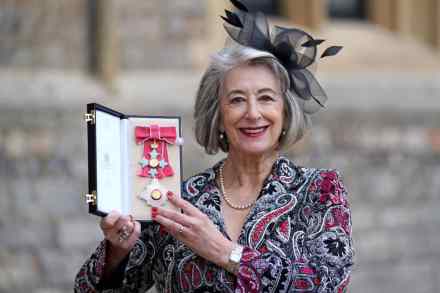
Will comedy become the latest victim of 'cancel culture'? Dame Maureen Lipman fears as much.  'Cancel culture, this cancelling, this punishment, it's everywhere,' she told the BBC yesterday. She says that the world of comedy is in danger of being 'wiped out' because comedians are scared that audiences will take offence, and that they self-censor their material as a precaution. 'It’s in the balance, whether we’re ever going to be funny again,' she said. It would be an ironic tragedy if this were true, because in no other field of entertainment as comedy has 'cancel culture' been at its most insidious, relentless and blatant. Lipman's warning is therefore unfounded, superficially at least.

The BBC is right to ditch the ‘Bame’ label

From our UK edition

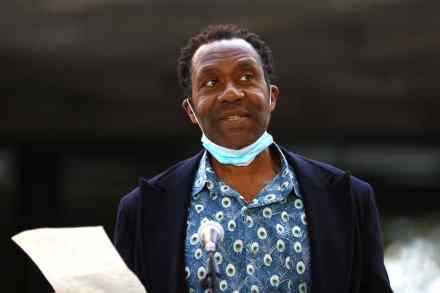
Broadcasters in the UK have declared they will no longer use the acronym BAME to refer to black, Asian and minority ethnic people. Following a report by the Sir Lenny Henry Centre for Media Diversity, the BBC, ITV, Channel 4 and Channel 5 have committed themselves to avoiding this catch-all term 'wherever possible', in favour of more specific terms to describe ethnicity. This is good news.  Last year a task force set up by UK Music, which represents the commercial interests of the sector, called the term 'outdated and offensive'; this latest report concluded that it could cause 'serious insult'. Quite so. The categorical term 'BAME' might as well have been called 'Miscellaneous', in crudely lumping together all non-white people.

Mispronouncing names isn’t a ‘microaggression’

From our UK edition

People can make a bewildering number of offensive transgressions these days: from using the wrong pronoun when addressing people to saying that only a woman has a cervix. The latest eggshell to avoid now is mispronouncing people's names. #MyNameIs is a new initiative calling on people to add phonetic spellings to their email signatures. Race Equality Matters (REM), which launched the campaign, says that mispronouncing names can be 'considered a microaggression' and sends out a message that 'you are minimal'. A survey conducted by REM found that 71 per cent of respondents said their names had been mispronounced, leading some to feel 'disrespected' or that 'they didn't belong'.

Does social media really make us unhappy?

From our UK edition

It’s a well-known fact that social media makes you miserable. While Facebook forever abounds with people apparently having a marvellous time, in exotic climes, never without ubiquitous smiles and exclamations of delight, Twitter seems too often awash with malicious imbeciles, who even when they are right, still get on your nerves. At their worst, Facebook makes you hate people you do know; Twitter makes you hate people you don’t. This, at least, is a popular opinion. And the consensus that social media makes us unhappy and lonely – in that it encourages us to unfavourably and unrealistically compare our lives to those of others – has been repeated this week in a Harvard study published in the journal JAMA Network Open.

Curry, colonialism and the problem with ‘cultural appropriation’

From our UK edition

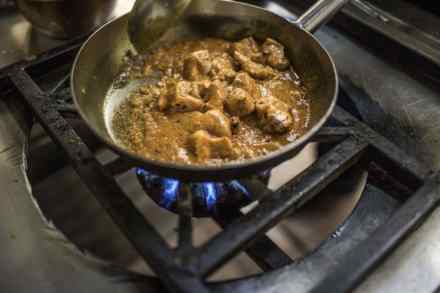
The latest casualty in the culture wars is an innocent-sounding word: 'curry'. Apparently it's inappropriate to use it, and incorrect to use it to refer to all spicy Indian food. It's far too broad as to be misleading, doesn't even have pan-Indian usage, and it remains tainted by its colonial origins. This is the widely reported opinion of Chaheti Bansal, a Californian blogger who posts Indian recipes on Instagram.  'There's a saying the food in India changes every 100km and yet we're still using this umbrella term popularised by white people who couldn't be bothered to learn that actual names of our dishes', she writes, imploring people to 'unlearn' the term. The word was indeed made popular by colonialists: the Portuguese.

Why wealth matters in the free speech debate

From our UK edition

The divide between the rich and the poor is obvious in Britain today. Whether in terms of income, geography or political outlook, the cleavage between the haves and have-nots widens conspicuously. It has become a source of much snobbery and resentment. But there is another field in which this division can be witnessed, yet all too often goes ignored: free speech. Increasingly, the freedom to express your political opinions has become the privilege of the rich, while the poor – or even those on middle incomes – now fear to say what they like. This is especially the case when it comes to talking about gender, race and Brexit.

Was what I said on Facebook really ‘hate speech’?

From our UK edition

Facebook has been accused of failing to combat extremism and hate-speech among its users. But as I found out this week, sometimes it does far too much to take down controversial opinions. Coffee House recently published an article by me with the headline 'Michael Parkinson is right: men are funnier than women'. In the piece, I argued that men are more adapted to and adept at humour because they are less grounded in reality and more at home with incongruence. I said that because humour is often based on cruelty and schadenfreude it is also suited to the typically more aggressive male mindset. In short, I said that men and women were different. I did not say than men were better than woman. If anything, I actually implied the opposite.

Who’s laughing now? Cancel culture is killing comedy

From our UK edition

The BBC and Channel 4 are self-censoring their comedy output because they are so terrified of offending people. So says Jimmy Mulville, the producer of Have I Got News For You, who claims 'cancel culture' has resulted in a fearful atmosphere in these institutions:  'People who cause offence now can be cancelled. And the BBC are worried about it. I know that Channel 4 is worried about it, they're all worried about it. I'm not blaming them, it's the culture in which we live.' This is becoming a familiar complaint. Comedian Dawn French recently bemoaned how censoriousness and offence-seeking was suffocating comedy.

Barnardo’s should know better about ‘white privilege’

From our UK edition

Corporations and charities virtue signalling has become a familiar spectacle in everyday life. Sainsbury's, Virgin West Coast, HSBC, Ben & Jerry's, Gillette and Nike have all pronounced their various anti-racist, anti-sexist and pro-gay, pro-trans principles. The latest to join in this festival of conspicuous compassion is Barnardo’s, which yesterday pronounced on the matter of 'white privilege'. Unveiling its new guide on this hot topic for parents, the children's charity said:  'Talking about white privilege means looking at how our own actions maintain and support racist systems and structures.' Unsurprisingly, this has generated some angry responses. 'As a former Barnardo’s Boy, I find your stance as disappointing as it is nonsensical,' was one reply.

Michael Parkinson is right: men are funnier than women

From our UK edition

As befitting his public persona of a plain-speaking Yorkshireman, and making the kind of devil-may-care social transgression that is the privilege of the very old, Sir Michael Parkinson has declared that men have a better sense of humour than women. In a interview with the Australian Daily Telegraph, the veteran broadcaster, 85, was asked whether men found it hard to express their emotions. 'Most men I know are the opposite, they're very sensitive and also very funny,' he replied. 'That's the the thing I like most about men. It's a contentious statement but they're much better than women in their sense of humour.' Such gender essentialism, especially that in favour of males, is taboo these days. So many unfashionable truths are.

Bruce Gilley and the ‘problems of anti-colonialism’ saga

From our UK edition

Most of us are familiar with the climate of censure and censorship we now live in. People are 'cancelled' and 'no-platformed' for having inappropriate opinions on matters of race and gender, and reprimanded for using the wrong pronoun when referring to transgender men and women. But there are worrying signs that this tendency to shut down those with the 'wrong views' has strayed into the world of books and publishing. Bruce Gilley, an Oxford-educated professor, is being cancelled for the second time in three years, having a book withdrawn after an online campaign against him. 'The Last Imperialist: Sir Alan Burns' Epic Defense of the British Empire' was due to be the first volume in a 'problems of anti-colonialism' series.

How closely linked are lockdown and Brexit?

From our UK edition

Once upon a time, a long time ago, this country was consumed by the matter of Brexit. Everywhere you turned, in every medium, even among friends and colleagues, you couldn't get away from the subject: everyone was talking about Brexit. We were obsessed by it. From 2016 to 2019 there was no escape. All of this changed this year. With the pandemic, the rancorous matter of Brexit vanished, or at least stopped becoming the emotive, divisive matter of primary concern. It has been relegated to a pedestrian news story about trading rights. In the year of the coronavirus and all its horrors, paranoia and despair, Brexit has become a sideshow. Right? Wrong.

An independent Kent isn’t as ridiculous as it sounds

From our UK edition

The news that a Brexit border will be introduced for lorry drivers entering Kent has aroused hilarity and derision among some Remainers. These critics see in Kent the personification of all that is parochial and plebeian. Horrible old Kent, with its proles who epitomise Little England at its most execrable and risible. The truth is that we people of Kent won't be too flustered by this new development. Many of us will actually welcome the Sussex/Kent divide.  For too long our county, the oldest in England, has been the playboy playground of rich Londoners and Sussex/Surrey county types who have descended on our wonderful chaff fields and cliffs, wading their cash around, buying up houses that they rarely occupy, or maybe live in for two or three weekends every summer.

The BBC’s bid to axe left-wing comedy will fail

From our UK edition

People of a conservative or Eurosceptic disposition should be thankful that the BBC's new director general, Tim Davie, is to address the widely-held perception that its comedy output is disproportionately left-wing. For years, listeners and viewers of the likes of The News Quiz, The Now Show, Mock The Week and Have I Got News For You have been subjected to – and bored by – an endless stream of quips and invectives at the expense of the Conservative party, Donald Trump and Brexiteers. According to a Daily Telegraph report, the BBC is to tackle this imbalance. Some of these shows might even be axed altogether. Yet this could be a difficult task. Although the liberal-left or woke nature of much BBC satire and political comedy can be grating, it is, alas, intrinsic to its nature.

Vegans, your soya milk is killing the planet

From our UK edition

In the popular imagination, veganism and environmentalism go hand-in-hand. Both are championed – often in one voice – by ultra-progressive types who protest that we should live more ethically and responsibly in order to save the planet. Both types argue that eating less methane-emitting cattle and consuming more agriculturally-efficient crops is the first step we can all make as individuals into halting climate change. A report published by the UK Sustainable Food Trust not only implicitly challenges the assumption that veganism and environmentalism work in symbiosis, it tacitly suggests that the two movements may be in actual conflict with each other.

Boris’s misguided war on obesity

From our UK edition

Boris Johnson has declared the government's latest war on obesity. It's a continuation of the war on 'junk food'. It's a timely move, as in lockdown we've all been snacking and munching straight from the fridge, during the most ghastly yet boring year in known living memory. Most of us have got fatter as a consequence. Predictably, we are once more now reprimanded for eating 'junk food'. Yet it's also an occasion to remind ourselves that there is no such thing as 'junk food'. There's only 'junk diet'. The idea of 'junk food' has been around for a couple of decades now as the proliferation of fast food outlets has expanded exponentially, with those ghastly names such as 'McDonald's' and 'Burger King', offering cheap food for the terrible proletariat.

The rise of Britain’s new class system

From our UK edition

Television chef Prue Leith believes that snobbery is still rife in Britain, and that it's keeping working-class people in their place. Speaking to the Radio Times this week, Leith described Britain as 'the most unbelievably class-ridden country'. She is right, but not for old-fashioned reasons we associate with that Frost Report sketch with John Cleese and the Two Ronnies. Snobbery no longer emanates from the landed gentry or the social-climbing bourgeoise. The most overt snobbery today can be found coming from some on the liberal-left and that minority of Remainers who like to deride 'gammons'.