Patrick West

Patrick West is a columnist for Spiked and author of Get Over Yourself: Nietzsche For Our Times (Societas, 2017)

There’s nothing ‘elitist’ about kids following in their parents’ footsteps

From our UK edition

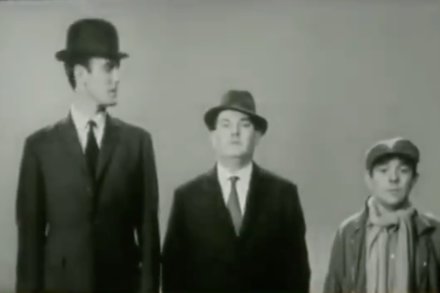
Children of doctors are 24 times more likely than their peers to become doctors. Children of lawyers are 17 times more likely to go into law, and children of those in film or television are 12 times more likely to enter these fields. The same pattern is repeated in architecture and in the performing arts. These are the revelations announced in a new book, 'The Class Ceiling: Why it Pays to be Privileged', by Sam Friedman, a professor at the London School of Economics, and Daniel Laurison. The book sets out to explore the "helping hands" that allow the well-connected middle-classes to retain their domination in elite professions. Dr Friedman calls some of these figures "staggering". But are they really? Historically, they are nothing of the sort.

Watling Street

From our UK edition

All roads lead to Rome, the saying goes. Well, all roads except for the Roman road of Watling Street, which at one end takes you to Dover (Dubris) and at the other Wroxeter (Viroconium) in Shropshire. I was always only vaguely aware of this thoroughfare but the name began, in recent years, to nag on my weekly visits to Canterbury (Durovernum Cantiacorum). When approaching the city centre from the station, I would see a street sign bearing the name on the side of a branch of Boots. It took some time to dawn on me that this was the very same Watling Street I had been told about in school history classes. The street sign in Canterbury isn’t unique, though: ‘Watling Street, EC4’ is affixed to a wall a few minutes’ walk from London Bridge station.

Banksy’s Brexit mural has helped halt Dover’s decline

From our UK edition

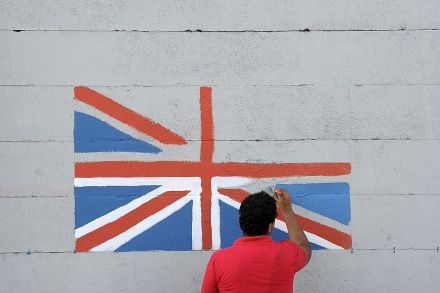
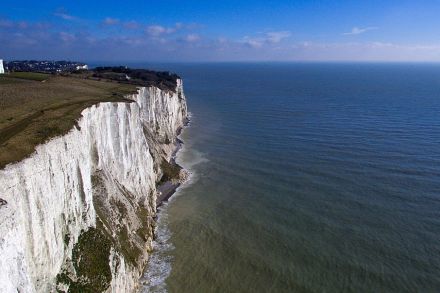
When people come to Dover, it’s usually to pass through. The magnificent castle on the cliffs may be a tourist attraction in its own right, but for the most part, Dover has been a place people go through on their way to or back from the Continent. It’s never been much of a seaside destination. The rise of cheap flights, the end of duty-free and the advent of the Channel Tunnel diminished its status as a port, and the 2008 crash hit it hard. The number of vagrants, street drinkers and empty shop premises in the centre bear witness to a town that has seen better times. Yet things are looking up. Back in May, to the surprise of Doverians and the world’s media, a new Banksy mural was unveiled on the side of an old amusement arcade in York Street.

Dover

From our UK edition

When people come to Dover, it’s usually to pass through. The magnificent castle on the cliffs may be a tourist attraction in its own right, but for the most part, Dover has been a place people go through on their way to or back from the Continent. It’s never been much of a seaside destination. The rise of cheap flights, the end of duty-free and the advent of the Channel Tunnel diminished its status as a port, and the 2008 crash hit it hard. The number of vagrants, street drinkers and empty shop premises in the centre bear witness to a town that has seen better times. Yet things are looking up. Back in May, to the surprise of Doverians and the world’s media, a new Banksy mural was unveiled on the side of an old amusement arcade in York Street.

Sticking up a ‘Vote Labour’ placard is an exercise in virtue signalling

From our UK edition

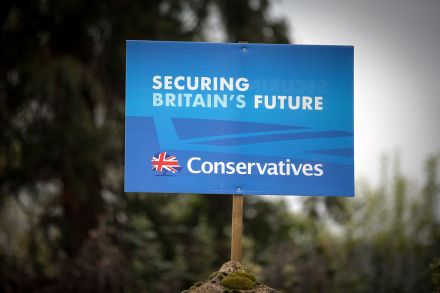
To judge by the number of Labour placards outside people's houses at the moment, you'd be forgiven for thinking the party is heading for a romping victory. Sure, you will see some 'Vote Conservative' placards dotted about here and there. But for the most part, putting up political posters is now predominately a left-wing pastime. This is certainly the case in the urban heartlands of England's three big cities, London, Birmingham and Manchester, where the rare Conservative posters that have made an appearance are often defaced or torn down. Perhaps surprisingly, 'Vote Labour' posters are most conspicuous in the wealthier parts of our cities.

The mystery of Kent’s disappearing Polish shops

From our UK edition

Outside of London, the area in Britain that has seen the greatest settlement of eastern Europeans since 2004 has been Kent, for obvious geographical reasons. And to cater for their needs and provide creature comforts, a multitude of shops sprang up in the years that ensued. But a strange thing has started to happen here in east Kent: all the Polish and Baltic shops are starting to close down. This struck me during a visit to Canterbury last week, when I noticed that the premises of the 'East European Food' store in Burgate Lane has now been vacated and lays empty. This represents a trend.

Flanders

From our UK edition

Usually, one of the first indications that you’ve entered a bilingual country is that the road signs are in two languages. At least this is the case in Ireland or Wales — but not in Belgium. In Flanders, the signs are written in Dutch. In Wallonia, they are all in French. French is spoken in Flanders, by the small local Francophone community, but more notably by the huge number of French people who descend on Brugge for the Christmas sales. The French registration plates and the gaggle of overly loud wanderers with cameras are giveaways, but don’t even think about trying French here yourself. It’s considered rude if it’s not your native language. You could, however, always make a stab at Dutch.

The nightmare of ‘pre-crime’ is already with us

From our UK edition

Those who express concern about the onset of a dystopian surveillance society in Britain, in which the boundary between public and private is being erased, and in which the state malignly uses new methods of monitoring, usually invoke the spectre of Nineteen Eighty-Four. ‘Orwellian’ is the customary adjective denoting the kind of cruel, maladjusted authoritarian state that spies on us, that knows everything about us — one, it is feared, that will soon be upon us. Such allusions have some credibility, as Britain has in some respects been transformed into that which George Orwell feared it might: we have detention without trial, armed police and the widespread use of CCTV cameras.