Owen Matthews

Owen Matthews

Owen Matthews is an Associate Editor of The Spectator and the author of Overreach: The Inside Story of Putin’s war on Ukraine.

Putin’s great game

From our UK edition

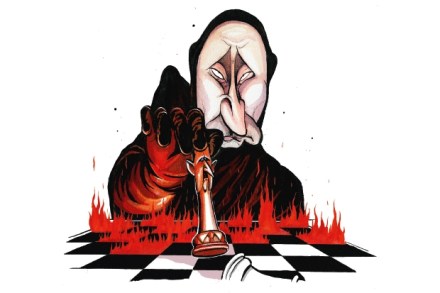
[audioplayer src="http://rss.acast.com/viewfrom22/putinsendgameinsyria/media.mp3" title="Putin's endgame in Syria"] Listen [/audioplayer] Russia’s bombing of the city of Aleppo this week sent a clear message: Vladimir Putin is now in charge of the endgame in Syria. Moscow’s plan — essentially, to restore its ally Bashar al-Assad to power — is quickly becoming a reality that the rest of the world will have to accept. America, Britain and the rest may not be comfortable with Putin’s ambitions in the Middle East, or his methods of achieving them. But the idea of backing a ‘moderate opposition’ in Syria has been proved a fantasy that leaves the field to Putin and Assad.

How Putin outwitted the West

From our UK edition

Saddam Hussein hanged: is Iraq a better place? A safer place? Gaddafi murdered in front of the viewers: is Libya a better place? Now we are demonising Assad. Can we try to draw lessons? — Sergei Lavrov, Russian foreign minister, United Nations, 1 October Russia was right about Iraq and Libya, and America and Britain were dead wrong. Regime change doesn’t seem to have changed Middle Eastern countries for the better, as Vladimir Putin has been warning for years. His policy is not to support any armed groups ‘that attempt to resolve internal problems through force’ — by which he means rebels, ‘moderate’ or otherwise.

Putin and the polygamists

From our UK edition

Homosexuality may not be tolerated in today’s Russia, nor political dissent. Polygamy, though, is a different matter. Ever since news broke this summer of a 57-year-old police chief in Chechnya bullying a 17-year-old local girl into becoming his second wife, Russian nationalists and Islamic leaders alike have been lining up to call for a man’s right to take more than one wife. Most vocal has been Ramzan Kadyrov, the flamboyant 38-year-old president of Chechnya (part of the Russian Federation), who advocates polygamy as part of ‘traditional Muslim culture’. Veteran ultranationalist politician Vladimir Zhironovsky has long held that polygamy is the solution for ‘Russia’s 10 million unmarried women’.

Panic, profiteering and a mysterious girl in a Mini: notes from Moscow

From our UK edition

 Moscow Here we go again. The rouble slides, then tumbles, and slides again. For those of us who remember the crash of August 1998, the drill is familiar. For Muscovites, the old instincts have surfaced from the 1990s like a sausagey burp. Shoppers besieged Ikea, Auchan and other mega-markets, desperate to spend rapidly devaluing roubles. Cynical expatriates such as myself did much the same with our newly inflated hard currency. I cleared my local posh wine shop of a thousand bucks’ worth of Burgundy, now half-price in dollar terms. A correspondent colleague raided the Moscow Apple store to the tune of two iPhones and a pair of laptops before they shut down to recalculate prices.

Letter from Donetsk: peace, with missile attacks

From our UK edition

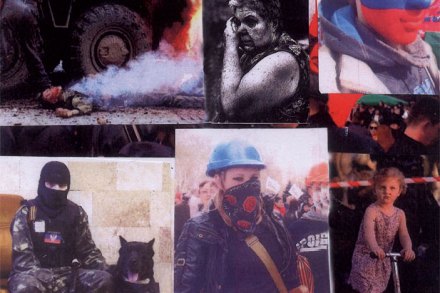
For what is technically peacetime, there’s a lot of shelling going on round here. Donetsk airport is still held by the Ukrainian army and the rebels of the Donetsk People’s Republic bombard it furiously every day. The Ukrainians reply by lobbing back artillery shells and Grad missiles. Both sides bristle with anti-tank and anti-aircraft missiles, so the war is a static one, fought by a series of artillery duels, first world war-style. Underneath the smart new airport built by Turks for the Euro 2012 championships is a warren of deep Soviet-era bunkers and tunnels, where the Ukrainian defenders retreat with their howitzers when the barrages get too heavy. Construct your own metaphor: deep, indestructible veins of the past lying underneath the fragile modernity of the present.

Meet Vladimir Putin’s real challengers (they’re even worse than he is)

From our UK edition

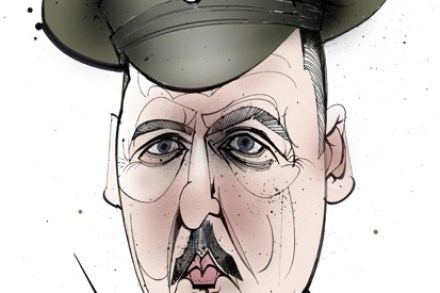
Strange times throw up strange heroes — and in Russia’s proxy war with Ukraine, none is more enigmatic than the Donetsk rebel leader Igor Girkin, better known by his nom de guerre of Igor Strelkov. In a few short months, Strelkov has gone from being an obscure military re-enactor to the highest-profile rebel leader in eastern Ukraine. But at the same time Strelkov’s fame and outspoken criticism of Vladimir Putin for failing to sufficiently support the rebels has earned him the enmity of the Kremlin. Moreover, Strelkov’s brand of sentimental ultra-nationalism, extreme Orthodoxy and Russian Imperial nostalgia offer a frightening glimpse into one of Russia’s possible futures.

Vladimir Putin’s empire of lies

From our UK edition

According to Russian state television, flight MH17 was shot down by Ukrainian government forces who believed they were targeting Vladimir Putin’s jet returning from a summit in Brazil. An unnamed Spanish air traffic controller allegedly overheard two Ukrainian fighter pilots talking about the secret operation at Kiev’s Boryspil Airport. Ukrainian jets were supposedly seen tailing the doomed flight just before it exploded. Or, no — the plane was actually downed by a surface-to-air rocket fired from Kiev-controlled territory. Russian spy satellites recorded the whole incident, apparently.

The conflict in Crimea will be the downfall of Putin

From our UK edition

Earlier this year, Owen Matthews discussed in the Spectator how the conflict in Crimea will be the making of Ukraine and the end of Vladimir Putin: David Cameron says that Russia’s annexation of Crimea ‘will not be recognised’. Ukraine’s Prime Minister Arseniy Yatsenyuk promises that ‘we will take our territory back’. They are both misguided. Let Crimea go: it will be the making of Ukraine and the end of Vladimir Putin. Without Crimea, there will never again be a pro-Moscow government in Kiev. Ukraine will have a chance to become a governable country — a strongly pro-European one with a Russian minority of around 15 per cent. Putin will have gained Crimea but lost Ukraine for ever.

No, Putin didn’t plot to invade Ukraine. But now he might have to

From our UK edition

So what, exactly, does Vladimir Putin want? ‘To start World War Three,’ according to the embattled Ukrainian prime minister Arseny Yatseniuk. ‘To rule as president for life with powers on par with the tsars,’ according to Alexei Navalny, leader of Russia’s tiny opposition. To ‘force a major change of boundaries on Europe… and break the post-Cold War consensus,’ according to Radek Sikorski, Poland’s foreign minister. Actually, Putin himself has always been rather clear about his ambitions. ‘Russia has been a great power for centuries, and remains so,’ Putin told the State Duma in his first speech as prime minister, back in August 1999.

How did revolution become Istanbul’s new normal?

From our UK edition

On a recent weekend I was thinking of taking my sons to downtown Istanbul to do some bazaar browsing. ‘Bad idea’,  a fellow expatriate warned me, ‘revolution on Taxim Square. Again.’ Revolt has become the new normal in Istanbul, a constant of urban life to be followed like the weather. Every few months the ritual dance erupts, chanting crowds on one side and sinister and well-drilled riot police on the other, followed by water cannon and the artillery-like noise of tear-gas canisters being fired into the crowd. How has Turkey come to this? Twelve years ago, Turkey’s then-new prime minister Recep Tayyip Erdogan promised to be an ‘Islamic Democrat’ in the sense that Germany’s Christian Democrats were Christians.

Let Putin have Crimea – and it will destroy him

From our UK edition

David Cameron says that Russia’s annexation of Crimea ‘will not be recognised’. Ukraine’s Prime Minister Arseniy Yatsenyuk promises that ‘we will take our territory back’. They are both misguided. Let Crimea go: it will be the making of Ukraine and the end of Vladimir Putin. Without Crimea, there will never again be a pro-Moscow government in Kiev. Ukraine will have a chance to become a governable country — a strongly pro-European one with a Russian minority of around 15 per cent. Putin will have gained Crimea but lost Ukraine for ever. And without Ukraine, as former US national security adviser Zbigniew Brzezinski famously said, ‘Russia can no longer be an empire.’ Crimea is a gangrenous limb on Ukraine’s body politic.

Ukraine’s turmoil highlights Vladimir Putin’s battle lines

From our UK edition

After two decades in the economic basket, Russia is decisively back as an ideological force in the world — this time as a champion of conservative values. In his annual state of the nation speech to Russia’s parliament in December, Vladimir Putin assured conservatives around the world that Russia was ready and willing to stand up for ‘family values’ against a tide of liberal, western, pro-gay propaganda ‘that asks us to accept without question the equality of good and evil’. Russia, he promised, will ‘defend traditional values that have made up the spiritual and moral foundation of civilisation in every nation for thousands of years’.

Vladimir Putin’s new plan for world domination

From our UK edition

[audioplayer src="http://traffic.libsyn.com/spectator/Untitled_2_AAC_audio.mp3" title="Anne Applebaum and Matthew Parris discuss how far we should let Putin go"] Listen [/audioplayer]It’s been a generation or so since Russians were in the business of shaping the destiny of the world, and most of us have forgotten how good they used to be at it. For much of the last century Moscow fuelled — and often won — the West’s ideological and culture wars. In the 1930s, brilliant operatives like Willi Muenzenberg convinced ‘useful idiots’ to join anti-fascist organisations that were in reality fronts for the Soviet-backed Communist International.

Putin’s own Cold War

From our UK edition

Whose side is Vladimir Putin on? It’s a question worth asking, because of late the Kremlin has come closer and closer to the tipping point between obstreperousness and outright hostility towards the West. Last week Barack Obama cancelled a September summit with Putin after Russia offered asylum to the National Security Agency whistleblower Edward Snowden. But in truth the Snowden affair is only the latest and most trivial of a long and growing list of issues where Russia and the US are on radically opposite sides. Syria probably tops the list — at least in terms of urgency and human cost. Russia has offered diplomatic support to the Assad regime by using its veto on the UN Security Council to block sanctions and intervention.

China: the Middle East’s new power broker

From our UK edition

It’s exactly ten years since Iranian dissidents first blew the cover of a secret uranium-enrichment facility under a mountain at Natanz, in a bleak stretch of desert near Isfahan. Ever since, relations between Israel and Iran have headed inexorably towards war. Israeli leaders have insisted that they are ready to launch a military strike — unilaterally if necessary — against Iran if the uranium enrichment continues. Iranian leaders, liberals and hardliners alike, have been equally adamant that the centrifuges will continue to spin. For Israeli hawks like prime minister Benjamin Netanyahu, the question has been not whether to strike Iran, but when.

Who killed Newsweek?

From our UK edition

So farewell then, Newsweek magazine, which published its last print issue this week. After 79 years — 15 of them as my employer — the venerable old rag is to disappear into an uncertain, web-only future. Many newspapers and magazines have folded as advertising shrinks and readers go online but Newsweek is perhaps the first of the titans to fall. Its demise is all the more resonant because it was one side of one of the great twin peaks of the press: Time and Newsweek, the New York Times and the Washington Post, the Times and the Daily Telegraph. In its heyday Newsweek was an essential part of America’s national conversation. It was controversial, liberal, usually half a step ahead of Middle America.

Istanbul: Going Deeper

From our UK edition

You’ve done the sights: the Hagia Sofia and the great imperial mosques, the Topkapi Palace and the Grand Bazaar, the Bosporus cruise and Basilica Cistern. With the tourist boxes ticked and the past squared away, it’s time to start exploring the real, living city. You may have had enough of museums, but Orhan Pamuk’s new Museum of Innocence in the Bohemian neighbourhood of Cihangir is worth a visit, if only for the abiding oddness of the concept as much as anything in the exhibits. The museum and Pamuk’s eponymous novel were conceived at the same time, and as Turkey’s Nobel Prize-winning author wrote the book about love and obsession set in 1970s Istanbul, he also collected artefacts.

Set art free | 10 March 2012

From our UK edition

Let’s not waste more millions ‘saving’ Old Masters Last week the National Gallery and National Gallery of Scotland proudly announced that they had jointly raised £45 million to buy Titian’s ‘Diana and Callisto’ from the Duke of Sutherland, thereby ‘saving it for the nation’. A few days before, Turkey’s Ministry of Culture and Tourism announced that it would be blocking export licences for various exhibits due to be displayed at the Metropolitan Museum of Art in New York, the British Museum and the Victoria & Albert Museum. The Turks said they would not release the artifacts until items in UK and US museums excavated in Anatolia during the 19th century were returned to the Turkish state.

A crackdown on kleptocrats

From our UK edition

The law is catching up with Russia’s corrupt oligarchs Moscow’s White House is a fairly pleasing pile, at least by the standards of late Soviet architecture. Its colonnaded white stone façade enjoys handsome views over the Moscow River, and its interiors are a symphony in green malachite, light teak and gold ormolu, a mid-1990s decorating style best described as mafia rococo. From the corner offices, now occupied by the Prime Minister, Vladimir Putin, and his deputies, one can gaze over gridlocked traffic, enlivened by the blue flashing lights of government Mercedes as they charge down the reserved central lane. ‘Do you remember Mabetex?’ I asked one of Putin’s deputy premiers a few months ago.

There’s something rotten in the state of Russia

From our UK edition

There is a chilling sequence in Tsar, Pavel Lungin’s dark and brilliant new film about Ivan the Terrible. Ivan, played by the mercurial rock musician Pyotr Mamonov, steps out of his private chapel wild-eyed after a long session of wheedling and bargaining with his God. The Tsar walks, lost in thought, through a series of rooms. As he shuffles along grovelling boyars ceremonially dress him. One group gently places a cloth-of-gold gown over his shoulders. Another group presents an embroidered collar, then cuffs, a crown and staff. Finally the Tsar emerges into the winter sunlight, golden and terrible. The crowd of people who have been waiting for him since dawn prostrate themselves in the slush and the shit of the palace yard. Silence falls.