Olivia Potts

Olivia Potts

Olivia Potts is the Guild of Food Writers’ Cookery Writer of the Year 2025. She hosts The Spectator’s Table Talk podcast and writes Spectator Life's The Vintage Chef column

How to make your own burger buns

From our UK edition

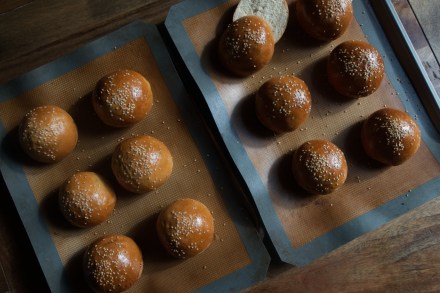
Do you ever find yourself holding forth on a topic you hadn’t realised you cared about? You know, someone asks you an innocuous question in passing about the merits of slow cookers, or the best way to grow cabbages, and before you know it, 20 minutes has passed and you're still grandstanding. There are a few topics that have crept up on me like this during my life: I have found out that I feel extremely strongly about pyjamas (pro), low-calorie cooking spray (anti) and the TV show Stars in their Eyes. And, it turns out, burger buns. I truly didn’t believe I had anything approaching an opinion on burger buns. But the moment I turned my mind to it, I realised that, to the contrary, I had very strong opinions on this apparently benign subject. So what is required of a burger bun?
Confit: the best (and most delicious) way of cooking duck

From our UK edition

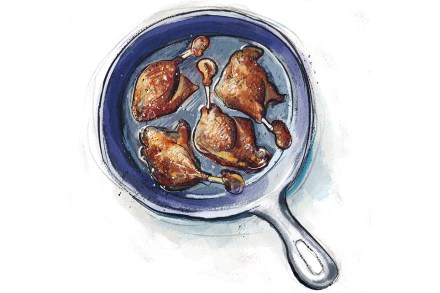
Of all the myriad ways of preserving, confit always strikes me as wonderfully improbable. The ability to preserve meat just through cooking it slowly in its own fat feels particularly wild. And the fact that this simple, unlikely process makes the meat more tender, more flavoursome than any other way of handling it only adds to the magic. Of course, if I pause for a moment and engage my brain, it’s very obvious why it’s such a successful method: most preservation relies on salting to reduce water levels, or excluding oxygen from the preserved food, both of which prevent bacteria from growing. Duck confit takes a belt and braces approach. The duck is salted (and sometimes spiced) for 24 hours – and once cooked, it is entirely submerged in fat, which protects it from air.

With Sarah Woods

From our UK edition

28 min listen

Sarah Woods is an author and cook, who left her corporate job behind to pursue her real passion after reaching the final of BBC1's Best Home Cook 2020. Her first cookbook, Desi Kitchen, has recently been released.  On the podcast she tells Liv and Lara about her upbringing in a Punjabi household and how she was inspired by Desi communities around the UK.

Alison Roman: ‘My desserts are consistently imperfect’

From our UK edition

Alison Roman’s cooking is a counsel of imperfection. She serves dinner late (fine, as long as you have snacks), gets her guests to pitch in on the washing up and won’t make her own ice cream – ‘it simply will never be better than what you can buy, sorry’. ’Her ‘pies leak, cheesecakes crack and pound cakes are pulled from the oven before they’re fully baked. Lopsided and wonky, occasionally almost burned, unevenly frosted, my desserts are consistently imperfect’. In her new book, Sweet Enough, Roman wants to free the home cook from the dessert ties that bind them. ‘My hope for you,’ she tells her reader, ‘is that you strive for the animalistically irresistible, not aesthetically pristine’. The two, she finds, are ‘rarely the same’. ‘Baking is annoying.

With Niki Segnit

From our UK edition

35 min listen

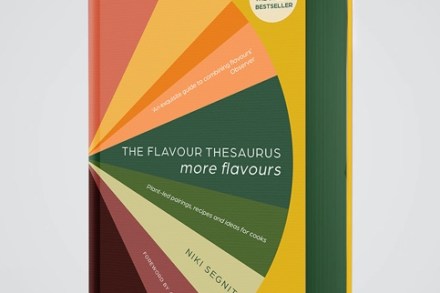
Niki Segnit is the author of the hit cooking books The Flavour Thesaurus and Lateral Cooking. Her new book The Flavour Thesaurus more flavours: Plant-led pairings, recipes and ideas for cooks, is out this Thursday 11th May. On the podcast she speaks to Lara and Liv about weird and wonderful flavour combinations, her childhood fascination with Oxo cubes and why she has gone plant-led for her new book.

Charlotte Royale: a celebration cake fit for a king

From our UK edition

The big bank holiday weekend is about to begin. You’ve made that spinach and broad bean quiche. The bunting’s ready for your street party. You’ve crafted a coronation drinking game. But there’s something missing, isn’t there? An itch that just needs to be scratched. Where’s the pizazz? Where’s the cake? As the oft-misattributed quote goes: a party without cake is just a meeting. I know, I know: a quiche can be fun, but is it celebratory? No, what we need is a good old over-the-top, lily-gilded showstopper of a cake, that you can cut into with appropriate levels of pomp and circumstance. And, boy, do I have the pudding for you. It’s hard to think of a more appropriate pudding to celebrate the coronation of a King called Charles than a Charlotte Royale.

Yorkshire puddings: is there anything as satisfying?

From our UK edition

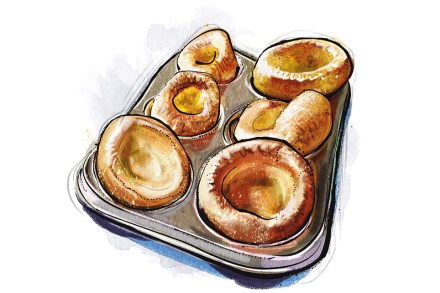
My mother, a Yorkshire woman, would occasionally take shortcuts in the kitchen, but not when it came to a roast, and certainly not when it concerned a Yorkshire pudding. She even owned a specific Tupperware shaker for the job: like a plastic cocktail shaker, in 1970s orange colour, with a propellor insert, and a lidded pouring spout. The batter would be prepared in this shaker and handed to anyone foolish enough to pass through the kitchen, and woe betide anyone who stopped shaking before they were so instructed. There are few things more satisfying than filling a perfect Yorkshire pudding with gravy I didn’t inherit my mother’s Yorkshire pudding shaker, but I make do with a vigorous whisk and then a short rest.

With Guy Tullberg

From our UK edition

25 min listen

Guy is the managing director of The Tracklements Company, providers of artisan chutneys, relishes and preserves, all made in small batches and to traditional recipes.  On the podcast they talk about the joys beef dripping on toast, the thriving food scene in Wiltshire and Guy's desert island meal.

Womb service: the politics of surrogacy

From our UK edition

37 min listen

On this week's episode: In her cover piece for The Spectator, journalist Louise Perry questions whether it is moral to separate a newborn child from their surrogate. She is joined by Sarah Jones, head of SurrogacyUK and five time surrogate mother, to debate the ethics of surrogacy (01:07). Also this week: In the books section of the magazine Olivia Potts reviews several recent books all of which seem to warn against the dangers of our food system and what we are eating. She is joined by Henry Dimbleby, author of Ravenous: How to Get Ourselves and Our Planet Into Shape, to ask if anything is safe to eat these days (14:29).

Is there anything safe left to eat?

From our UK edition

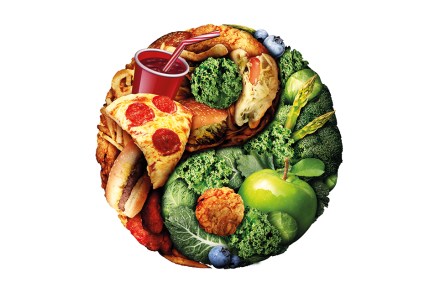
The chapter headings alone are enough to induce a panic attack: ‘Disrepair – how modern diets harm brain health in childhood, adolescence and young adulthood’; ‘How ultra-processed food hacks our brains’; ‘How solving the last crisis in the food system caused the current one’. It’s not a new thing for books examining our food system to be doom-laden, but there has been something of an avalanche of them recently. Within the space of a couple of months we have had four, which may discuss different aspects of how our food is produced, but when it comes to the effects are as one: this is a manmade problem, and without serious intervention the future is bleak for humanity and the Earth. It can all induce apathy, even nihilism – and it’s hard not to feel berated.

Chess pie: how to make the flakiest pastry

From our UK edition

Chess pie was, in one sense, new to me when I started learning about it a few months ago. I’d never heard of this favourite of the American South until I came across it in a pie-centric cookery book. But in another sense, it’s extremely familiar – both to me and to anyone who’s ever eaten a pie or a tart before. Chess pie is a bit like an ur-pie, made with the most simple, most essential of pie ingredients. That’s possibly where its name comes from: the story goes that in the 1800s in Alabama, where nuts and other common pie fillings were expensive, a freed slave made a pie with the most basic of ingredients – eggs, sugar, butter, cream. When asked about it, she replied: ‘Oh it’s jes’ pie.’ And, lo, thanks to a mishearing, chess pie was born.

With Jonathan Ray

From our UK edition

33 min listen

Jonathan Ray is The Spectator’s drinks editor and formerly wine critic for the Telegraph. He has also written several books on the subject of wine and how to buy it. On the podcast Lara, Liv and Johnny share a glass of wine and discuss his earliest memories of food, his go-to hangover cure and his desert island meal.

The secret of perfect chocolate brownies: use a hairdryer!

From our UK edition

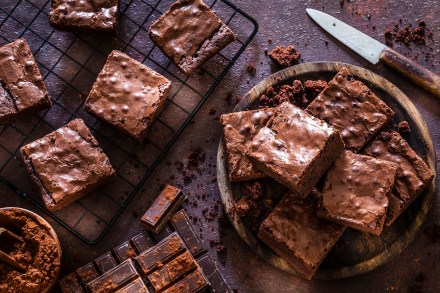
I'm standing in my kitchen aiming a hairdryer at a pan of uncooked brownie batter and feeling like I might have finally lost my mind. I’ve done a lot of strange things in pursuit of recipe perfection, but even for me, this is an odd one. Brownies are a funny old beast. We think of them as quite straightforward, both in the making and in the eating. But actually, that’s not fair. There are countless variables which can produce anything from a dry chocolate cake to uncooked fudge. And – more importantly – for a glorified traybake, they’re pretty damn expensive to make. A whole pat of butter, lots of chocolate, anything from three to five eggs, a boatload of sugar (rarely simple granulated). It’s a commitment.

Bring back the savoury!

From our UK edition

For a while now, we’ve been living through a renaissance of classical British cooking: a whole host of restaurants have been embracing the joy of the old school, the pies and puddings, the traditional and the retro. But there’s something missing. Bring back the savoury! An Edwardian favourite, a ‘savoury’ was an extra course that came towards the end of the meal, either just before or after pudding, or as an alternative to it. A savoury should be small – a ‘morsel’ – and strongly flavoured. To this end, the main ingredients are usually cheese, smoked or salted fish, bacon, or spice in the form of devilling. It is often served on toast or with a small pastry croute, and with something creamy as a foil.

Baked custard pots: a sprightly spring alternative to crème brûlée

From our UK edition

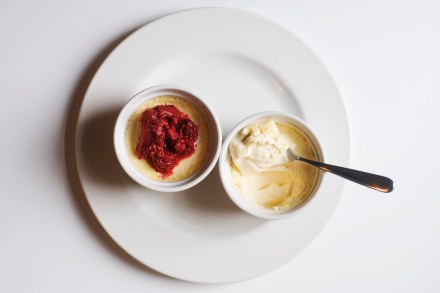
I am pretty capricious when it comes to puddings. I'm always ready to declare my most recent success the king of all desserts, swearing blind I will never make anything else, and just falling short of sending a newsletter to my entire address book informing them of the new love of my life – only for a new pretender to take its place a week a later. So you would be forgiven for feeling a little dismissive when I crow about my new favourite pudding. But listen, this really is my new favourite pudding. Maybe I will never make anything else again. Baked custard pots: richer than a crème caramel, but without the distinctive brittle ceiling of the crème brûlée, these are a make-ahead wonder, fantastically impressive, and really, completely delicious.

Kugelhopf: a reassuring introduction to baking with yeast

From our UK edition

Yeast scares even some of the most proficient cooks. I know home cooks and professionals alike, food writers and fanatics, who wouldn’t think twice about deboning a duck or rustling up a feast for 14, who quail the moment they hear the word ‘yeast’. I understand the trepidation: yeast is a living thing and, as such, capricious and unpredictable. Its behaviour is influenced by the season, the warmth, the humidity and how it is handled. Put like that, it sounds quite relatable, doesn’t it? Despite its intimidating reputation, yeast is actually pretty good at showing us what’s going on: it visibly inflates the dough or batter before cooking. And if the mixture hasn’t yet grown, it often just needs more time. This is an exercise in patience and trust.

With Eleanor Steafel

From our UK edition

25 min listen

Eleanor is a features writer and columnist for the Daily Telegraph where she writes the the regular food column The Art of Friday Night Dinner. Her new book – of the same name – is released on the 30th March and includes recipes for every kind of Friday night.  On the podcast she reminisces about her mother's famous tomato sauce, takes us through her perfect Friday night and explains why she has always loved gathering friends around the kitchen table.

In defence of chicken tikka masala

From our UK edition

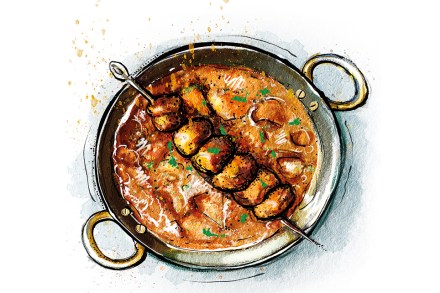
Chicken tikka masala has become something of a joke. When, in the late 2000s, it was topping lists of the nation’s favourite dishes, its popularity was seen as an indictment of British cuisine: we nick stuff from other cultures, strip out its character and call it our own. This is all deeply unfair: chicken tikka masala is a fantastic, aromatic dish that has earned its place in British culinary history. But there is an element of truth to some of the accusations. Chicken tikka masala is indeed a curry which probably was invented in the UK to appeal to British palates. It is mild and creamy, much more so than most authentically Indian curries.

With Tom Athron

From our UK edition

30 min listen

Tom Athron is the CEO of luxury brand Fortnum and Mason, a position which he undertook during the pandemic having held senior roles at John Lewis and Waitrose. On the podcast he talks about his earliest memories of food, the produce he grows in his vegetable patch and what makes Fortnums so special.

The life lessons of making lamingtons

From our UK edition

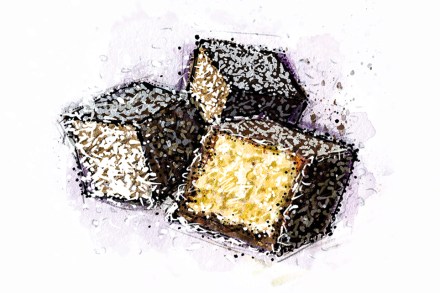
A confession: I don’t like being messy. I think this is something of a failing in a home baker, but I can’t deny it. I can’t stand dough on my hands. I don’t like getting buttercream on myself when I ice a cake. I love arancini, but my God, the mess! I might as well breadcrumb my own hands. It’s not that I’m a neat freak (I wish), I just don’t like being sticky. So in some ways, lamingtons are my worst nightmare. Because, as I have learned, there is no way of making these cakes without getting a bit messy. Lamingtons, the (unofficial) national cake of Australia, are little cubes of sponge cake coated in a thin chocolate sauce and tossed in desiccated coconut until they look like shag cushions.