Olivia Potts

Olivia Potts

Olivia Potts is the Guild of Food Writers’ Cookery Writer of the Year 2025. She hosts The Spectator’s Table Talk podcast and writes Spectator Life's The Vintage Chef column

Pavlova: the crumble of summer

From our UK edition

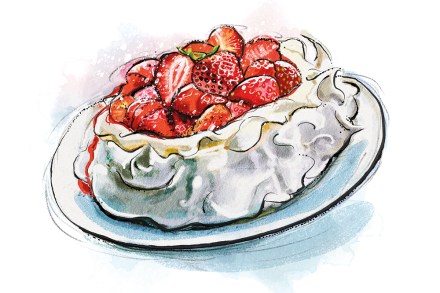
Whenever I tell someone that I’m making a pavlova the response is the same: sheer joy. Even the most fervent pudding-denier struggles to resist a slice of pav. It makes sense – fragile, crisp meringue with a tender, mallowy centre, soft waves of cream and some kind of fruit is such a brilliant combination. You can turn whatever you have to hand into a glorious, celebratory pav You don’t often see pavlovas on restaurant menus. There’s a good reason for that. A little like a trifle, part of the joy of a pavlova is that it arrives at the table looking unruffled: fruit perched perkily on clouds of cream atop a mountain of meringue. Then, as soon as the spoon hits it, it’s a mess.

With Ebru Baybara Demir

From our UK edition

23 min listen

Ebru Baybara Demir is a Turkish chef with a big dream; to introduce tourism to Mardin, a municipality in the Kurdish region of Turkey. It was a brave decision as Mardin is a city beset by terror-related security issues, boasting very little local agriculture and dealing with huge border problems due to the war in neighbouring Syria.  On the podcast they discuss the challenges of creating a restaurant from scratch, preparing and serving local delicacies and pulling together as women in a patriarchal society to make culinary dreams come true.

French tomato tart: a simple celebration of summer

From our UK edition

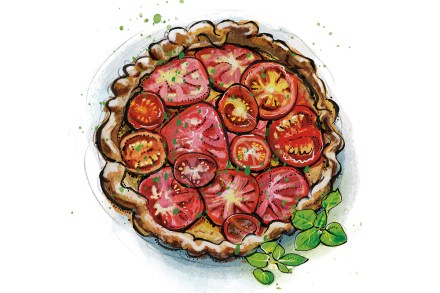
Last year, we grew tomatoes for the first time. And we did so with our characteristic enthusiasm, lack of knowledge and ignoring of instructions. So inside our raised bed we planted out radishes and beetroot, chard and kale, tenderstem broccoli and Brussels sprouts – and one very busy row of tomatoes. We didn’t let this lack of real estate hold us back, oh no. We really went to town with the tomato seedlings. Crammed ’em in. ‘You should pinch those out,’ my father-in-law, a seasoned gardener, said more than once, with a hint of panic in his voice. We did not heed his advice.

With Jimi Famurewa

From our UK edition

36 min listen

Jimi Famurewa is a British-Nigerian journalist, writer, broadcaster and food critic. In 2020 Jimi became chief restaurant critic for the Evening Standard and he has also won the restaurant writing awards at both the Fortnum and Mason and Guild of Food Writers awards. On the podcast they discuss Jimi's new book Settlers: Journeys Through the Food, Faith and Culture of Black African London, his earliest memories of food growing up in Lagos and how he came to become a restaurant reviewer.

If the choux fits: the secrets of perfect profiteroles

From our UK edition

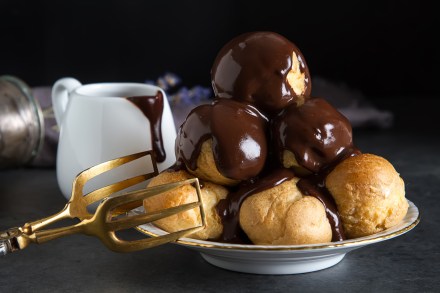
Choux pastry can inspire fear in even the most confident of cooks. There's a good reason for it: it’s difficult to give a very precise recipe for choux pastry, as the amount of egg needed to create the correct texture depends on the flour you’ve used, how long the choux has rested, and how fast and how thoroughly you have cooked the choux mixture out. It’s the water content in the egg that primarily causes the choux to rise and puff in the oven into those distinctive domes or elegant eclairs: not enough and they will fall flat, but too much and the pastry will be too sloppy to pipe properly. It’s the Goldilocks of pastry recipes. I am not unfamiliar with choux-dread.

How to make proper vanilla ice cream

From our UK edition

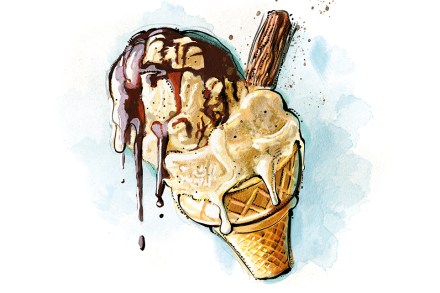
I could map out my life geographically and temporally in scoops of ice cream. From the oyster delights handed over in tracing-paper napkins from Minchella’s hatch in South Shields on the beachfront, to the little silver coupe bowls of ice cream we ordered every night on family holiday in France (always the same, one ball of pistachio, one of blackcurrant). The perfect brown-bread ice cream I had at Andrew Edmunds in Soho when I first moved to London. An elder-flower ice cream with a damson swirl that we ordered on honeymoon in the Cotswolds; a strikingly memorable blue-cheese ice cream which was the first thing I ate upon arriving in Bilbao. A red-bean ice bar we were handed as we stepped out of a sweltering day in Georgetown into a cool and calm hotel.

With Amy Newsome

From our UK edition

38 min listen

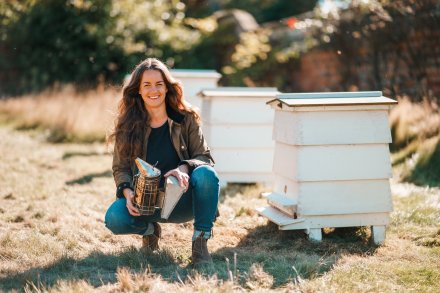
Amy Newsome is a Kew-trained horticulturalist, beekeeper and author of the new book Honey: Recipe's from a beekeepers kitchen.  On the podcast, she tells Lara and Liv how beekeeping saved her mental health, why you should always keep at least four types of honey in your pantry and details her desert island meal.

Cobb salad: a bright idea for summer suppers

From our UK edition

They do salads differently in America. Caesar salad, Waldorf salad, even their egg salads and potato salads: they’re big, they’re gutsy and often they’re the main event, not an afterthought shoved to one side. This is never more true than when it comes to the Cobb salad: a riot of colour and instantly recognisable thanks to its various components being plated in tidy rows. The dish was invented at the Hollywood Brown Derby restaurant, probably in the 1930s, and is named after the owner, Robert Howard Cobb. Stories abound as to who exactly at the restaurant was responsible for the creation: was it Robert Kreis, the executive chef; Paul J. Posti, another chef; or Cobb himself?

Yoghurt pot cake: the perfect sugary blank canvas

From our UK edition

I’m pretty easygoing when it comes to most aspects of cooking. I don’t think there’s much to be gained from being dogmatic or dictatorial. It’s just supper, at the end of the day. There are, as they say, many ways to skin a rabbit. And cooking is supposed to be about joy; it’s not an exam. But the exception is measuring ingredients for baking. Oh boy, do I get on my high horse about this. I can be very boring indeed about the need to measure accurately. The American system of cups and tablespoons drives me mad. Cups are inexact and inaccurate, they rely on scooping and sweeping, they don’t account for the varying density of dry ingredients. Scales, I will declaim – with only the slightest impetus – are inexpensive and an essential piece of kitchen equipment.

With Eddie Huang

From our UK edition

23 min listen

Eddie is an American author, chef, restauranteur, presenter and former attorney. He has recently brought his famous Taiwanese bao buns over the UK, and they are now available at Neighbourhood in Islington and Shelter Hall in Brighton.  On the podcast he tells Liv and Lara about his early memories of cooking with his mother, how to make the perfect fried rice, and the process of setting up his acclaimed restaurant Baohaus in New York.

How to make your own burger buns

From our UK edition

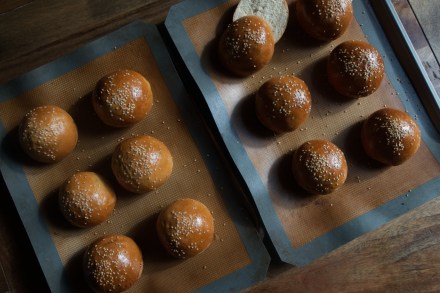
Do you ever find yourself holding forth on a topic you hadn’t realised you cared about? You know, someone asks you an innocuous question in passing about the merits of slow cookers, or the best way to grow cabbages, and before you know it, 20 minutes has passed and you're still grandstanding. There are a few topics that have crept up on me like this during my life: I have found out that I feel extremely strongly about pyjamas (pro), low-calorie cooking spray (anti) and the TV show Stars in their Eyes. And, it turns out, burger buns. I truly didn’t believe I had anything approaching an opinion on burger buns. But the moment I turned my mind to it, I realised that, to the contrary, I had very strong opinions on this apparently benign subject. So what is required of a burger bun?

Confit: the best (and most delicious) way of cooking duck

From our UK edition

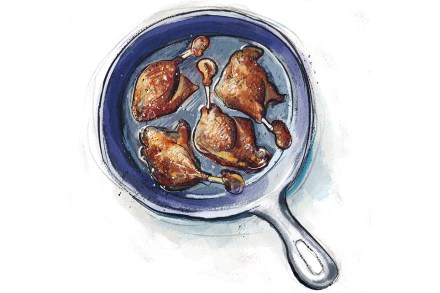
Of all the myriad ways of preserving, confit always strikes me as wonderfully improbable. The ability to preserve meat just through cooking it slowly in its own fat feels particularly wild. And the fact that this simple, unlikely process makes the meat more tender, more flavoursome than any other way of handling it only adds to the magic. Of course, if I pause for a moment and engage my brain, it’s very obvious why it’s such a successful method: most preservation relies on salting to reduce water levels, or excluding oxygen from the preserved food, both of which prevent bacteria from growing. Duck confit takes a belt and braces approach. The duck is salted (and sometimes spiced) for 24 hours – and once cooked, it is entirely submerged in fat, which protects it from air.

With Sarah Woods

From our UK edition

28 min listen

Sarah Woods is an author and cook, who left her corporate job behind to pursue her real passion after reaching the final of BBC1's Best Home Cook 2020. Her first cookbook, Desi Kitchen, has recently been released.  On the podcast she tells Liv and Lara about her upbringing in a Punjabi household and how she was inspired by Desi communities around the UK.

Alison Roman: ‘My desserts are consistently imperfect’

From our UK edition

Alison Roman’s cooking is a counsel of imperfection. She serves dinner late (fine, as long as you have snacks), gets her guests to pitch in on the washing up and won’t make her own ice cream – ‘it simply will never be better than what you can buy, sorry’. ’Her ‘pies leak, cheesecakes crack and pound cakes are pulled from the oven before they’re fully baked. Lopsided and wonky, occasionally almost burned, unevenly frosted, my desserts are consistently imperfect’. In her new book, Sweet Enough, Roman wants to free the home cook from the dessert ties that bind them. ‘My hope for you,’ she tells her reader, ‘is that you strive for the animalistically irresistible, not aesthetically pristine’. The two, she finds, are ‘rarely the same’. ‘Baking is annoying.

With Niki Segnit

From our UK edition

35 min listen

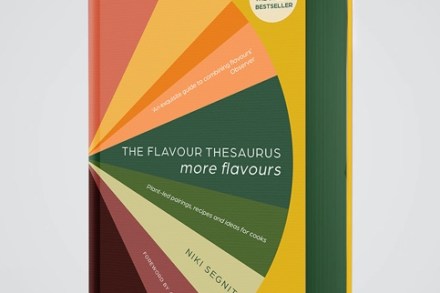
Niki Segnit is the author of the hit cooking books The Flavour Thesaurus and Lateral Cooking. Her new book The Flavour Thesaurus more flavours: Plant-led pairings, recipes and ideas for cooks, is out this Thursday 11th May. On the podcast she speaks to Lara and Liv about weird and wonderful flavour combinations, her childhood fascination with Oxo cubes and why she has gone plant-led for her new book.

Charlotte Royale: a celebration cake fit for a king

From our UK edition

The big bank holiday weekend is about to begin. You’ve made that spinach and broad bean quiche. The bunting’s ready for your street party. You’ve crafted a coronation drinking game. But there’s something missing, isn’t there? An itch that just needs to be scratched. Where’s the pizazz? Where’s the cake? As the oft-misattributed quote goes: a party without cake is just a meeting. I know, I know: a quiche can be fun, but is it celebratory? No, what we need is a good old over-the-top, lily-gilded showstopper of a cake, that you can cut into with appropriate levels of pomp and circumstance. And, boy, do I have the pudding for you. It’s hard to think of a more appropriate pudding to celebrate the coronation of a King called Charles than a Charlotte Royale.

Yorkshire puddings: is there anything as satisfying?

From our UK edition

My mother, a Yorkshire woman, would occasionally take shortcuts in the kitchen, but not when it came to a roast, and certainly not when it concerned a Yorkshire pudding. She even owned a specific Tupperware shaker for the job: like a plastic cocktail shaker, in 1970s orange colour, with a propellor insert, and a lidded pouring spout. The batter would be prepared in this shaker and handed to anyone foolish enough to pass through the kitchen, and woe betide anyone who stopped shaking before they were so instructed. There are few things more satisfying than filling a perfect Yorkshire pudding with gravy I didn’t inherit my mother’s Yorkshire pudding shaker, but I make do with a vigorous whisk and then a short rest.

With Guy Tullberg

From our UK edition

25 min listen

Guy is the managing director of The Tracklements Company, providers of artisan chutneys, relishes and preserves, all made in small batches and to traditional recipes.  On the podcast they talk about the joys beef dripping on toast, the thriving food scene in Wiltshire and Guy's desert island meal.

Womb service: the politics of surrogacy

From our UK edition

37 min listen

On this week's episode: In her cover piece for The Spectator, journalist Louise Perry questions whether it is moral to separate a newborn child from their surrogate. She is joined by Sarah Jones, head of SurrogacyUK and five time surrogate mother, to debate the ethics of surrogacy (01:07). Also this week: In the books section of the magazine Olivia Potts reviews several recent books all of which seem to warn against the dangers of our food system and what we are eating. She is joined by Henry Dimbleby, author of Ravenous: How to Get Ourselves and Our Planet Into Shape, to ask if anything is safe to eat these days (14:29).

Is there anything safe left to eat?

From our UK edition

The chapter headings alone are enough to induce a panic attack: ‘Disrepair – how modern diets harm brain health in childhood, adolescence and young adulthood’; ‘How ultra-processed food hacks our brains’; ‘How solving the last crisis in the food system caused the current one’. It’s not a new thing for books examining our food system to be doom-laden, but there has been something of an avalanche of them recently. Within the space of a couple of months we have had four, which may discuss different aspects of how our food is produced, but when it comes to the effects are as one: this is a manmade problem, and without serious intervention the future is bleak for humanity and the Earth. It can all induce apathy, even nihilism – and it’s hard not to feel berated.