Olivia Potts

Olivia Potts

Olivia Potts is the Guild of Food Writers’ Cookery Writer of the Year 2025. She hosts The Spectator’s Table Talk podcast and writes Spectator Life's The Vintage Chef column

Carbonnade à la Flamande: give your stew a Flemish makeover

From our UK edition

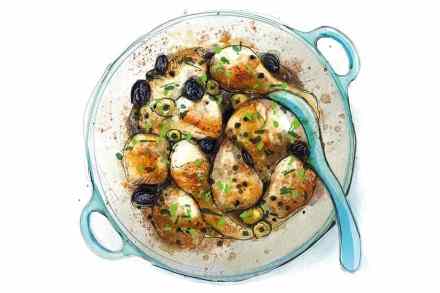
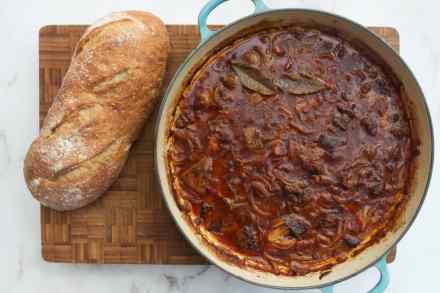
‘Casseroles,’ Julia Child wrote to her long-term penpal Avi DeVotos, ‘I even hate the name, as it always implies to me some god awful mess.’ On this, Julia and I are in full agreement: I have a real problem with the word ‘casserole’. And ‘stew’ for that matter. Both of them sound so unappetising, so school dinners. But Child and I are also aligned in our hypocrisy, because actually, deep down, I love a casserole, as long as you call it anything else. Like me, despite her vocal opposition to the casserole, Child loved bourguignons and carbonnades, coq au vin and poulet poele à l'estragon, and wrote about them with enthusiasm and appetite. Of course, all of these are casseroles, just with fancy (or specific) names.

With Grizelda

From our UK edition

24 min listen

Grizelda is an award-winning cartoonist for publications including The Spectator, the New Statesman and Private Eye. She was Pocket Cartoonist of the Year in 2018. On the podcast, she tells Lara and Liv about her brother's infamous cooking, how she comes up with ideas for cartoons, and why she only knows four recipes.

Forget London – why foodies are flocking to the North

From our UK edition

If you only read restaurant reviews, you might be forgiven for thinking that the North is a culinary wasteland: despite a few intrepid reviewers venturing further than the Watford gap, restaurant reviewing remains firmly London-centric. But there is life (and culinary prowess) beyond the outer zones of the London underground. Last month Moor Hall in Lancashire was named ‘National Restaurant of the Year’ at the prestigious Estrella Dam National Restaurant Awards. When it comes to the top spot, this is nothing new: Moor Hall has retained the top spot since 2019, when the last awards took place.

The trick to making blackberry pie

From our UK edition

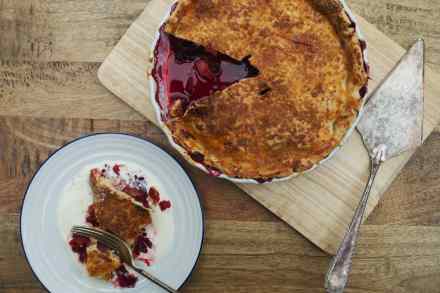
There are some fruits which, while lovely cooked, are probably at their best fresh: nectarines and peaches, raspberries, mango. But blackberries, as delightful as they are eaten fresh from the bush mid-forage, come alive when cooked. As you heat blackberries, and they break down and give up their juices, begin to smell like violets and wine. They become more complex, perfumed; their sweet-sour flavour is softened into something more elegant, even more irresistible than when fresh. Normally in a pie, those beautiful juices are a cause for concern. They’re a one-way ticket to a soggy bottom, something we try to avoid with careful blind-baking, or pre-cooking, or layering the base with something like ground almonds to soak up any liquid.

French toast: an easy-peasy bougie brunch

From our UK edition

A rose by any other name may smell as sweet, but somehow, eggy bread just doesn’t hold the same appeal as French toast, does it? The latter has become a bougie brunch dish, while the former languishes in second-hand student cookbooks. At heart, they’re the same thing: slightly stale bread soaked in an egg-based custard, then fried. Whatever pretensions French toast may have (and however delicious it might be), its origins are a cheap dish that improves and extends the life of stale bread with just a couple of eggs and a knob of butter.

With Ed Balls

From our UK edition

18 min listen

Ed Balls is an acclaimed broadcaster, writer, economist, professor and former politician who served as shadow chancellor from 2011 to 2015. On the podcast, he tells Lara and Liv about the importance of Sunday lunches growing up, his long history of making bespoke children's birthday cakes and the times he turned his campaign team into a makeshift kitchen staff. All this and more is documented in his new book Appetite, out now.

Jam Roly Poly: why it’s time to revive this retro pudding

From our UK edition

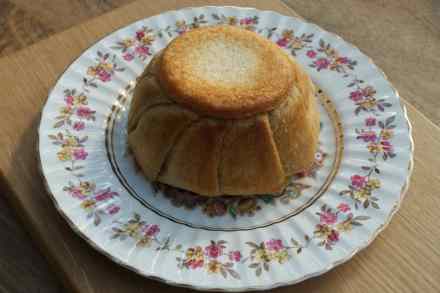
More than new pencil cases, name tapes, and the smell of school halls, back to school season always makes me think of proper puddings. There’s a category of pudding that seems reserved for properly old cookbooks, a handful of old-fashioned pubs, and dinner ladies. Spotted dick, cornflake tart, and jam roly poly. Perhaps its ubiquity at school lunches accounts for its ghoulish alias: dead man’s leg or dead man’s arm. School children have a taste for the macabre, but to be fair to them when the pudding is unwrapped and before it is sliced, it does look fairly uninspiring, and not a hundred miles away from a pallid limb. This probably wasn’t helped by the fact that, before baking parchment and foil were widespread, the pudding would be steamed in a shirtsleeve.

French connection: how to make cherry clafoutis

From our UK edition

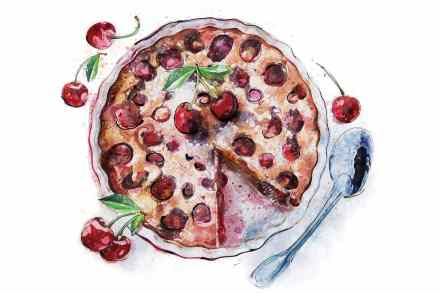
My daydreams at the moment follow a predictable theme. I am on holiday somewhere balmy, with a carafe of cold white wine in front of me. Someone handsome has just brought me a large bowl of salted crisps, unbidden but very welcome, and the greatest responsibility I have is finishing the book that I’m reading. The reality has been a little more prosaic. I am at my Manchester dining table, nursing a cold cup of tea, as the rain falls so heavily it’s like sitting in a drum. I’m sure I’m not alone: changing rules, quarantines, vaccination certificates, or simply the sheer weight of anxiety mean that the majority of us have spent this summer in the UK. I would give my eye teeth for a proper holiday. If I could choose, I’d be in France.

The surprising history of Garibaldi biscuits

From our UK edition

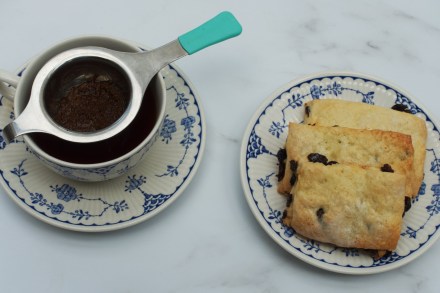
I’m not sure that many people would choose the unassuming garibaldi as their favourite biscuit. Garibaldis aren’t flashy: there’s no luxury chocolate, no pretty, brightly-coloured icing, no fancy-pants shapes. They aren’t squidgy, trendy cookies, or wholesome buttery shortbread. In fact, they’re often called squashed-fly biscuits because the currants baked into the dough resemble, well, squashed flies. And yet, they persist. Garibaldi biscuits have stuck around for 150 years, outseeing fads and fickle consumers, keeping their place on supermarket shelves for longer than almost any other biscuit. The biscuits have an unlikely namesake: Giuseppe Garibaldi, an Italian General, who fought for Italian unification.

With Charlie Stebbings

From our UK edition

41 min listen

Charlie Stebbings is an acclaimed food director and photographer. On the podcast, he talks to Lara and Liv about photographing M&S's melt in the middle chocolate puddings, treating himself to baked beans and red wine and measuring mayonnaise from a syringe.

Jamón Croquetas: an oozing Spanish entrée

From our UK edition

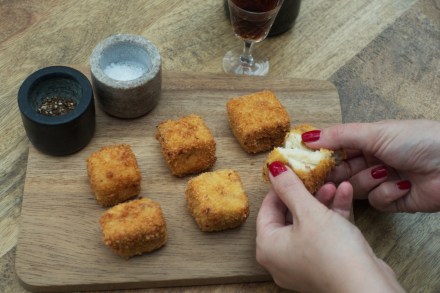
Being deeply unchic and uncosmopolitan, for a long time I assumed that croquetas were the same as the croquettes of my childhood: potato-based, probably a bit bland, and almost certainly coming from a bag that lives in the freezer. We’d often have them served with roast ham and cider sauce and green beans, as part of a main meal. To be fair to me and my culinary shortsightedness, the two bear strong similarities: both are breadcrumbed and fried or baked, soft within, and similarly shaped and sized. But, to my mind, croquetas are several levels above the French/English potato variant. Of course, Spanish croquetas don’t contain potato at all. The filling is made from a thick, thick bechamel sauce: a flour and butter roux cooked with milk to form a sauce.

The secret to mastering strawberry ice cream

From our UK edition

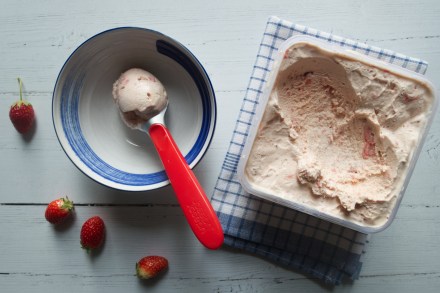
When I was first playing about with the recipe, the sun was shining. Every day was hotter than the last, and I found myself seeking out dishes that were cooling, that were fresh, and made me feel like I was on holiday. Looking ahead to when this recipe might go out I was fairly confident that it would hit the right note at the height of summer: July might have a damp day here and there, but overall, it seemed a relatively safe bet for days and nights of heat, the kind of time where there’s a sudden run on paddling pools, and ice cream becomes near medicinal. But as I write this, August is letting me down. The early summer spells have vanished and it is looking distinctly autumnal outside the window. My neighbour has just run past the window in a raincoat.

Tres leches cake: a soaked pudding straight from Latin America

From our UK edition

I confess, the idea of a tres leches cake did not initially appeal to me. A dry sponge soaked in a variety of tinned milks sounds, at best, like bland nursery food and, at worst, tooth-achingly saccharine. ‘Milky’ has never been one of the words that I hope to see in connection with anything other than ‘coffee’ or ‘Way’. But I saw it likened to trifle and curiosity got the better of me – and I’m so glad it did. Actually, a tres leches cake is not terribly like a trifle at all, although I can see where the comparison came from. Soaked puddings are nothing new, and that’s really what a tres leches cake is.

With Rory Bremner

From our UK edition

26 min listen

Rory Bremner is one of Britain's leading comedians, impressionists and political satirists. On the episode, he tells Lara and Liv about his first impression (of a school history teacher), doing shows with Ainsley Harriott, getting stuck in a storm in Turkey at the same time as Betty Boothroyd, and helping refugees and asylum seekers through food.

Watercress soup: the lunch that keeps on giving

From our UK edition

I’m normally averse to leftovers: it’s not a trait I like in myself. I’d far rather be able to eat the same thing for days on end, especially when it’s seasonal veg, or an enormous, hearty stew that I’ve spent ages making. It’s a sensible way of cooking: healthy, seasonal, cheap, time-saving. But I’m easily bored, and the best laid plans of mice and men the night before, clingfilmed or tupperwared up, no longer appeal the following lunchtime. I end up parcelling those thoughtful, carefully prepared dishes onto my husband and plumping instead for so-called novelty in the form of toast, or a sandwich. For some reason, soup is the one dish that doesn’t suffer this fate.

Bath buns: just the right amount of sweetness

From our UK edition

I am always slightly nervous about presenting recipes which are distinctly regional: locals tend to be fiercely defensive, proprietary even. about how their particular delicacy should be made and enjoyed. Devon and Cornwall have long been engaged in a battle as to whether cream or jam comes first on their otherwise very similar scones (personally, if you’re offering me a freshly made scone, loaded up with delicious things, I have absolutely no interest in the order of their piling), and the Cornish are so protective of their eponymous pasty, that they campaigned for years for it to receive Protected Geographical Indication, meaning that it must be manufactured in Cornwall.

With Molly Baz

From our UK edition

35 min listen

Molly Baz is a cook, recipe developer, video host, cookbook author, and a self proclaimed weenie lover. On this episode, Molly talks to Lara Prendergast and Olivia Potts about her food revelation with an Italian house-mother in Florence, her time working for Bon Appetit and about her new cook book COOK THIS BOOK, which revolutionises the medium by adding easy to access how-to videos to watch as you cook.

Spanakopita: a forgiving pie full of Greek flavour

From our UK edition

There are few things more comforting than a pie, but often that level of comfort is directly proportional to the amount of effort required to make it. Pastry bases that must be prepared, then chilled, lined, blind baked and re-baked; fillings that require pre-cooking, or sauces that need thickening. Not so with spanakopita. Spanakopita is a Greek cheese and spinach pie, encased in several layers of filo pastry, each sheet painted with butter or oil; once baked it is golden brown and crisp on the outside, and soft inside, fresh from the herbs, and rich and salty from the cheese. Filo is forgiving and easy to handle, the butter-brushing smoothing the filo into your pie dish, as well as bringing colour and flavour.

Refrigerator cake is cold, easy and delicious

From our UK edition

I don’t know about you, but my brain has felt like soup for the last week. If I were to see you in real life, I would probably say to you ‘My brain feels like soup; does yours?’ and then ten minutes later I’d ask the same question, because my brain is soup and I am incapable of normal human behaviour. I am, it turns out, not made for heat. Or at least, not made for it in a context where I’m required to work and commute and make decisions and reply sensibly to emails, rather than lie in the shade on a sun lounger reading a trashy book until it’s time to go out for dinner and cocktails. In England we are simply not made for such scorching temperatures.

Olivia Potts, Rory Sutherland and Tanya Gold

From our UK edition

14 min listen

On this week's episode, Olivia Potts says angry chefs could soon get their comeuppance. (00:56) Then, Rory Sutherland says over-qualification is leading to collective idiocy. (06:28) And finally, Tanya Gold wonders why people eat lobsters.