Olivia Potts

Olivia Potts

Olivia Potts is the Guild of Food Writers’ Cookery Writer of the Year 2025. She hosts The Spectator’s Table Talk podcast and writes Spectator Life's The Vintage Chef column

The sweet satisfaction of a burnt Cambridge cream

From our UK edition

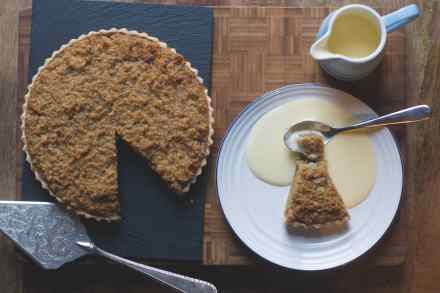
If a rose by any other name would smell as sweet, then a Trinity or Cambridge burnt cream must taste as sweet as its French twin, the crème brûlée. The two cooked custard dishes are essentially identical: an egg yolk-rich baked custard served cold and topped with a layer of hard caramel. Both are similar to the crema Catalana you find throughout Spain (known as ‘crema cremada’ in Catalan cuisine), but Catalana is made with milk rather than cream. It means it is lighter, and tends to have a thinner, paler caramel layer. Lemon or orange zest and a cinnamon stick are often used as flavouring for the Spanish pudding, whereas a burnt cream or crème brûlée is traditionally only flavoured with vanilla.

With Andy Burnham

From our UK edition

24 min listen

Andy Burnham has served as Mayor of Greater Manchester since 2017. Before this he held prominent positions in Gordon Brown's cabinet, including health secretary and culture secretary.On the podcast he recalls Friday night 'chippy teas' as a child, the oddity of having food items named after him and discusses his work tackling food insecurity in Greater Manchester.

Fit for a king: kedgeree is the most regal of all Anglo-Indian dishes

From our UK edition

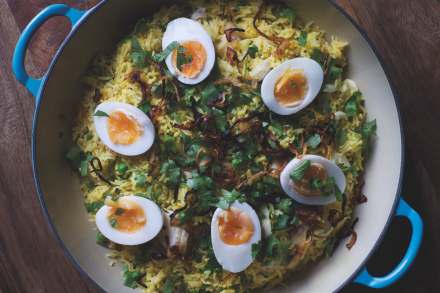
How does the saying go? ‘Eat breakfast like a king, lunch like a prince and dinner like a pauper.’ Well, if you’re looking for the highest possible status of breakfast, then kedgeree is the dish for you. Bran flakes just don’t quite scratch the same itch. Kedgeree cannot be casual; it requires time, both for preparation and enjoying, and it makes breakfast an occasion. It came to our breakfast tables (or mahogany sideboards) in Victorian times, brought back to Britain by returning colonial officers. It was served in silver chafing dishes, set alongside steaming urns of porridge. Kedgeree is a rice-based dish, flavoured with curried spices and cooked with smoked haddock, onions and boiled eggs.

With Oliver Woodhead

From our UK edition

24 min listen

Oliver Woodhead is founder of L'Entente, the British brasserie in Paris. On the podcast, he tells Lara and Liv about what the French think about a traditional English breakfast, explains how he was inspired by London's St. John restaurant, and asks what our hosts' favourite ingredient is.

The ultimate chicken pie recipe

From our UK edition

Laurie Colwin wrote: ‘No one who cooks, cooks alone. Even at her most solitary, a cook in the kitchen is surrounded by generations of cooks past, the advice and menus of cooks present, the wisdom of cookbook writers.’ It is one of my favourite quotes about cooking, mainly because it feels true: everything you cook is informed by other dishes, those that you’ve cooked, those that you’ve tasted or read about, the successes and the failures. In quiet moments of kitchen solitude, it is reassuring to know that there is an army of cooks behind me, each offering their experience, their recipes and books, a hand to hold when I feel uncertain. I never feel the truth of Colwin’s words more than when I’m making a chicken pie.

I’ve finally learned to love baked cheesecake

From our UK edition

I used to be a baked cheesecake sceptic: I didn’t feel they were worth the effort when other cheesecakes required you simply to stir together some ingredients and bung them in the fridge. My thinking was: why waste your time? Was the result really worth the extra effort? In turns out that yes, it was. It is. I just hadn’t ever eaten a really good cheesecake. That changed on a visit to San Sebastián. La Viña is a small bar and restaurant serving pintxos (the Basque version of tapas), but it is best known for its ‘burnt’ baked cheesecake. Inside, you feel as though you’re in a cheese shop that has recently suffered a fire: the walls are lined with shelves on which sit rows of cheesecakes, slowly cooling in their charred baking-parchment wrappers.

How to make a true apple strudel

From our UK edition

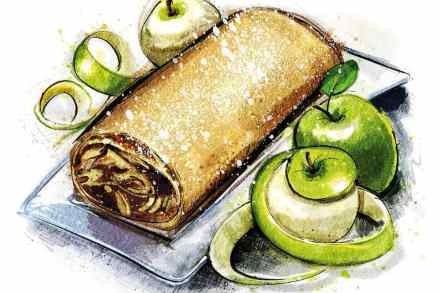
It’s possible that, like me, your first encounter with the Grande Dame of the Austrian pastry world, the apfelstrudel, was not in fact in one of the famed Viennese grand cafés, but rather from the freezer aisle at the supermarket. If it was anything like mine, it was probably a latticed, puffed version; the one I remember from childhood had blackberries mixed into the apple, which peeked through the holes in the pastry. I have no interest in denigrating our Sunday lunch pudding staple. In fact I loved it, served with thick, cold custard, straight from the carton. But it is fair to say that a true apple strudel is a little different. Strudels – meaning a filled, enclosed layered pastry – can be sweet or savoury, but the apple version is by far the most famous.

With Al and Kitty Tait

From our UK edition

25 min listen

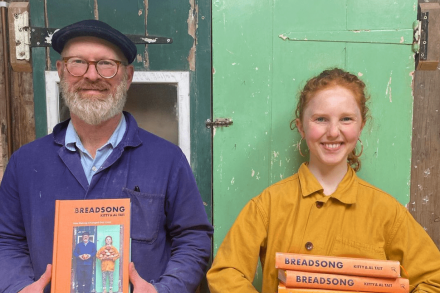
Al and Kitty Tait run the Orange Bakery in Watlington, and are the authors of Breadsong: How Baking Changed Our Lives. On the podcast, the father-and-daughter pair explain how cooking changed their relationship, why baking helped Kitty out of depression, and why Watlingtons make such great customers.

The politics of butter

From our UK edition

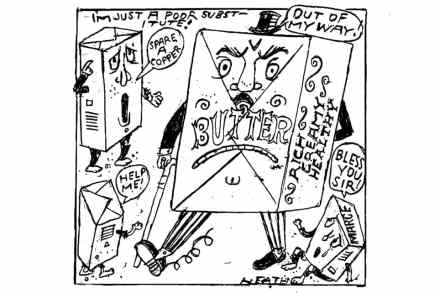
Butter was not a major part of my childhood. In fact, I don’t remember it ever being in our fridge. My parents were subject to the saturated fat scaremongering of the 1980s, and consequently believed that butter was the enemy. Instead, we had spread: margarine, rebranded as a cholesterol-busting alternative to heart-clogging butter. But spread wasn’t so bad. It lubricated my sandwiches and melted on my toast. Spread was everyday. Butter was for high days and holidays. Otherwise, we were all certain to die young. Butter has always been a bellwether of the British psyche. We want luxury, but only every so often, and only so much – and we don’t want to pay too much for it.

Sole Véronique: there’s no need to fear fish and grapes

From our UK edition

One of the joys of writing about old-fashioned food is coming across dishes that are new to me, and turn out to be such a delight that they gain a recurring role in my cooking. Of course, some I’ve encountered were already among my established regulars – boeuf bourguignon, coq au vin. Others were childhood staples – shepherd’s pie, proper rice pudding. But a few of the dishes I take into my kitchen to work with I’ve never even tried before. The first recipe I wrote for The Spectator was for blancmange. Having grown up during the brief period when milk jelly was fashionable, I’d avoided blancmange like the plague. I was sure it must be rubbery, flavourless and a bit, well, creepy.

With Paul Feig

From our UK edition

25 min listen

Paul Feig is an actor, comedian and acclaimed filmmaker. He has directed films such as Bridesmaids, The Heat and the 2016 remake of Ghostbusters as well as episodes of Parks and Recreation and The Office.  On the podcast, Paul talks to Lara and Olivia about growing up thinking food was bland, the secrets of on set catering and how to make the perfect Martini.

How to poach peaches (and why you should)

From our UK edition

I’ve never been very good at leaving things be. I tend to gild the lily. I may plan to do something simple, but I always find myself adding to it, primping, faffing. This is true in every area of life, but never more so than when I’m cooking. For that reason, this time of year can make me a little uncomfortable. When summer arrives in earnest – as opposed to those brief, misleadingly sunny weekends of late April and mid-May – we are inundated with beautiful fresh fruit. Right now, it’s strawberries, gooseberries, peaches and cherries; raspberries, blackcurrants and figs are just around the corner. And we are told over and over that it is impossible to improve on ripe, raw fruit, fresh from the tree.

With Aidan Hartley

From our UK edition

23 min listen

Aidan Hartley is a writer and entrepreneur. Born in Kenya, he grew up in Africa and England and has worked as a reporter for Reuters all over the world. Aidan has also written The Spectator’s Wild life column for the past 21 years. On the podcast, Aidan talks about spending his younger years on safaris in the wilderness, where mealtimes consisted of handfuls of rice cooked from metal tins on an open fire.As a reporter, he talked about reporting on famine in Somalia and why that led him to where he is now – living on a remote family farm, as a disciple of John Seymour’s guide to self-sufficiency.

How to turn your pineapple into a showstopper

From our UK edition

You can’t please me: the grass is always greener. I spend the summer months longing for a time when crumbles and stew, cardigans and the big duvet, are not only welcome but required. Then as soon as we hit the autumn and the weather changes, I’m trying to hold onto the last vestiges of sunshine. This, I suppose, is as close as I can get to a compromise, a middle ground: pineapple, peeled but whole, still sporting its Sideshow Bob haircut, roasted until cooked all the way through, and caramelised on the outside. Served hot with ice cream, or boozy cream, and drizzled with the spicy, dark glaze that drips off during cooking, it captures all the flavours of summer and yet still delivers warmth.

With Thom Elliott

From our UK edition

33 min listen

Thom Elliott is the co-founder of Pizza Pilgrims. On the podcast, Thom tells Lara and Liv about growing up above a pub, learning to make pizza while touring Italy with his brother, and starting Pizza Pilgrims on his lunch break.

Greek salad: the ultimate heatwave dish

From our UK edition

Good lord, it’s hot. I mean, really, really hot. Right now, the heat is so overwhelming as to feel like it is tangible, as if you could reach out and touch it. All we’re capable of talking about is the heat; any other polite conversation is too much for our fried brains. Normally, when our annual heatwave hits, I proffer some halfway house of a recipe: a dish that only needs the hob, not the oven, or is sufficiently refreshing or brightening that it justifies the added kitchen heat. But, this year, even that compromise seems unmanageable.

Sundae best: how to make a knickerbocker glory

From our UK edition

I grew up by the seaside. More precisely, I grew up near South Shields, on the north-east coast – somewhere which is British summer beach country for one, maybe two days a year, and salt-lashed and grey for the rest of it. But come rain or shine, ice cream is a permanent fixture. Ice cream was such an important part of life that the first school trip I ever went on, aged three, was to an ice-cream factory. I remember being handed an ice cream as big as my (admittedly then quite small) head, and vehemently declining the bright red sauce offered, known locally as ‘monkey blood’. A kindly nursery nurse reassured me it was just raspberry sauce, but I simply wasn’t taking the risk.

With Lily Dunn

From our UK edition

19 min listen

Lily Dunn is a writer, teacher and lecturer in creative writing and narrative non-fiction at Bath Spa University. Her latest book Sins of my father: a daughter, a cult, a wild unravelling is out now. On the podcast, Lily talks about her first memories of picking blackberries in Cornwall, her love for all kinds of toast and her culinary experiences in Italy.

Lemon drizzle cake: how to bring out the zing

From our UK edition

Call it nominative determinism, but a lemon drizzle cake is perfect for disappointing, drizzly weather. It’s cheering: brightly flavoured, and packed with zest, but still comforting, filling your home with a warm citrus scent as it bakes. It’s also a more enjoyable food-based activity than picnics or barbecues when winds are high. A lemon drizzle cake is really just a pound cake – equal quantities of butter, sugar, eggs and flour – that’s then spritzed up with zest and juice. But it’s a pretty glorious one, managing to be both zingy and sweet, light and sticky.

The trick to making good focaccia

From our UK edition

Focaccia is one of my favourite breads: glossy and golden on top thanks to the olive oil, but firm and crisp, with a chewy, aerated, oil-soaked crumb with a real spring. You should be able to squish a good focaccia with your hand and watch it slowly rise back up to its former glory. Focaccia’s a brilliant bread to make if you’re a little nervous of yeast and dough: the ‘shaping’ of focaccia is far easier than that of a traditional loaf, or even a ciabatta or baguette. To make focaccia, you spread your dough out in a tin – an imprecise art – and then paddle it with your fingers, creating divots and dimples.