Nicholas Shakespeare

At the beginning of the second world war, Winston Churchill seemed a most unlikely hero

From our UK edition

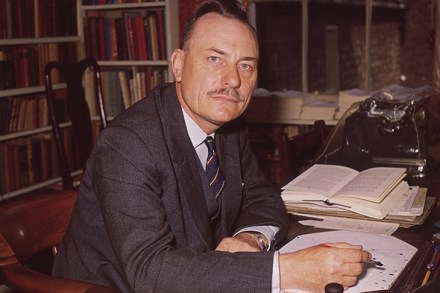
Removed from banknotes, his statue sprayed with graffiti, blamed for Gaza, the Bengal famine, the deaths of millions, Churchill no longer sits comfortably aloft his ‘pinnacle of deathless glory’, as he wrote of Alfred the Great. In the parlance of the late Martin Amis, it’s as if our national hero’s trusted barber at Truefitt & Hill has given him a brutal rug-redo. A further clipping to his reputation is Simon Matthews’s study of his ‘poor record’ at the Admiralty between September 1939 and May 1940 – i.e. just before he becomes ‘Peak Churchill’. Viscount Stuart famously overheard Churchill reply to a questioner pressing for awkward details ‘Only history can relate the full story’, adding after the right pause: ‘And I shall write the history.
Charles Darwin’s contribution to Patagonia’s grim history

From our UK edition

It was a journey Bruce Chatwin hankered to make: to Southampton and the grave of General Juan Manuel de Rosas, the exiled Argentine dictator described in the Southampton Times after his funeral in 1877 as ‘one of the most cruel, remorseless and sanguinary tyrants who ever existed on Earth’. Chatwin died before I could accompany him to the Hill Lane Cemetery, but four years later I stood with his widow in front of Rosas’s ornamented tomb in Buenos Aires as we prepared to meander south on a 2,000-mile car journey in his footsteps. In 1989, the year of Chatwin’s death, President Menem decided to have Rosas’s remains repatriated as a gesture of national reconciliation. Their arrival was greeted by mounted lancers wearing Rosas’s signature red uniform.

A war of words: circulating forbidden literature behind the Iron Curtain

From our UK edition

If James Bond, now in American hands, re-emerges refreshed as an agent of the CIA, then it will be a homecoming of sorts, given that his creator played a role in drawing up the blueprint for America’s first foreign intelligence service. In May 1941, Commander Ian Fleming sat down in Washington with Colonel William (‘Wild Bill’) Donovan to sketch out an agency modelled on British naval intelligence. Under Donovan’s stewardship, this became the Office of Strategic Services and, in 1947, the CIA. The two men got on well and were not afraid to try things that had not been tried before.

Nicholas Shakespeare: The Complete Man

From our UK edition

52 min listen

In this week's Book Club podcast, my guest is Nicholas Shakespeare, author of Ian Fleming: The Complete Man. He tells me about the astonishing secret life of a writer whose adventures in espionage were more than the equal of his creation's; and about the damaged childhood and serially broken heart of a man far kinder and more sympathetic than his biographer had ever suspected.

The great awakening: Henry Shukman becomes a child of the universe

From our UK edition

For eight years I rented a small house in Oxford overlooking the canal. The landlord, a poet and novelist younger than myself, had moved with his family to New Mexico. At his desk I managed to write three books, beneath shelves containing editions of his work. I can’t explain why it took me so long to reach up and open those books, but when I finally did, it was extraordinary to discover how similar were our trajectories: same prep school and university; two young sons; novels set in North Africa and Peru; a gap year working on an Argentine estancia. Until that moment, I had cultivated a self-protective disconnect with my landlords, hardly unique, indeed part of a tradition — rather like V.S. Naipaul behaved towards Stephen Tennant when living in Wilsford.

The making of a monster: Paul Kagame’s bloodstained past

From our UK edition

In June, Commonwealth heads of government will meet in the Rwandan capital Kigali, a city advertised by their Tutsi host, the 63-year-old Paul Kagame, as ‘the Davos of Africa’. Kagame, Rwanda’s de facto leader since 1994 — and boasting more honorary degrees than Barack Obama, although he never finished high school — has become the ‘donor darling’ of the international community. He is why the World Bank has donated in excess of $4 billion, and why, until recently, the biggest bilateral donor has been the UK. ‘As far as I’m concerned,’ says the Tory MP Andrew Mitchell, ‘he is a hero for ending the violence.’ Michela Wrong is a British authority on Africa who begs to differ.

The man who hunted himself

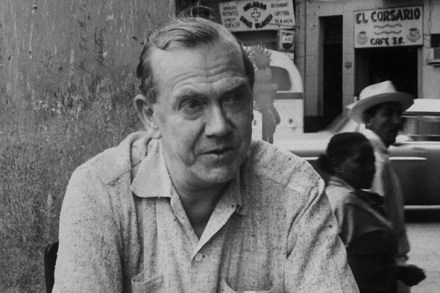
The death of Joseph Conrad made Graham Greene feel, at 19, sitting on a beach in Yorkshire, ‘as if there was a kind of blank in the whole of contemporary literature’. Greene’s own death in 1991, aged 87, had a similar effect on many younger writers, myself included. For John Le Carré, his most obvious successor, Greene had ‘carried the torch of English literature, almost alone’. His cool fugitive presence, in Martin Amis’s phrase, had been there all our reading lives. In an age of diminishing faith, he had used Catholic parables in a way that lent them a power beyond their Biblical origins, mining the Gospels rather as Le Carré has mined the Cold War.

greene

Nicholas Shakespeare: remembering John Le Carre

From our UK edition

36 min listen

In this week's Book Club podcast, we remember the great John Le Carre. I'm joined by one of the late writer's longest standing friends, the novelist Nicholas Shakespeare. He tells me about Le Carre's disdain for - and debt to - Ian Fleming, his intensely secretive and controlling personality, his magnetic charm, his thwarted hopes of the Nobel Prize... and why at the end of his life he acquired an Irish passport.

The paradox of Graham Greene – searching for peace in the world’s warzones

From our UK edition

Joseph Conrad’s death made Graham Greene feel, at 19, sitting on a beach in Yorkshire, ‘as if there was a kind of “blank” in the whole of contemporary literature’. Greene’s own death in 1991, aged 87, had a similar effect on many younger writers, myself included. For John le Carré, his most obvious successor, Greene had ‘carried the torch of English literature, almost alone’. His cool fugitive presence, in Martin Amis’s phrase, had been there all our reading lives. In an age of diminishing faith, he had used Catholic parables in a way that lent them a power beyond their biblical origins, mining the gospels rather as le Carré has mined the Cold War.

Novel explosives of the Cold War

From our UK edition

One autumn night in 1991, I stood on the rooftop terrace of a tacky villa in Saranda once owned by Albania’s Stalinist dictator Enver Hoxha, beside three elderly former SOE officers who were returning to Albania for the first time since 1945. In an image that summed up the waste and the horror of the Cold War, David Smiley stared out over the dark water at the lights of Corfu, from where, on a similar night in October 1949, he had sent a group of dissidents, code-named the ‘Pixies’, to launch an insurgency — and wiped his eye in silence. Smiley’s men had been ambushed as they landed, and then killed, on the tip-off from Kim Philby, the highest Russian agent to infiltrate British Intelligence, and in charge of anti-communist espionage.

The thoughts of Chairman Gonzalo

From our UK edition

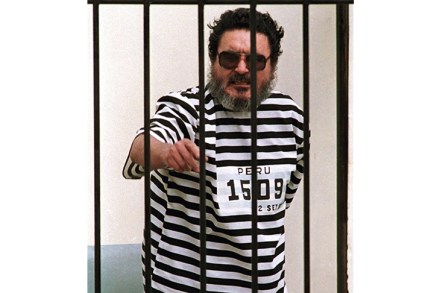
Few Peruvians today are interested in ‘the Shining Path years’, which left no traces besides 70,000 mutilated bodies and a wrecked country. Modern Lima, by and large, is a thriving city of five-star restaurants, shopping malls and newish Toyotas. Yet between 1980 and 1992 it was a vile and violent place, under siege from a revolutionary movement that modelled itself on Mao, Pol Pot and Enver Hoxha, and which venerated its leader as these men’s planetary heir. If anything, Sendero Luminoso was a precursor of Isis, with its child-suicide bombs, its rigid code of secrecy and its cultish devotion to a short, bearded, chubby figurehead who believed that ‘violence is a universal law’.

Sun, sea and spooks

From our UK edition

Cuba meant a lot to Graham Greene. Behind his writing desk in his flat in Antibes he had a painting by the Cuban artist René Portocarrero, presented to him by Fidel Castro, who had signed his name on the back, so that Greene didn’t know which way to hang it. Another prize possession was a tatty Penguin copy of Our Man in Havana, kept together by Sellotape, which the Russian cosmonaut Georgy Grechko had read in outer space, and in which, while circumnavigating our planet, Grechko had underlined the places in Havana that he had visited. ‘I’ve been reading it all my life, both on earth and in space,’ he wrote in his inscription when presenting the paperback to Greene in 1985. ‘I’ve learned it by heart.

The name’s Sorge, Richard Sorge

From our UK edition

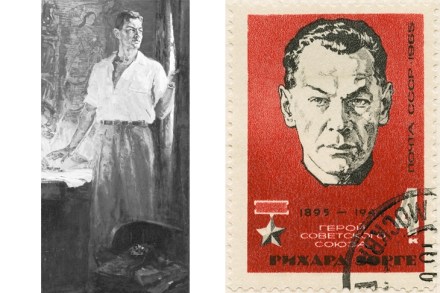
Interviewed on the Today programme on 7 March, a former executive of the gigantic Chinese tech firm Huawei admitted: ‘It is the nature of humanity to spy, to conduct espionage.’ A gold-plated incarnation of this impulse is the tall, craggy-faced German journalist who was arrested in his pyjamas in his Tokyo house in October 1941. ‘I am a Nazi!’ he insisted to the Japanese police, who, before entering his study, had politely removed their shoes. On the sixth day of his interrogation, he finally broke. He raised his vigilant, deep-set blue eyes, which could have charmed the whiskers off Blofeld’s cat, and said: ‘I will confess everything.

Voices from the recent past

From our UK edition

Interviews, like watercolours, are very hard to get right, and yet look how steadily their art has become degraded and under-appreciated. Each and every Shumble, Whelper and Pigge in our media fancies that an interview can be tossed off: you need only switch on the microphone and let the person speak. Radio is the worst culprit. John Fowles was on a US book tour when the announcer muddled his notes and introduced him as ‘the singing nun of Milwaukee’. Inevitably hitting the wrong note, too many interviewers rely on the rickety scaffolding of the unpublished novelist, seizing on, say, their subject’s white socks, and then truffling up some unpalatable morsel from their past with which to spring an ambush — resulting in a locked jaw that no road drill could unclamp.

The old man and the siren

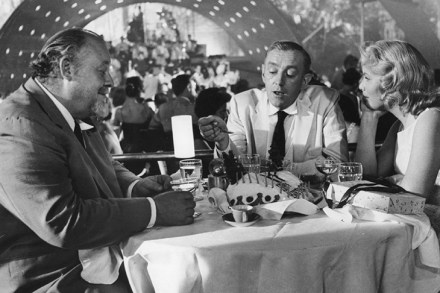
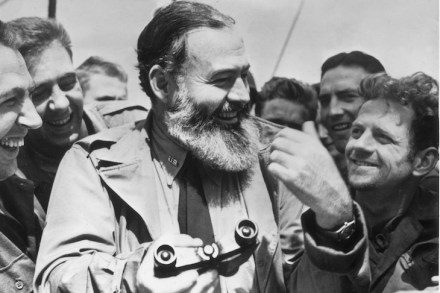
One rainy evening in December 1948, a blue Buick emerged from the darkness of the Venetian lagoon near the village of Latisana and picked up an Italian girl — 18, jet black wet hair, slender legs — who had been waiting for hours at the crossroads. In the car, on his way to a duck shoot, was Ernest Hemingway — round puffy face, protruding stomach and, at 49, without having published a novel in a decade, somewhat past his sell-by. He apologised for being late, and offered the rain-sodden girl a shot of whisky which, being teetotal, she refused.

Outward bound

From our UK edition

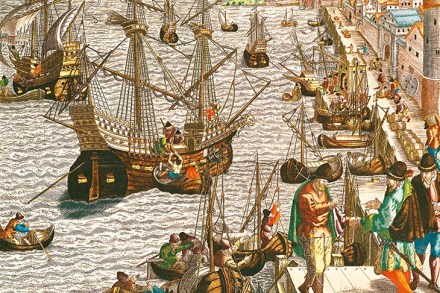
Paris, Venice, Montevideo, Cape Town, Hobart. There are cities, like fado, that pluck at the gut. In my personal half dozen, having also lived there, Lisbon ranks high. ‘What beauties doth Lisboa first unfold,’ gasped Byron’s Childe Harold. Two centuries on, Portugal’s capital remains Queen of the Sea. Yet beyond a sombrely sentimental gift to entrance, the character of Lisbon is elusive. It outreached the grip even of its greatest modern muse, Fernando Pessoa, whose posthumous 100-page guidebook, Lisbon: What the Tourist Should See, finally published in 1992, included the helpful information that Lisbon ‘rises like a fair vision in a dream, clear-cut against a bright blue sky which the sun gladdens with its gold’.

Hooked for life

From our UK edition

In Havana, one week before President Obama unthawed half a century of cold relations with Cuba, I talked to the last fisherman to have known Ernest Hemingway. Oswald Carnero came from Cojimar — where the writer kept his boat, the Pilar — and was one of the villagers to whom Hemingway dedicated his Nobel Prize after publishing The Old Man and the Sea. Carnero had met him in 1950, aged 13. ‘He was bringing in a big marlin on his boat. He asked me if I could skin the fish.’ Thereafter Carnero sold Hemingway turtle flesh for soup and ran errands, scurrying back to the Pilar with bottles of White Horse, and going up to his house, the Finca Vigía.

A huff to the music of time

From our UK edition

You’re in the index, but not in the book. This ghostly sensation has been my experience since 1990 after commissioning Auberon Waugh to review Anthony Powell’s Miscellaneous Verdicts. Waugh’s verdict appeared in the Sunday Telegraph on 20 May that year. Next morning, Powell resigned in a celebrated huff from the sister paper, of which I happened to be literary editor. When, seven years later, Powell published his Journals, I wanted to know how he dealt with this incident which had caused acute distress. The index directed me to page 40, yet my name wasn’t there. Nor any entry for 20 May 1990; nor one for Auberon Waugh, as promised, on page 49. The absence hinted that lawyers may have been at work.

The greatest journeys ever made

From our UK edition

Many believed in Australia for 1,000 years before its discovery. There had to be a commensurate weight — somewhere Down Under — to counter the northern land mass; an ‘unknown Southland’ which was crucial to maintaining the balance of the world. To confuse matters, this theoretical continent was dubbed for a while Austrialia del Espiritu Santo — in honour of the House of Austria. A socially awkward Lincolnshireman, Matthew Flinders, in 1804, was the originator of Australia as the name for what had for centuries been called New Holland, but two French sailors, an aristocratic cartographer, Louis Freycinet, and a manipulative, one-eyed anthropologist, François Péron, showed for the first time the continent’s actual shape.

Love at first sight | 30 November 2017

From our UK edition

The novelist Mary Wesley never forgot the night of 26 October 1944. She was then 32, locked in a loveless marriage to ‘a perfectly nice but remarkably boring’ barrister, Lord Swinfen, and was dining at the Ritz with a friend from MI6 — she had worked there in April 1940, decoding the positions of German regiments — when she looked up and saw, seated at another table, the Royal Marines captain whom she had met only a few hours earlier at Les Ambassadeurs. ‘He kept sending me notes through dinner saying, “You can’t stay with that old bore. Come dancing.”’ Which she did.