Nicholas Lezard

Sebastian Faulks looks back on youth and lost idealism

From our UK edition

I must say, calling a book Fires Which Burned Brightly promises much. At best, from the jaded reviewer’s point of view, an autobiography of delusional self-aggrandisement; at worst, a wild mismatch between the, well, incendiary language of the title and the potentially humdrum contents. It might have been dreamed up by a master satirist intending

Lives upended: TonyInterruptor, by Nicola Barker, reviewed

From our UK edition

‘Is it any good?’ a friend asked when he saw I was reading this book. ‘Yes,’ I said, ‘but it’s full of wankers.’ By that stage I was only up to page 24, but the remaining 184 pages did nothing to fundamentally alter my view. There is nothing intrinsically wrong with this. The works of,

The benign republic of Julian Barnes

From our UK edition

Not long into this essay I found myself wondering if it would have been published if the author were not Julian Barnes. I also wondered: would I have guessed the author’s identity if it had been withheld from me? Actually, it’s really five little essays, whose subjects are ‘Memories’, ‘Words’, ‘Politics’, ‘Books’, and ‘Age and

The contagions of the modern world

From our UK edition

Nearly a quarter of a century ago, Malcolm Gladwell wrote The Tipping Point in which he explained how little things could suddenly add up to cause huge change, in phenomena as diverse as the popularity of Hush Puppies and the reduction of crime in New York City. The book achieved its own tipping point and

Peter Parker, Wayne Hunt, Nicholas Lezard, Mark Mason and Nicholas Farrell

From our UK edition

33 min listen

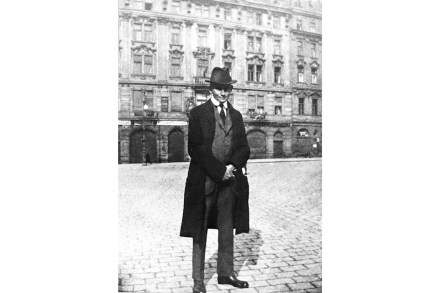
On this week’s Spectator Out Loud: Peter Parker takes us through the history of guardsmen and homosexuality (1:12); Prof. Wayne Hunt explains what the Conservatives could learn from the 1993 Canadian election (9:10); Nicholas Lezard reflects on the diaries of Franz Kafka, on the eve of his centenary (16:06); Mark Mason provides his notes on Horse

The wry humour of Franz Kafka

From our UK edition

How do you see Franz Kafka? That is, how do you picture him in your mind’s eye? If you are Nicolas Mahler, the writer and illustrator of a short but engaging graphic biography of the man, you’d see him as a sort of blob of hair and eyebrows on a stick. The illustrations of Completely

Music was always Anthony Burgess’s first love

From our UK edition

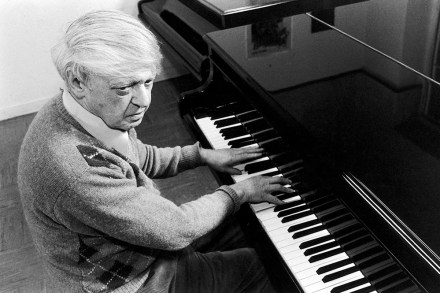
Anthony Burgess, a professional to his finger- tips, knew how to write an arresting first sentence. The locus classicus is his opening to Earthly Powers. But try this for size, a lapel-grabbing start of a piece about William Walton in The Listener: Waking crapulous and apothaneintheloish, as I do most mornings these days, I find

The real problem with ChatGPT is that it can never make a joke

From our UK edition

I have been reviewing books for nearly four decades – starting in this very magazine – and over the years I have encountered some real stinkers. But this is the first time I can recall being reluctant to pick up the book because of actual physical nausea. Intellectual nausea I’ve had plenty of times. Give

Judge Dredd: the prescience of a 45-year-old comic strip

From our UK edition

In 1977, an enduring character was created for the pages of the IPC comic 2000 AD: Judge Dredd, lawman of the future, the most visible symbol of police procedure – a helmeted, black-clad, motorbike-riding policeman patrolling the streets of Mega-City One, a vast metropolis stretching along the eastern coast of the US, whose remit also

How hardboiled detective fiction saved James Ellroy

From our UK edition

Public readings by James Ellroy would tend to begin like this: Good evening, peepers, prowlers, pederasts, panty sniffers, punks and pimps. I’m James Ellroy, demon dog of American literature, the foul owl with the death growl, the white night of the far right, and the slick trick with the donkey dick. My books are written