Nicholas Lezard

How Jeffrey Bernard led me to London’s rudest landlord

From our UK edition

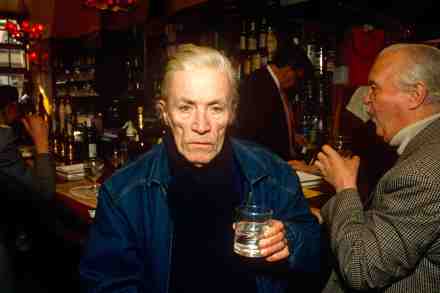
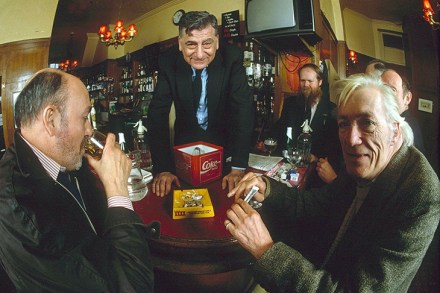
On a recent Sunday evening, the Shaftesbury Theatre in Soho was packed to the gills with a crowd celebrating a dramatic tribute to a landlord: the best kind of landlord, the landlord of a pub. And not just any old pub, but the pub he ruled with an iron fist for 63 years until his retirement in 2006. Ladies and gentlemen, I give you Norman Balon, sole proprietor of the legendary Coach and Horses. ‘London’s rudest landlord’, as he was known; it said so on the matchboxes. On for one night only, Norman Balon – It’s All True was a play written by the person who took over the lease, Alastair Choat.

If Lady Mendl didn’t exist, it would be necessary to invent her

From our UK edition

It is Hollywood, in perpetual summer, and Ludwig Bemelmans has driven past some unusually well-groomed eucalyptus trees for a meeting with Elsie de Wolfe, Lady Mendl, interior decorator to the stars. In her salon is a footstool that once belonged to Madame de Pompadour. Lady Mendl’s husband comes into the room and trips over the stool. ‘My God, he’s dead,’ says Lady Mendl. He isn’t, of course. He’s the classic English booby beloved by Hollywood, so is immortal. Death hangs over this book in a way I’ll return to later, but at this point it’s mainly because Lady Mendl is old, old. 80? 90? No one knows for certain. But she has a force for life which is close to insanity. Everyone here is mad in one way or another.

The art of exclamation marks!

From our UK edition

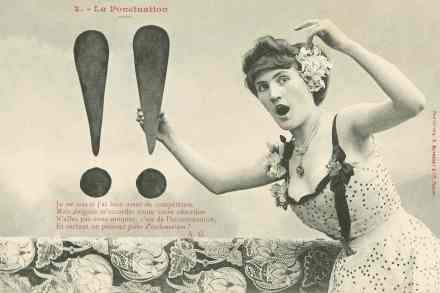
This is a short book, but it carries a punch, as does its subject, the exclamation mark – or shriek, or bang, as it is occasionally and graphically called. I use the word ‘graphically’ advisedly, for the punctuation mark falls into an ambiguous territory overlapping orthography and illustration. I say to myself that I don’t like it, but I do on occasion. I recently used it to describe the noise of my horrible doorbell (‘BZZZT!’) to convey the sensation of panic that occurs when I hear it. I also love it when the speech bubble above a cartoon character’s head contains nothing but an exclamation mark: pure surprise. My favourite example is in Snoopy’s case, for often his ears also stand up like exclamation marks themselves.

The new vandals

From our UK edition

31 min listen

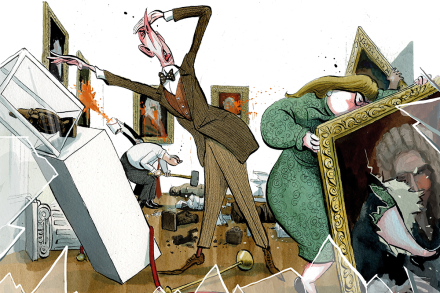
This week: In his cover piece Douglas Murray writes that museums are turning against their own collections. He is joined by the historian Robert Tombs to discuss whether a culture of self-flagellation is harming British museums (00:56). Also this week: For the magazine The Spectator’s assistant editor Cindy Yu writes that the tune is changing in China. She is joined by Professor Kerry Brown, director of the Lau China Institute at King’s College London to consider what the recent protests could mean for the Chinese Communist Party (13:24). And finally: Nicholas Lezard writes in The Spectator about how to beat London's expanding Ultra Low Emissions Zone. He is joined by journalist Tanya Gold to investigate an elegant loophole in the plans (24:56).

How to avoid paying London’s Ulez charge

From our UK edition

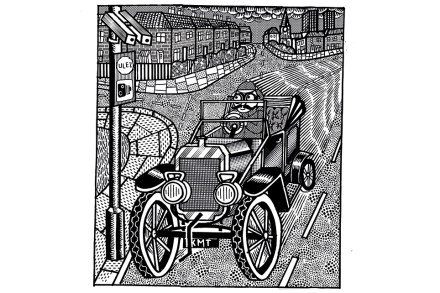
It’s getting hard to escape low emission zones. In Birmingham, Oxford and Bristol – and pretty soon the whole of London – unless your vehicle is squeaky clean, you are going to have to pay every day that you drive. London--based readers probably know by now of Transport for London’s plans to expand its £12.50-a-day Ultra Low Emission Zone (Ulez) to every single borough, from Hayes to Hornchurch, Cheshunt to Caterham, and with a sticky-out bit which I think has been deliberately designed to include Chessington World of Adventures. For many, this is an outrage. The Conservative MP for Carshalton and Wallington, Elliot Colburn, has described himself as ‘very, very angry’, calling the expansion a ‘disgusting move’.

A ghoulish afterlife: The Seven Moons of Maali Almeida, by Shehan Karunatilaka, reviewed

From our UK edition

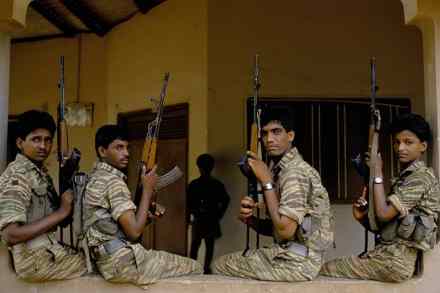
Ten years ago Shehan Karunatilaka’s first novel, Chinaman, was published and I raved about it, as did many others. Set in the 1980s, it intertwined the stories of a vanished, forgotten cricketer who was able to bowl unplayable deliveries and the particularly brutal war that was ravaging Sri Lanka. My review ended with the words: ‘Karunatilaka is, I gather, writing another novel, but how it can be as good as this I can hardly imagine.’ We now have that novel, and I was right: it isn’t as good. Which is not to say it’s bad. In fact, there are parts of its design and telling that are very good indeed. But I had problems with it, as you will see. We are in 1990, and Sri Lanka is as dangerous a place is it was in Chinaman, and in reality.

Aleister Crowley was even more beastly than we’d imagined

From our UK edition

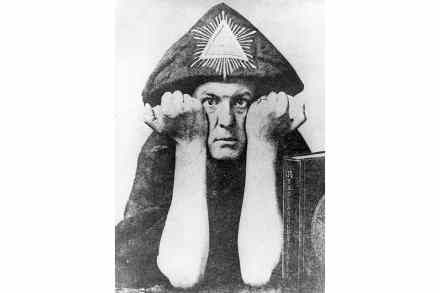
I have never had much time for Aleister Crowley. Magic(k) is nonsense; the mystical societies he founded were simply pretexts for him to take as many drugs and have as much sex as he could. And he was a second-rate writer at best. When the novelist Arthur Calder-Marshall said he had gone ‘from Great Beast to Great Bore’, I thought it a fair summing-up. Crowley initiates were some of the dodgiest people in the western world – either frauds or hucksters themselves or the most gullible of fools. There was always the matter of his self-reinvention. Aleister Crowley was not christened thus: he changed his first name because he thought that a dactyl followed by a spondee conferred the greatest chance of becoming famous. (I cannot say it has done me any favours.

The Everybody Inn: what happened when a hotel opened its doors to the homeless?

From our UK edition

What do you do when you pass someone sleeping or begging in the street? I’ll tell you what I do: pretty much the bare minimum to appease my conscience. Pound coins distributed, some names asked for and learned, sandwiches and snacks for those outside supermarkets (Müller Corners and bottles of chocolate milk particular favourites). After reading this book I realise there is rather a lot more I could be doing. And indeed a lot more others, particularly the government, could be considering. Here is how Christina Lamb describes what Mike Matthews, owner of the historic Prince Rupert Hotel in Shrewsbury, was doing a few years before the pandemic struck: He couldn’t help remembering...

The boys who never grow up: Sad Little Men, by Richard Beard, reviewed

From our UK edition

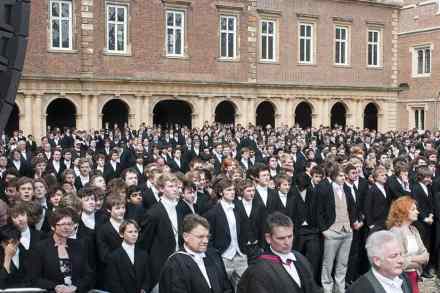
I can’t recall reading an angrier book than this. Richard Beard has written what I hope for his sake is a cathartic denunciation of the private boarding school system, and his rage is on two fronts. The first is how being sent away at the age of eight damaged and twisted him and just about everyone else who experienced the same; the second is about what these damaged children as adults have done to the country. He pays special attention to the Prime Minister and his predecessor but one. I suspect that The Spectator has quite a few readers who went to boarding school, and who even think the government is doing a good job. So you may either have given up on this review already or will have no intention of reading the book.

Tenderness and sorrow: Inside Story, by Martin Amis, reviewed

From our UK edition

Inside Story is called, on the front cover, which boasts a very charming photograph of the author and Christopher Hitchens, a novel. It also has a good and comprehensive (14-page) index. I’ve been a book reviewer for 35 years and I’ve lost count of the number of times I have wished, professionally, for larger novels to have an index; but I’m not sure I can remember seeing one before. A non-facetious one, that is. This index is very much non-facetious. Novel or not, then? I’ll try to get rid of this question as quickly as possible, but it has to be addressed (as I write these words, I have a feeling most of this review will be taken up with this, one way or another).

Our recent stockpiling is nothing to what ‘preppers’ lay in store

From our UK edition

This book could not have been published at a better time — nor, in a way, at a worse time. Better, because we are now living with the threat of disaster looming over us and society is being radically transformed; worse, because the apocalyptic scenarios Mark O’Connell writes about include such quaint, marginal topics as catastrophic climate change, nuclear devastation and the concern of ‘preppers’. These are the men who build bunkers in the countryside and fill them with enough tins of protein sludge to keep them going through whatever unspecified calamity brings about the end of the rule of law. There’s not a great deal here about a global pandemic. That said, there doesn’t have to be.

There are more negatively-loaded words than positive ones — so what?

From our UK edition

Negativity has a power over us. You know how it is. One bad thing can ruin your whole day, even if the day has been otherwise full of good or non-bad things. Infants react more quickly to an image of a snake than a frog, or unhappy or angry faces than happy ones. Then again, I reacted more strongly to Roy E. Baumeister’s face on the back flap of the book than I did to John Tierney’s, because Baumeister has a beard and a broad grin that suggests high self-esteem. And why not? He’s written or co-written more than a dozen books (first title, Meanings of Life) while Tierney has written only three. The aim of the book is to get us to compensate for the brain’s natural reaction to see the worst in everything.

Coffee and Kalashnikovs

From our UK edition

‘This guy’s crazy,’ says a taxi driver, listening to a BBC interview with a man who has decided to become the first exporter of coffee from Mokha, Yemen, in 80 years. The man being interviewed, we have learned, has risked his life quite a few times over, in the most hair-raising ways imaginable it would seem, to achieve his dream of putting Yemeni coffee back on the map. We meet this taxi driver towards the end of the book, and although he does not know that the man being interviewed is actually sitting in the back of his cab, by this stage we have come to think that, yes, the man concerned, one Mokhtar Alkhanshali, is crazy. Coffee was discovered — or, to be more accurate, the beverage invented — in Yemen.

… to nonagenarian love

From our UK edition

Towards the end of Live a Little, one of its two main characters says: ‘I’m past the age of waiting for something to go wrong. It already has.’ And we know what has, because some 200 pages earlier we have seen the man as a young boy, just before the second world war, pulling his mother’s underwear out of the laundry basket. Here is how the moment, and its repercussions, are described: ‘He climbed into his mother’s bloomers and tumbled into hell.’ Let’s pause to consider the comic elegance and precision of that sentence.

We were all unwell then

From our UK edition

On the one hand, I am supremely qualified to review this book. In 1984, bored beyond endurance after graduating with one of those degrees that leaves you both over- and under-qualified for employment, I decided to take my dole money down to the Coach and Horses pub in Soho, where this magazine’s Jeffrey Bernard held court, and pay my respects to him, for I liked his prose style and his stories. I stayed there for three years or more, a postgraduate course in itself, only packing my bags at the end of 1987 when I met the woman who was to become my wife.

Master of letters

It is tempting to compare two highly intelligent, learned and gifted young Dublin writers, suffering under the burdensome, Oedipal influence of James Joyce, struggling to have their first novels published in the late 1930s. Samuel Beckett’s Murphy, whose central character is an extremely idiosyncratic young man in the grip of profound indolence, was published in 1938; Flann O’Brien’s At Swim-Two-Birds, whose central character is an extremely idiosyncratic young man etc., in 1939.

Stories about stories

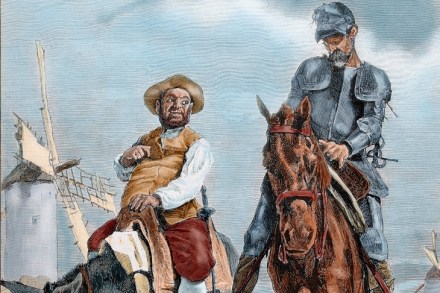
I wonder what your idea of a good novel is. Does it embody the attributes of solid plotting, characterisation and an impermeable membrane between invention and reality — the novel, that is, being a box from which nothing can leap out, and into which nothing, except what the author has chosen to put there, can leap in? And does it conform to the conventions laid down by the great writers of the 19th century? That’s what I assumed, during my schooldays; and the little that had filtered down to me of Don Quixote, which is claimed by many to be the ‘first’ novel, did not alert me to the fact that it was anything more than a story. As opposed to — to put it very simply indeed — a story about stories.

Prince of punters

From our UK edition

About a third of the way through this book I worked out that I had an unbeatable system for winning at the horses. All I would need was a degree in mathematics, or access to someone who has one, a lot of research on horses, jockeys and racecourses under my belt, including inside knowledge, and a little seed money. Say, £100,000. Two thirds of the way through I realised I would also need some links to organised crime, and if I didn’t have any, they would be furnished for me, whether I wanted them or not. By the end of the book I reverted to my original opinion: that it is not for the likes of me.

A bad taste in the mouth

From our UK edition

Here is the opening sentence of Karl Ove Knausgaard’s meditation on beds.: With its four legs and its flat, soft surface, the bed gently accommodates one of our most basic needs: it is good to lie down in bed, and it is good to sleep in them through the night. Well, you learn something every day. Actually you do, if you are very young, or at least you are meant to. For this is one of Knausgaard’s letters to his unborn daughter, and he’s written one book for each season, 20 letters per month, for her to be able to see the world, or for Knausgaard to see it again, anew. It is a mission freighted with honourable intent.

Signs and spellsnich

From our UK edition

On 25 February 1980, Roland Barthes, the great French intellectual, was run over by a laundry van in Paris. He died from his injuries a month later. This book — Laurent Binet’s second novel — proposes that it was not an accident; that Barthes had just come from lunch with the Socialist candidate for the forthcoming French presidential elections, François Mitterrand, and that he was in possession of an extremely important document, one which gave detailed instructions on the seventh function of language.